
Back to Exercises
Stretch
Upper Trapezius Stretch
The Upper Trapezius Stretch is a simple seated or standing exercise designed to elongate the fibers between your neck and shoulder.

How to Perform
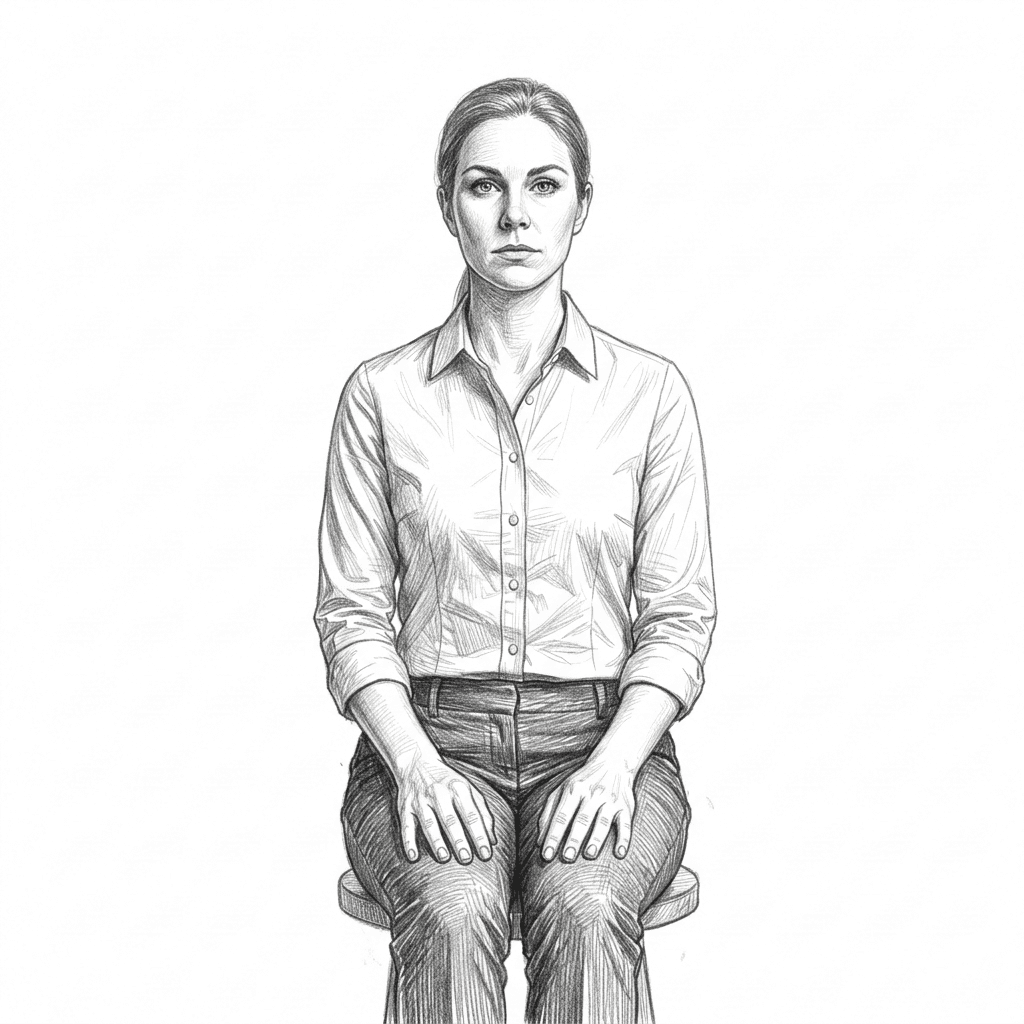 1
1Keep your back straight and shoulders relaxed.
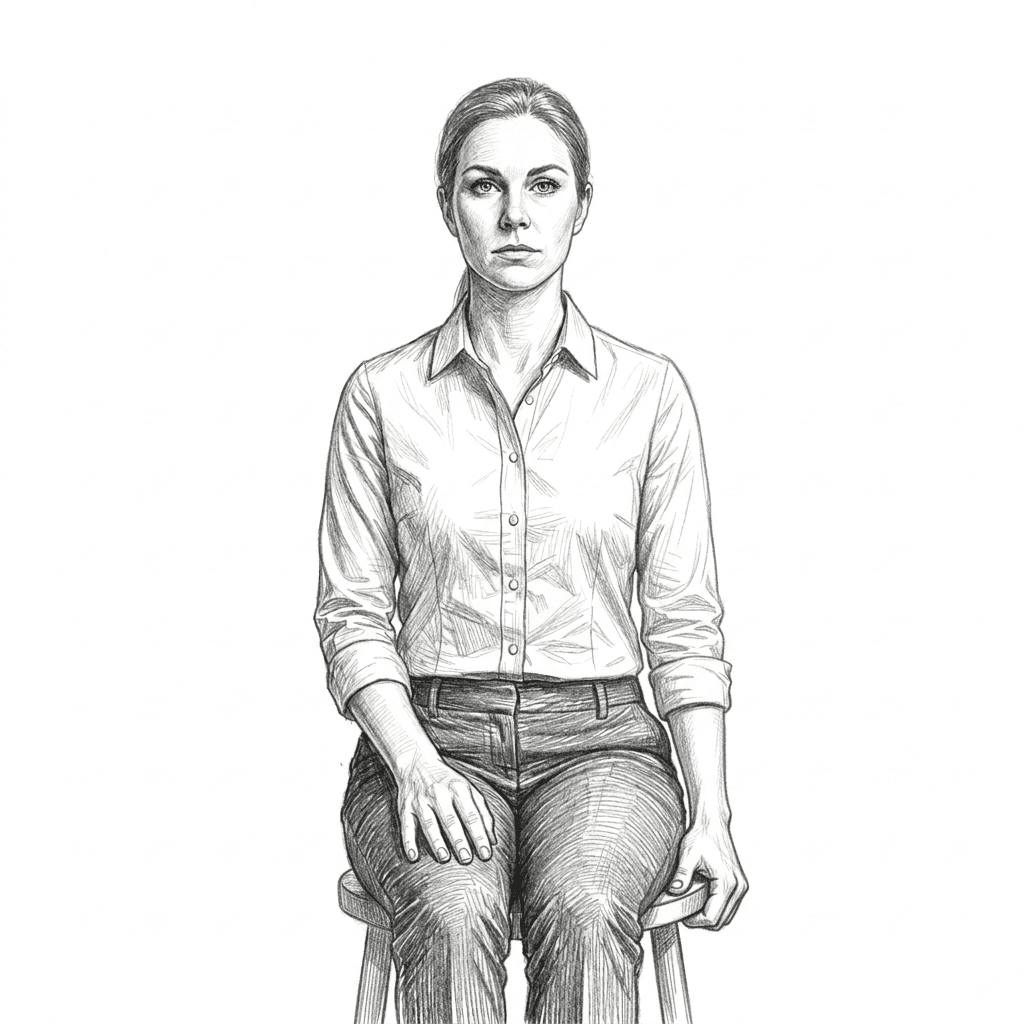 2
2Hold the bottom of your chair with your left hand.
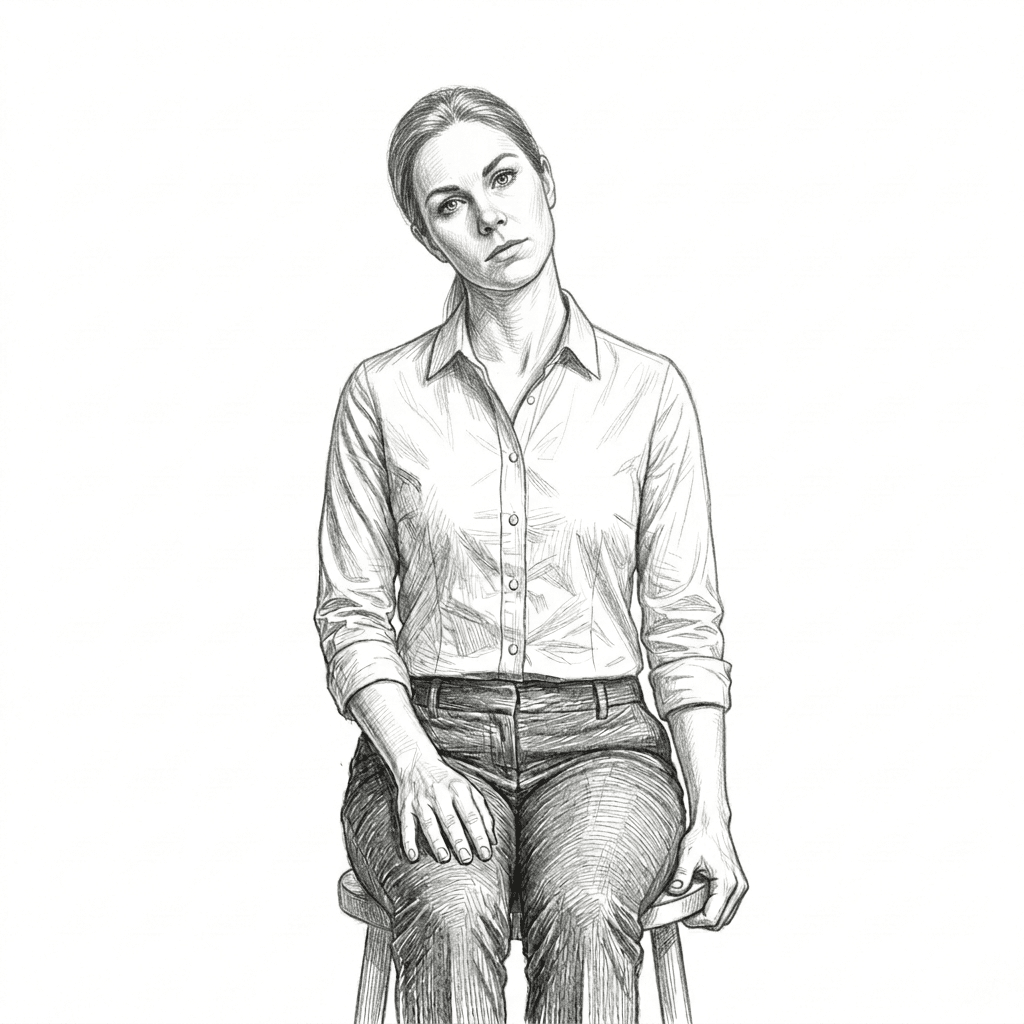 3
3Gently drop your right ear toward your right shoulder.
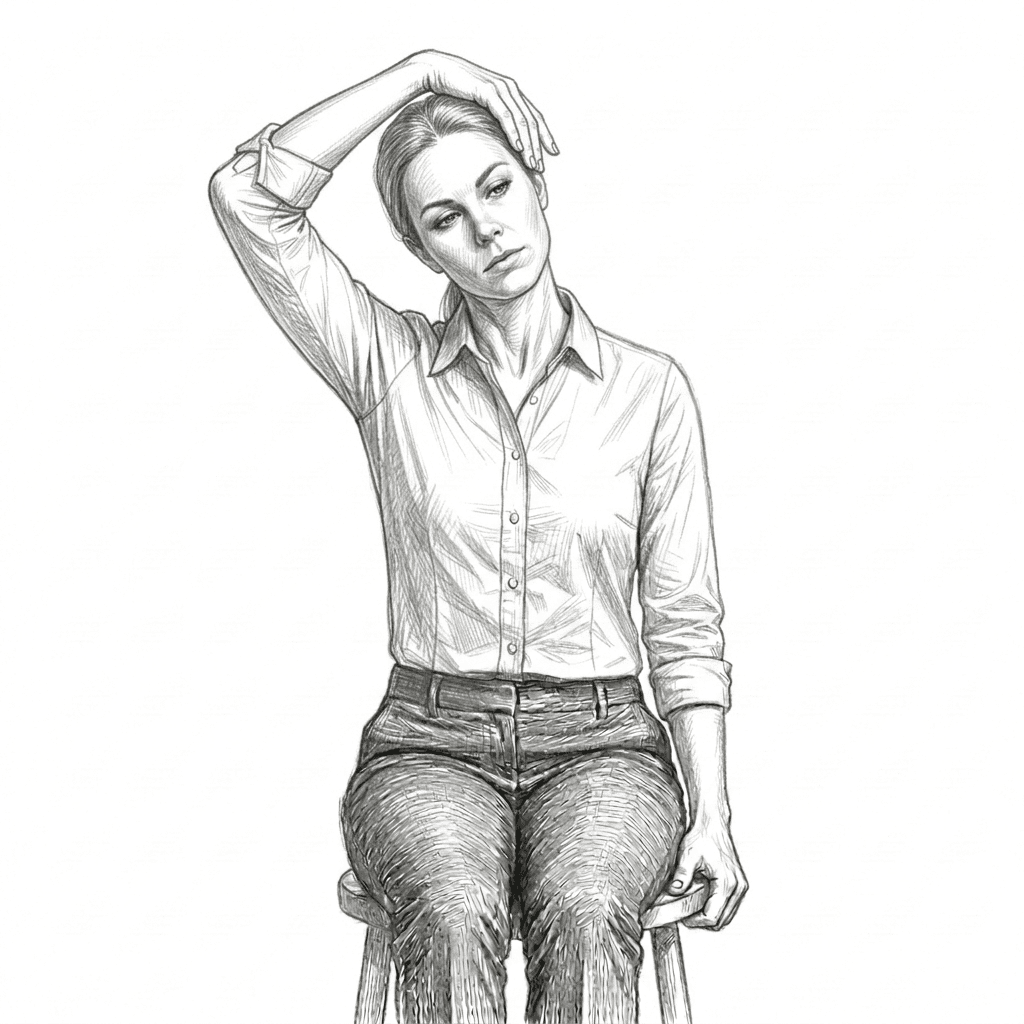 4
4Use your right hand to pull your head down very lightly.
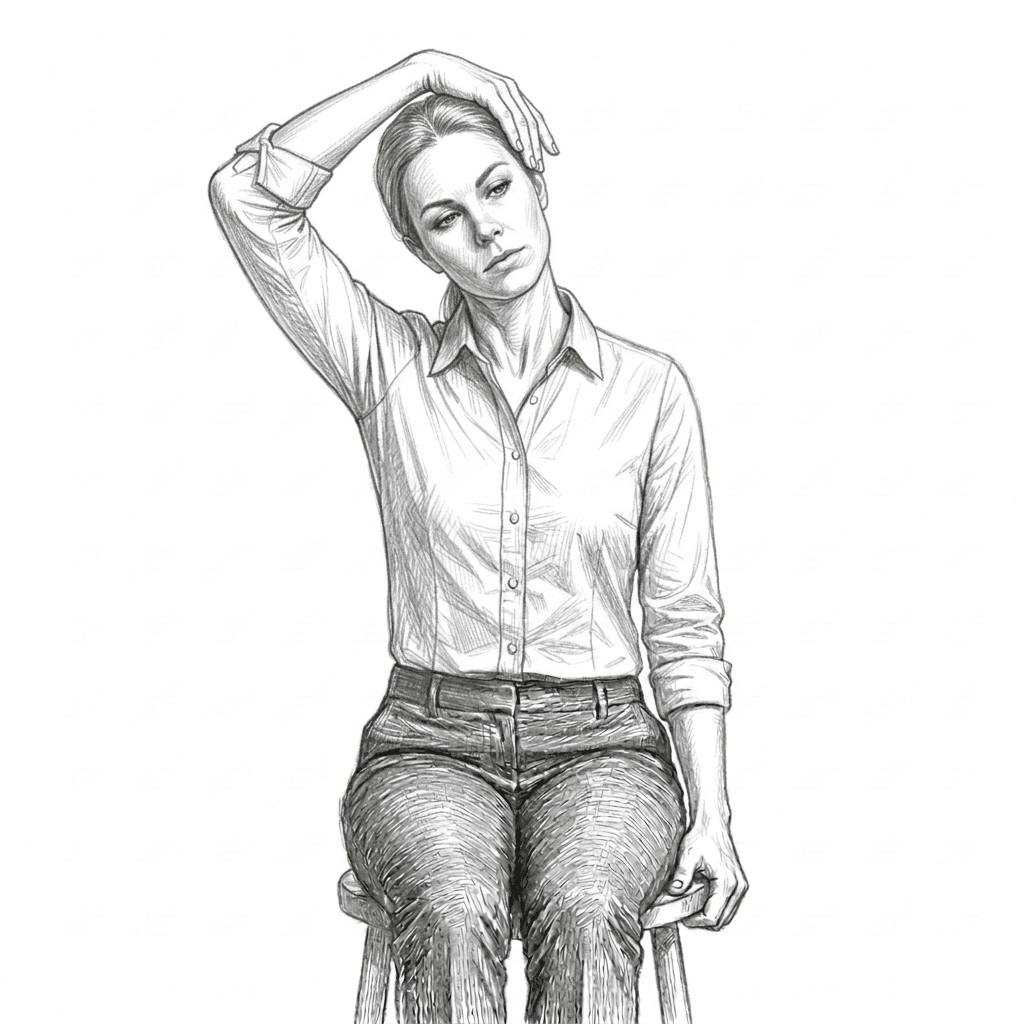 5⏱ Hold 10s
Breathe and hold for 10 seconds.
6
Switch sides and do the same for the left hand.
🔁 Repeat this exercise 5 times
Muscles Targeted
Levator Scapulae
Often stretched simultaneously (especially if you tilt your chin down).
Sternocleidomastoid (SCM)
The large muscle that runs along the front/side of the neck.
Scalenes
Muscles on the side of the neck.
Upper Trapezius
The primary muscle being lengthened.
Helpful For
Tension Headaches
Often caused by tight neck muscles pulling on the base of the skull.
Tech Neck (Cervical Strain)
Pain resulting from looking down at phones or computers for hours.
Fibromyalgia
Managing chronic muscle stiffness.
Cervical Spondylosis
General age-related wear that causes neck stiffness.
Torticollis
A condition where the neck muscles cause the head to tilt.
Benefits
- Reduces Tension: Releases "trigger points" or knots caused by stress.
- Improves Posture: Helps counteract the "slumped" look from sitting at a desk.
- Increases Range of Motion: Makes it easier to turn your head while driving or looking around.
- Headache Relief: Can decrease the frequency of tension headaches.
Precautions
- The Stretch Movements should be slow ,Never bounce
- You should feel a good pull, but never sharp or stabbing pain. If it hurts, back off.
- Ensure the shoulder you are stretching away from stays down. If it lifts up, the stretch becomes ineffective.
- Don't lean your whole body,only move your neck.
Helps With

Frozen Shoulder (Adhesive Capsulitis)
Frozen shoulder, clinically known as adhesive capsulitis or periarthritis shoulder, is a condition characterized by severe pain and progressive stiffness in the shoulder joint.
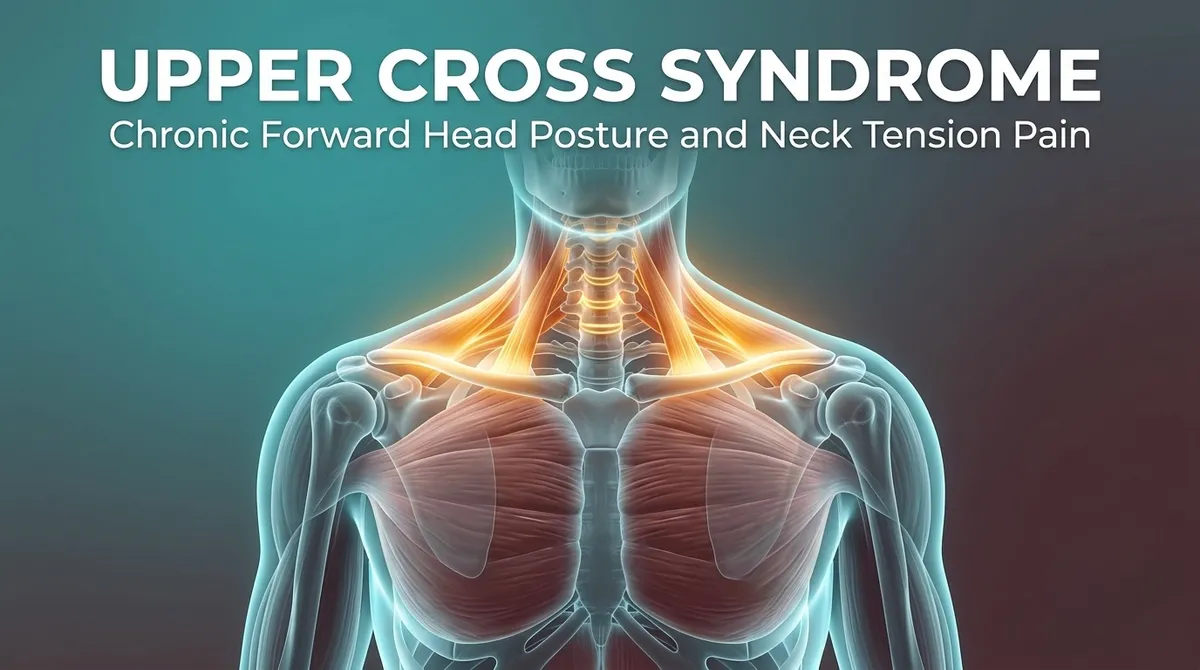
Upper Cross Syndrome (UCS)
Upper Cross Syndrome is a common postural condition caused by a predictable pattern of muscle imbalance around the neck, shoulders, and chest. It develops gradually often without you even noticing until pain, stiffness, or poor posture becomes hard to ignore.
Related Articles


Need Professional Help?
Book a consultation to get personalized treatment advice for your condition.
Book on Instagram