
Do you log off after a heavy 9 or 10 hour shift only to be greeted by a stiff, burning pain in your neck and shoulders?
You might be hyper-aware of how you sit, yet the severe pain still lingers. If you’re starting to worry that this daily tension is just going to become a permanent part of your routine, take a deep breath.
There is nothing to fear. You aren't doomed to a life of daily stiffness. The key to relief isn't just about changing your chair it's about understanding the hidden connection between your mental workload and your physical tension. Let's break down exactly what's happening to your body and, more importantly, how to release it.
The Dual Threat: Tech Neck & Trapezitis
Before we fix the pain, we have to name it. If you spend your days locked onto a screen while managing a high workload, you are likely dealing with a combination of two very common clinical conditions:
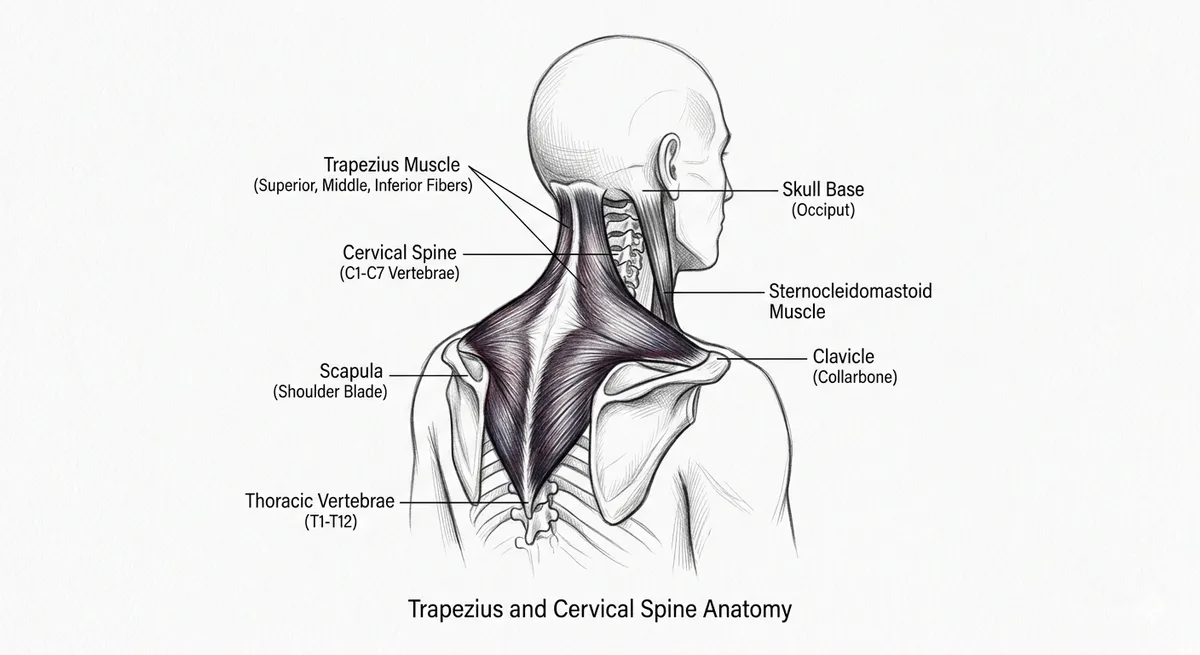
Tech Neck: Chronic neck and shoulder pain, soreness, or stiffness caused by the sustained strain of screen time. Every inch your head drifts forward under deep concentration places extra load on your cervical spine.
Trapezitis: The clinical inflammation of the trapezius muscle (the large, diamond-shaped muscle covering your neck, shoulders, and upper back), heavily triggered by chronic stress and sustained tension.
The Missing Link: Why Stress Causes Neck Pain
Wait, stress causes physical neck pain? Absolutely.
When you experience psychological stress, high cognitive load, or anxiety, your body’s sympathetic nervous system activates. This is your biological “fight-or-flight” survival mechanism. Your brain perceives workplace stress as a physical threat, which induces a subconscious, involuntary contraction of your neck and shoulder muscles.
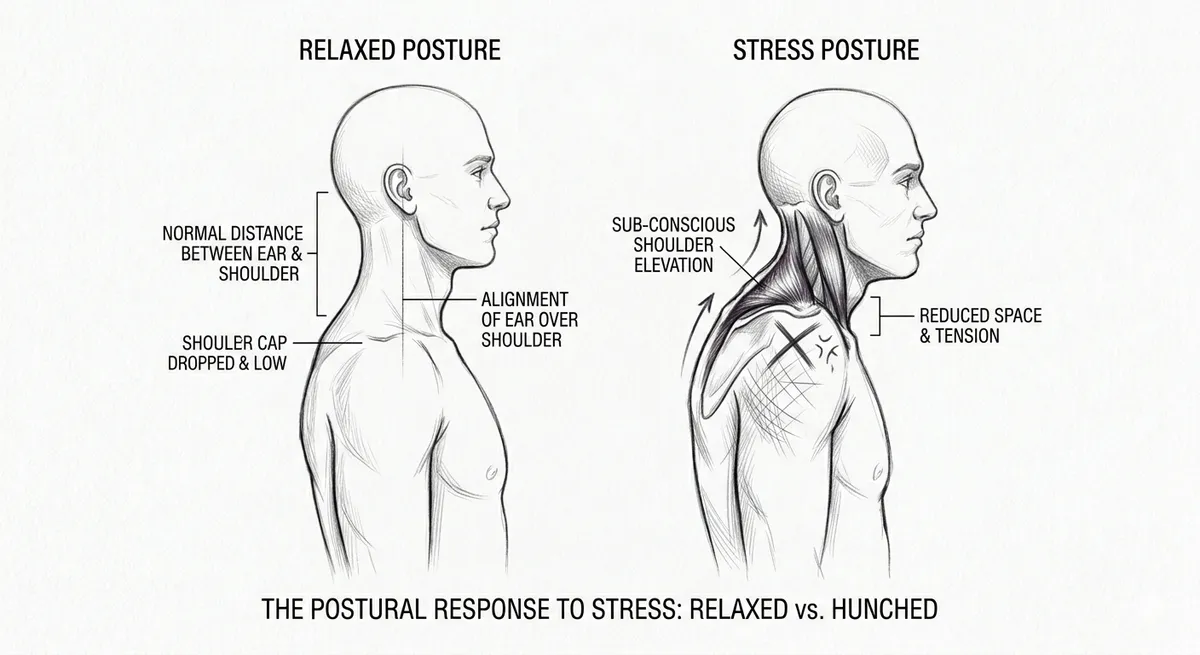
Stress alters your nerve input and forces your muscles to tighten, even in the complete absence of heavy physical lifting. Notice your shoulders the next time you are rushing to meet a deadline you are likely unconsciously hunching them right up toward your ears. This continuous, low-grade tension overloads the upper trapezius, leading to inflammation, restricted blood flow, and severe pain.
Are You Experiencing These Symptoms?
How do you know if your workplace stress is triggering Tech Neck and Trapezitis? Look out for these early signs:
Severe Stiffness: A heavy, locked-up feeling in the neck and shoulders.
Tension Headaches: A pulsing ache that typically starts at the base of the skull and wraps around the head.
Burning Pain: A localized, burning sensation directly between the shoulder blades.
Restricted Mobility: Difficulty or sharp pain when trying to look sideways over your shoulder.
The Physiotherapist’s Approach: Healing Through Stress Release
Painkillers only mask the problem. To truly heal Trapezitis and Tech Neck driven by stress, we need an evidence-based approach that targets both the physical tissues and the overloaded nervous system.
Here is how a physiotherapist approaches this specific tension:
Nervous System Down-Regulation: Using clinical breathwork and somatic tracking to shift the body out of "fight-or-flight" (sympathetic) and back into a "rest-and-digest" (parasympathetic) state, which instantly stops involuntary muscle guarding.
Manual Therapy & Myofascial Release: Hands-on clinical techniques designed to break down tissue adhesions, restore restricted blood flow, and manually release the deep, stubborn tension held in the cervical fascia.
Therapeutic Movement: Guiding the body through safe, controlled motions that signal to the brain that the physical "threat" has passed, allowing the trapezius to finally relax.
4 Tension-Melting Exercises for Immediate Relief
You don't need a gym to signal safety to your muscles. Incorporate these therapeutic, stress-relieving movements into your workday to melt tension away:
Diaphragmatic Breathing (The Nervous System Reset): Sit comfortably and place one hand on your belly. Inhale deeply through your nose for 4 seconds, feeling your belly expand (not your chest). Exhale slowly through your mouth for 6 seconds. Repeat 5 times.
Why it works: Prolonged exhales directly stimulate the vagus nerve, forcing your shoulder muscles to stop guarding.
Upper Trap Stretch with Active Exhale: Gently tilt your right ear toward your right shoulder. Reach your left hand down toward the floor to deepen the pull. Take a deep breath in, and as you exhale, actively imagine the tension melting out of the left side of your neck. Hold for 20-30 seconds, then switch sides.
Levator Scapulae Release: Turn your head 45 degrees to the right, then gently tilt your chin down toward your right armpit. Place your right hand gently on the back of your head for light overpressure. Hold for 20-30 seconds to release the specific muscle responsible for that localized "stiff neck" feeling, then switch sides.
Shoulder Blade Squeezes (Tension Flush): Pull your shoulders back and down, actively squeezing your shoulder blades together as if holding a pencil between them. Hold the squeeze tight for 5 seconds, then completely let go and let the shoulders drop heavily. Repeat 10 times to flush fresh blood into the fatigued tissues.

When Is It Time to See a Physiotherapist?
While stress management and targeted stretching are highly effective for muscular tension, certain red flags require professional clinical assessment.
If your symptoms have not improved after 2 weeks of consistent stress-relief exercises, or if you begin experiencing severe numbness, tingling, or weakness traveling down your arm, it is time to consult a physiotherapist or physician. These symptoms can indicate nerve involvement that requires a structured, specialized rehabilitation plan.
Ready to stop letting workplace stress dictate your physical health?
For more evidence-based recovery strategies, therapeutic exercises, and movement education, explore more resources right here at Heal and Move.