
Are you experiencing persistent shoulder pain, making simple tasks like combing your hair or fastening your seatbelt a daily struggle?
Do you find yourself limited in movement, with a stiffness that just won't ease?
If so, you might be navigating the challenging path of a frozen shoulder. This comprehensive guide, developed by our expert physiotherapists, is your roadmap to understanding, managing, and ultimately healing from this often debilitating condition.
What Exactly is a Frozen Shoulder? (Adhesive Capsulitis Explained)
Frozen shoulder, medically known as adhesive capsulitis, is a painful condition characterized by significant stiffness and restricted movement in the shoulder joint. It's not just a stiff shoulder; it's a specific process where the connective tissue capsule surrounding your shoulder joint thickens, tightens, and develops scar tissue, severely limiting overall mobility.
The Anatomy of Your Shoulder Joint
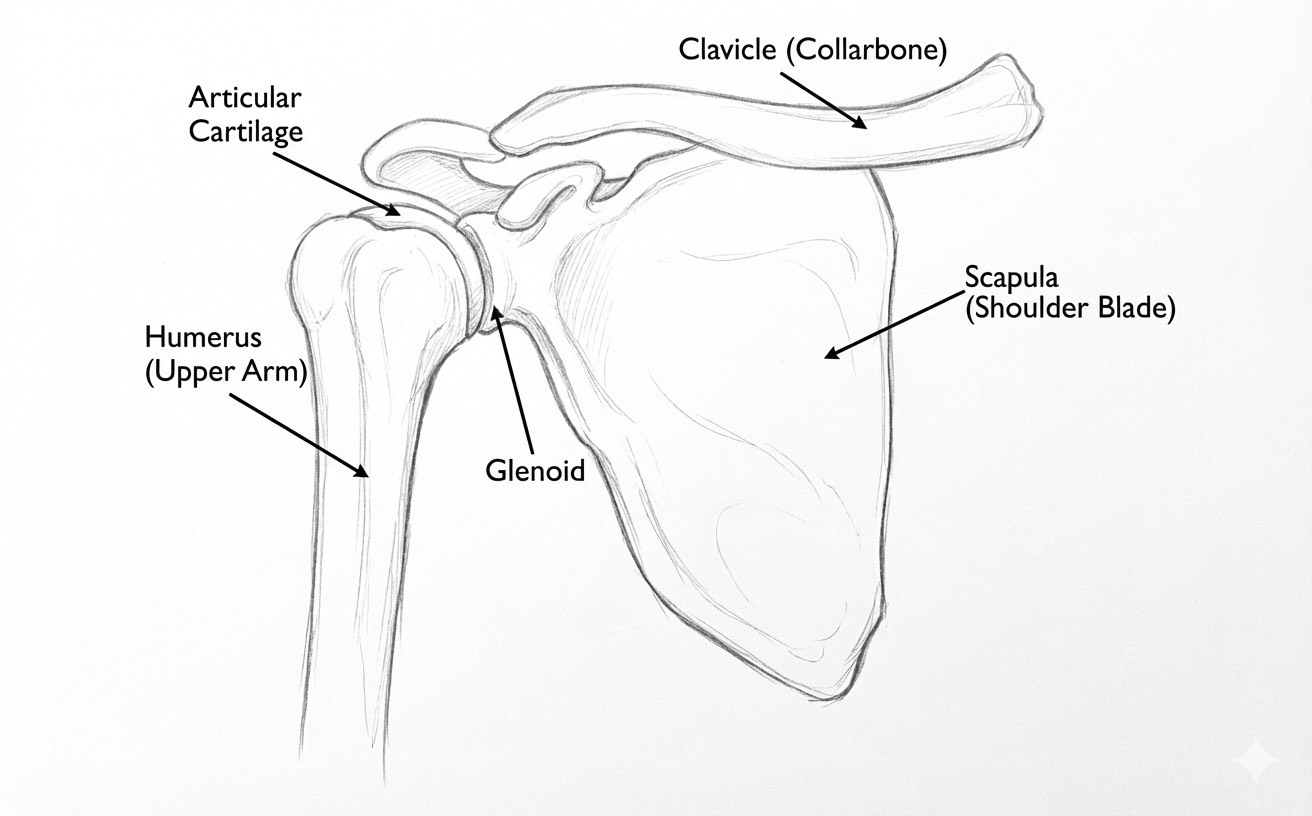
To understand frozen shoulder, it's helpful to know a little about your shoulder's intricate design. Your shoulder is a complex ball and socket synovial joint, renowned for its incredible range of motion. It's formed by three main bones:
Humerus: Your upper arm bone.
Scapula: Your shoulder blade.
Clavicle: Your collarbone.
These bones are enveloped by a strong, fibrous structure called the joint capsule, which, along with ligaments, securely holds the joint together while allowing for fluid movement. Inside this capsule, synovial fluid acts as a natural lubricant, ensuring smooth, pain free motion.
The Pathology of Frozen Shoulder: Why it "Freezes"
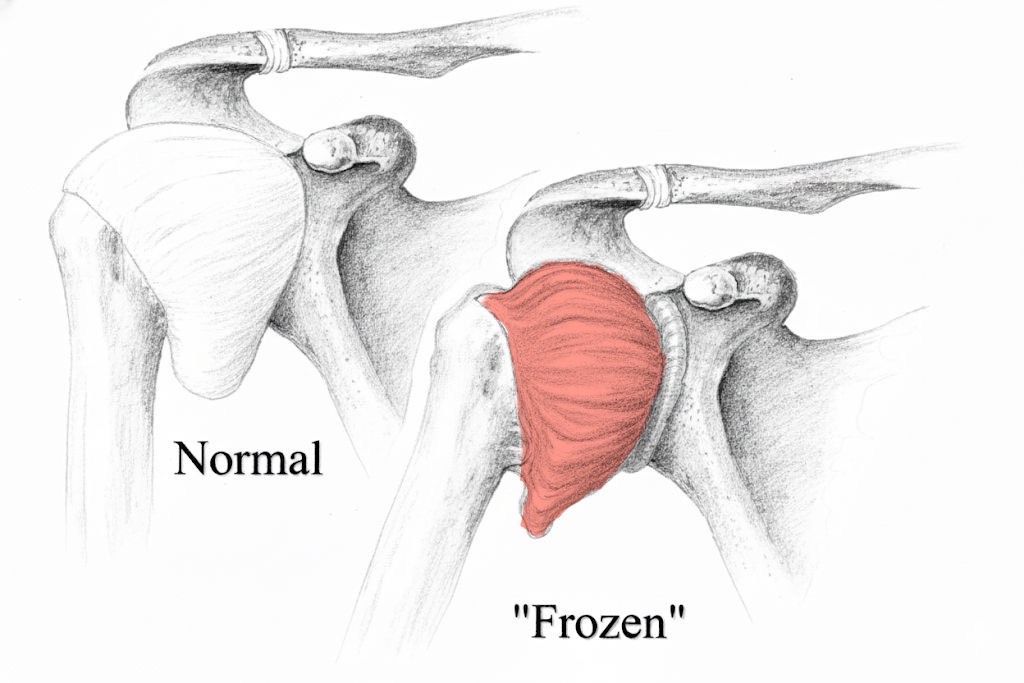
In a frozen shoulder, the normally supple joint capsule undergoes a significant change. It becomes inflamed, thickened, and contracts, much like a piece of clothing shrinking in the wash. This inflammation and subsequent tightening lead to severe pain and a progressive loss of movement.
As this process continues, bands of rigid scar tissue (adhesions) form within the capsule. These adhesions further restrict the shoulder's ability to glide smoothly. Furthermore, the production of lubricating synovial fluid can decrease, exacerbating the problem. The pain and stiffness often lead individuals to use their shoulder less, creating a vicious cycle where inactivity further stiffens the capsule – hence the term "frozen shoulder."
Causes and Risk Factors for Frozen Shoulder
While the exact cause of frozen shoulder remains somewhat elusive, medical research has identified several key risk factors that increase an individual's likelihood of developing the condition. It often develops spontaneously, without a clear precipitating injury.
Who is at Risk?
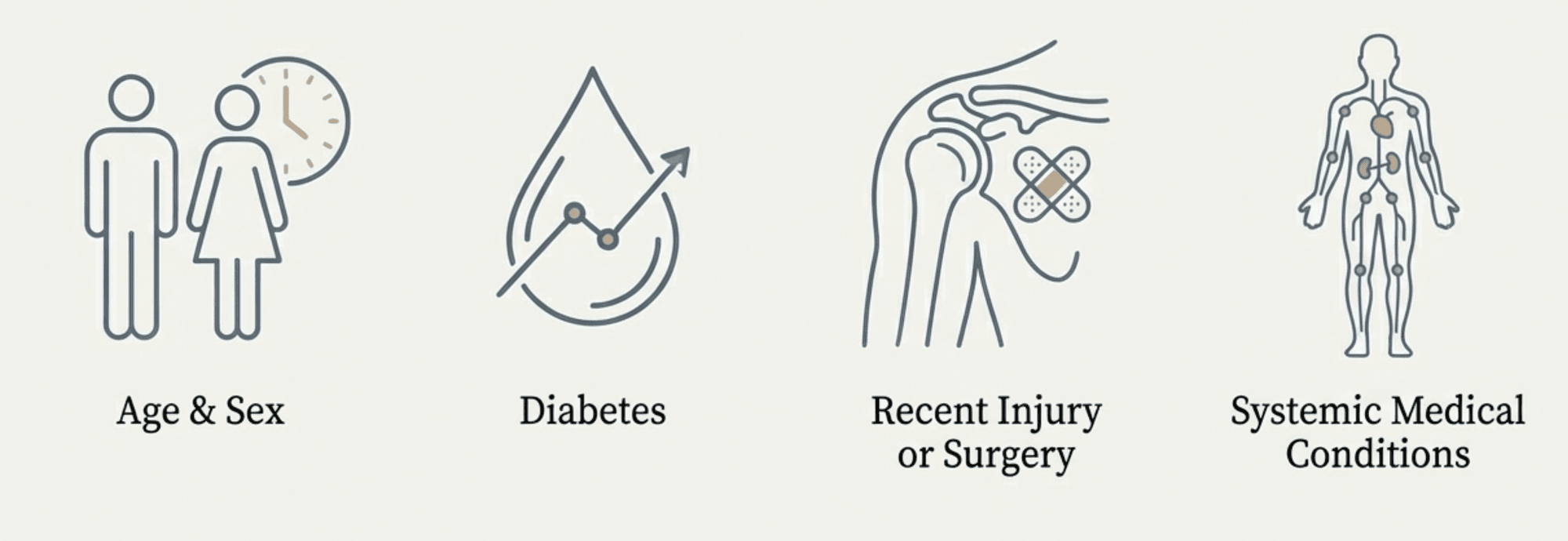
Age: Most commonly affects individuals between 40 and 60 years old.
Sex: Women are more frequently affected than men.
Diabetes: Individuals with diabetes are at a significantly higher risk (up to 20% develop frozen shoulder) and may experience more severe symptoms and longer recovery times.
Recent Shoulder Injury or Surgery: Prolonged immobilization due to a rotator cuff tear, fracture, or surgery can increase the risk.
Certain Medical Conditions:
Thyroid disorders (hyperthyroidism or hypothyroidism)
Parkinson's disease
Stroke
Heart disease
Tuberculosis
Immobility: Any condition requiring prolonged immobilization of the arm or shoulder can contribute to its development.
Recognizing the Symptoms: The Three Stages of Frozen Shoulder
Frozen shoulder typically progresses through three distinct stages, each characterized by a shifting balance of pain and stiffness. Understanding these stages can help you anticipate the journey ahead and guide treatment strategies.
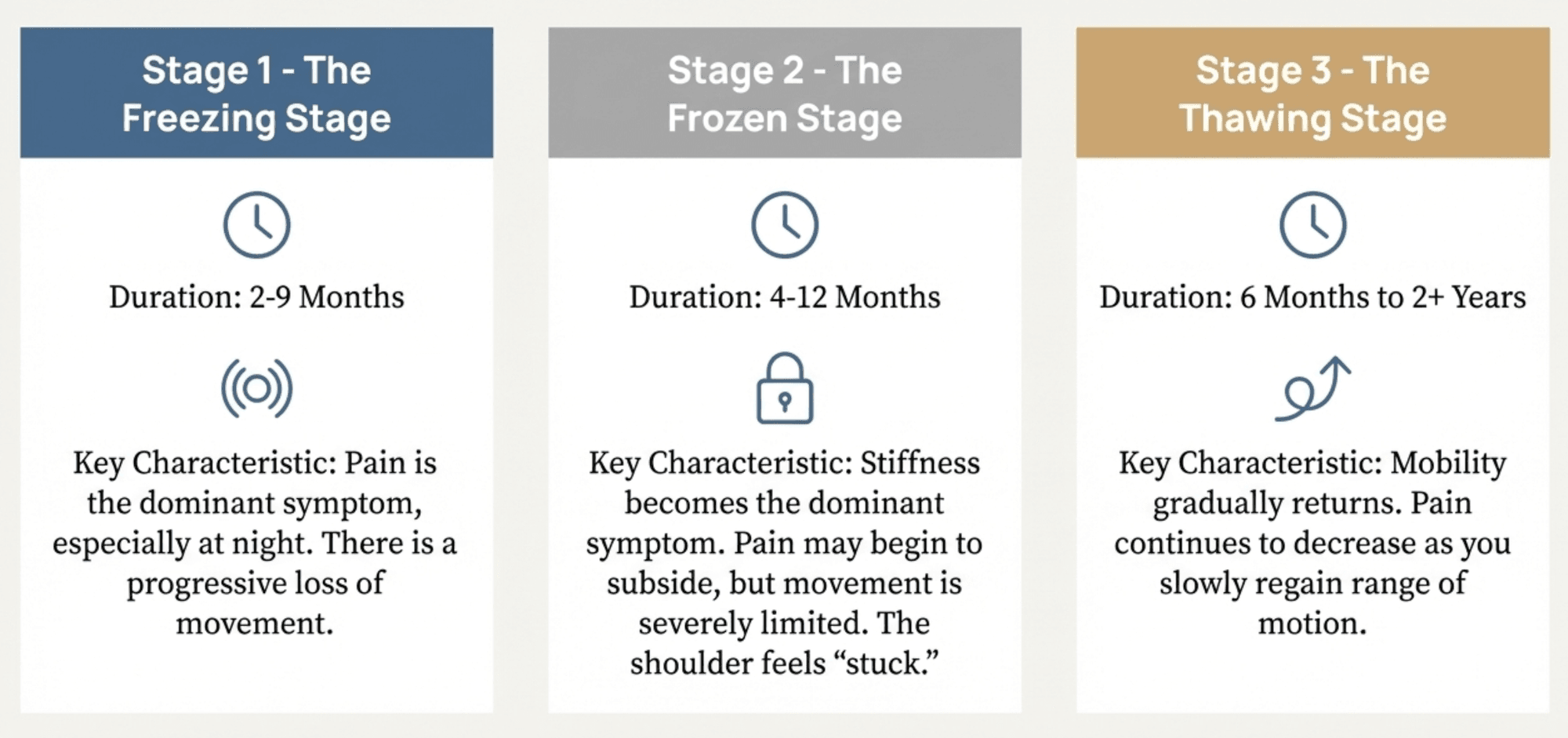
Stage | Key Characteristics | Duration | What to Expect |
|---|---|---|---|
Freezing Stage |
| Typically 2-9 months | Pain is the dominant symptom; range of motion slowly but steadily decreases. Everyday tasks become difficult. |
Frozen Stage |
| Typically 4-12 months | Stiffness is the dominant symptom; pain starts to lessen. You might find it hard to reach overhead, behind your back, or out to the side. |
Thawing Stage |
| Typically 6 months to 2 years (or longer) | Mobility gradually restores. This is a slow process, but consistent physiotherapy can significantly aid recovery. Some individuals may not regain 100% of their original range of motion. |
Diagnosing Frozen Shoulder: A Physiotherapist's Approach
A thorough physical examination by an experienced healthcare professional, such as a physiotherapist, is the cornerstone of diagnosing frozen shoulder. While imaging tests like X-rays or MRIs can rule out other conditions (like arthritis or rotator cuff tears), the definitive diagnosis often comes from assessing your shoulder's movement patterns.
The Diagnostic Process
Medical History: We'll discuss your symptoms, their onset, severity, and any relevant medical conditions or past injuries.
Visual Inspection: We'll observe your shoulder and arm for any visible signs of atrophy or swelling.
Palpation: We'll gently feel around your shoulder joint to identify areas of tenderness or tightness.
Range of Motion Assessment: This is crucial. We'll measure both:
Active Range of Motion (AROM): How far you can move your arm on your own.
Passive Range of Motion (PROM): How far we can move your arm for you.
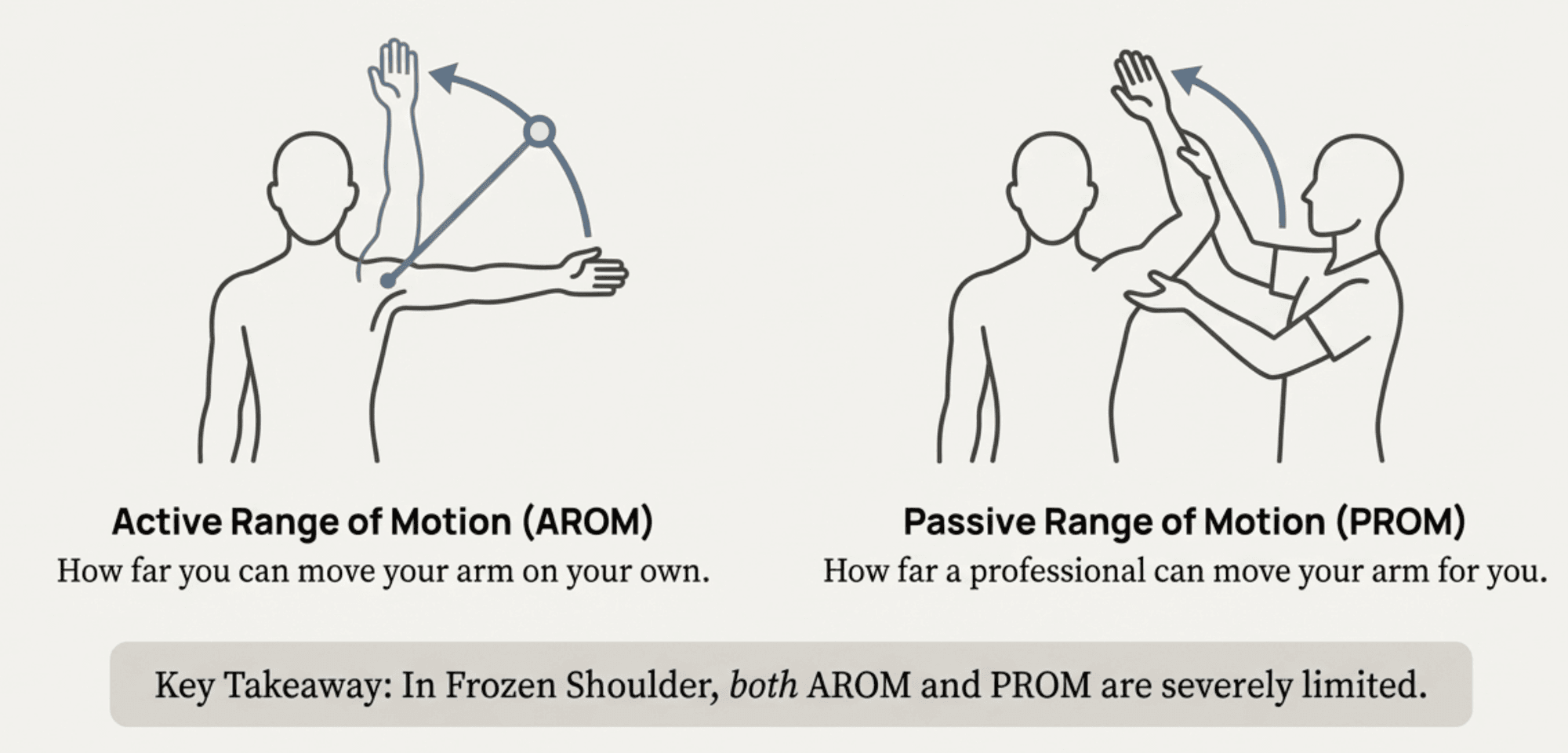
In frozen shoulder, both active and passive ranges of motion are significantly restricted, which helps differentiate it from other shoulder conditions where passive motion might be preserved (e.g., a rotator cuff tear).
By comparing your active and passive movements, we can accurately diagnose frozen shoulder and develop a tailored treatment plan.
When to Seek Professional Help
If you suspect you have a frozen shoulder, or are experiencing persistent shoulder pain and stiffness, it's essential to seek professional assessment. Early intervention can significantly impact your recovery trajectory.
Contact Professionals if you experience:
Progressive pain and stiffness in your shoulder that limits daily activities.
Difficulty reaching overhead, behind your back, or across your body.
Pain that worsens at night and interferes with sleep.
Symptoms that do not improve with rest or over-the-counter pain relievers.