
Back to Exercises
Stretch
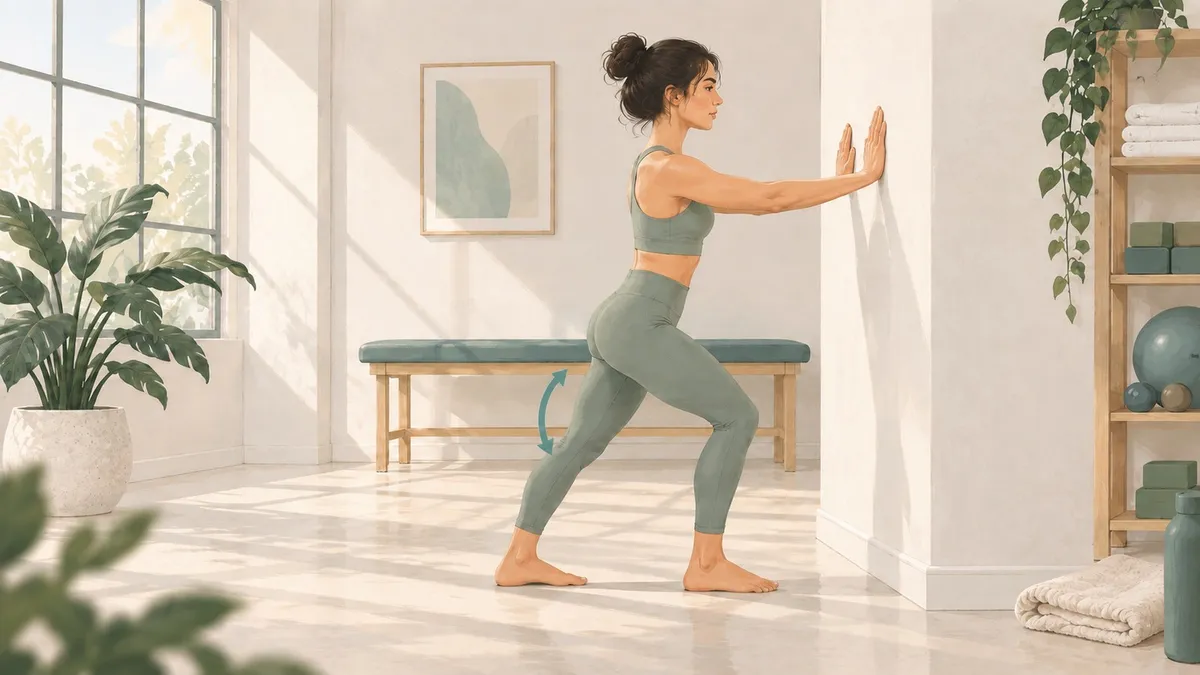
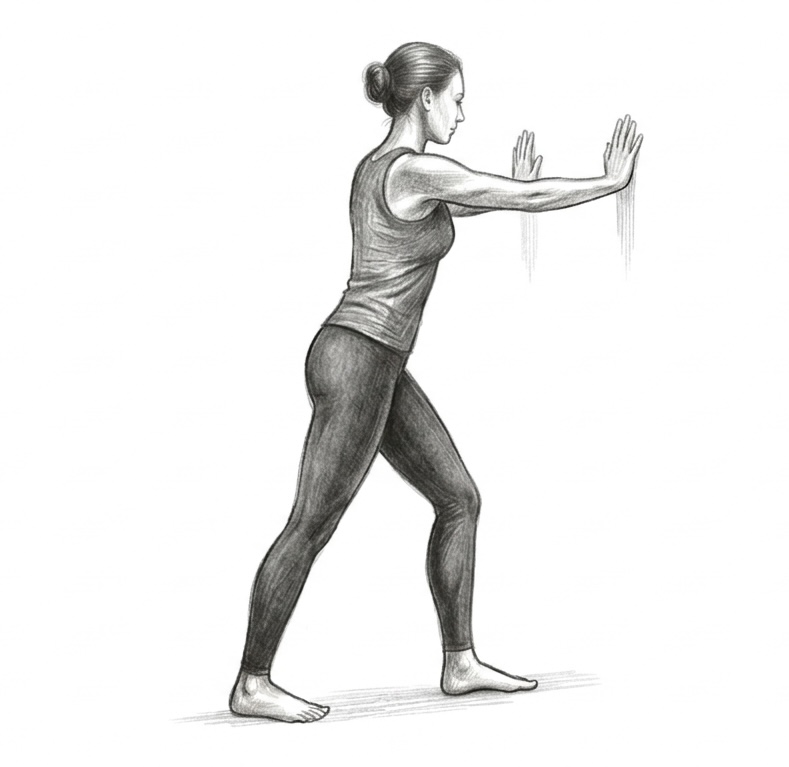
Wall facing calf stretch -Soleus
Unlike a standard calf stretch, the soleus can only be isolated when your knee is bent. This unlatches the larger gastrocnemius muscle, allowing the stretch to reach the deeper soleus.
How to Perform
 1
1Stand facing a wall with your hands on it for support. Place one foot slightly behind the other. Point both feet straight ahead and keep both heels flat on the floor.
🔁 Repeat this exercise 5 times
Muscles Targeted
Soleus
The main target
Plantaris
A tiny, thin muscle that runs alongside the larger calf muscles
Helpful For
Plantar Fasciitis
Relieving calf tightness reduces the pull on the bottom of the foot
Achilles Tendonitis
Relieving tension in the soleus reduces the constant "tug" on the tendon
Chronic Ankle Instability
Helps regain range of motion after sprains
Benefits
- Injury Prevention: Reduces the strain on the Achilles tendon
- Improved Balance: Helps stabilize the lower leg during standing tasks
- Postural Support: A flexible soleus helps maintain a better center of gravity
- Increased Ankle Mobility: Specifically improves dorsiflexion (pulling your toes toward your shin), which is vital for deep squats and walking
Precautions
- Don't Lift the Heel: If your heel pops up, you aren't stretching the muscle,you're just moving your foot
- Control the Weight: Don’t bounce or push too hard with your upper body. Slow and steady wins the race here
- Avoid Sharp Pain: You should feel a "pull" or tension, never sharp or stabbing pain. If it hurts the front of your ankle, back off
Helps With

Sciatica
Sciatica is a condition affecting the lower back, characterized by pain that radiates along the path of the sciatic nerve.

Plantar Fasciitis
Plantar Fasciitis is one of the most common causes of heel pain, caused by inflammation and degeneration of the thick band of tissue that runs along the bottom of your foot. It affects millions of people worldwide from athletes to those who spend long hours on their feet.
Related Articles


Need Professional Help?
Book a consultation to get personalized treatment advice for your condition.
Book on Instagram