
Have you been experiencing persistent pain and numbness in your back and leg, and traditional treatments haven't provided lasting relief?
It's possible your condition might be a case of mistaken identity, making effective treatment elusive. The complexity often arises from the striking similarities between "true sciatica" and "piriformis syndrome," two distinct conditions that can present with nearly identical symptoms.
Understanding the key differences between them is crucial for accurate diagnosis and effective management. Let's delve into what sets true sciatica apart from piriformis syndrome.
Understanding Your Sciatic Nerve: The Root of the Problem
Before we differentiate these conditions, let's understand the star player: the sciatic nerve.
What is the Sciatic Nerve?
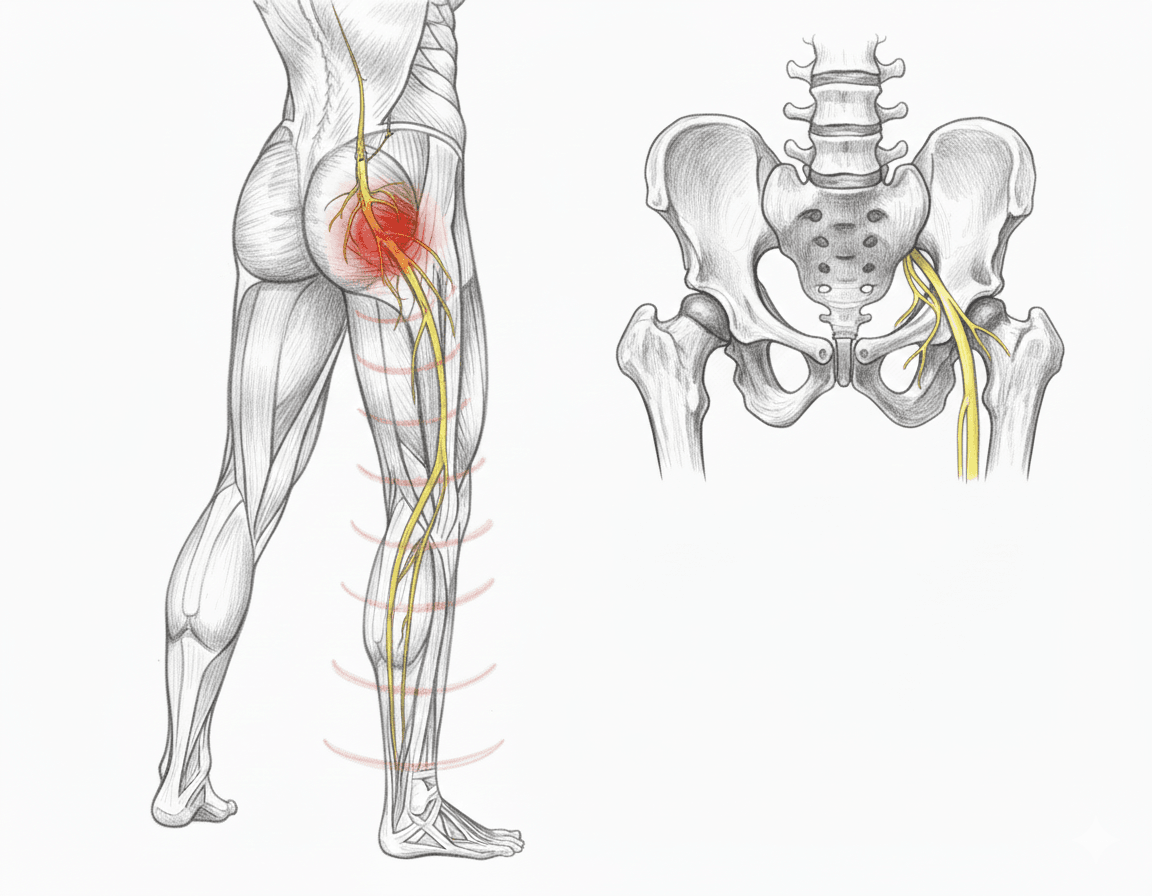
The sciatic nerve is the longest and thickest nerve in the human body. Originating from nerve roots (L4-S3) in your lower back, it travels down through your buttocks, the back of each thigh, leg, and all the way to your foot. This extensive network of nerves plays a vital role in controlling the muscles and sensation in your leg and foot.
Without a healthy sciatic nerve, everyday activities like walking, standing, and even sitting can become incredibly painful and challenging.
True Sciatica: When the Spine is the Source
True sciatica, medically known as lumbar radiculopathy, occurs when the sciatic nerve roots in the lower back become irritated or compressed. This irritation happens at the very origin of the nerve(nerve roots), within the spinal column itself.
Common Causes of True Sciatica
The irritation of the sciatic nerve in true sciatica is most often due to issues within the spine. Common culprits include:
Disc Herniation (Slipped Disc): When the soft inner material of a spinal disc bulges or ruptures, it can press directly on a nerve root.
Spinal Stenosis: A narrowing of the spinal canal, often due to aging, which can compress the spinal cord or nerve roots.
Spondylolisthesis: A condition where one vertebra slips forward over another, leading to nerve compression.
Bone Spurs (Osteophytes): Abnormal bone growths that can develop on the vertebrae and impinge on nerve roots.
In true sciatica, the pain typically originates in the lower back and radiates down the leg, often below the knee, and sometimes all the way to the foot. It's often described as a sharp, burning, or electric-shock-like sensation, sometimes accompanied by numbness, tingling, or muscle weakness.
Piriformis Syndrome: When a Muscle is to Blame
Piriformis syndrome, often referred to as "pseudo-sciatica," mimics the symptoms of true sciatica, but the source of the problem is different. Here, the irritation of the sciatic nerve occurs not in the spine, but in the buttock and hip region.
The Role of the Piriformis Muscle
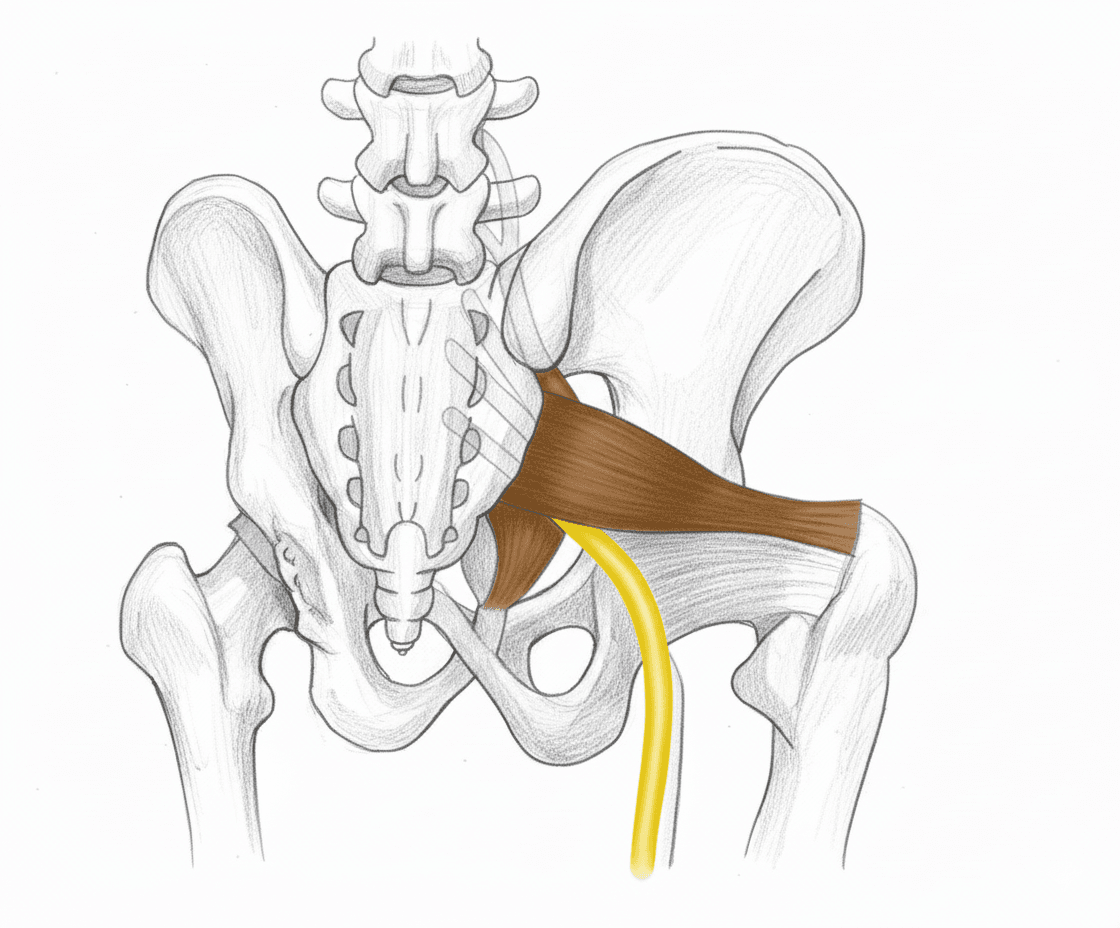
The piriformis muscle is a small, pear-shaped muscle located deep within your buttock. Its primary function is to help rotate your hip and stabilize your pelvis. Crucially, in about 80% of people, the sciatic nerve runs directly underneath or even through a part of this muscle.
When the piriformis muscle becomes tight, inflamed, or goes into spasm, it can compress or irritate the sciatic nerve passing by it. This pressure on the nerve is what leads to the characteristic symptoms of piriformis syndrome.
Causes of Piriformis Syndrome
Piriformis syndrome can arise from several factors:
Muscle Tightness or Spasm: Overuse, injury, or prolonged sitting can cause the piriformis muscle to tighten or spasm, trapping the sciatic nerve.
Anatomical Anomalies: In some individuals, the sciatic nerve may have a less common pathway, making it more susceptible to compression by the piriformis muscle.
Repetitive Activities: Athletes involved in activities like running, cycling, rowing, or climbing stairs are particularly prone due to repetitive hip movements.
Trauma: Direct injury to the buttock area can inflame the piriformis muscle.
Unlike true sciatica, piriformis syndrome typically does not involve issues with the spinal nerve roots. The pain is usually concentrated in the buttock and may radiate down the back of the thigh, often stopping above the knee. It's also often described as a deep ache or burning sensation.
Sciatica vs. Piriformis Syndrome: Key Distinctions
Differentiating between true sciatica and piriformis syndrome can be challenging due to their similar symptoms. However, understanding the subtle differences is vital for accurate diagnosis and effective treatment.
While both conditions can cause pain described as burning or electric shock-like, the location and aggravating factors often provide clues:
Feature | True Sciatica (Lumbar Radiculopathy) | Piriformis Syndrome |
|---|---|---|
Source | The Spine (Disc herniation/stenosis). | The Buttock (Muscle spasm/tightness). |
Primary Trigger | Bending forward, coughing, or sneezing. | Prolonged sitting or running, cycling, climbing stairs. |
Back Pain | Often accompanied by lower back pain. | Rarely involves the actual lower back. |
Numbness | Often follows a specific "map" to the foot. | Usually stays above the knee or upper calf. |
Diagnostic Tests: Pinpointing the Problem
Because the symptoms are so similar, your physiotherapist or doctor will perform specific physical tests to help distinguish between true sciatica and piriformis syndrome. These tests aim to either provoke nerve root irritation (for true sciatica) or piriformis muscle irritation (for piriformis syndrome).
1. Straight Leg Raise Test (Lasegue maneuver)
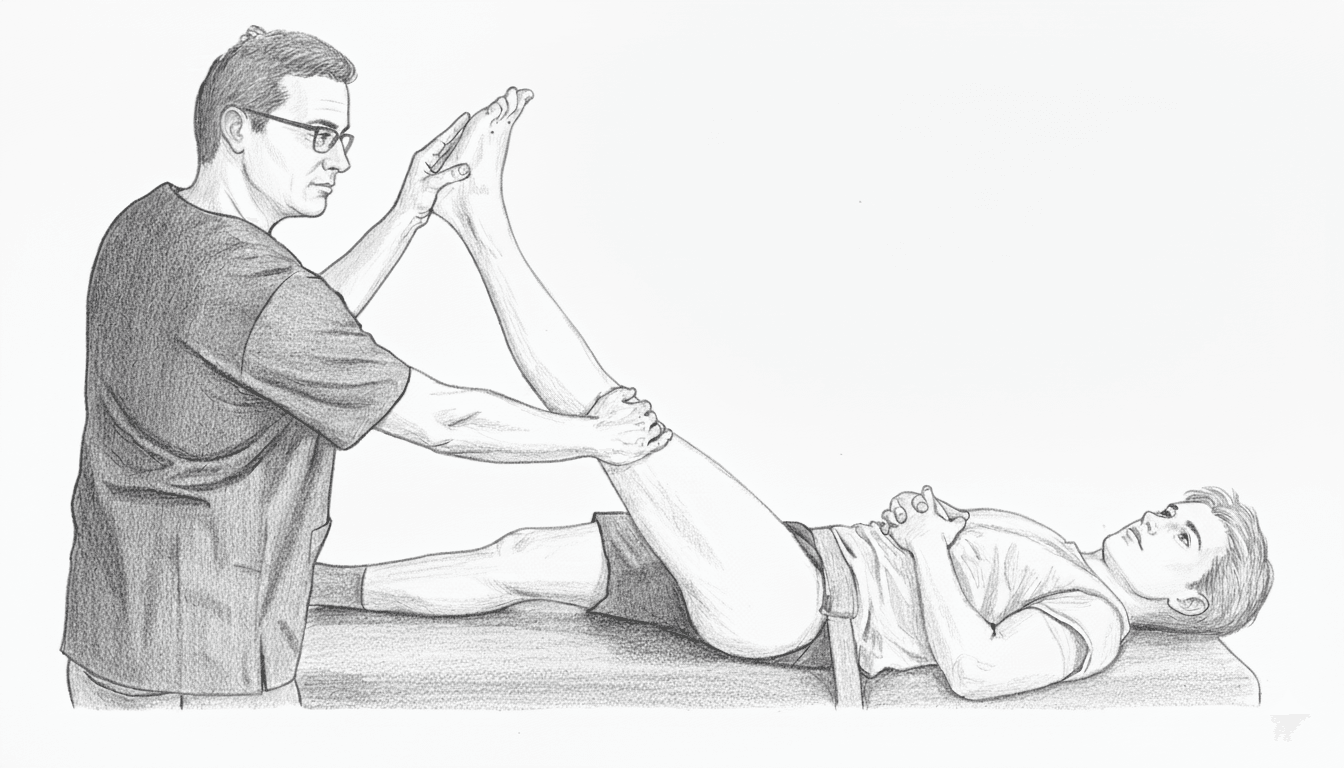
This test is primarily used to assess for true sciatica. While lying on your back, your therapist will passively raise your affected leg straight up, keeping the knee extended. If this movement reproduces your sciatic pain, especially with dorsiflexion of the foot (pulling toes towards the shin), it suggests irritation of the sciatic nerve roots in the lumbar spine.
2. FAIR Test (Flexion, Adduction, Internal Rotation Test) / FADDIR Test
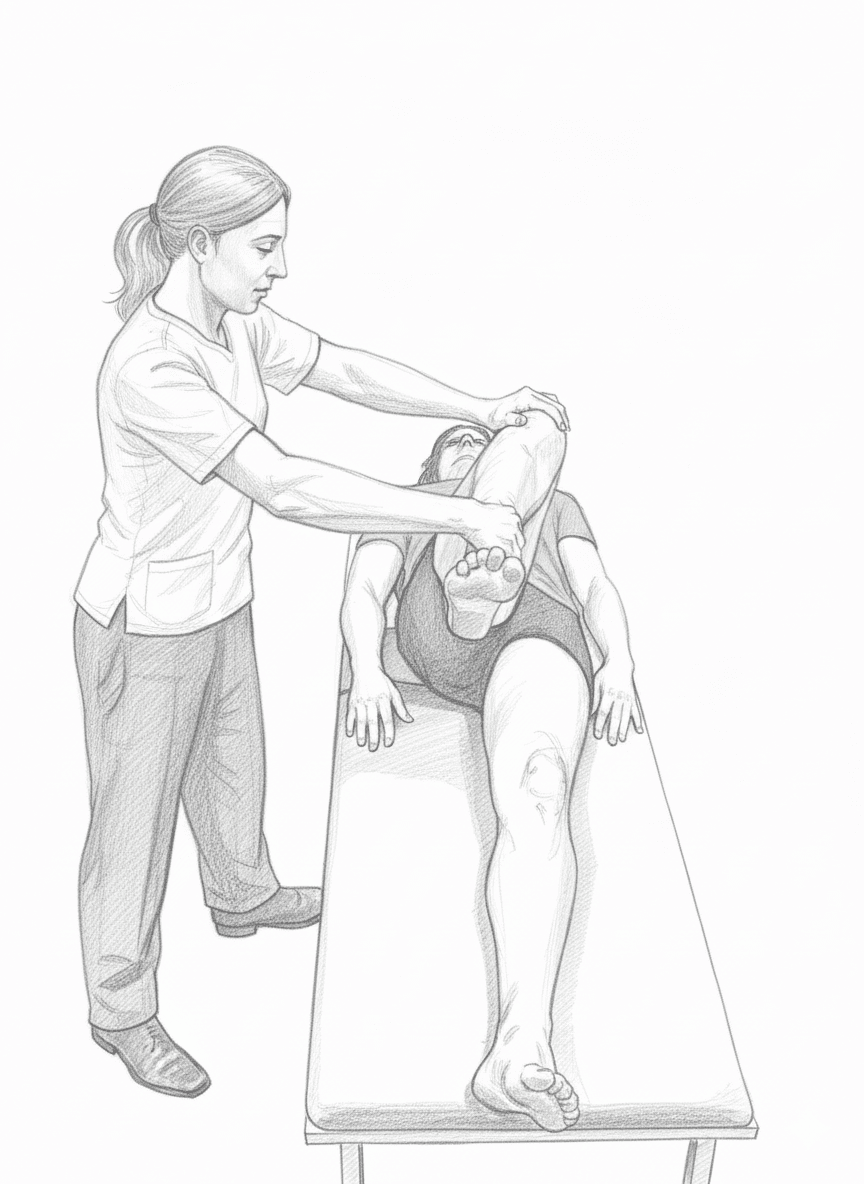
The FAIR test is commonly used to evaluate for piriformis syndrome. While lying on your back, your therapist will flex, adduct (move towards the midline), and internally rotate your hip. This manoeuvre specifically stretches or compresses the piriformis muscle, and if it reproduces your buttock and leg pain, it points towards piriformis syndrome.
Accurate diagnosis is paramount. Misidentifying the source of your pain can lead to ineffective treatments and prolonged suffering. A thorough clinical assessment by a qualified healthcare professional, including a detailed history and physical examination, is essential for determining whether you are dealing with true sciatica or piriformis syndrome.
Once correctly diagnosed, a targeted physiotherapy program can be initiated to address the specific root cause of your discomfort, paving the way for lasting relief and improved quality of life.