Piriformis Syndrome

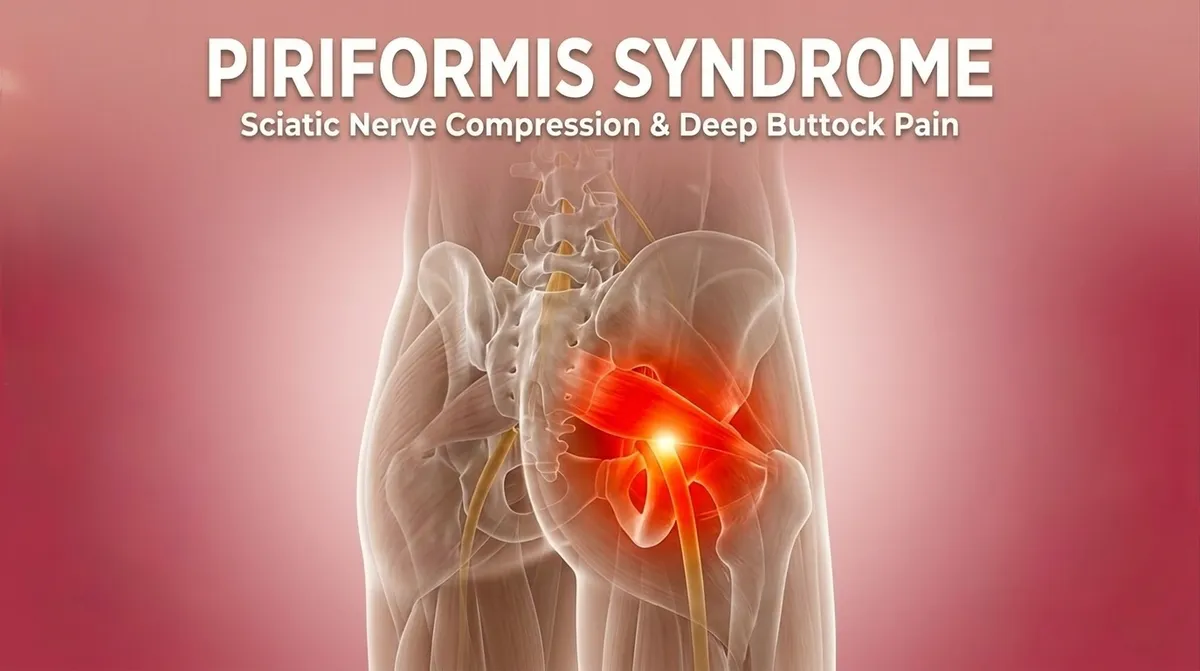
Piriformis Syndrome is a condition that causes pain, numbness, or tingling in the buttock, hip, or upper leg. It occurs when the piriformis muscle a small, deep muscle in the buttock becomes tight, inflamed, or irritated and compresses the sciatic nerve running beneath it.

Piriformis Syndrome

Overview

While piriformis syndrome is commonly seen in runners, cyclists, and those who sit for long periods, it can affect anyone. It is often mistaken for sciatica or a lumbar disc problem because the symptoms can feel very similar pain radiating down the leg, numbness, and tingling.

Understanding your condition is the first step toward recovery. Whether your goal is to return to sport or simply sit and walk without pain, this guide covers everything from anatomy to advanced physiotherapy rehabilitation.

Anatomy

The piriformis is a small, pear-shaped muscle located deep in the buttock, running from the sacrum (base of the spine) to the top of the femur (thigh bone). It plays an important role in hip stability and controls outward rotation of the hip during walking, running, and standing.

The sciatic nerve the largest nerve in the body runs from the lower spine through the buttock and down the back of the leg. In most people, it passes directly beneath the piriformis muscle. When the piriformis becomes inflamed, tight, or goes into spasm, it can compress or irritate the sciatic nerve, producing pain and neurological symptoms that radiate into the buttock and leg.

Key Functions of the Piriformis:

  • Hip External Rotation: Rotating the leg outward during walking and running.

  • Hip Abduction: Assisting in moving the leg away from the body when the hip is flexed.

  • Pelvic Stability: Stabilizing the hip and pelvis during dynamic activities.

Symptoms

If you have piriformis syndrome, you may notice the following signs:

Buttock Pain

A deep, aching pain in the buttock that may feel worse after prolonged sitting, climbing stairs, or walking.

Burning or Electric Shock Sensation

A burning or sharp electric-like pain radiating from the buttock into the back of the leg.

Pain Above the Knee

Pain that typically stays in the buttock and upper leg, usually above the knee or upper calf unlike disc-related sciatica, which often radiates further down.

Numbness

Reduced sensation in the buttock or back of the thigh.

Pain with Sitting

Symptoms often worsen with prolonged sitting, particularly on hard surfaces, as this places direct pressure on the piriformis.

Pain Above the Knee

Pain that typically stays in the buttock and upper leg, usually above the knee or upper calf unlike disc-related sciatica, which often radiates further down.

Causes

Piriformis syndrome develops when the piriformis muscle becomes inflamed, tight, or goes into spasm placing pressure on the sciatic nerve beneath it.

  • Muscle Tightness or Spasm: Overuse, fatigue, or sustained tension in the piriformis leading to spasm and nerve compression.

  • Anatomical Variation: In some individuals, the sciatic nerve passes through or above the piriformis muscle rather than beneath it, making them more susceptible to compression.

  • Repetitive Activities: Running, cycling, rowing, and other repetitive lower limb activities that overload the piriformis.

  • Direct Trauma: A direct blow or fall onto the buttock causing muscle inflammation or bruising.

  • Herniated Disc: A lumbar disc herniation can alter movement patterns and contribute to secondary piriformis irritation.

  • Prolonged Sitting: Long periods of sitting particularly with poor posture or on hard surfaces increase compression on the piriformis and sciatic nerve.

Risk Factors

Certain factors may increase your likelihood of developing piriformis syndrome:

  • Occupation: Jobs involving prolonged sitting, such as desk workers, drivers, or those working from home.

  • Sport: Runners, cyclists, rowers, and other endurance athletes due to repetitive hip and leg use.

  • Hip Muscle Weakness: Weakness in the hip abductors and external rotators increases demand on the piriformis.

  • Tight Hip Muscles: Reduced hip flexibility increases the resting tension in the piriformis.

  • Training Errors: Sudden increase in running mileage or intensity without adequate conditioning.

  • Previous Buttock Injury: A history of direct trauma to the buttock or gluteal region.

Complications

If left unmanaged, piriformis syndrome can lead to:

  • Chronic Sciatic Pain: Persistent nerve irritation causing ongoing pain, tingling, and numbness in the leg.

  • Functional Limitation: Difficulty walking, sitting, running, or climbing stairs due to ongoing symptoms.

  • Muscle Weakness: Prolonged sciatic nerve irritation can cause weakness in the leg and hip muscles.

  • Compensatory Injuries: Altered movement patterns to avoid pain can lead to secondary problems in the lower back, hip, or knee.

Prevention Tips

While piriformis syndrome cannot always be prevented, you can significantly reduce your risk by:

  • Stretching: Regularly stretching the piriformis, hip external rotators, and hamstrings to maintain flexibility.

  • Strengthening: Building strength in the gluteal muscles and hip stabilizers to reduce over-reliance on the piriformis.

  • Gradual Training Progression: Avoid sudden increases in running volume or intensity.

  • Posture Awareness: Avoid prolonged sitting — take regular breaks and adjust your sitting position frequently.

  • Warm-Up: Always perform a dynamic warm-up before sport or exercise, including hip mobility and activation exercises.

  • Ergonomics: Use a well-supported chair and maintain a neutral pelvis while seated.

Diagnosis

  1. Physical Examination

Your physiotherapist will assess your posture, gait, hip range of motion, and muscle strength. Palpation of the piriformis in the deep buttock region typically reproduces the characteristic tenderness. Both sides are compared to identify asymmetry.

  1. Special Tests

  • FAIR Test (Flexion, Adduction, Internal Rotation): With the patient lying on their back, the therapist flexes, adducts, and internally rotates the hip. Reproduction of buttock and leg pain is a positive test, indicating piriformis irritation and sciatic nerve compression.

  • FADDIR Test (Flexion, Adduction, Internal Rotation): Similar to the FAIR test, the hip is passively moved into flexion, adduction, and internal rotation. Pain in the buttock and leg indicates a positive test.

  • Piriformis Test (Side-lying): The patient lies on their unaffected side at the edge of the table. The therapist brings the upper leg into 60° of hip flexion with the knee fully extended, then fixates the pelvis and applies downward pressure at the knee. The test is positive if the patient experiences pain in the buttock and piriformis region.

  1. Imaging and Other Investigations

  • MRI: The preferred imaging for ruling out lumbar disc herniation, nerve root compression, or other spinal causes of sciatic pain. MRI can also identify inflammation or structural changes around the piriformis in some cases.

  • Ultrasound: Can visualize the piriformis muscle and identify signs of inflammation, asymmetry, or abnormal sciatic nerve anatomy relative to the muscle.

  • X-Ray: Not diagnostic for piriformis syndrome but may be used to rule out hip joint pathology or sacroiliac joint problems contributing to symptoms.

  • Nerve Conduction Studies (NCS) / EMG: May be used in complex cases to assess the degree of sciatic nerve involvement and rule out peripheral neuropathy.

Treatment Options

Treatment depends on the severity and cause of your symptoms. The vast majority of piriformis syndrome cases respond well to conservative management.

Conservative (Non-Surgical)

  • Activity Modification: Temporarily reduce or avoid activities that aggravate symptoms particularly prolonged sitting, running, or cycling.

  • Posture and Ergonomic Advice: Adjusting sitting position, using a supportive cushion, and taking regular movement breaks to reduce compression on the piriformis.

  • Heat Therapy: Applying heat to the buttock region to relax muscle spasm and improve local circulation.

Medical Management

  • Oral Medications: NSAIDs or analgesics may be used short-term to manage pain and inflammation.

  • Corticosteroid or Botulinum Toxin Injection: An injection directly into the piriformis muscle, guided by ultrasound, can reduce inflammation and muscle spasm in refractory cases. Botulinum toxin injections may be considered when muscle spasm is a primary driver.

Surgical Management

Surgery is rarely required and is reserved for cases where conservative and medical treatment have failed, particularly when there is confirmed anatomical compression of the sciatic nerve by the piriformis. Surgery involves releasing the piriformis tendon to decompress the nerve.

Physiotherapy Management

  1. Hot Pack

Applied to the buttock region to relax the piriformis muscle and improve local blood flow before exercise.

  1. Isometric Exercises

To gently activate and maintain muscle function without aggravating symptoms:

  • Abdominal isometrics

  • Calf isometrics

  • Hamstring isometrics

  1. Strengthening Exercises

Progressive strengthening to build gluteal and hip muscle capacity and reduce over-reliance on the piriformis:

  • Bridging exercises

  • Cat and camel

  • Straight Leg Raises (SLR)

  • Bird Dog

  • Lunges

  1. Stretching Exercises

Targeted stretching to restore piriformis flexibility and reduce nerve compression:

  • Piriformis stretch

  • Hamstring stretch

  • Calf stretch

  • Cobra stretch

  • Single knee to chest

  • Double knee to chest

  1. Manual Therapy

Deep soft tissue release and trigger point therapy to the piriformis muscle, combined with hip joint mobilization where indicated, to reduce muscle tension and restore hip mobility.

  1. Nerve Mobilization

Sciatic nerve gliding techniques to improve nerve mobility and reduce neurological symptoms such as tingling and numbness.

  1. Gait and Movement Retraining

Analysis and correction of running or walking mechanics to identify and address contributing biomechanical factors such as hip weakness or excessive internal rotation.
Recommended Exercises

Frequently Asked Questions

Related Articles

Need Professional Help?

Book a consultation to get personalized treatment advice for your condition.

Book on Instagram