

Frozen shoulder is a gradual stiffening and tightening of the shoulder joint capsule that typically moves through 3 stages over 1 to 3 years and 70% of the people it happens to are women, most often between ages 40 and 60. The right exercises at each stage can meaningfully shorten that timeline.
Why It Hits Women So Much More
Hormonal shifts around perimenopause and menopause are thought to play a major role falling estrogen affects collagen and connective tissue throughout the body, including the shoulder capsule, making this a genuinely women's-health issue as much as an orthopedic one.
The 3 Stages
Freezing (2-9 months): Pain gradually increases, movement starts to reduce.
Frozen (4-12 months): Pain may ease, but stiffness is at its worst reaching, dressing, and sleeping on that side become difficult.
Thawing (5-24 months): Movement gradually returns, often on its own but faster with the right exercise.
Note: You might notice the month ranges overlap. This is because the stages blend into one another, and everyone heals at their own pace. The timelines below represent the total time passed since your symptoms first began, not consecutive back to back phases.
Exercises by Stage
1. Freezing stage : Focus on pain control, gentle range of motion
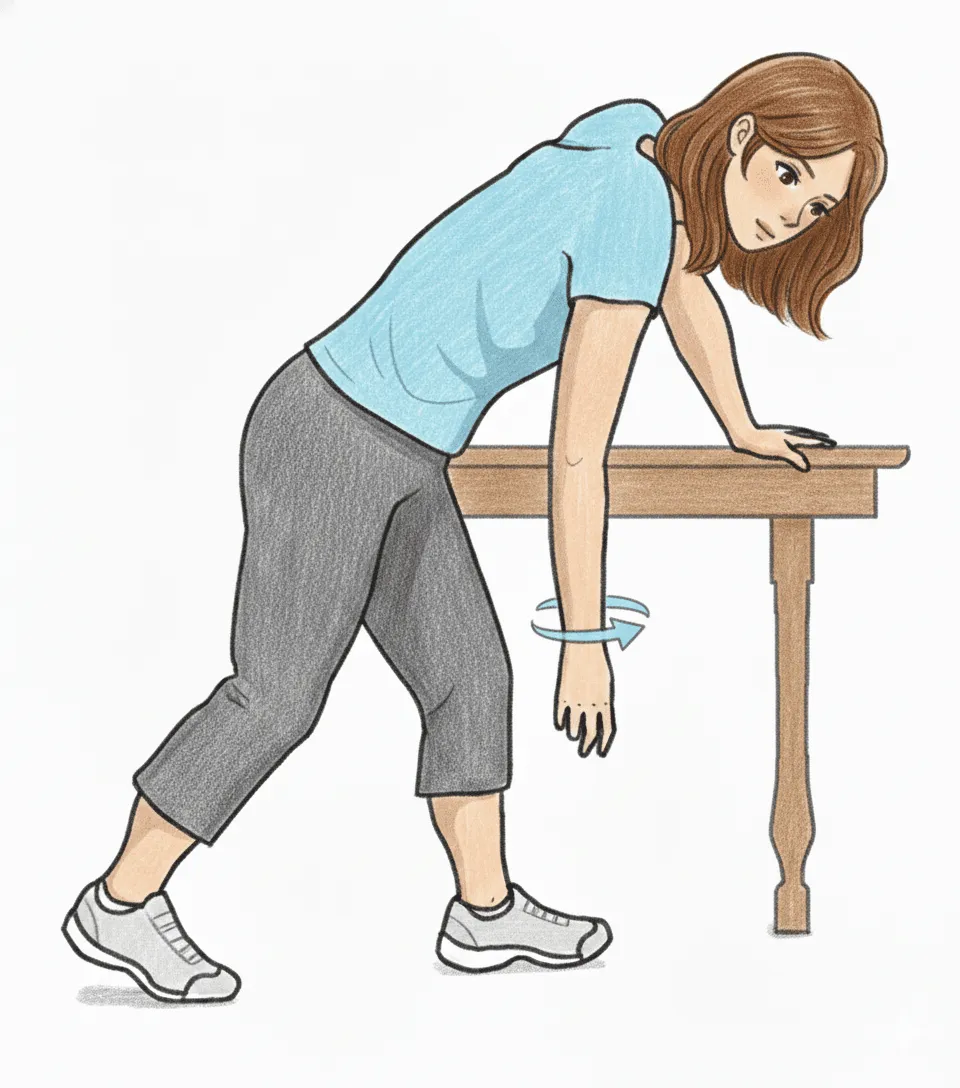
Pendulum swings : Lean forward, let the arm hang and gently swing in small circles.
Passive assisted reaching: Use your healthy arm to hold the wrist of your affected arm and gently lift it overhead to stretch, keeping the painful shoulder completely relaxed.
2. Frozen stage : Focus on maintaining and slowly improving range
Table-top arm slides: Sit at a table, place your hand on a towel, and gently slide your arm forward to stretch.
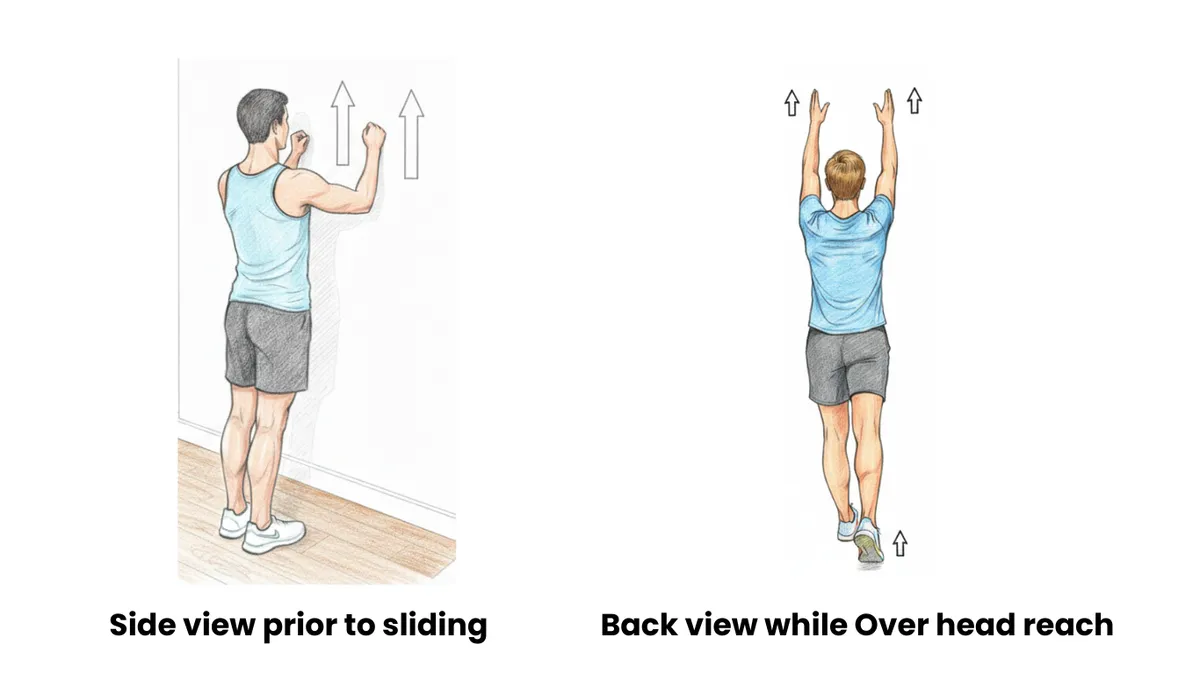
Wall crawls: Walking fingers up a wall.
3. Thawing stage : Focus on rebuilding strength
Resisted external rotation with a light band: Keep your elbow tucked into your side and stretch a light resistance band outward away from your body.
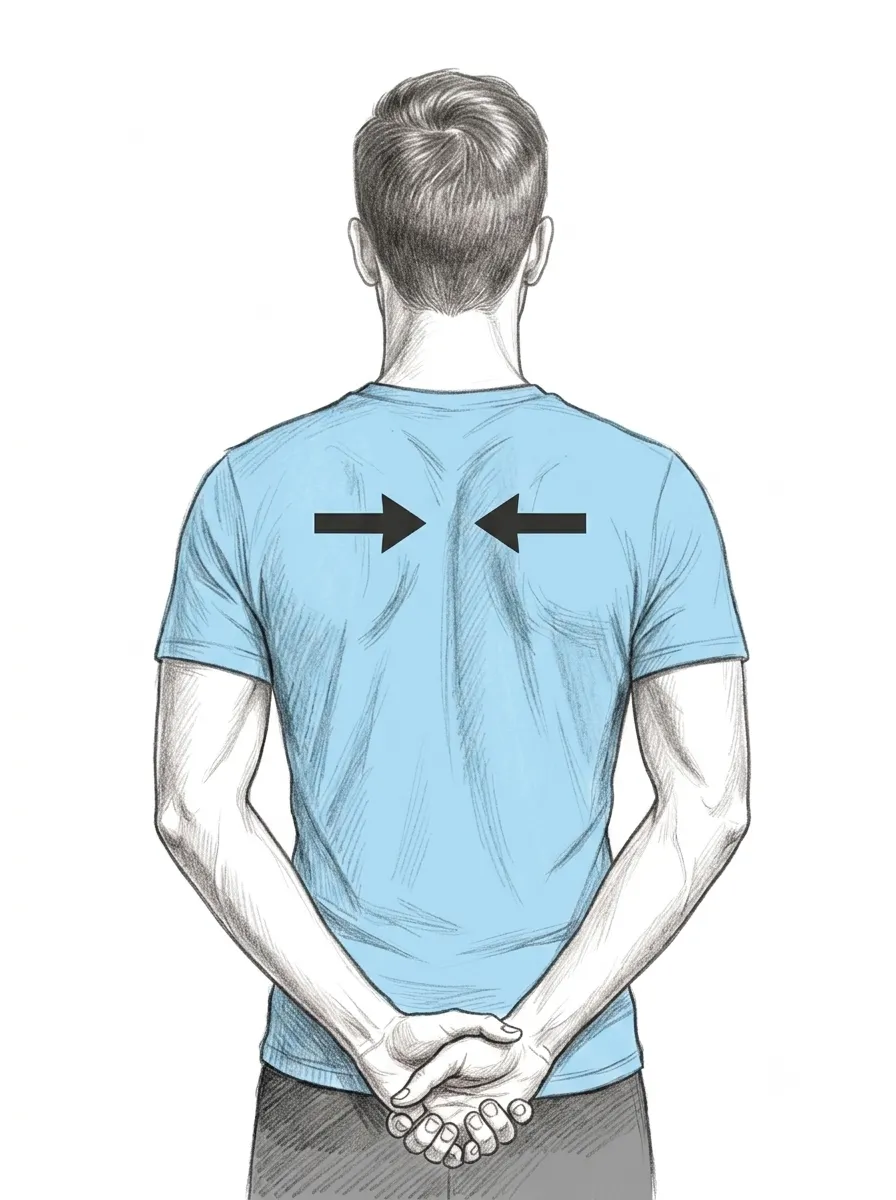
Scapular retraction exercises : Squeeze your shoulder blades together gently, hold for a few seconds, and release to strengthen the upper back.
What Not to Do
Avoid forcing the joint through pain, frozen shoulder responds to consistent, gentle mobilization, not aggressive stretching, which can trigger a flare-up and set recovery back.
How Physiotherapy Speeds This Up
A physiotherapist can identify which stage you're in, hands-on mobilize the joint capsule, and adjust your home program weekly, several studies show this shortens the overall timeline compared to waiting it out alone. See our related guide on diagnosing frozen shoulder early for what that first assessment typically looks like.
Quick Answers
Q: How long does frozen shoulder actually take to heal?
A: Anywhere from 1 to 3 years untreated, targeted physiotherapy can meaningfully shorten this.Q: What is the fastest way to heal a frozen shoulder?
A: Consistent, stage appropriate gentle mobility work plus hands-on physiotherapy, not rest or forceful stretching.Q: Can physiotherapy fix a frozen shoulder?
A: Yes, physiotherapy can't "unfreeze" it overnight, but it reliably speeds recovery and reduces how much motion is lost along the way.