Wall Push-Up
A standing push-up done against a wall. It builds strength in the chest, shoulders and arms with less load on the joints than a floor push-up.
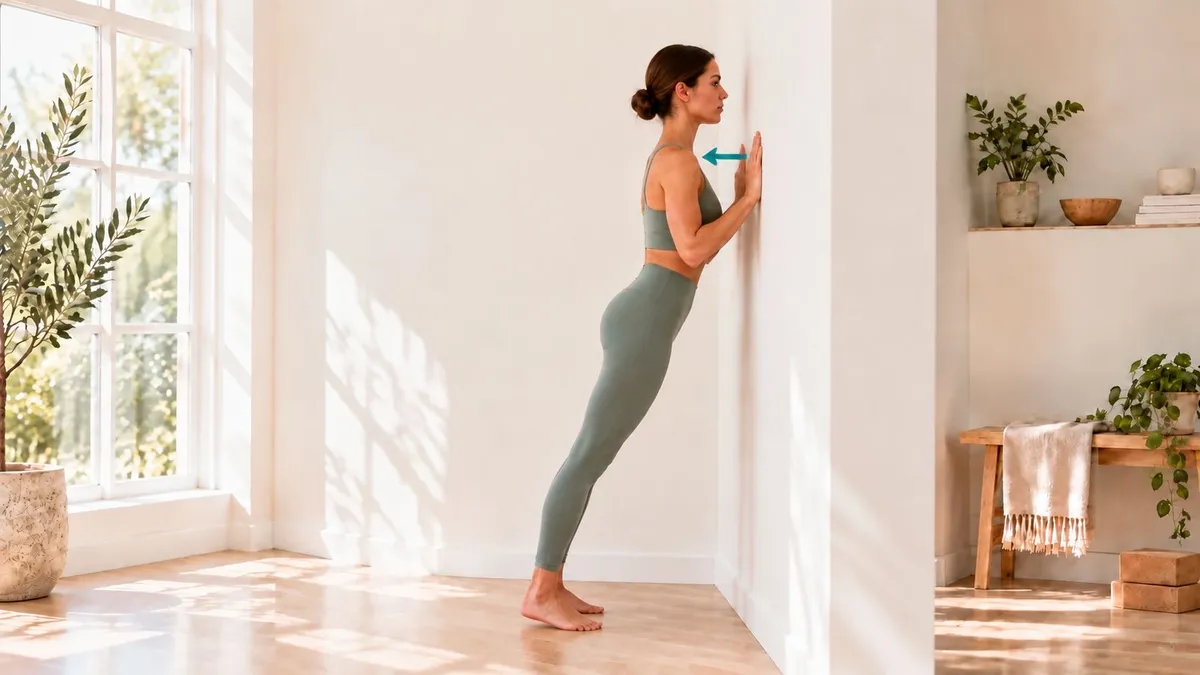
How to Perform
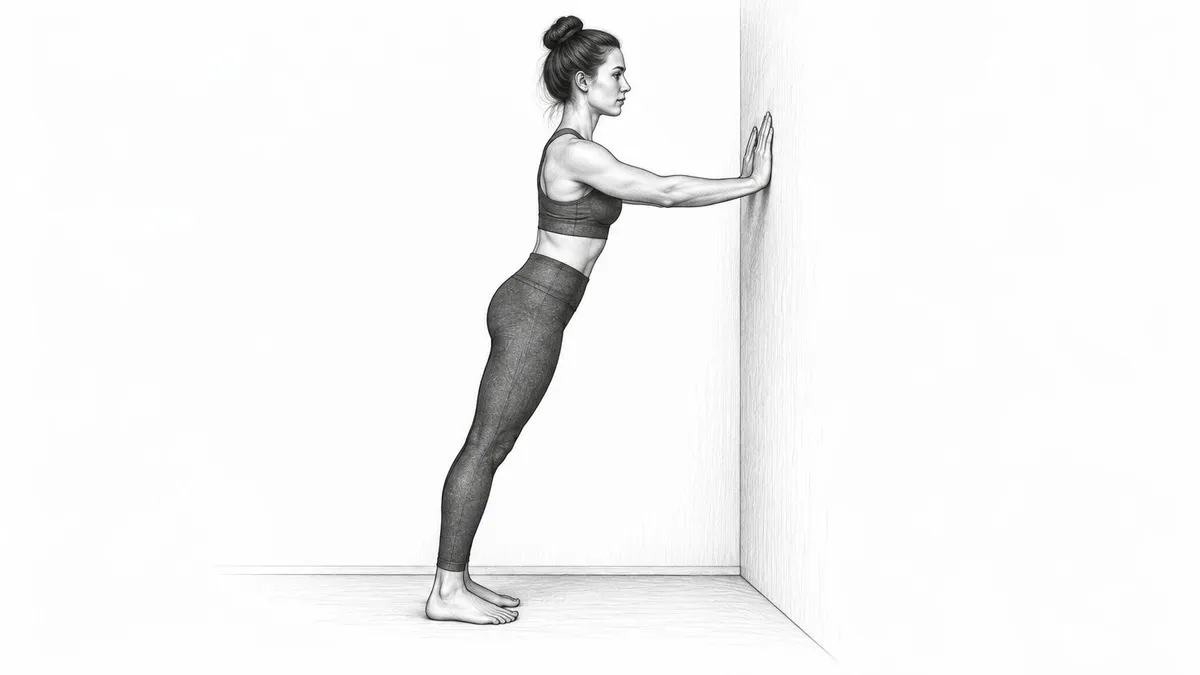 1
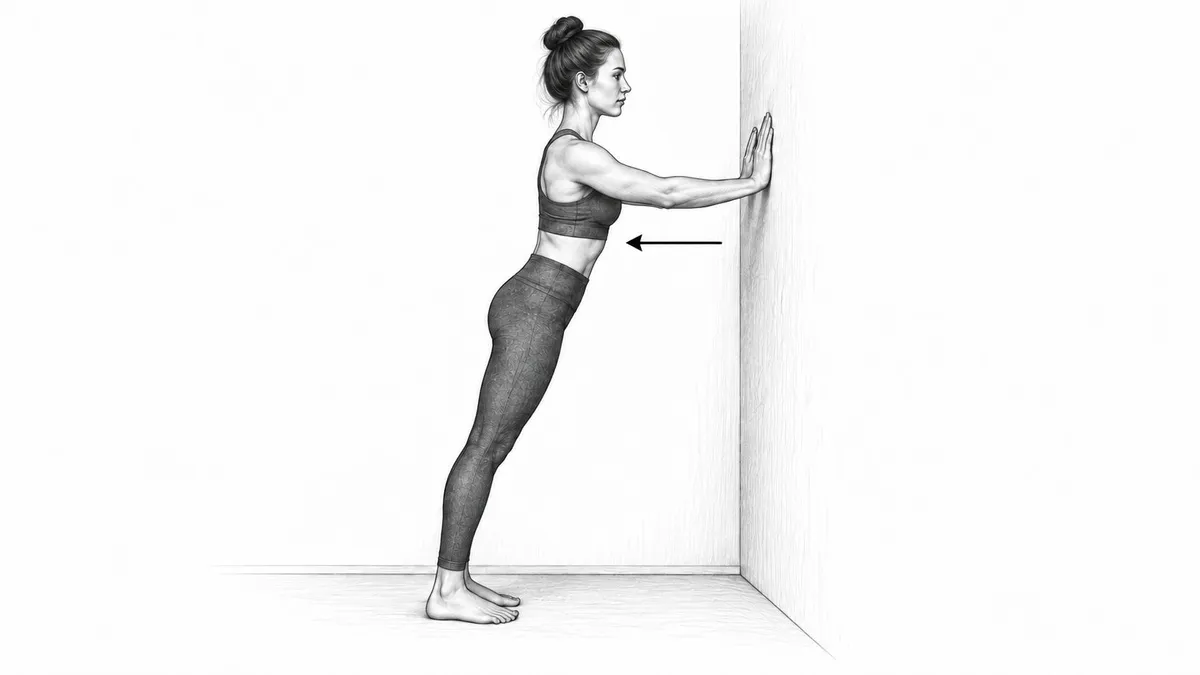
1Stand one big step away from a wall. Place both hands flat on the wall at shoulder height, shoulder-width apart, with your arms straight.
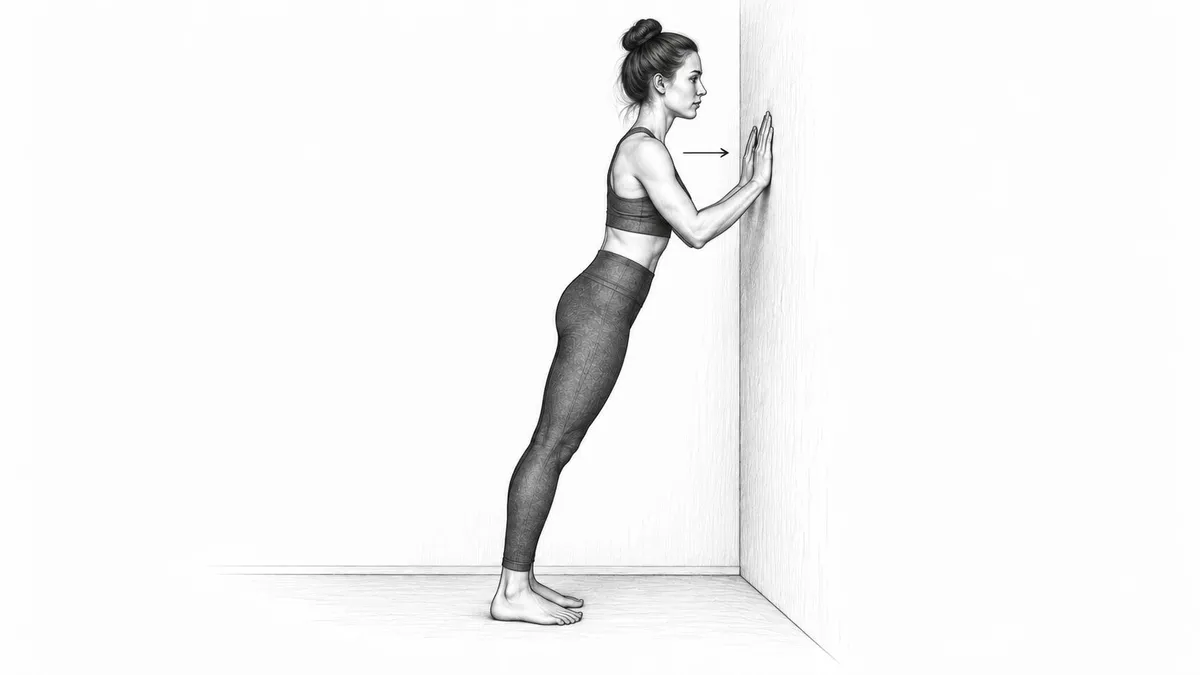 2
2Slowly bend your elbows and bring your chest and head toward the wall. Keep your body in a straight line from head to heels.
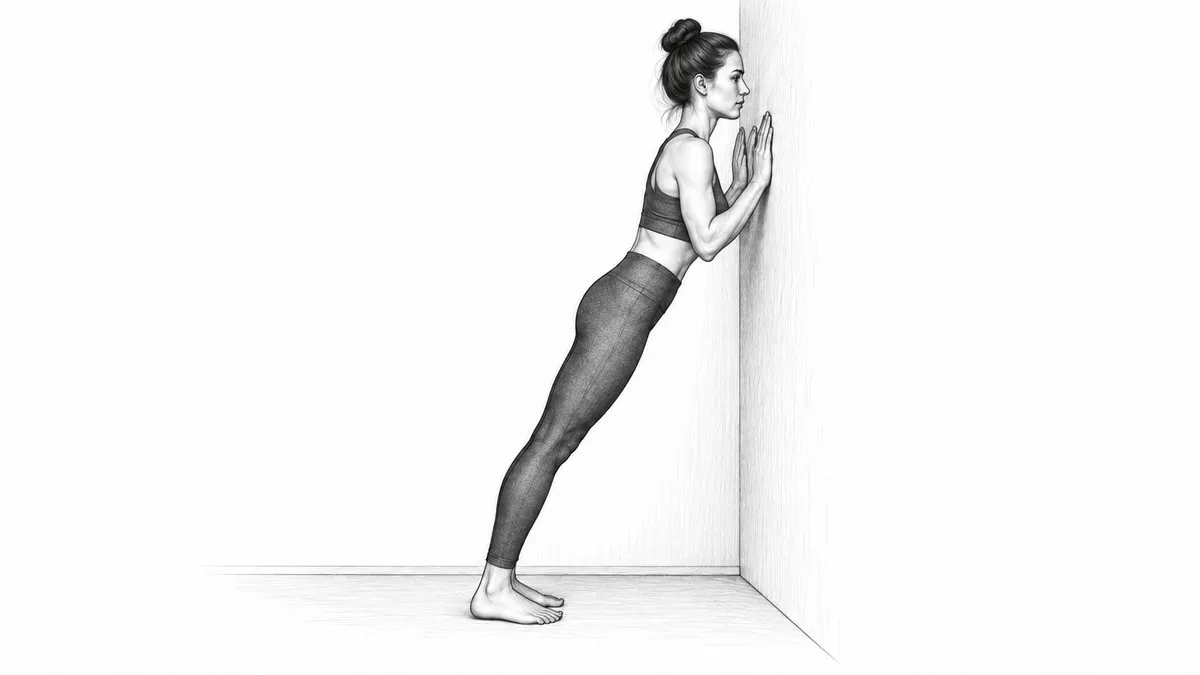 3⏱ Hold 10s
Hold this position for 10 seconds. Keep your heels on the floor and keep breathing.
 4
4Push through your hands to straighten your arms and return to the start. Repeat this 5 times.
🔁 Repeat this exercise 5 times
Muscles Targeted
Large chest muscle. It pushes your body away from the wall.
Muscle on the back of the upper arm. It straightens your elbows as you push.
Front part of the shoulder muscle. It helps push and steadies the shoulder.
Muscle along the side of the ribs. It holds the shoulder blade flat against the ribs.
Helpful For
Builds gentle strength in the shoulder and chest. It is a low-load way to start pushing movements.
Trains the muscle that steadies the shoulder blade. This helps the shoulder move smoothly.
Practises pushing doors, getting up from a bed or chair and lifting. This helps with everyday activity.
Good for people who cannot yet do floor push-ups. Standing closer to the wall makes it easier.
Benefits
- Builds upper body strength: Works chest, shoulders and arms together.
- Trains core control: Keeping the body straight uses the trunk muscles.
- Joint-friendly: Less weight goes through the wrists and shoulders than on the floor.
- Easy to progress: Step farther from the wall to make it harder, or closer to make it easier.
Precautions
- Stop if you feel pain, pinching or clicking in the shoulder, elbow or wrist.
- Keep your body straight. Do not let your hips sag or push backward.
- Keep your heels on the floor and your neck relaxed.
- Do not rush or bounce. Move slowly and under control.
- Recent shoulder, elbow or wrist injury or surgery: check with your physiotherapist or doctor first.
Need Professional Help?
Book a consultation to get personalized treatment advice for your condition.
Book on Instagram