Wall Angels
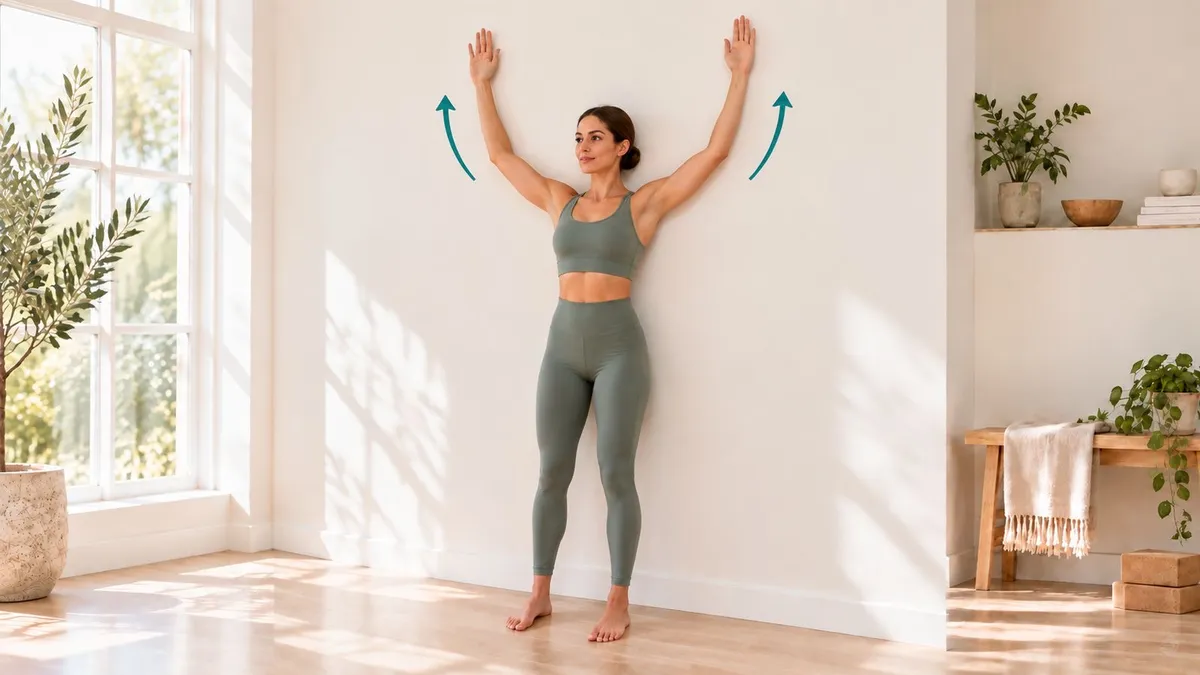
A gentle standing exercise that improves shoulder mobility and upper-back control, helping you move more comfortably after long periods of sitting.
How to Perform
 1
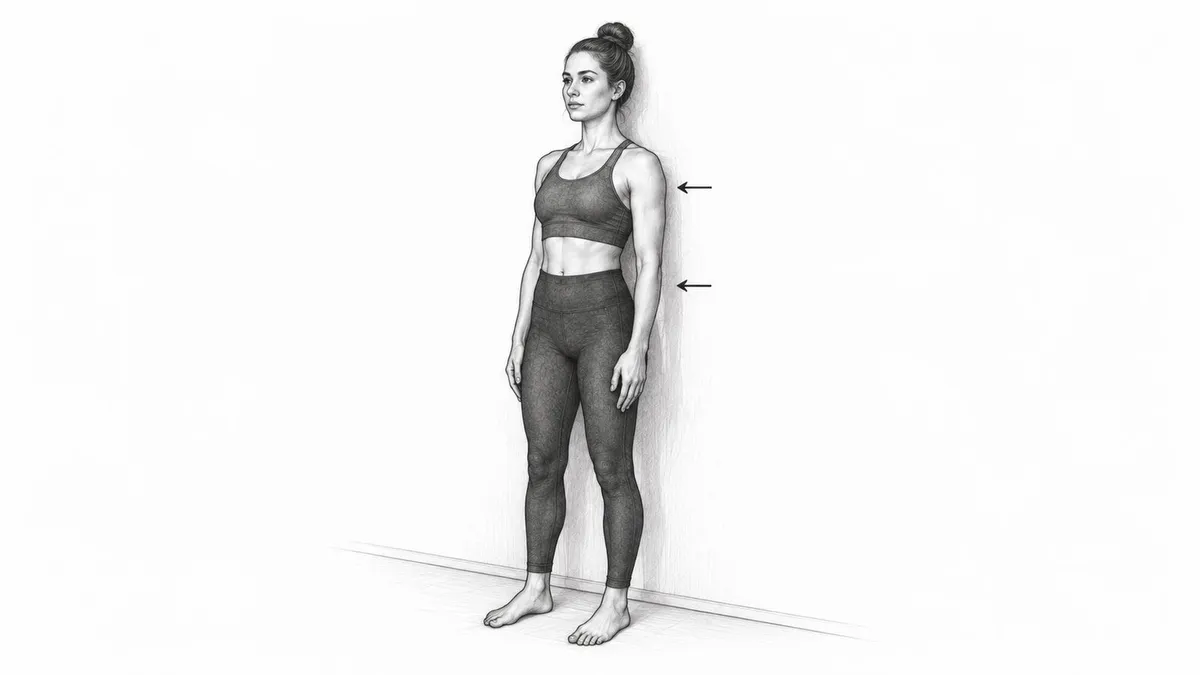
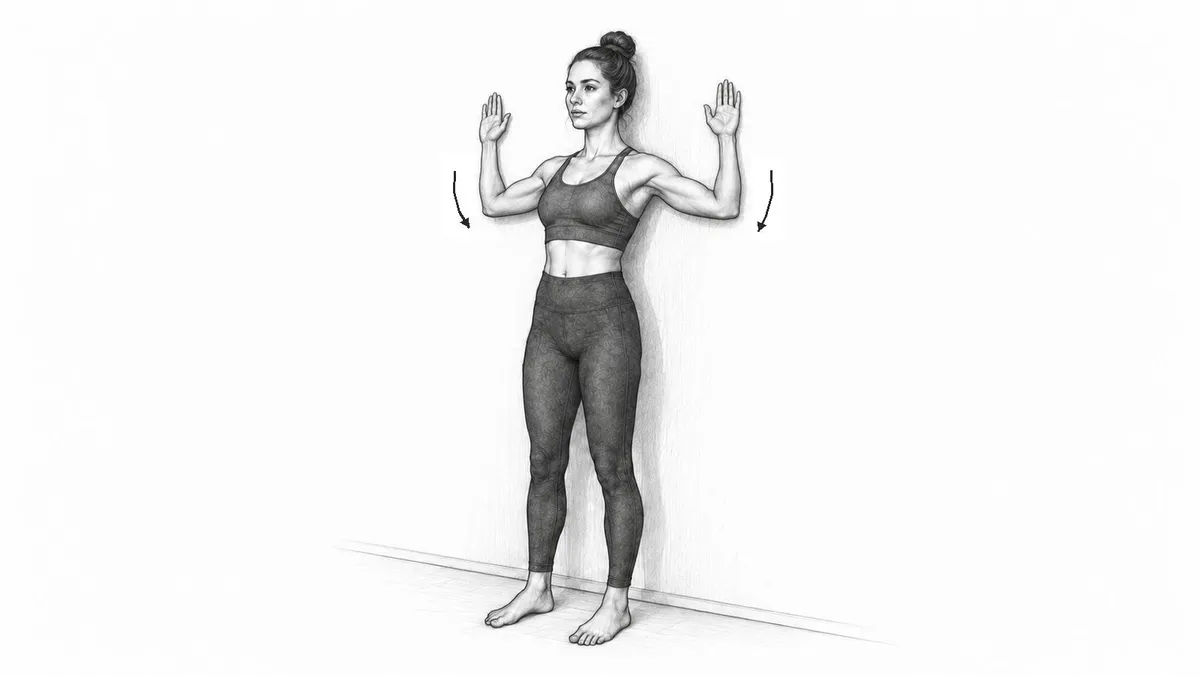
1Stand with your back against a wall, feet hip-width apart and a short distance forward. Keep your knees soft, chin level and ribs relaxed. Rest your upper back against the wall without forcing your head back.
 2
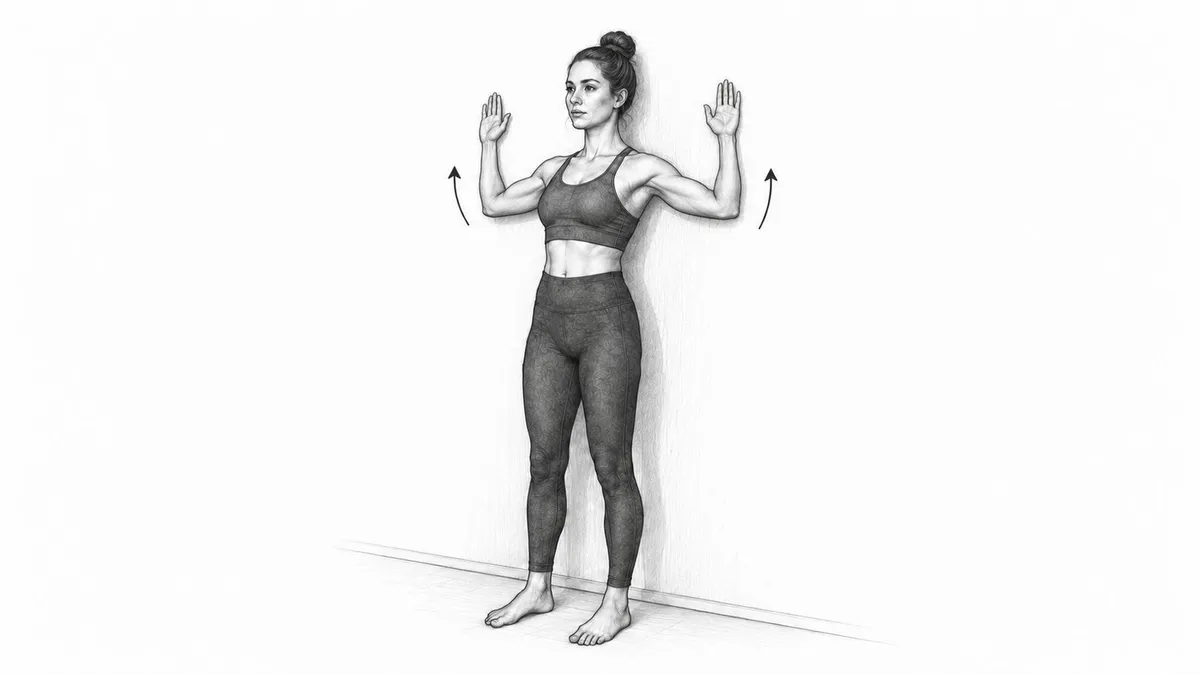
2Raise your arms into a goalpost shape, with elbows bent about 90 degrees and palms facing forward. Bring the backs of your hands and elbows toward the wall as comfortably as you can.
 3
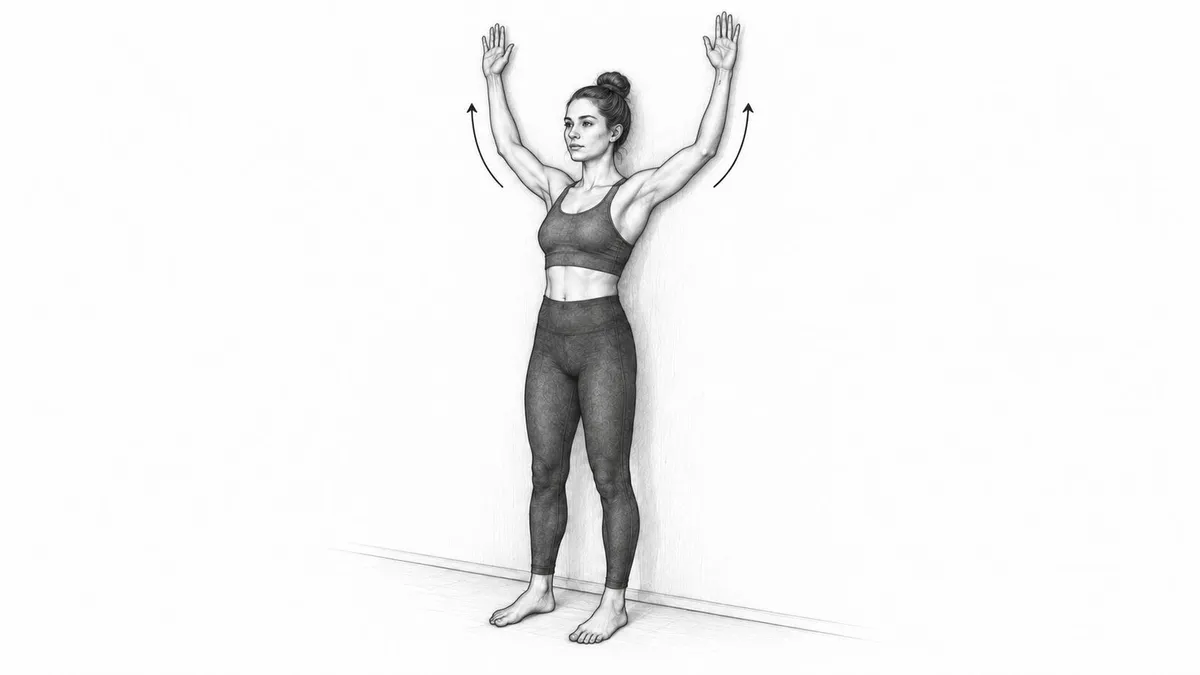
3Slowly slide your arms upward within a comfortable range. Keep your ribs from flaring and avoid arching your lower back or shrugging your shoulders. Pause briefly at your highest comfortable point.
 4
4Slowly slide your arms back down to the goalpost position. Keep breathing normally.
🔁 Repeat this exercise 5 times
Watch the Exercise
Muscles Targeted
Guides and steadies the shoulder blade as the arm rises. It works with other shoulder-blade muscles during the slide.
Sits along the side of the ribs. It rotates the shoulder blade upward as the arm rises.
Covers the outer side of the shoulder. It lifts the upper arm during the upward slide.
Turns the arm outward and steadies the shoulder joint. It controls movement as the hands and elbows approach the wall.
Helpful For
Practises comfortable arm raising and lowering. Keep the hands away from the wall if contact causes pain or back arching.
Practises coordinated arm and shoulder-blade movement. Slow sliding helps you notice shrugging or loss of control.
Offers a gentle shoulder and upper-back movement break. Change position regularly rather than holding one posture for hours.
Benefits
- Improves shoulder mobility - practises comfortable overhead movement without added weights.
- Builds shoulder-blade control - trains the upper-back muscles to guide your arms smoothly.
- Supports posture awareness - helps you notice your head, ribs and shoulder position without forcing a rigid posture.
- Provides a movement break - gently moves the shoulders and upper back after long periods of sitting.
Precautions
- Stop if you feel pain, pinching, tingling or numbness - these are not sensations to push through; seek advice if they persist.
- Do not force wall contact - reduce your range if your hands, elbows or head cannot comfortably reach the wall.
- Avoid arching your back or flaring your ribs - keep your trunk steady rather than using your lower back to reach higher.
- Keep your neck relaxed and breathe normally - avoid shrugging your shoulders or holding your breath.
- Recent shoulder or neck injury, surgery or ongoing symptoms - check with your physiotherapist or doctor before starting.
Need Professional Help?
Book a consultation to get personalized treatment advice for your condition.
Book on Instagram