Triceps Stretch in Standing
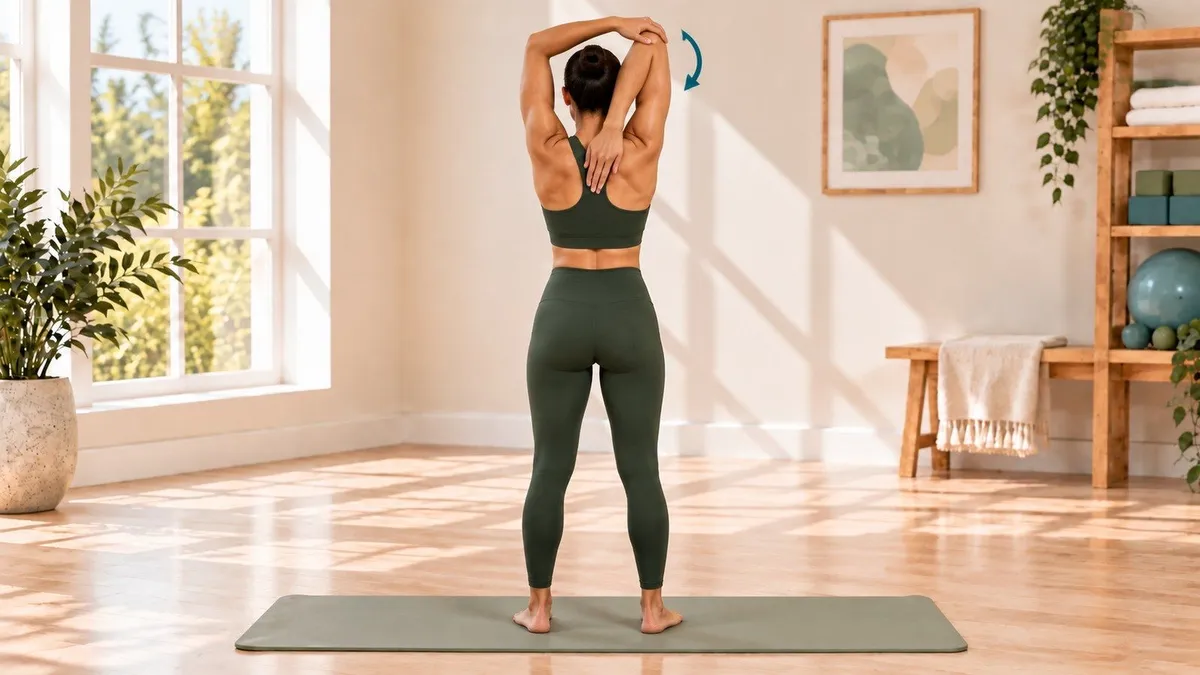
Triceps Stretch in Standing, also called the Standing Overhead Triceps Stretch or Overhead Arm Stretch, is a gentle stretch for the back of your upper arm. You raise one arm, bend the elbow and use your other hand to guide it gently behind your head.
How to Perform
 1
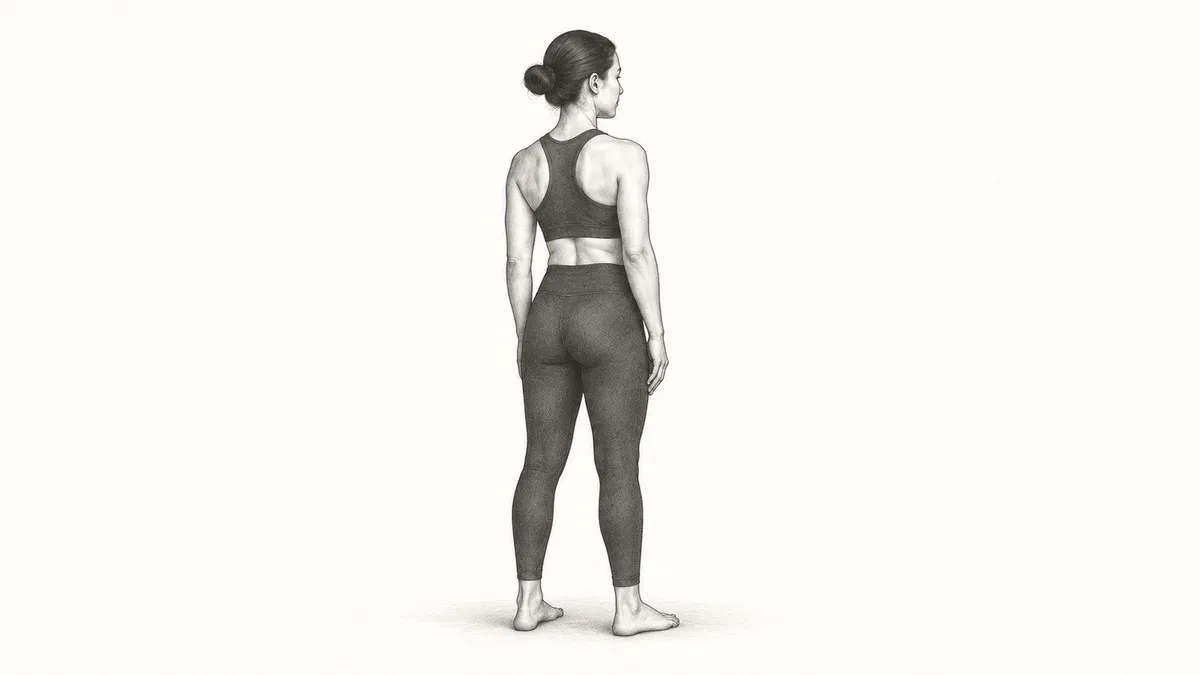
1Stand tall with your feet hip-width apart. Keep your knees relaxed and your back straight.
 2
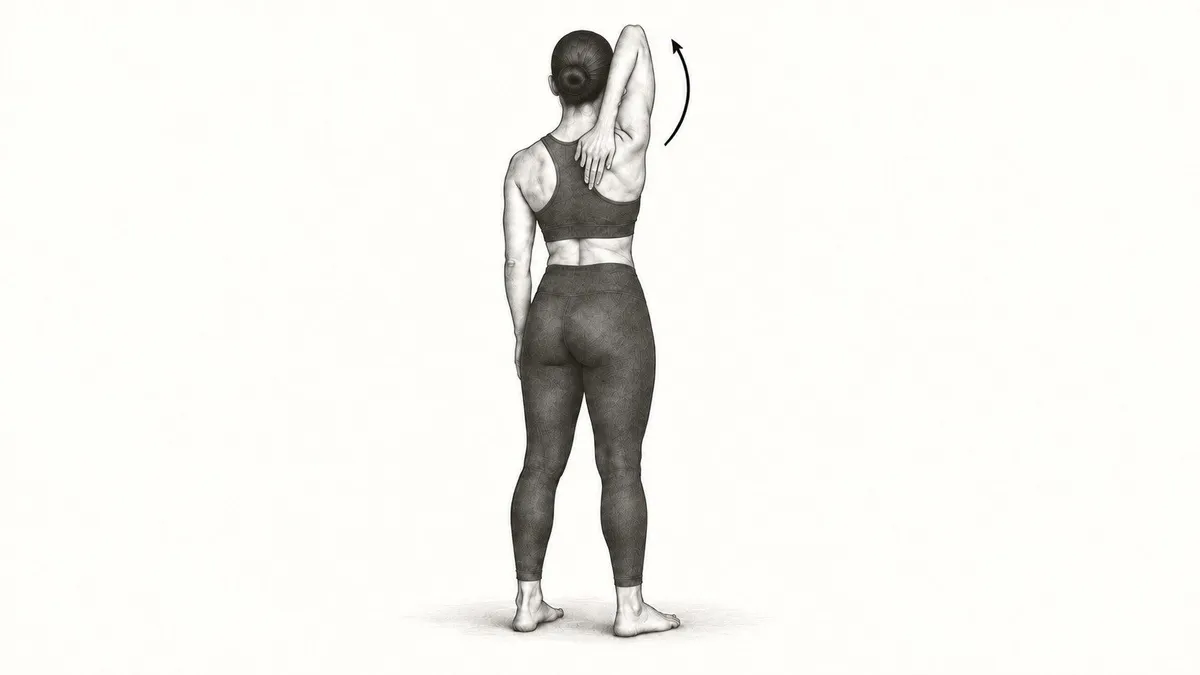
2Raise your right arm above your head. Bend your right elbow so your hand reaches down your upper back, with your elbow pointing up.
 3⏱ Hold 10s
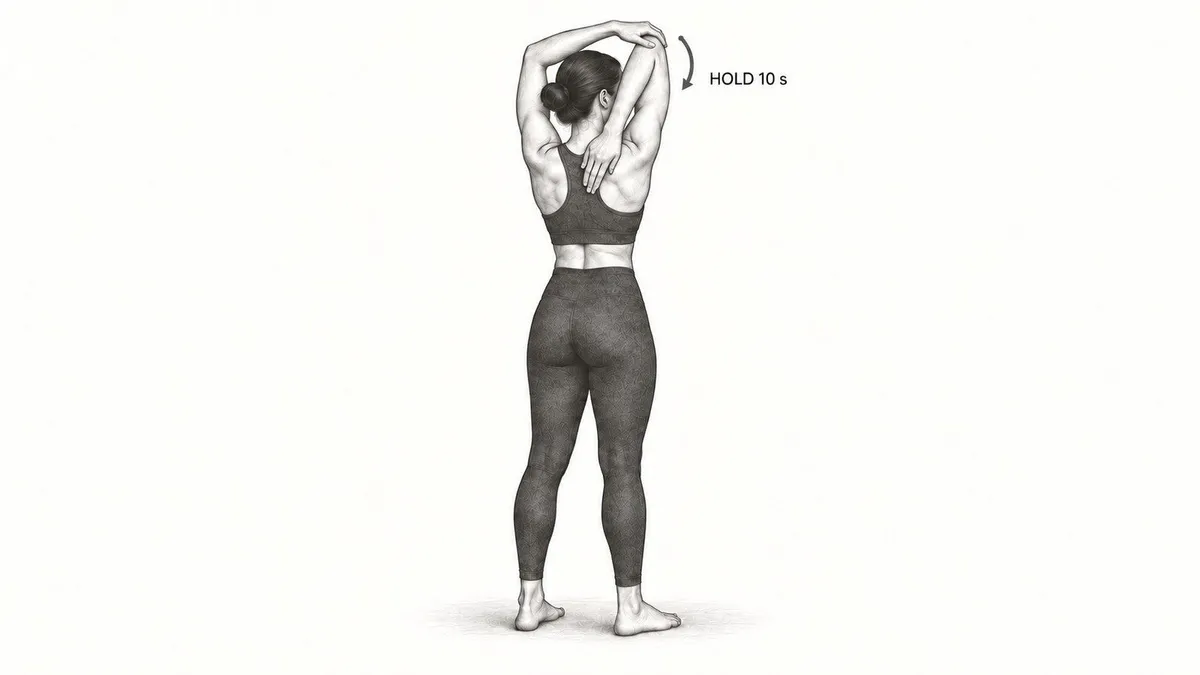
Place your left hand just above your right elbow. Gently guide the elbow behind your head until you feel a mild stretch at the back of your upper arm. Hold for 10 seconds and breathe normally.
 4
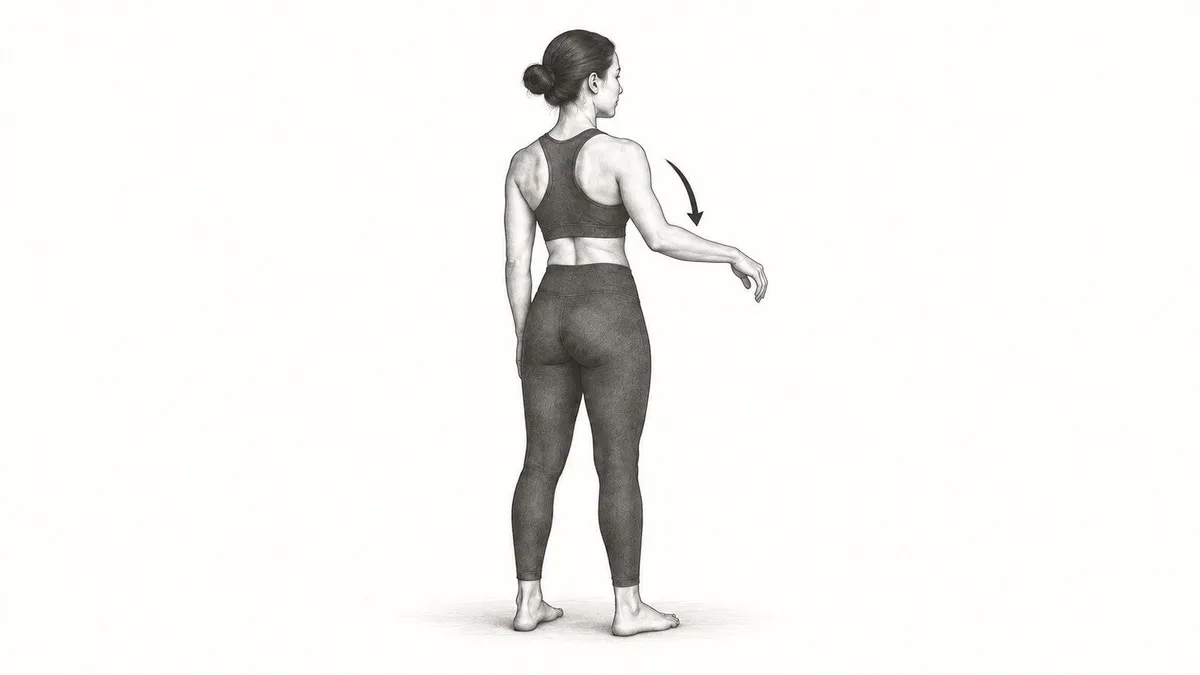
4Release your left hand and slowly lower your right arm. Do the same with your left arm. Repeat 5 times on each side.
🔁 Repeat this exercise 5 times
Watch the Exercise
Muscles Targeted
Runs along the back of the upper arm. Bending the elbow overhead mainly stretches its long head.
This broad back muscle connects to the upper arm. The overhead position may stretch it near the side and armpit.
Links the shoulder blade to the upper arm. It may lengthen during overhead reaching, depending on shoulder position.
This muscle along the ribs supports the shoulder blade overhead. It supports the position rather than being a main stretch target.
Helpful For
Gently stretches the back of the upper arm. It may ease post-activity tightness when overhead positioning is comfortable.
May stretch muscles behind and beside the shoulder. Aim for a mild muscle pull rather than joint pain or pinching.
May help when muscle tightness limits overhead movement. Do not use it to force a painful or injured shoulder.
Benefits
- Improves flexibility at the back of the upper arm
- May ease upper-arm muscle tightness
- Supports comfortable overhead arm movement
- Simple, no equipment
Precautions
- Warm up with a short walk or gentle arm movements first
- Use light pressure, do not pull hard on the elbow or bounce
- Keep your neck relaxed, do not lean back or arch your lower back
- Stop if you feel pain, shoulder pinching, tingling or numbness
- Ask your physiotherapist first if you have a recent shoulder or elbow injury, surgery, or cannot lift your arm comfortably
Need Professional Help?
Book a consultation to get personalized treatment advice for your condition.
Book on Instagram