Supine Butterfly Stretch
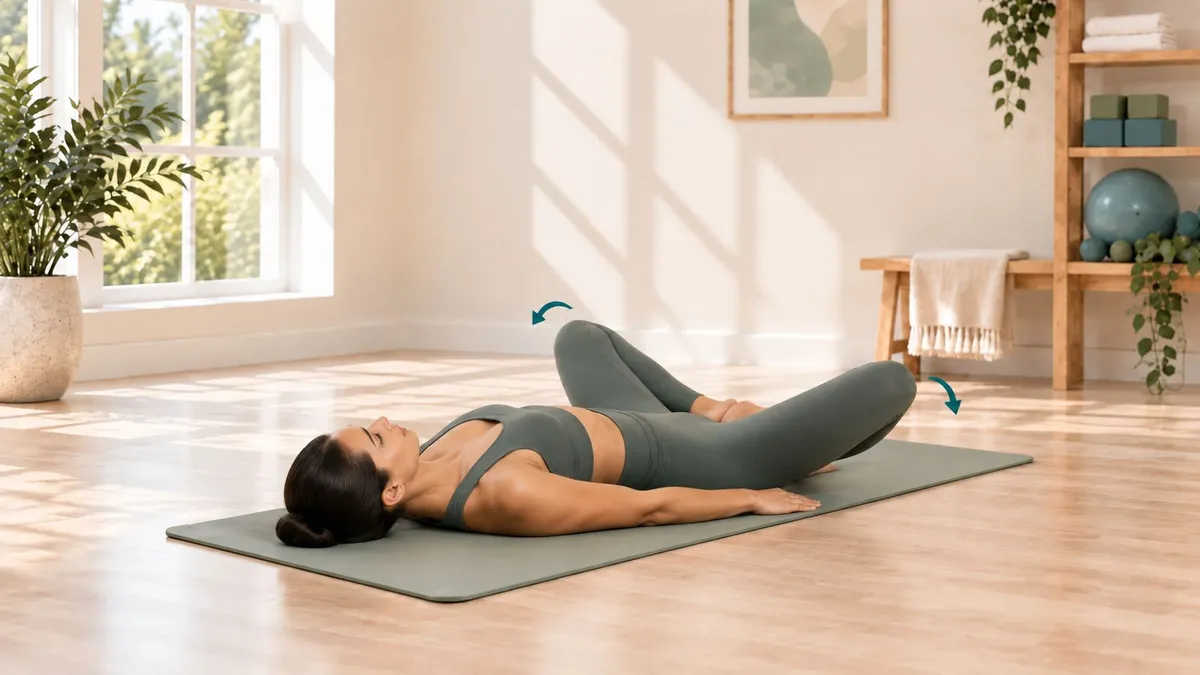
A gentle stretch lying on your back with the soles of your feet together and knees relaxed out to the sides. Stretches the inner thighs and can help the pelvic floor relax with slow breathing.
How to Perform
 1
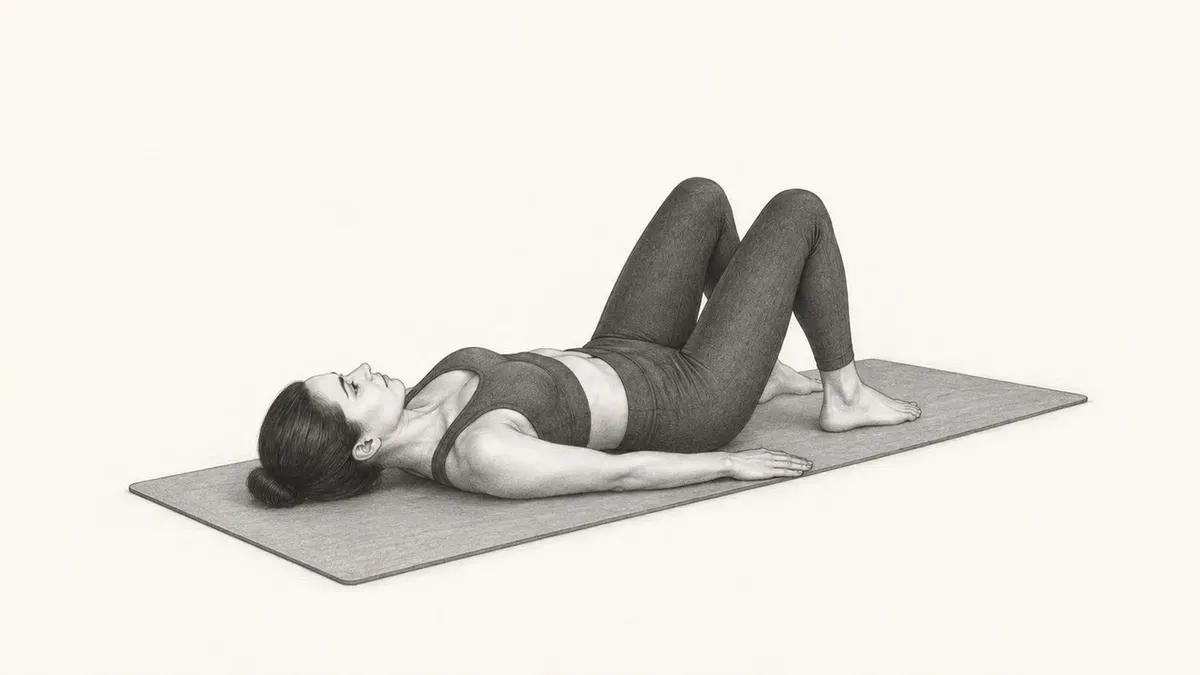
1Lie on your back on the mat with your knees bent and feet flat. Rest your head and arms on the mat.
 2
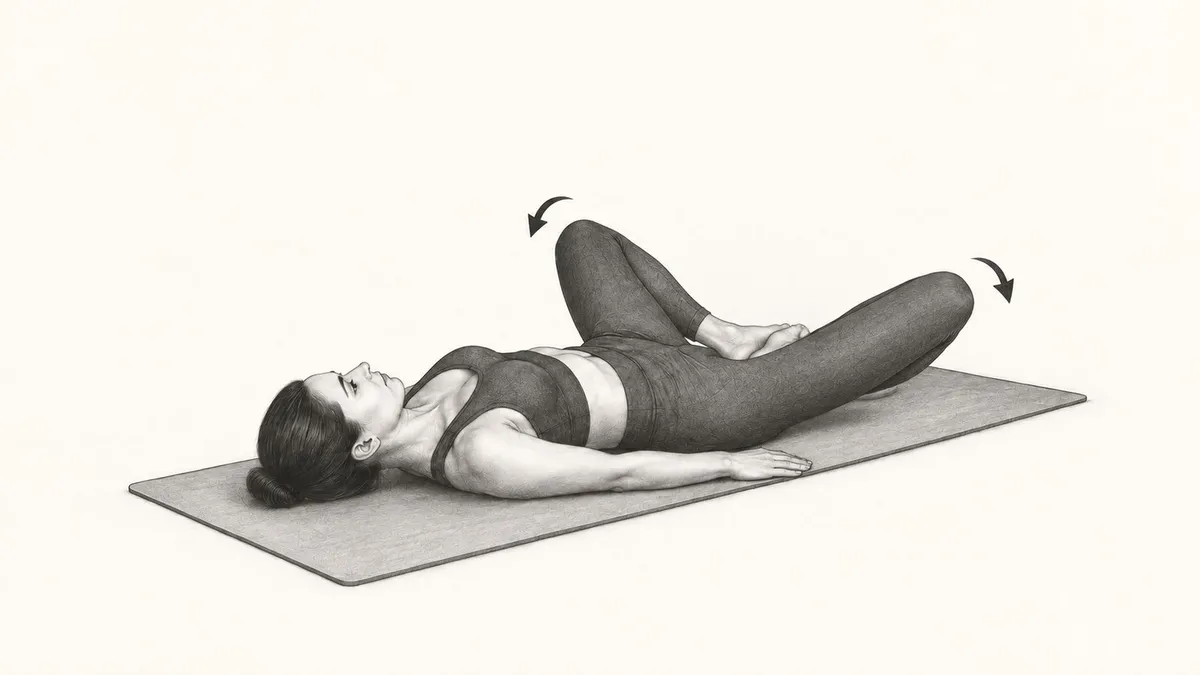
2Bring the soles of your feet together. Let both knees fall gently out to the sides, with your feet resting on the mat.
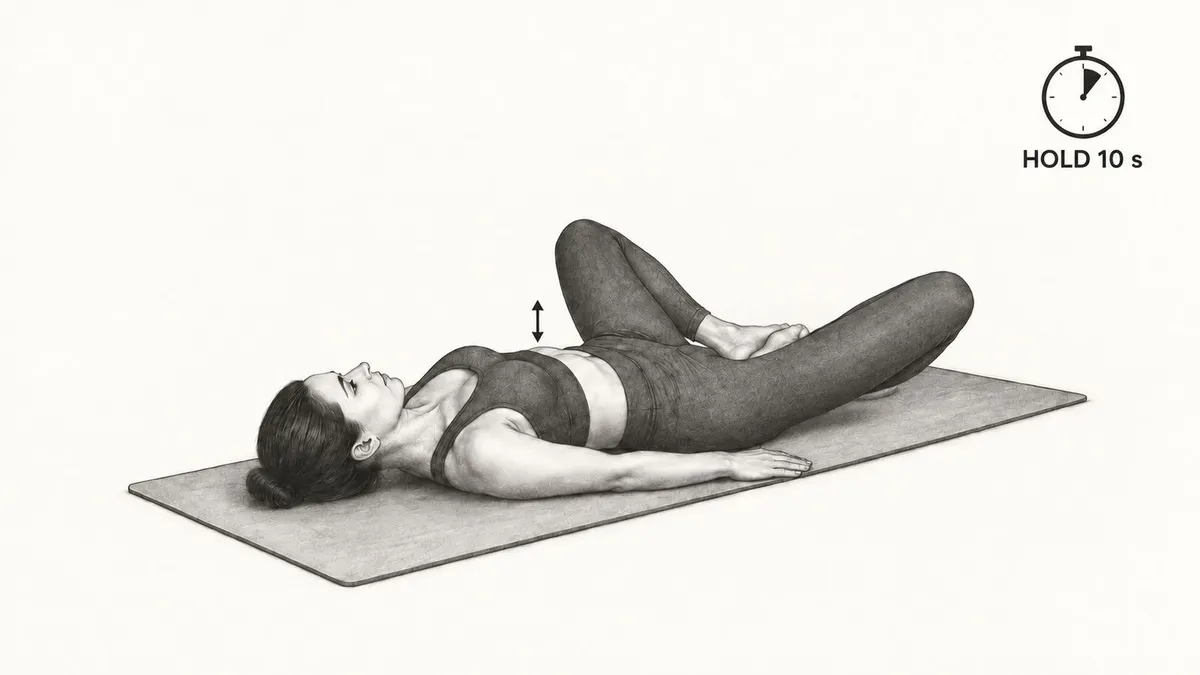 3⏱ Hold 10s
Hold this position and breathe slowly. Keep your tummy soft.
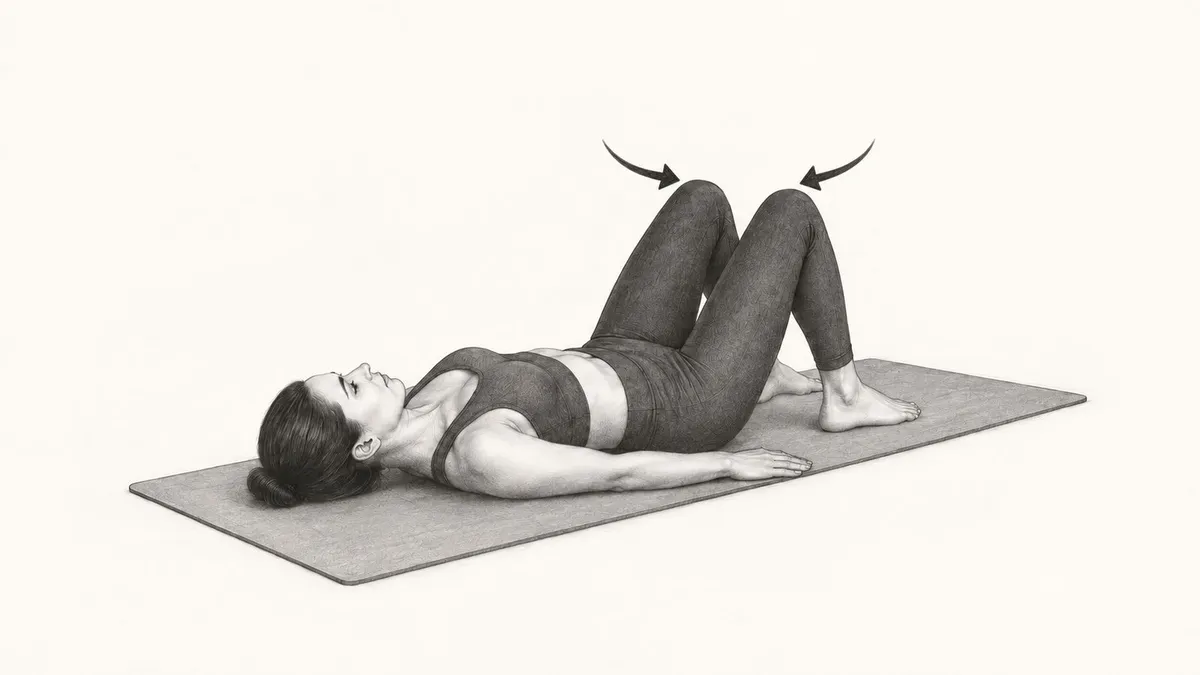 4
4Bring your knees back together with your feet flat on the mat. Repeat this 5 times.
🔁 Repeat this exercise 5 times
Watch the Exercise
Muscles Targeted
Lies along the inner thigh. It lengthens as the knees open with the feet together.
This large inner-thigh muscle brings the legs together. The open-hip position gives it a gentle stretch.
This thin inner-thigh muscle crosses the hip and knee. Opening the hips stretches it, although bent knees reduce tension.
Forms part of the pelvic floor. Slow breathing encourages relaxation with the wider pelvic floor, without isolating this muscle.
Helpful For
Gently stretches the groin and inner thighs. Support the thighs with cushions to reduce the stretch.
Practises hip opening with the back supported. Let the knees settle without pressing them toward the floor.
Supported lying and slow breathing help practise pelvic floor relaxation. A pelvic health physiotherapist can check whether the position suits your symptoms.
May support a guided relaxation programme when comfortable. Avoid it if the position causes pain or increases pelvic symptoms.
Benefits
- Improves inner thigh flexibility.
- Encourages comfortable hip movement.
- Supports pelvic floor relaxation with slow breathing.
- A gentle resting position, with cushions if needed.
Precautions
- Do not press the knees down or bounce. Use cushions if the stretch is too strong.
- Keep breathing. Do not squeeze the pelvic floor or push down.
- Stop if you feel pain, tingling, numbness or dizziness.
- Recent injury, surgery, pregnancy-related pelvic pain or ongoing pelvic symptoms: check with your physiotherapist first.
Need Professional Help?
Book a consultation to get personalized treatment advice for your condition.
Book on Instagram