Standing Lateral Flexion Stretch
The Standing Lateral Flexion Stretch (frequently referred to as a standing side bend) is a targeted flexibility exercise designed to elongate the soft tissues of the lateral trunk and pelvis. By stabilizing the lower extremities and actively moving the spine into lateral flexion, it safely distracts the lateral spinal structures and stretches the musculature connecting the ribcage to the pelvis.
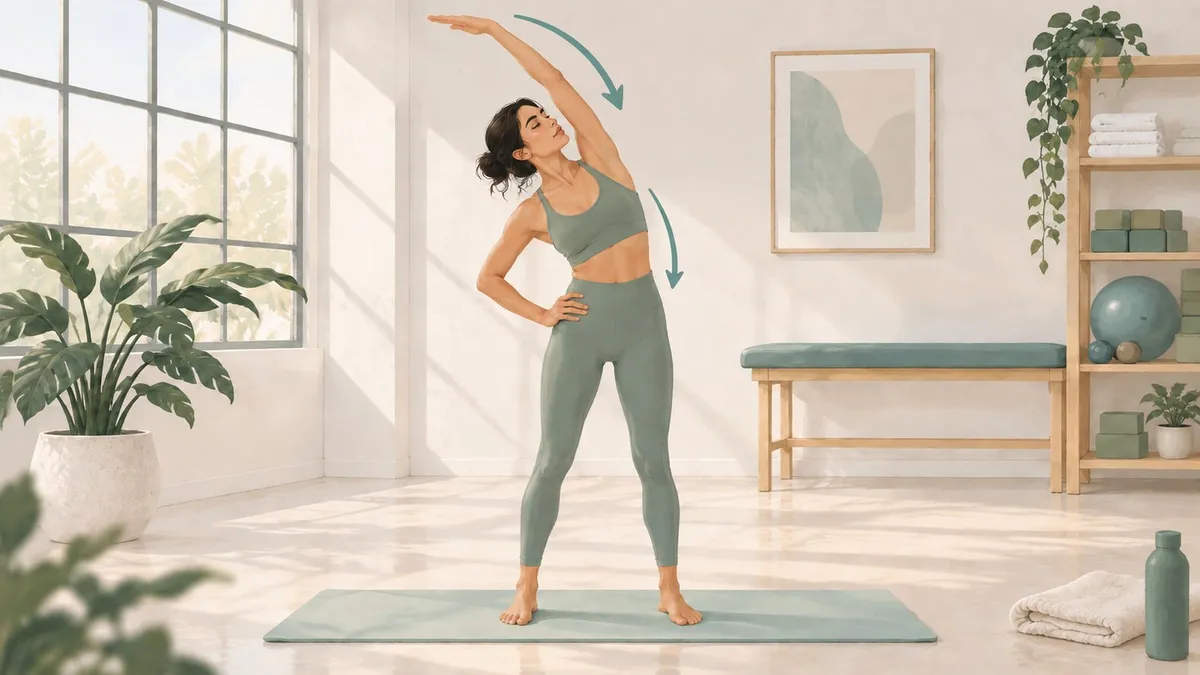
How to Perform
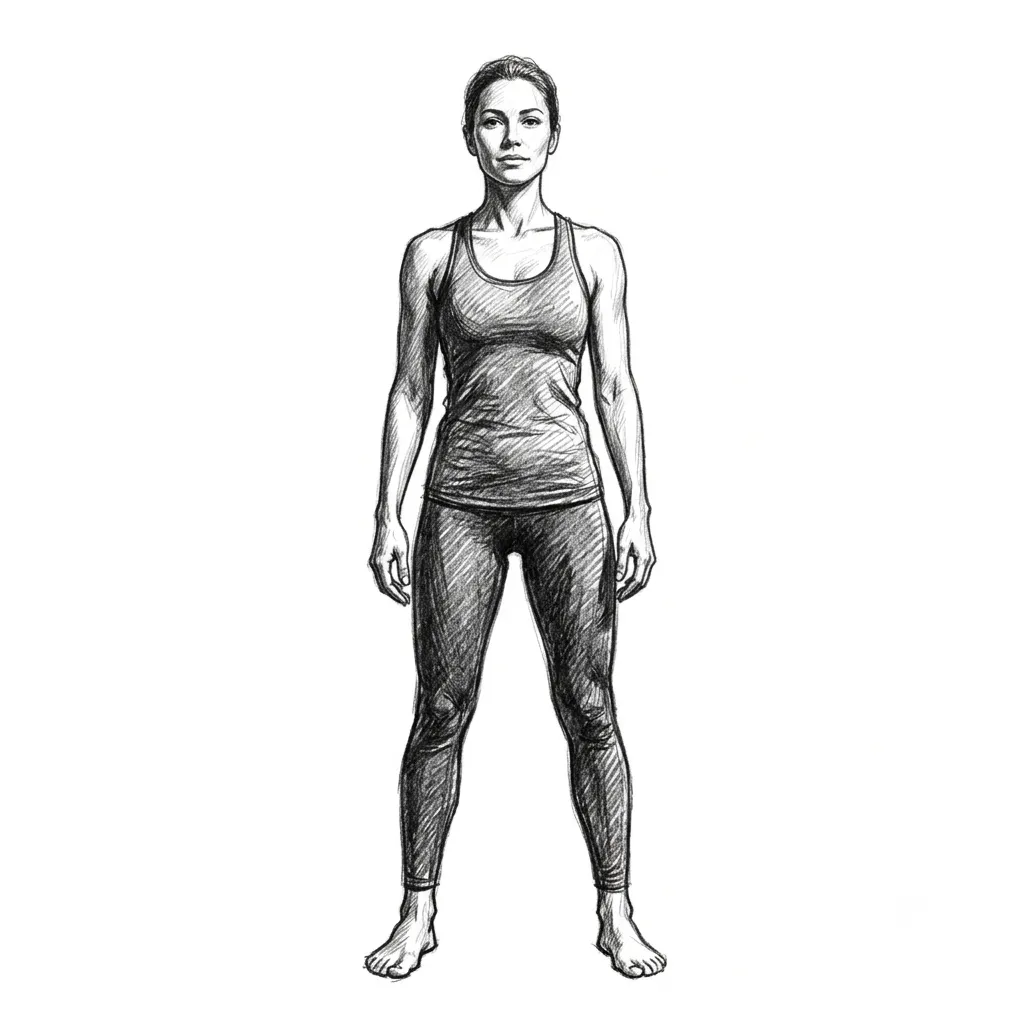 1
1Keep your feet shoulder width apart on a stable surface.
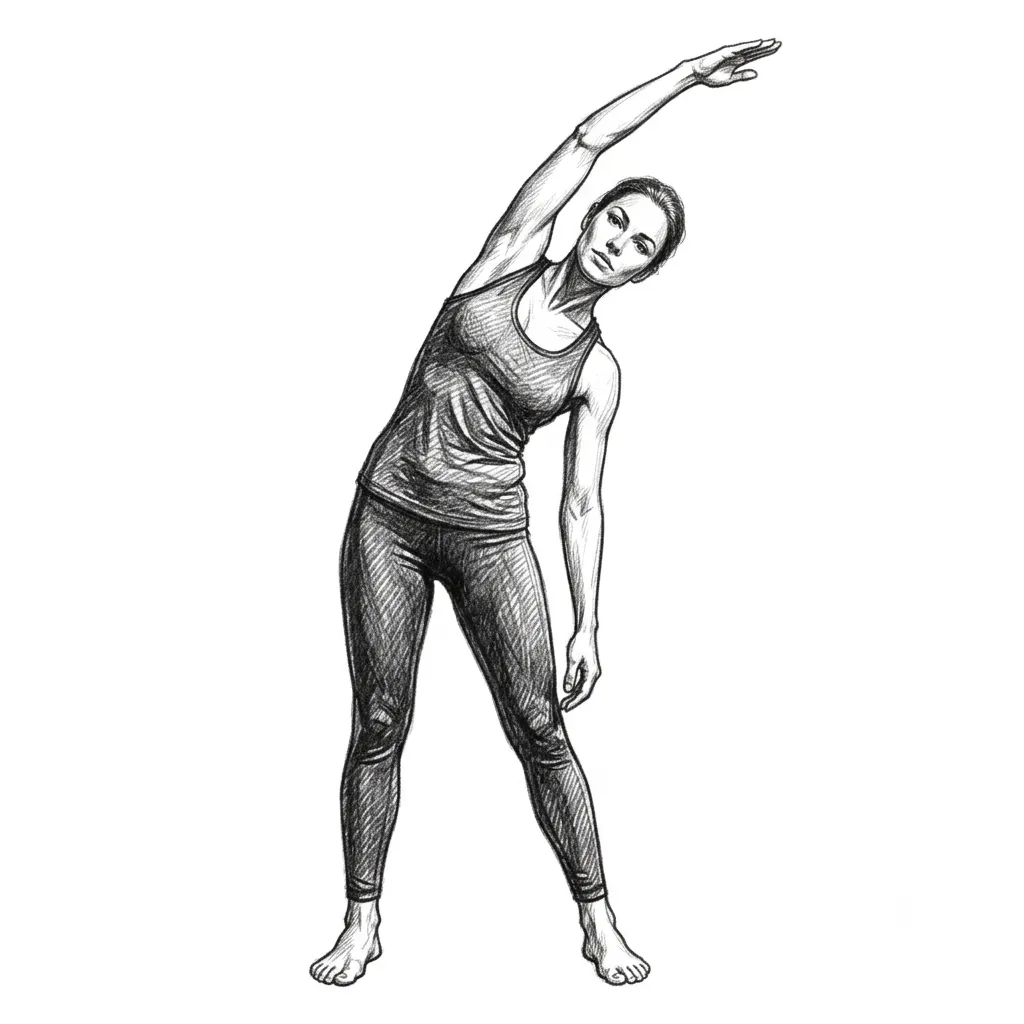 2
2Raise the arm on the tight or restricted side straight up and over toward the opposite side.
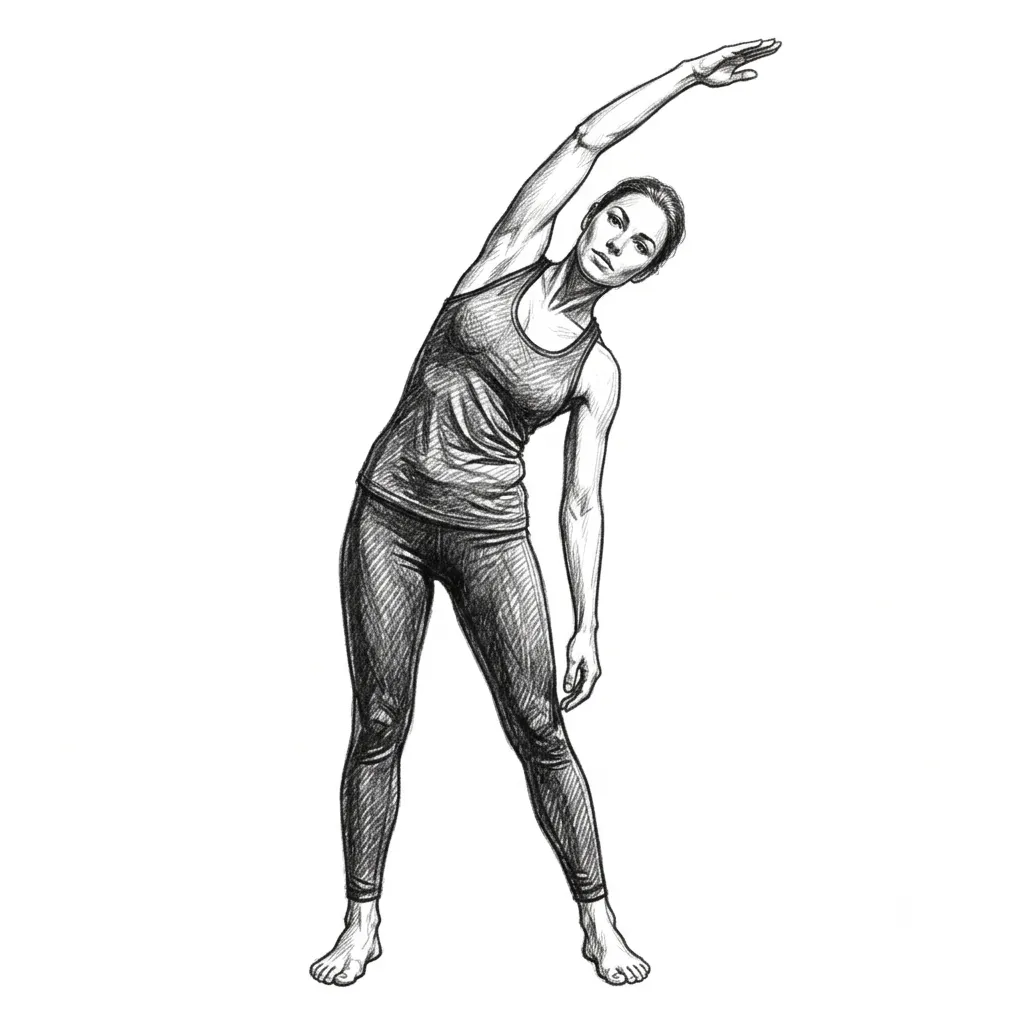 3⏱ Hold 10s
Gently lean your upper body to the opposite side while keeping your hips stable and facing forward and hold for 10 seconds and repeat.
🔁 Repeat this exercise 5 times
Watch the Exercise
Muscles Targeted
A deep posterior abdominal muscle spanning from the iliac crest to the lowest rib, which receives a primary stretch during lateral flexion.
The expansive superficial muscle of the back that connects the upper extremity to the spine and pelvis.
The lateral core muscles responsible for controlling trunk rotation and side-bending.
The respiratory muscles layered between the ribs that expand during the upward reach.
These lateral hip structures are heavily engaged, particularly when utilizing the cross-leg variation.
Helpful For
Highly effective for relieving unilateral back tightness and tension in the QL and latissimus dorsi.
Frequently utilized in conservative management (such as the Schroth method) to stretch the shortened musculature on the concave side of the spinal curve.
Corrects asymmetric tightness resulting from carrying loads on one side, scoliosis, or uneven sitting postures.
Can assist in elevating the ribcage and releasing tension along the lateral thoracic wall, potentially reducing neurovascular compression.
A standard inclusion in rehabilitation protocols for patients recovering from generalized lateral spinal or hip restrictions.
Benefits
- Increases Spinal Mobility: Improves the lateral range of motion in the thoracic and lumbar spine, promoting healthier intervertebral joint mechanics.
- Releases Myofascial Tension: Alleviates stiffness in the lower back, ribcage, and lateral hip complex often caused by prolonged sitting or poor ergonomic habits.
- Corrects Postural Imbalances: Helps address lateral pelvic tilts and asymmetrical spinal loading by stretching tight unilateral structures.
- Enhances Respiratory Mechanics: Opens up the intercostal spaces, allowing for greater ribcage expansion and deeper, more efficient breathing.
Precautions
- Avoid Forward or Backward Leaning: The core must remain engaged to prevent moving into lumbar extension or flexion. The movement should occur strictly in the coronal plane.
- Do Not Bounce: Use a smooth, sustained pull rather than ballistic, bouncy movements, which can trigger a muscle spindle reflex and cause spasms.
- Keep Hips Square: Ensure the pelvis remains stabilized and facing directly forward. Avoid allowing the hips to twist or hike excessively toward the stretching side.
- Respect Pain Limits: Move only to the point of a mild, comfortable stretch. Any sharp, pinching pain (especially near the spinal joints) is a strict indication to reduce the range of motion.
Need Professional Help?
Book a consultation to get personalized treatment advice for your condition.
Book on Instagram