Standing Hip Abduction
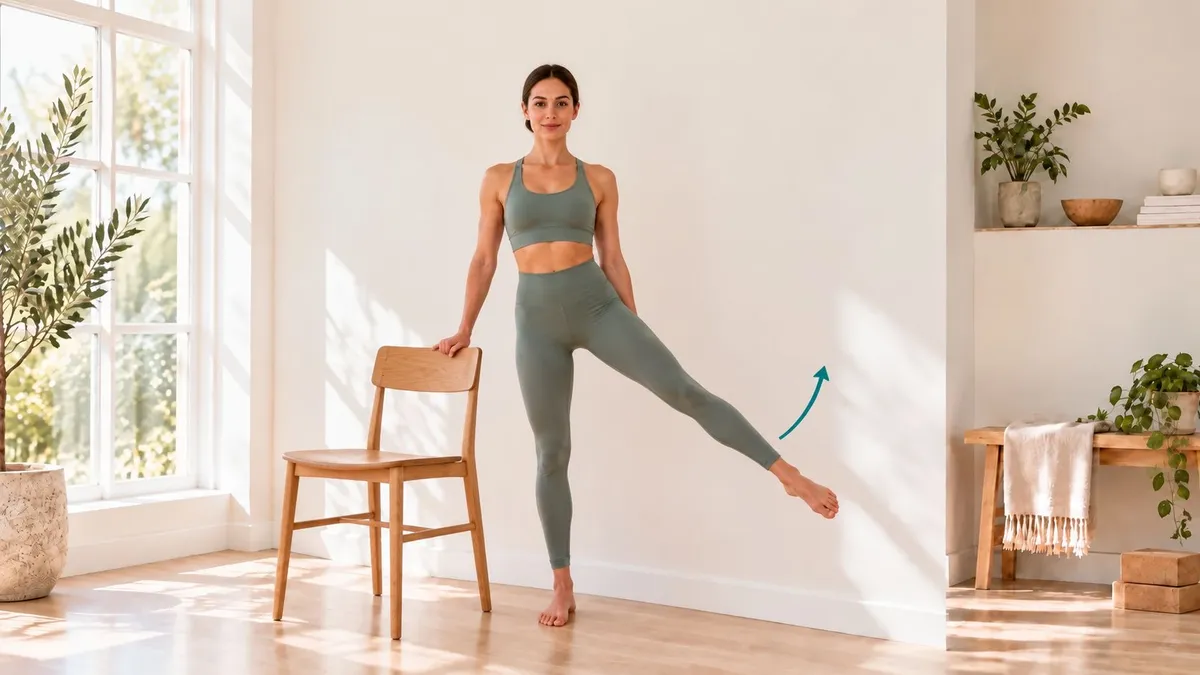
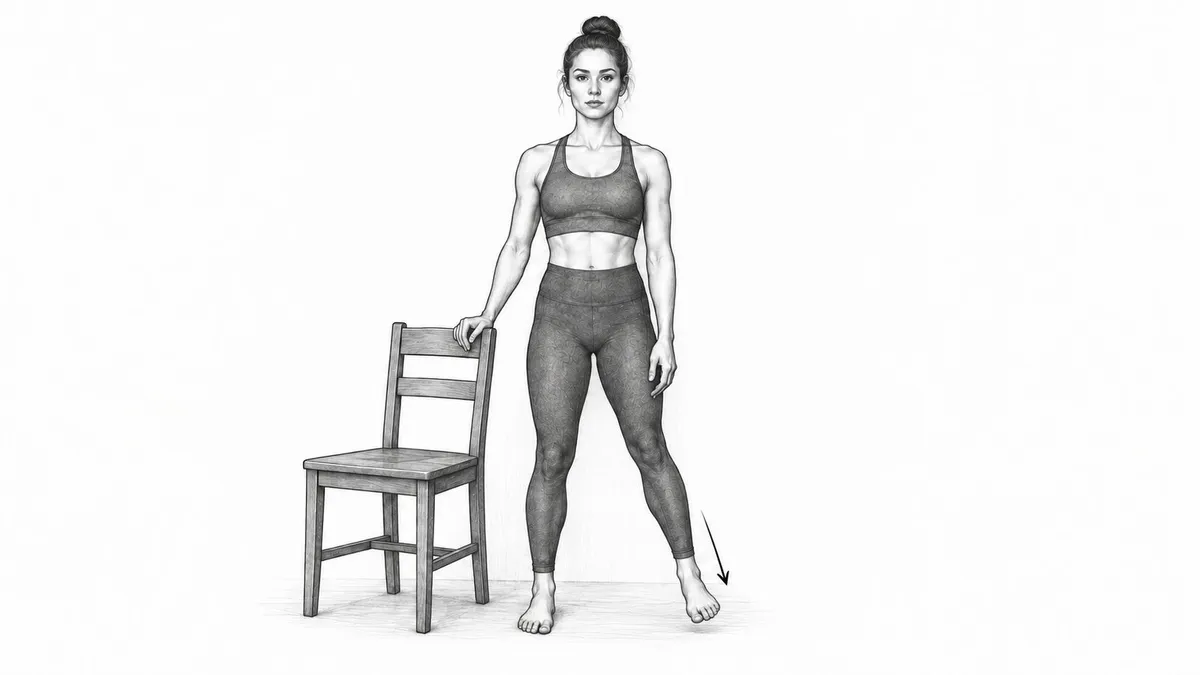
A standing exercise where you lift one leg out to the side while holding a chair for support. It strengthens the muscles on the outer side of the hip.
How to Perform
 1
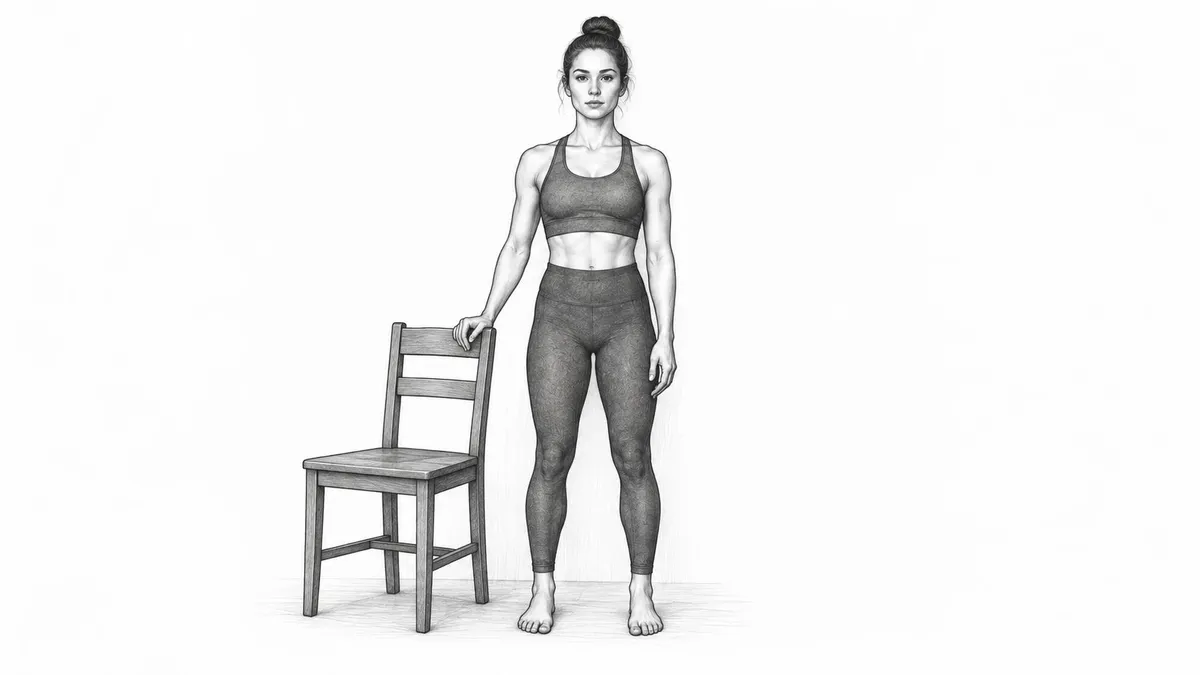
1Stand tall next to a sturdy chair or wall and hold it lightly with one hand. Keep your feet hip-width apart and toes pointing forward.
 2
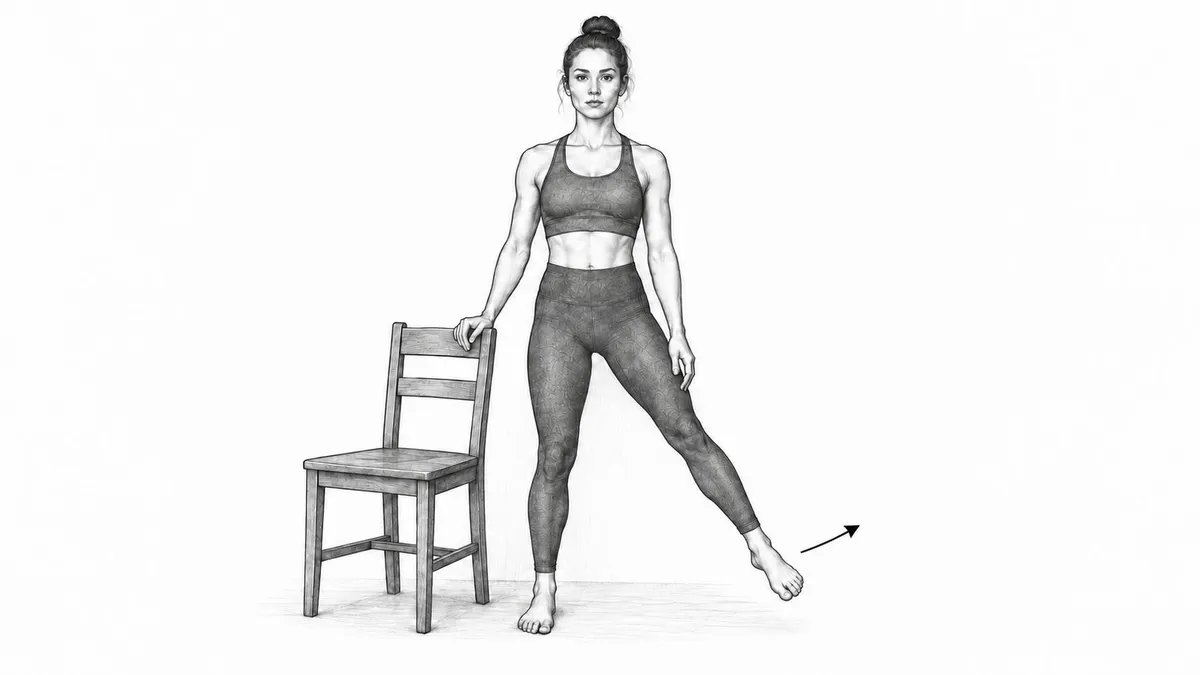
2Keeping your knee straight and toes forward, slowly lift the leg farther from the chair out to the side. Do not lean your body.
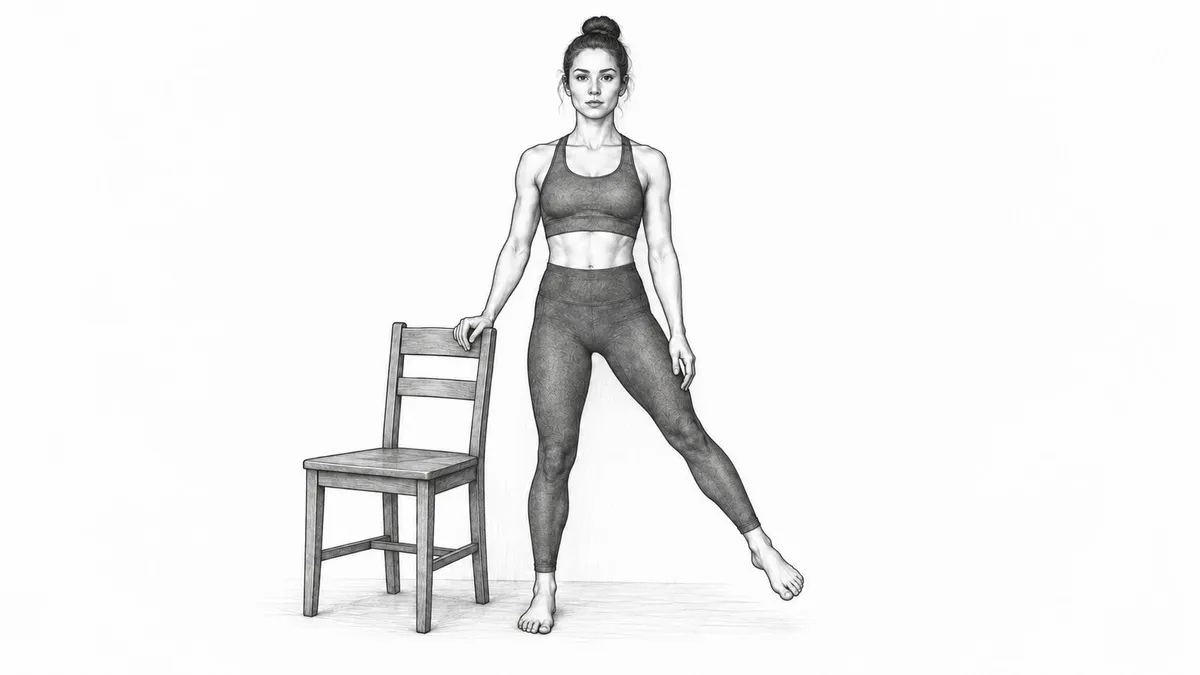 3⏱ Hold 10s
Hold this position for 10 seconds. Keep your hips level and your body upright.
 4
4Slowly lower your leg back down. Repeat this 5 times, then switch legs.
🔁 Repeat this exercise 5 times
Muscles Targeted
Sits on the outer side of the hip. It lifts the leg out to the side and keeps the pelvis level.
Lies under the gluteus medius. It helps lift the leg and steadies the hip joint.
Small muscle at the upper outer thigh. It helps lift the leg to the side.
Large buttock muscle. Its upper part helps move the leg out and supports the hip.
Helpful For
Strengthens the muscles around the hip. This can reduce strain on the joint.
Builds strength in the outer hip muscles. This can ease the load on the sore tendons.
Stronger hip muscles help control the knee during walking. This can lessen stress on the knee.
Trains the standing leg to hold the pelvis steady. This helps with stable walking.
Benefits
- Strengthens the outer hip: Builds the muscles that lift the leg to the side.
- Improves pelvic control: Helps keep the hips level when you walk or stand on one leg.
- Supports balance: The standing leg works to keep you steady.
- Needs only a chair or wall: Easy to do at home.
Precautions
- Stop if you feel sharp pain in the hip, groin or back.
- Do not lean your body or swing the leg. Lift slowly and under control.
- Keep your toes pointing forward and your knee straight.
- Hold the support lightly. Do not pull on it to balance.
- Recent hip surgery or replacement: check with your physiotherapist or doctor first.
Need Professional Help?
Book a consultation to get personalized treatment advice for your condition.
Book on Instagram