Standing calf raise
The standing calf raise is a foundational lower-body exercise designed to isolate and strengthen the muscles of the lower leg. It requires no equipment and relies on body weight to build strength, stability, and endurance in the ankle complex.
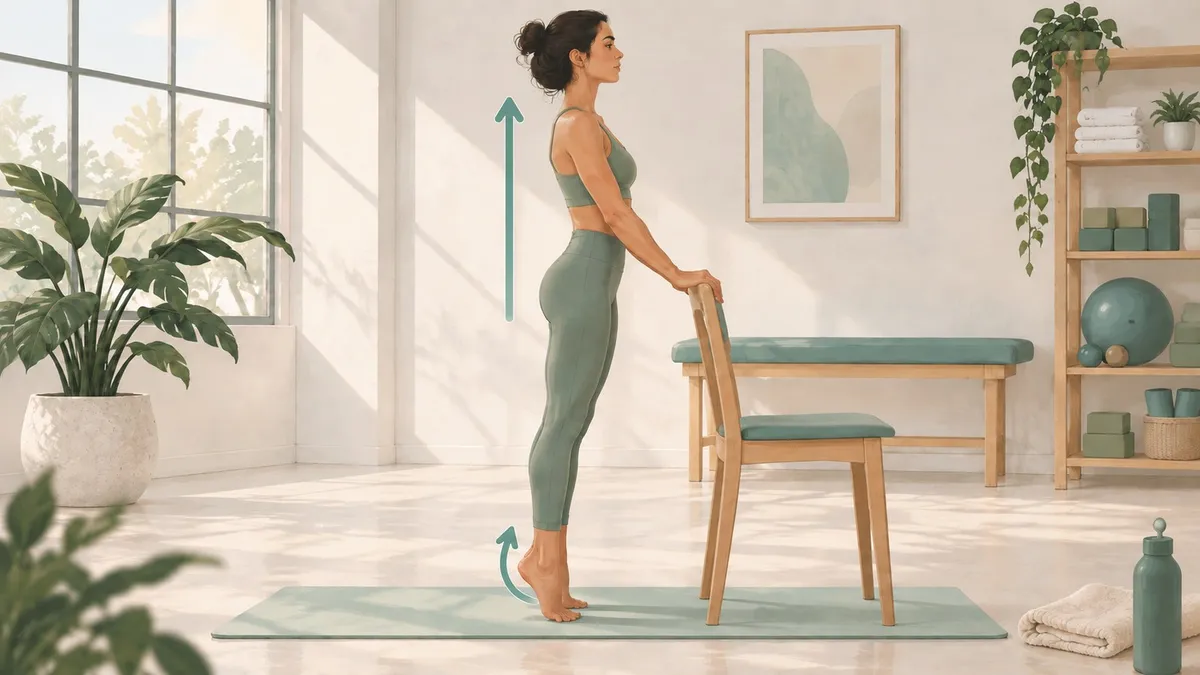
How to Perform
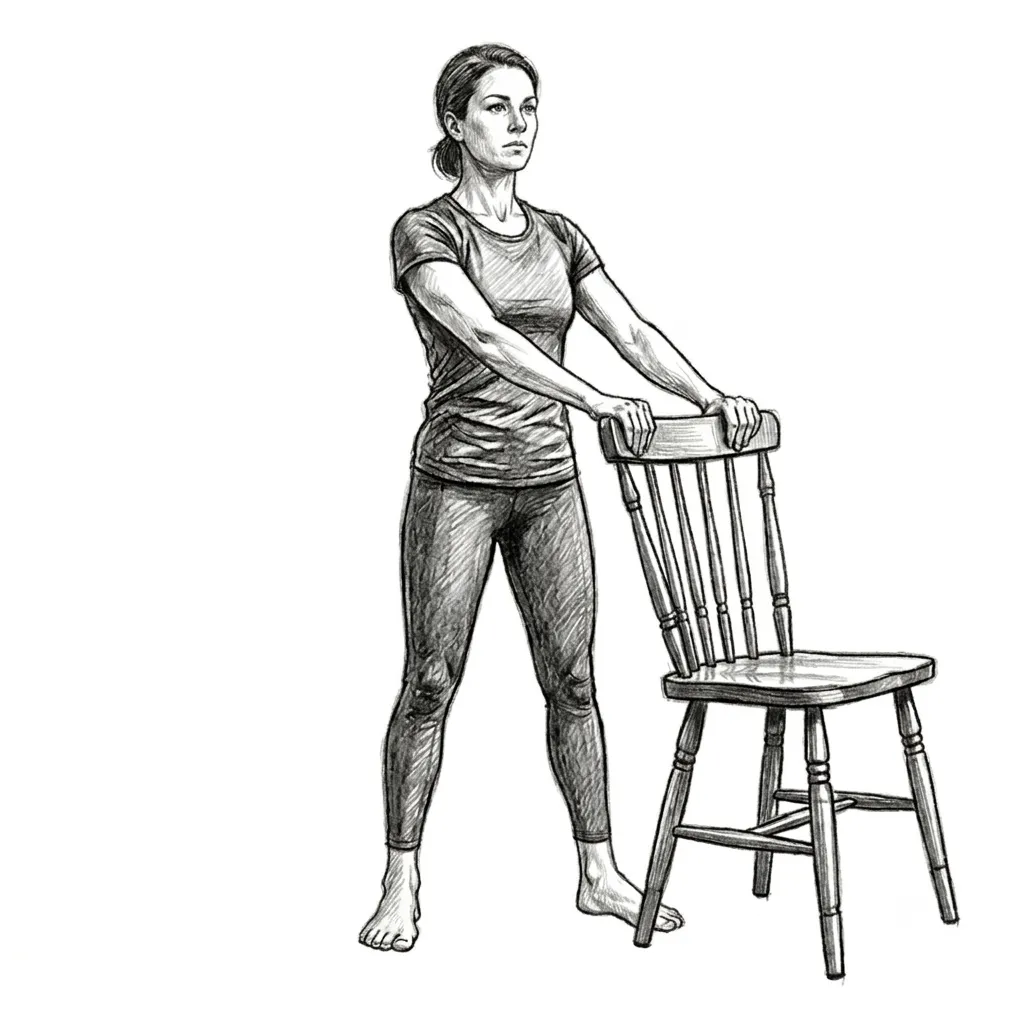 1
1Stand tall with your feet hip-width apart on a flat, stable surface. Maintain a neutral spine and engage your core, for balance hold a chair.
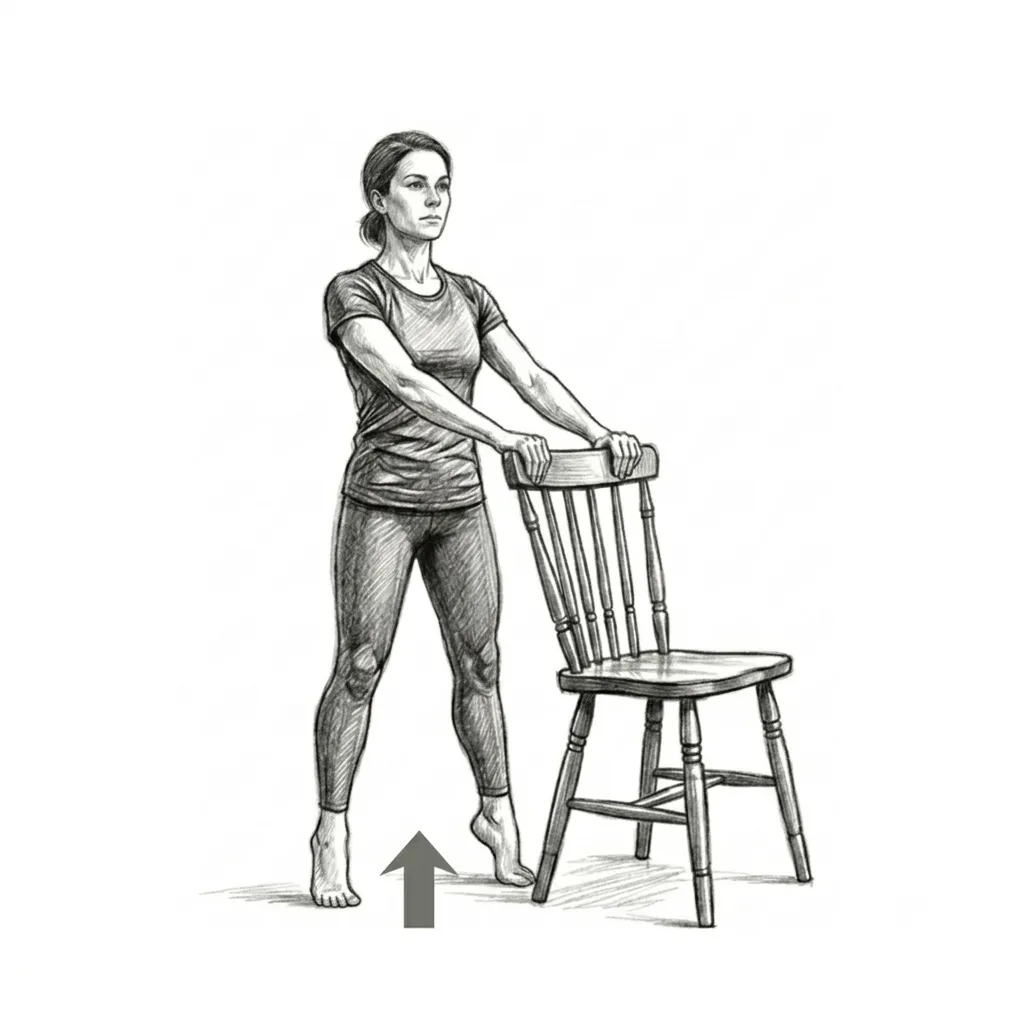 2⏱ Hold 10s
Slowly push through the balls of your feet to lift your heels high off the floor, keeping your legs straight but without locking your knees and hold this position for 10 seconds
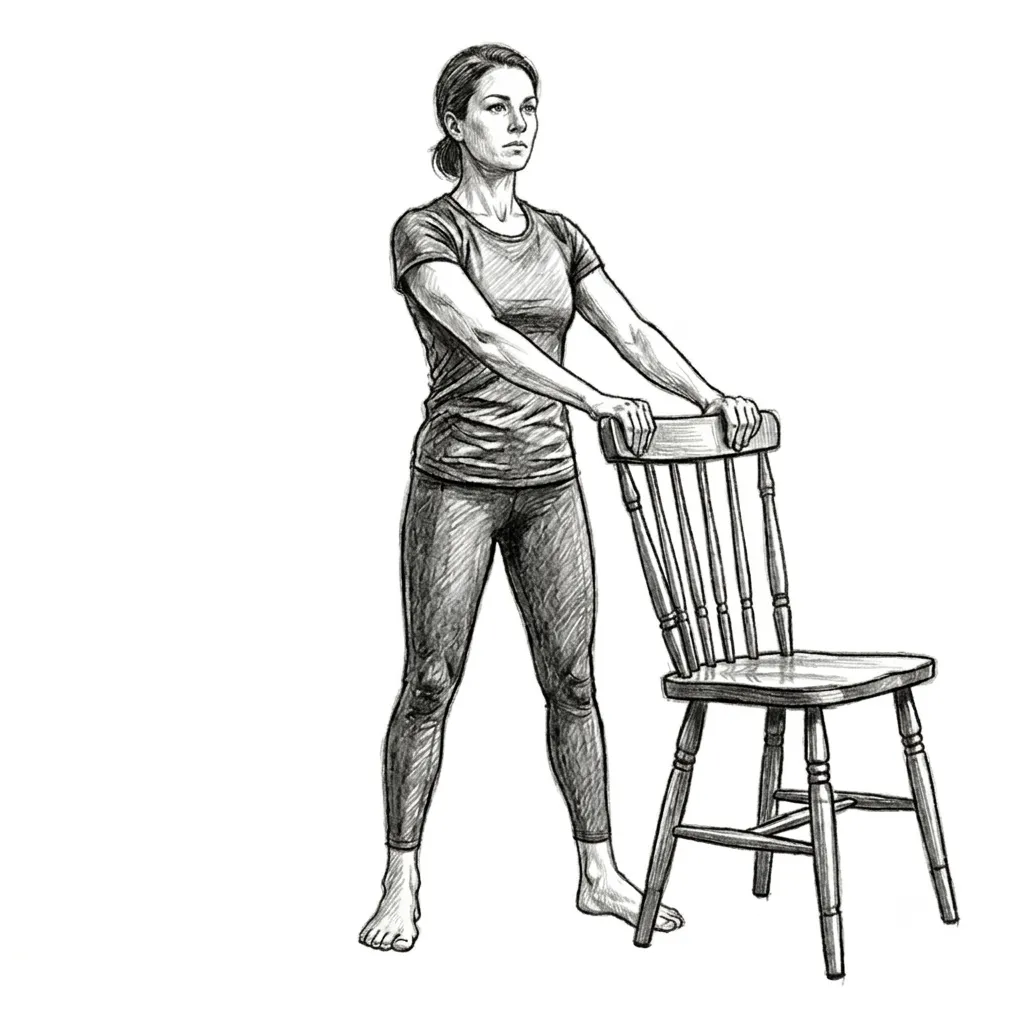 3
3Slowly and with control, lower your heels back to the floor to complete the repetition.
🔁 Repeat this exercise 5 times
Muscles Targeted
The large, two-headed muscle visible on the back of the calf. It is the primary muscle targeted when the knee is kept straight.
The deeper, flatter calf muscle that assists in plantar flexion (though it is targeted more aggressively when the knee is bent).
Work to stabilize the ankle and arch of the foot during the movement.
Run along the outside of the lower leg to prevent the ankle from rolling outward.
Helpful For
Often utilized in heavy slow resistance (HSR) or eccentric loading protocols to rebuild tendon strength and collagen structure.
Helps strengthen the foot-ankle complex, including the intrinsic foot muscles, which supports the arch and reduces strain on the plantar fascia.
Used to condition the lower leg musculature to better absorb impact forces during running or jumping.
An essential part of late-stage rehab following an ankle sprain to restore functional strength and proprioception.
Used progressively (often starting seated, then moving to standing) after Achilles tendon repairs or ankle fracture fixations once weight-bearing is permitted.
Benefits
- Increases Ankle Stability: Strengthens the muscles and tendons surrounding the ankle joint, reducing the risk of rolls and sprains.
- Improves Athletic Performance: Builds the explosive power needed for running, jumping, and rapid changes of direction.
- Enhances Balance and Proprioception: Trains the body to maintain stability through a full range of motion on a reduced base of support.
- Enhances Balance and Proprioception: Trains the body to maintain stability through a full range of motion on a reduced base of support.
- Aids in Injury Prevention: Conditions the Achilles tendon to handle greater loads, protecting it from sudden tears or strains.
Precautions
- Avoid Bouncing: Do not use momentum to spring up and down. The movement should be slow and deliberate, especially during the lowering (eccentric) phase.
- Watch Ankle Alignment: Ensure your weight is distributed evenly across the balls of your feet. Avoid rolling your ankles outward (supination) or inward (pronation) at the top of the movement.
- Don't Hyperextend the Knees: Keep your legs straight to target the gastrocnemius, but keep a micro-bend in the knee joint to avoid joint strain.
- Prioritize Full Range of Motion: Ensure you are pushing all the way up onto your toes and returning completely to the floor on every repetition.
Need Professional Help?
Book a consultation to get personalized treatment advice for your condition.
Book on Instagram