Sit-to-Stand
A simple chair exercise that uses your legs to move from sitting to standing and back again. It helps build strength for everyday movement.

How to Perform
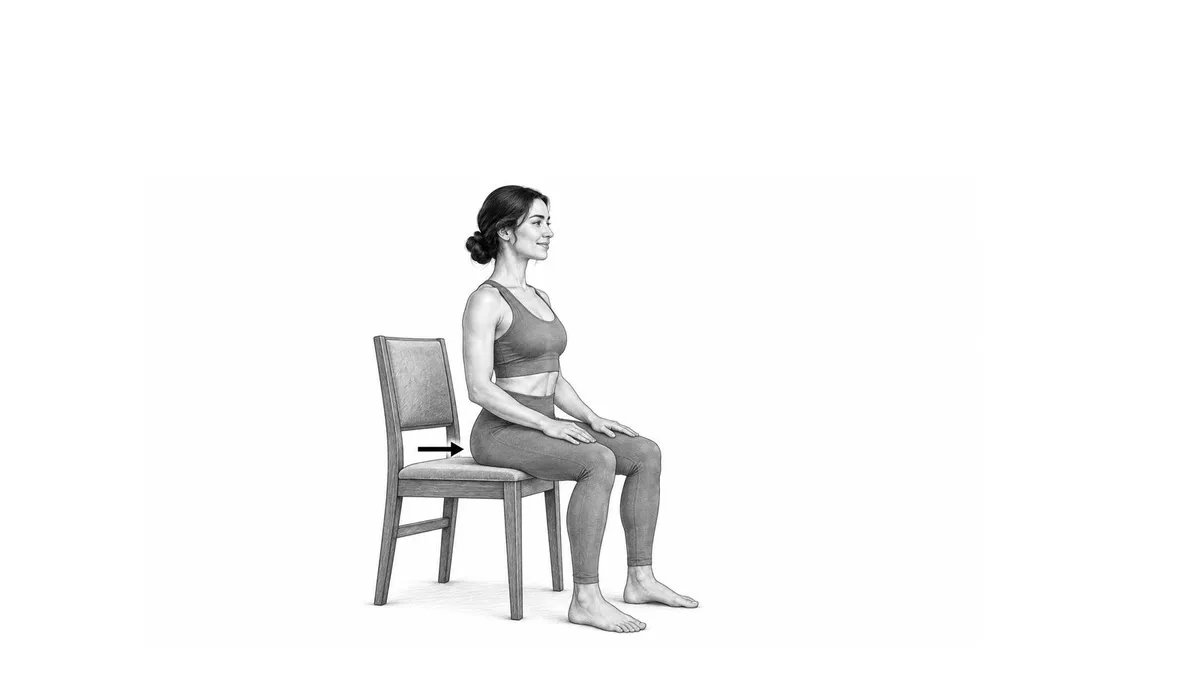 1
1Sit on a firm, stable chair and slide forward to the edge. Feet flat, about shoulder-width apart, knees bent to about 90 degrees.
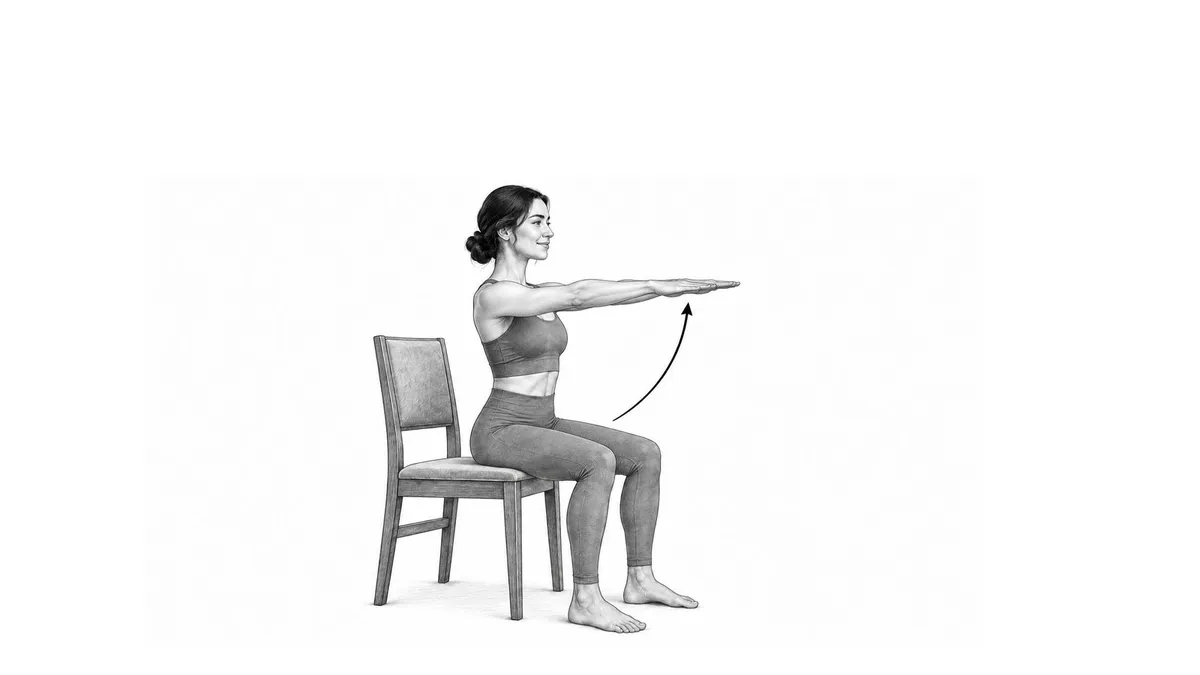 2
2Raise both arms out in front of you at shoulder height. Keep looking ahead.
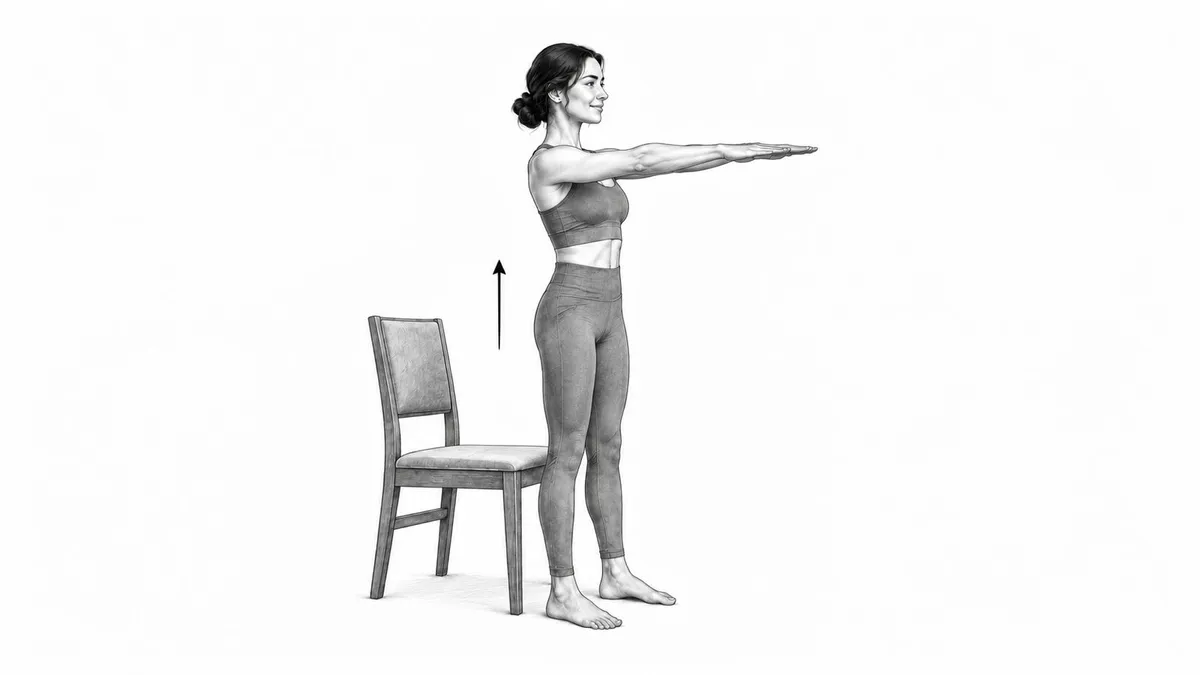 3
3Lean forward slightly from your hips and slowly stand up, straightening hips and knees, arms still in front.
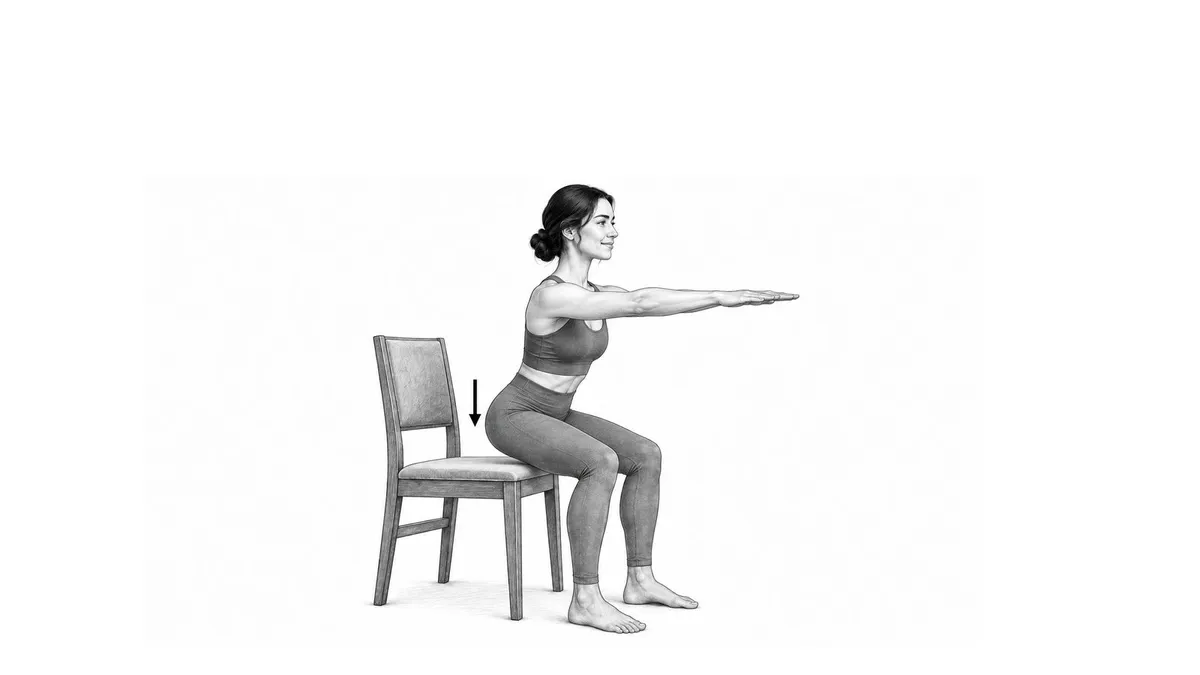 4
4Bend hips and knees and slowly lower yourself back onto the chair with control. Repeat this 5 times.
🔁 Repeat this exercise 5 times
Watch the Exercise
Muscles Targeted
This buttock muscle straightens the hips as you stand. It also controls the return to the chair.
Lies at the inner front of the thigh near the knee. It helps the quadriceps straighten and control the knee.
This front thigh muscle is part of the quadriceps. It straightens the knee as you rise.
This calf muscle controls the lower leg over the foot. It supports balance as your weight moves forward and upward.
Helpful For
Trains leg muscles used in everyday standing. Adjust chair height and support to match your ability.
Directly practises getting up from a chair. A physiotherapist can adjust chair height or hand support for safe practice.
Builds strength and control for daily transfers. Combine chair rises with other suitable activity for broader mobility.
Benefits
- Leg Strength - works the muscles that help you stand up.
- Everyday Function - practises a movement used when getting up from a chair.
- Movement Control - encourages a slow, controlled return to sitting.
- Core Control - the arms-forward position also works the muscles around your middle.
Precautions
- Stable Chair - firm chair without wheels that will not slide.
- Easier Version - if too hard, stand facing the chair, hold the backrest and squat to about 45 degrees.
- Balance Problems - practise with supervision rather than alone.
- Comfortable Movement - stop if it causes joint pain. Seek advice if pain persists.
- Normal Breathing - do not hold your breath.
- Warning Symptoms - stop if dizzy, chest pain or unusually breathless. Seek medical help.
Need Professional Help?
Book a consultation to get personalized treatment advice for your condition.
Book on Instagram