Single leg glute bridge
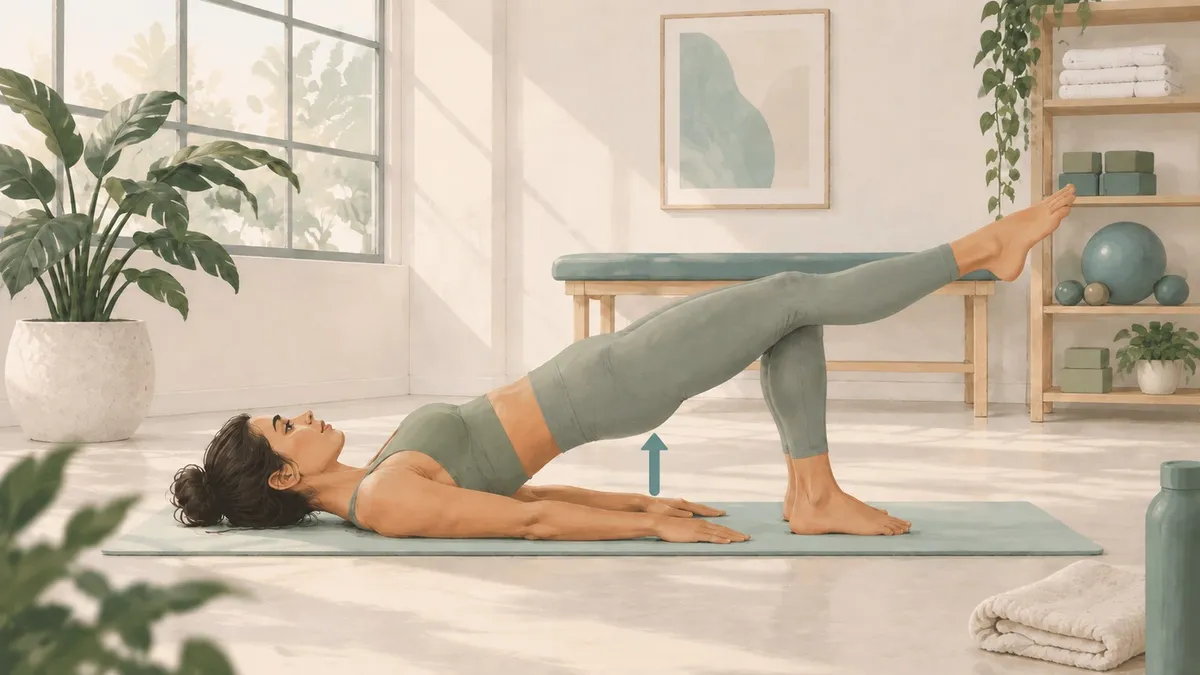
The single leg glute bridge is a unilateral bodyweight exercise that isolates and strengthens the posterior chain. By relying on one leg to lift the hips, it demands higher core engagement and pelvic stability than the standard bilateral bridge.
How to Perform
 1
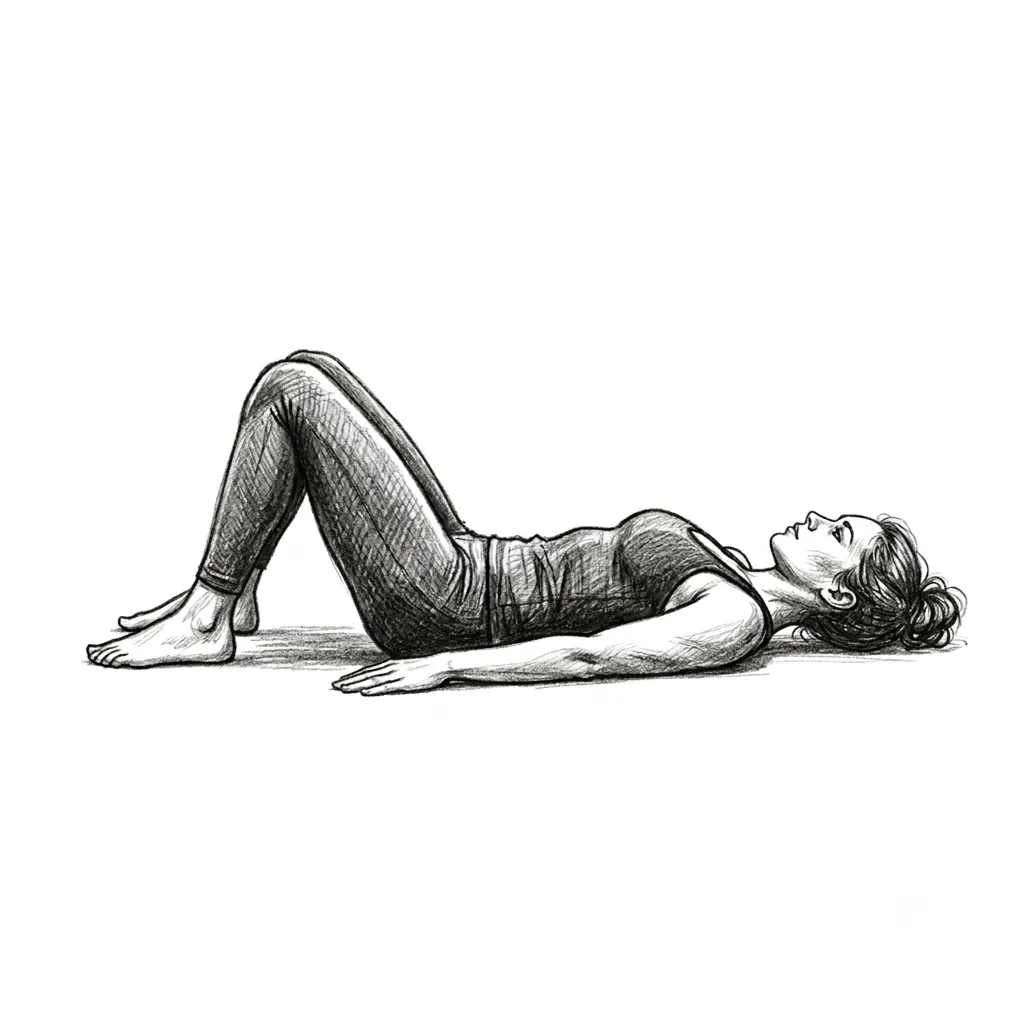
1Lie flat on your back on a mat with your knees bent and feet flat on the floor, hip width apart.
 2
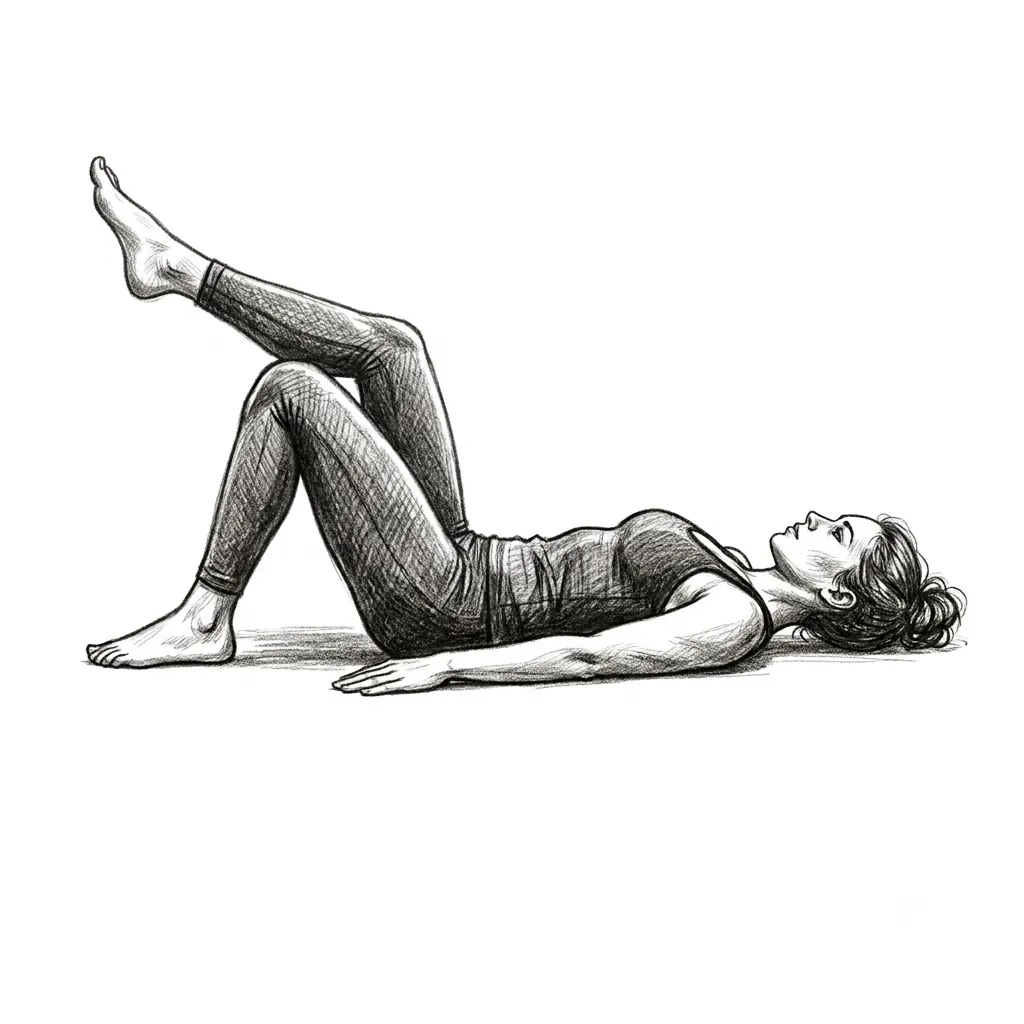
2Extend one leg straight up or bend the knee at a 90-degree angle, keeping your thighs parallel.
 3
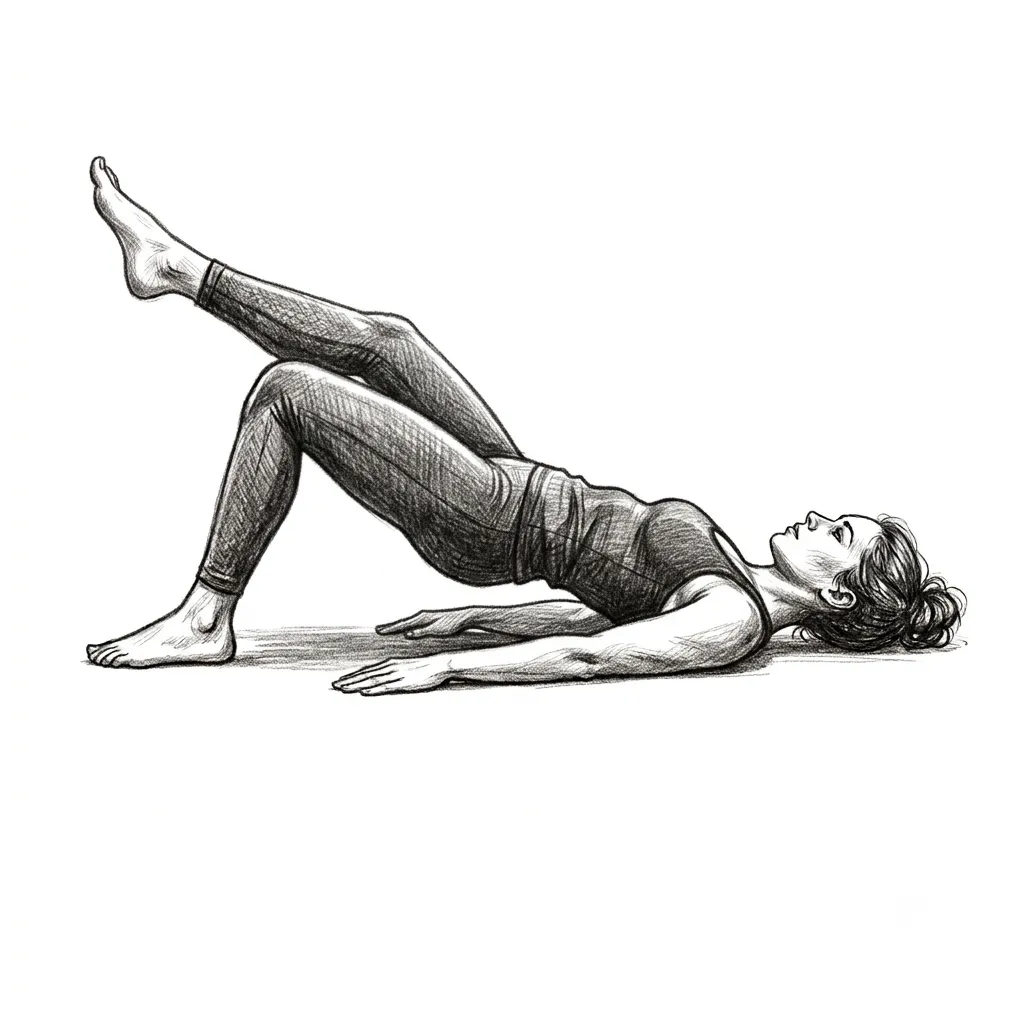
3Tighten your core and press through the heel of your planted foot to lift your hips toward the ceiling.
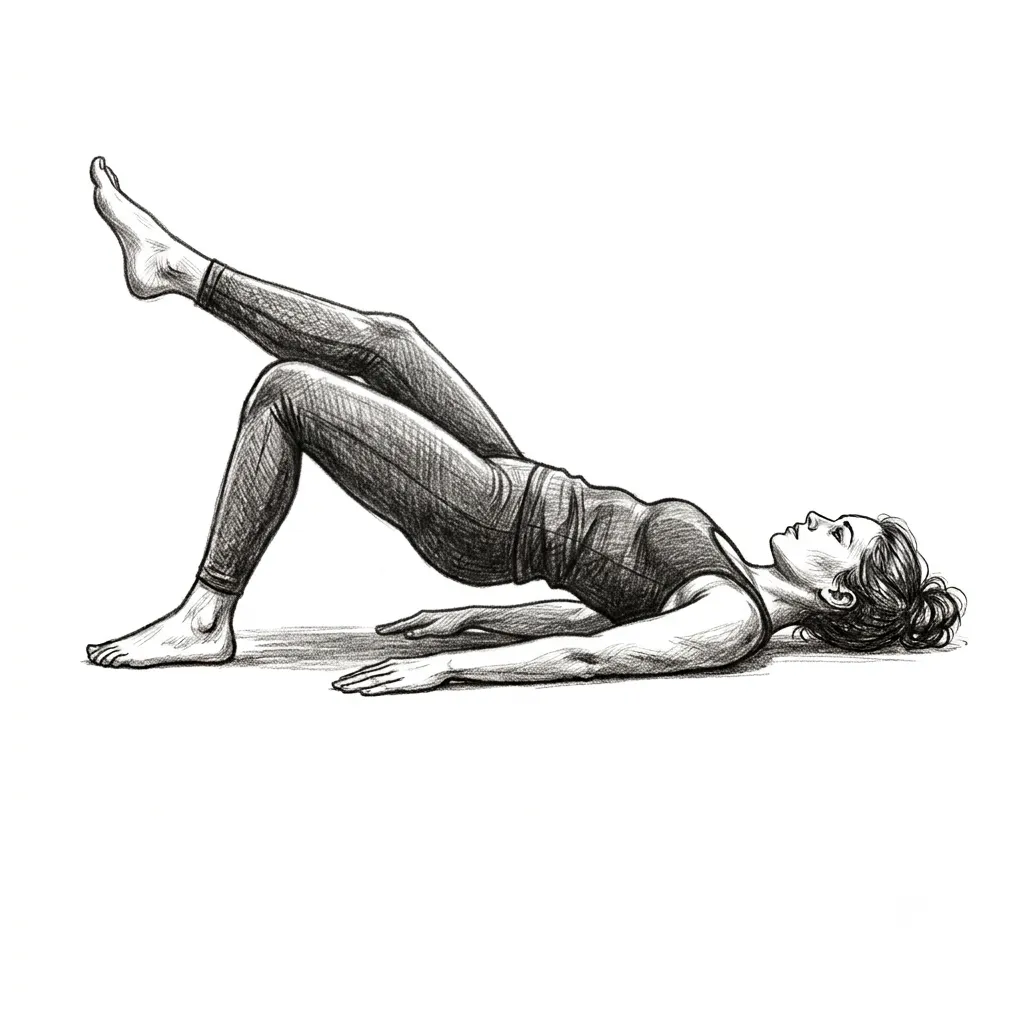 4⏱ Hold 10s
Squeeze your glutes at the top until your shoulders, hips, and knee form a straight line and hold for 10 seconds.
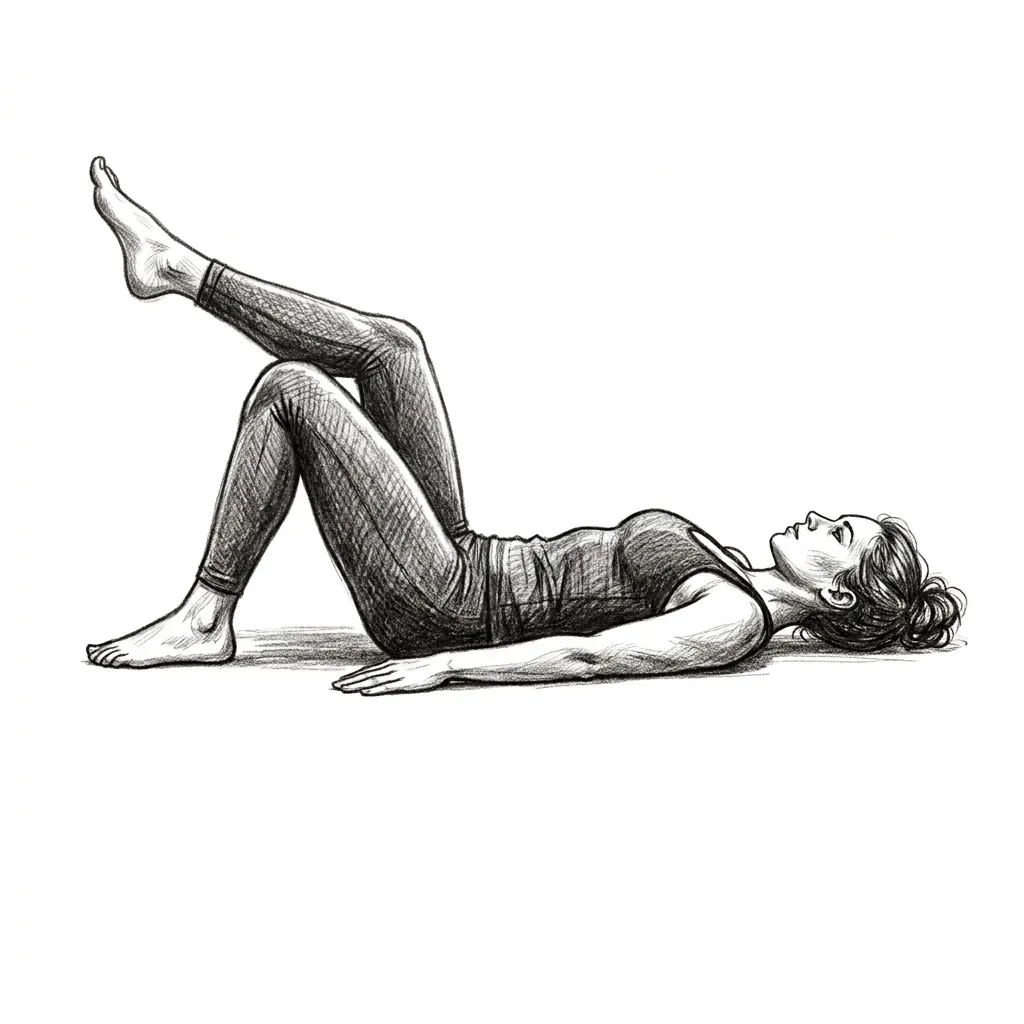 5
5Lower your hips slowly back to the floor with control. Complete all repetitions on one side before switching to the other leg.
🔁 Repeat this exercise 5 times
Watch the Exercise
Muscles Targeted
Primary Movers
The muscles at the back of the upper thigh.
The muscles along your spine that help maintain your posture during the reach.
The main core muscles.
Helpful For
Helps reactivate under-stimulated glute muscles caused by prolonged sitting.
Strengthens the glutes and core to take excessive pressure off the lumbar spine.
Improves hip stability, which prevents the femur from internally rotating and placing stress on the knee joint.
Strengthens the hip abductors (like the gluteus medius) to reduce friction and tension along the iliotibial band.
Used in later stages of knee rehab to rebuild hamstring and glute strength without stressing the anterior knee.
Benefits
- Corrects Muscle Imbalances: By working one side at a time, it prevents the dominant leg from compensating for the weaker one.
- Improves Pelvic Stability: Challenges the core and hip abductors to keep the pelvis level during the movement.
- Enhances Athletic Performance: Builds unilateral explosive power necessary for running, jumping, and pivoting
- Lower Back Safe: Provides excellent glute activation without placing heavy compressive loads on the lumbar spine.
Precautions
- Avoid Overarching: Do not push your hips so high that your lower back hyperextends. The lift should come from the glutes, not the lower back.
- Watch for Pelvic Drop: Keep your hip bones level throughout the movement. If the hip of the extended leg sags toward the floor, you need to engage your core and stabilizing glute more.
- Push Through the Heel: Driving through the toes shifts the workload to the quads and knees. Keep the weight planted firmly in the heel.
- Keep the Neck Relaxed: Avoid pressing the back of your head aggressively into the mat; keep your neck neutral and relaxed.
Need Professional Help?
Book a consultation to get personalized treatment advice for your condition.
Book on Instagram