Sidelying Thoracic Rotation
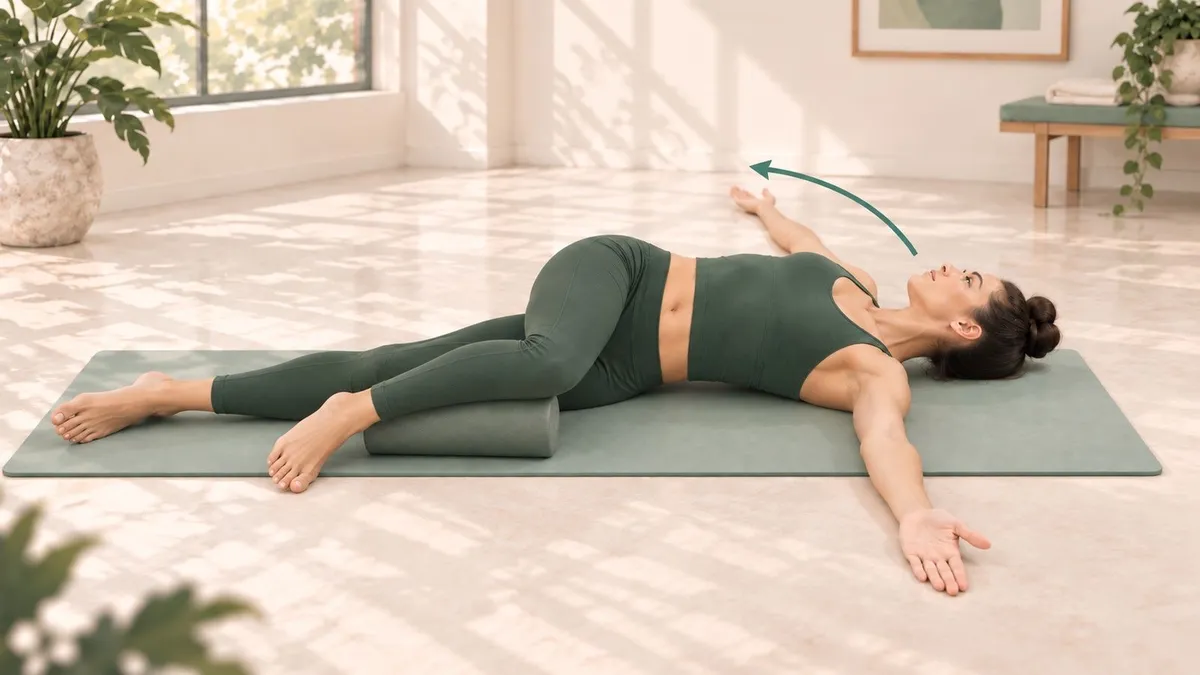
Sidelying Thoracic Rotation, also known as Open Book Thoracic Rotation, is a gentle exercise for mid-back movement. It helps you turn your upper body and stretch the front of your chest while your lower body stays still.
How to Perform
 1
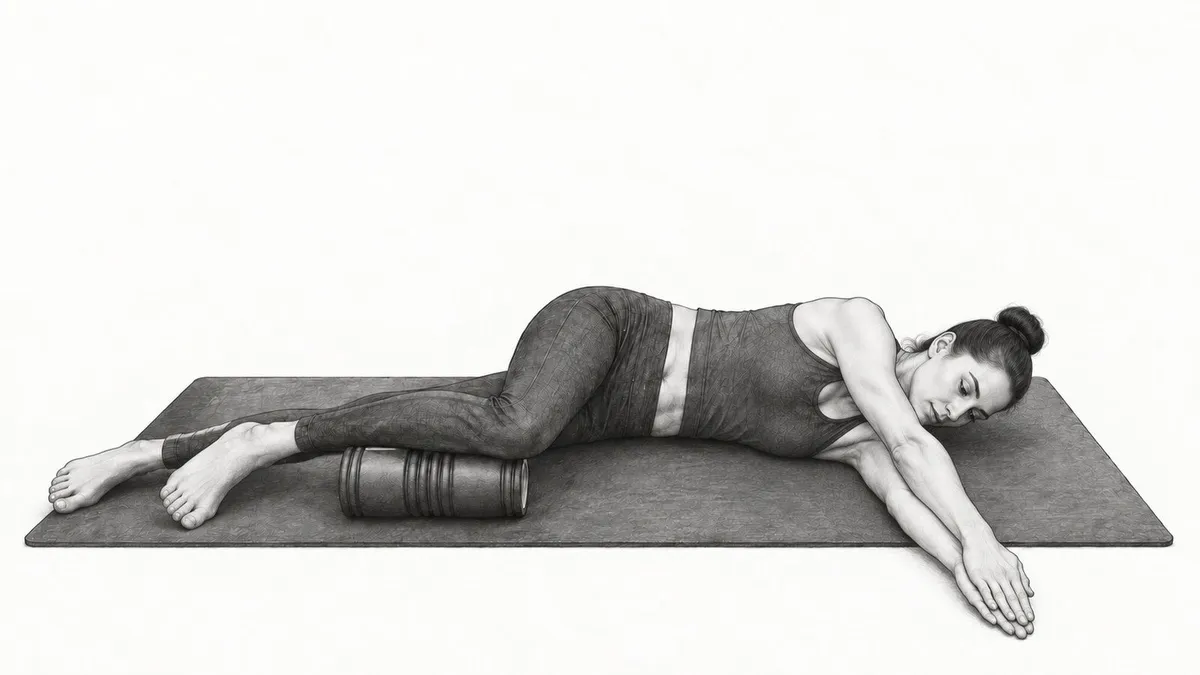
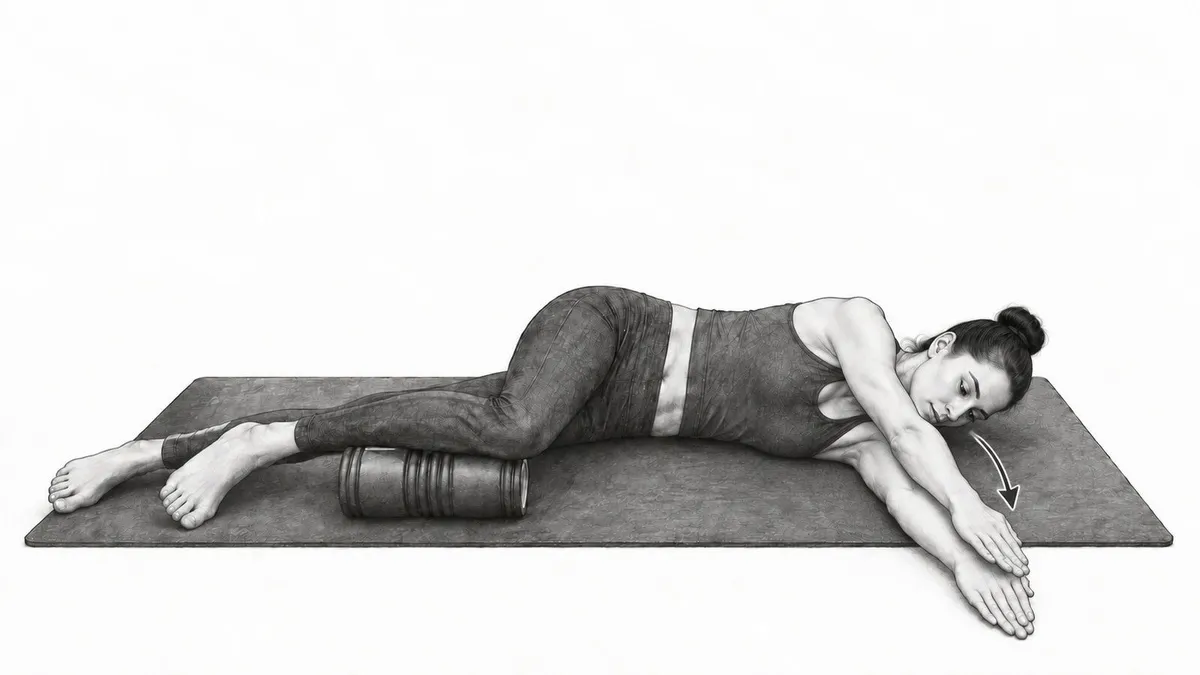
1Lie on your side on a mat. Keep your bottom leg straight. Bend your top hip and knee to about 90 degrees and rest the knee on a foam roller, or a folded pillow or folded blanket. Reach both arms straight in front of your chest with your palms together. Support your head with a small pillow if needed.
 2
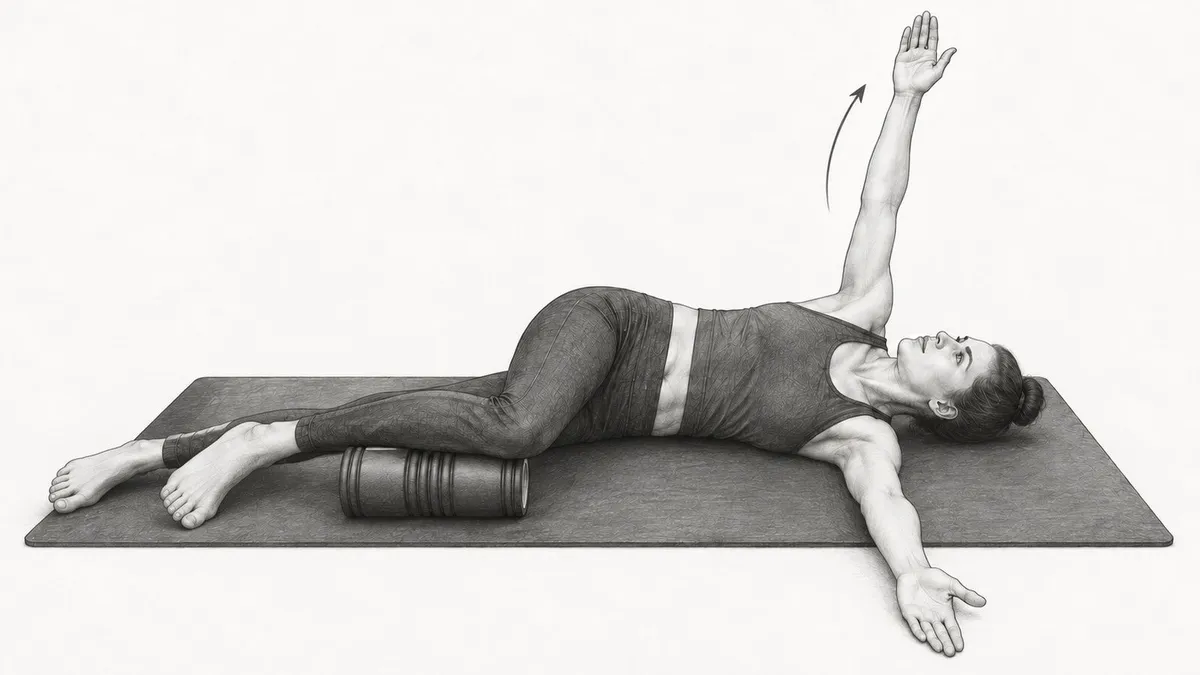
2Keep your bottom arm on the mat and your top knee on the roller. Slowly lift your top arm toward the ceiling. Follow your hand with your eyes.
 3⏱ Hold 10s
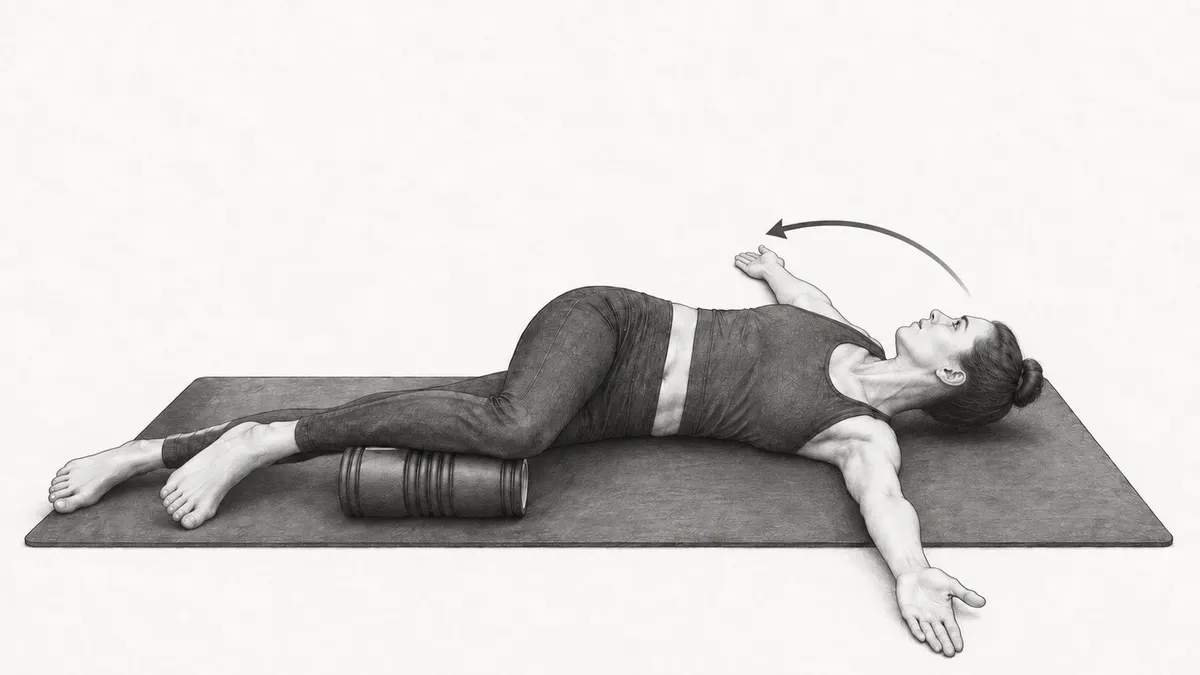
Move your top arm back, letting your chest turn with it. Stop when you feel a gentle stretch in your chest or mid-back. Keep your hips still and breathe normally. Hold for 10 seconds.
 4
4Slowly bring your top arm back until your palms meet. Turn onto your other side and repeat.
🔁 Repeat this exercise 5 times
Watch the Exercise
Muscles Targeted
This chest muscle brings the arm across the body. It gently lengthens as the top arm opens with the chest.
This side tummy muscle turns the trunk. It controls the chest as it rotates and returns.
This deeper side tummy muscle controls rotation. It helps keep the turn slow and steady.
These small muscles lie close to the mid-back spine. They control small spinal movements during the turn.
Helpful For
Gently rotates the mid-back. Keep the range comfortable without forcing the hand to the floor.
Practises turning the chest with the hips supported and still. Slow movement helps avoid rolling the whole body.
Offers a break from a fixed sitting position. It gently moves the chest and mid-back when they feel tight.
Benefits
- Improves turning movement in the mid-back.
- Gently stretches the front of the chest.
- Helps ease upper-back stiffness.
- Helps you control upper-body movement while keeping the hips still.
Precautions
- Move slowly. Do not force your arm or shoulder to touch the floor.
- Keep your top knee on the roller. Do not roll your hips backward to turn further.
- Stop if you feel pain, catching, numbness or tingling.
- Ask your physiotherapist first if you have osteoporosis or a back or shoulder injury.
Need Professional Help?
Book a consultation to get personalized treatment advice for your condition.
Book on Instagram