Side Straight Leg Raise
The Side Straight Leg Raise (also known as Side-Lying Hip Abduction) is a targeted exercise designed to isolate and strengthen the lateral muscles of the hip.

How to Perform
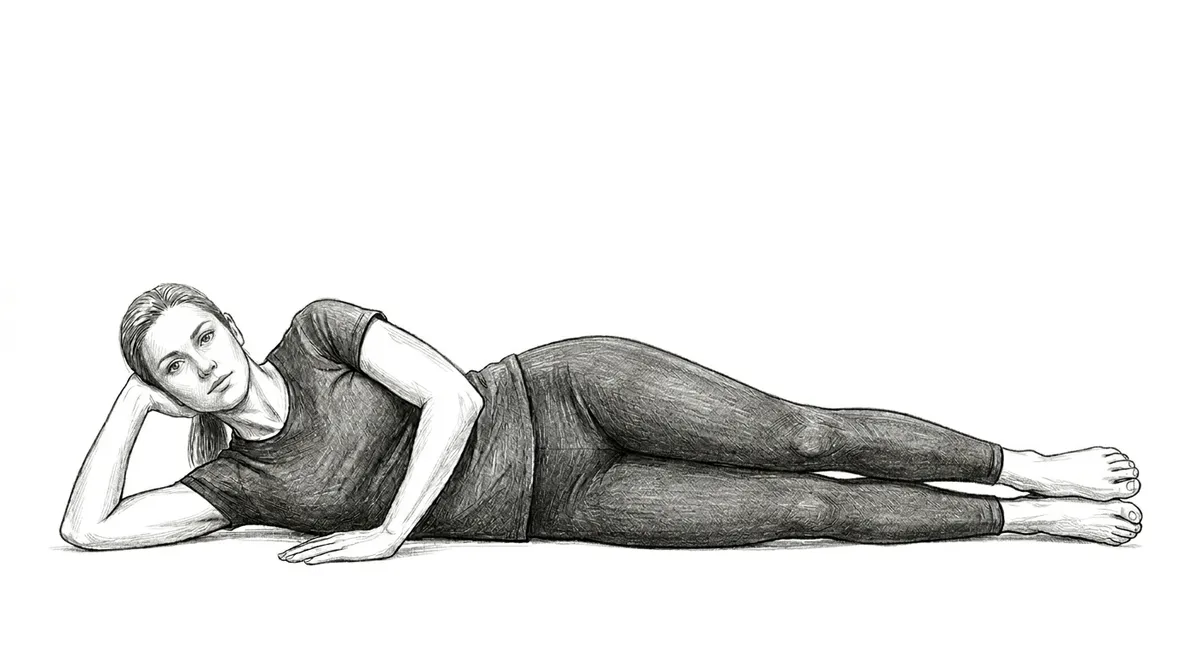 1
1Lie on your side on a mat or firm surface.The affected should be on top.
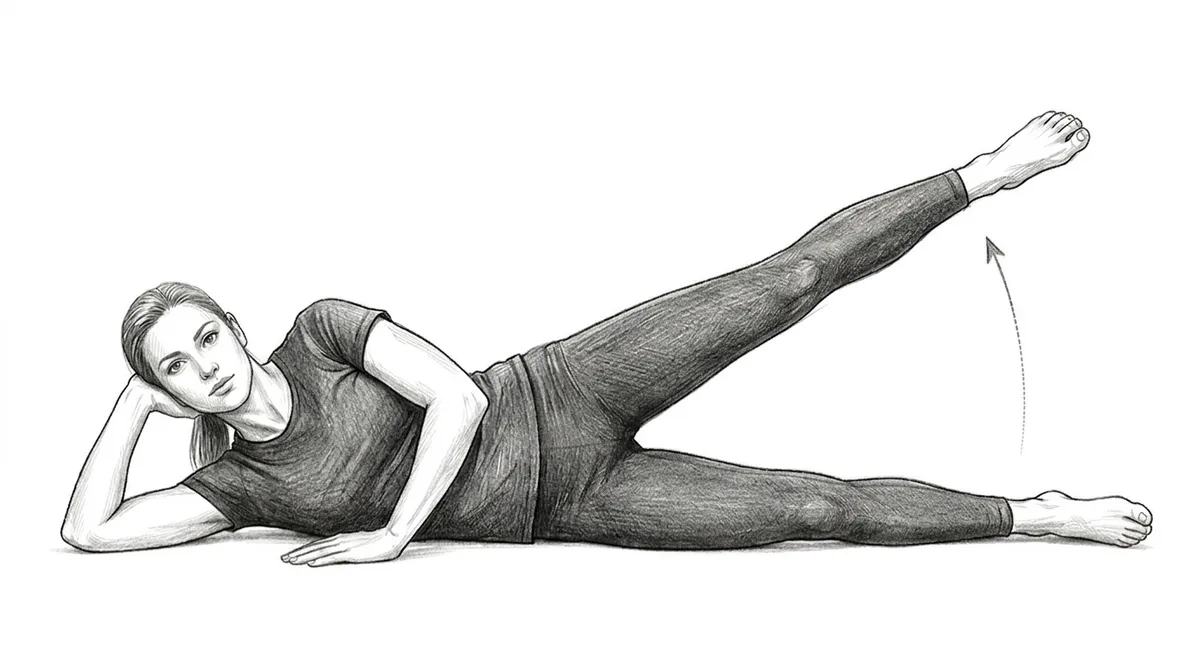 2⏱ Hold 10s
Slowly lift the top leg toward the ceiling about 12 to 18 inches and hold this position for 10 seconds
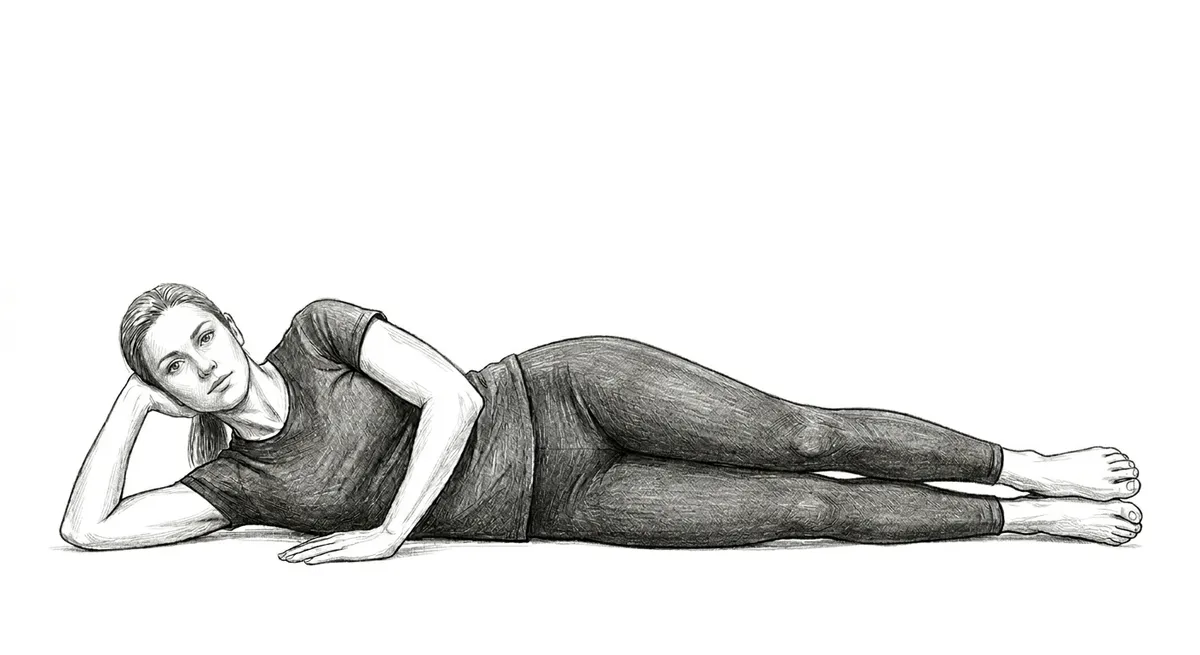 3
3Slowly lower the leg back down to meet the bottom leg with control and repeat this exercise 5 times.
🔁 Repeat this exercise 5 times
Muscles Targeted
Primary Movers
Secondary Synergists
Primary Movers
Helpful For
Helps correct the femoral internal rotation that exacerbates knee pain.
Addresses the underlying gluteal weakness that often leads to IT band tightness.
Gradually loads and strengthens the lateral hip tendons.
Benefits
- Improves Pelvic Stability: By strengthening the hip abductors, this exercise helps keep the pelvis level during walking, running, and single-leg weight-bearing activities.
- Enhances Balance and Alignment: Strong lateral hip muscles prevent the knees from collapsing inward (valgus collapse), improving overall lower extremity alignment.
- Injury Prevention: Builds resilience in the hip joint, reducing the compensatory load on the lower back and knees.
- Accessible and Low Impact: It requires no equipment and places minimal stress on the joints, making it highly effective for early-stage rehabilitation.
Precautions
- Keep the Pelvis Stacked: Do not allow your top hip to roll backward as you lift the leg. This is the most common mistake and shifts the work from the glutes to the hip flexors.
- Watch the Toes: Ensure your toes are pointing straight ahead or slightly down. If your toes point upward (external rotation), you will recruit the hip flexors and quads rather than the target gluteal muscles.
- Avoid Hip Hiking: The movement should come strictly from the hip joint. Do not hike your hip up toward your ribs, which inappropriately engages the lower back (quadratus lumborum).
Need Professional Help?
Book a consultation to get personalized treatment advice for your condition.
Book on Instagram