Side Plank (Modified, on Knees)
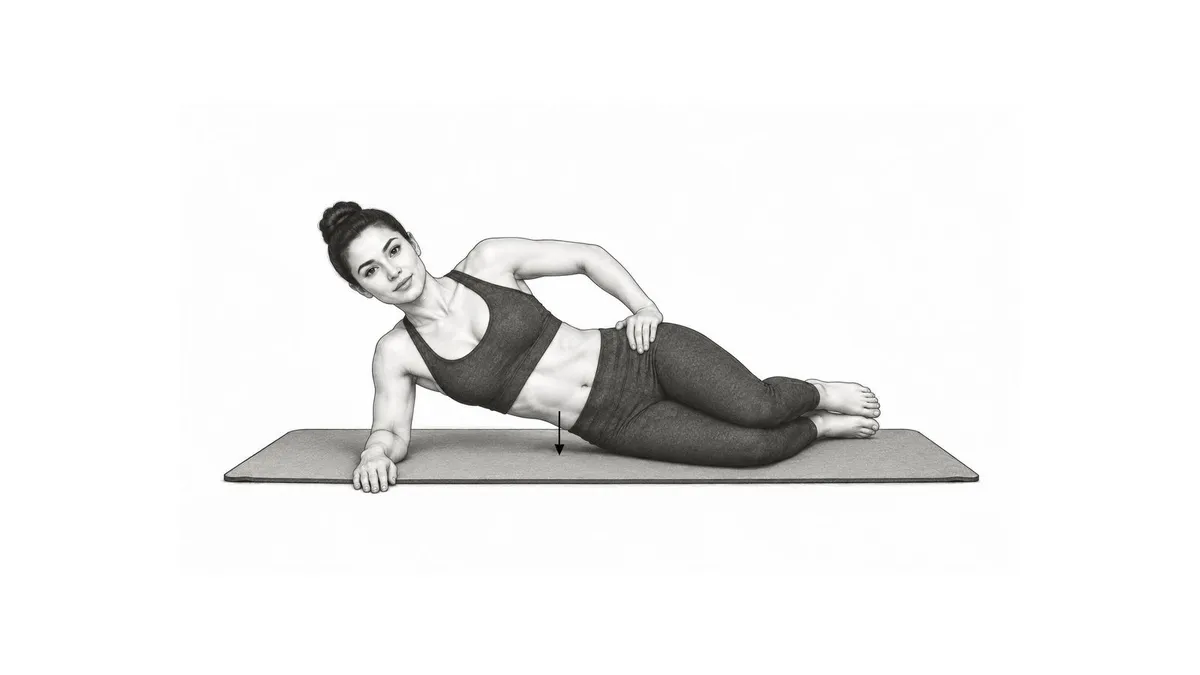
A side plank with bent knees that works the muscles around your waist and hips. It is an easier way to build strength and control before trying a full side plank.
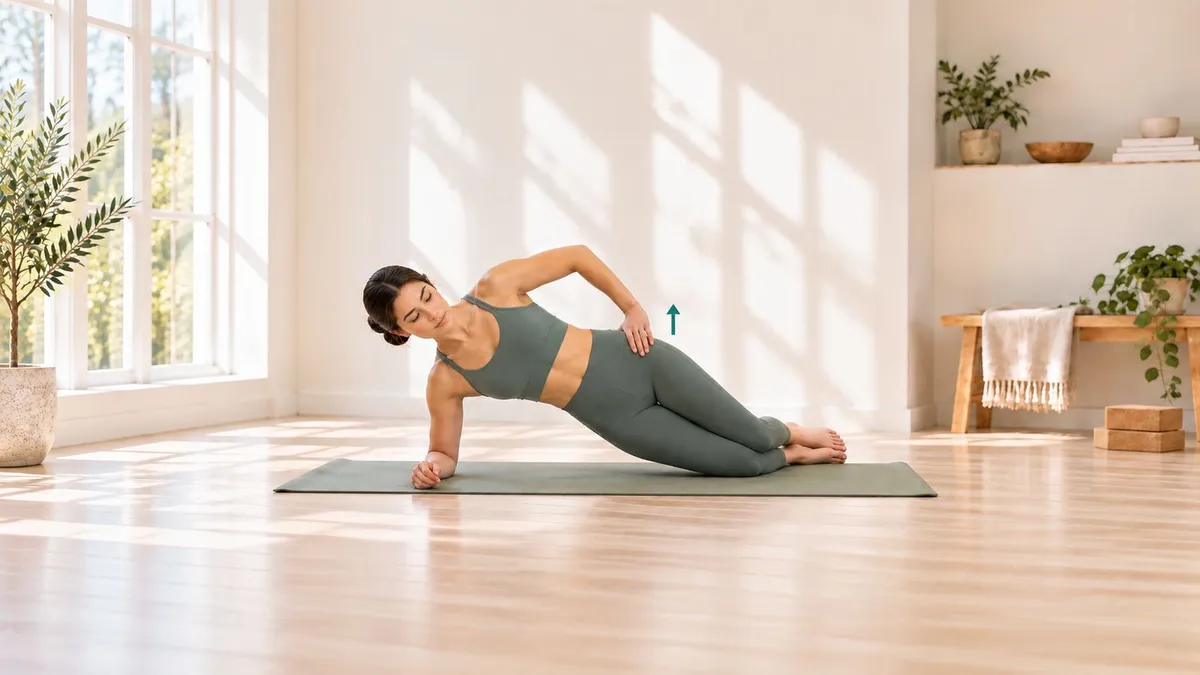
How to Perform
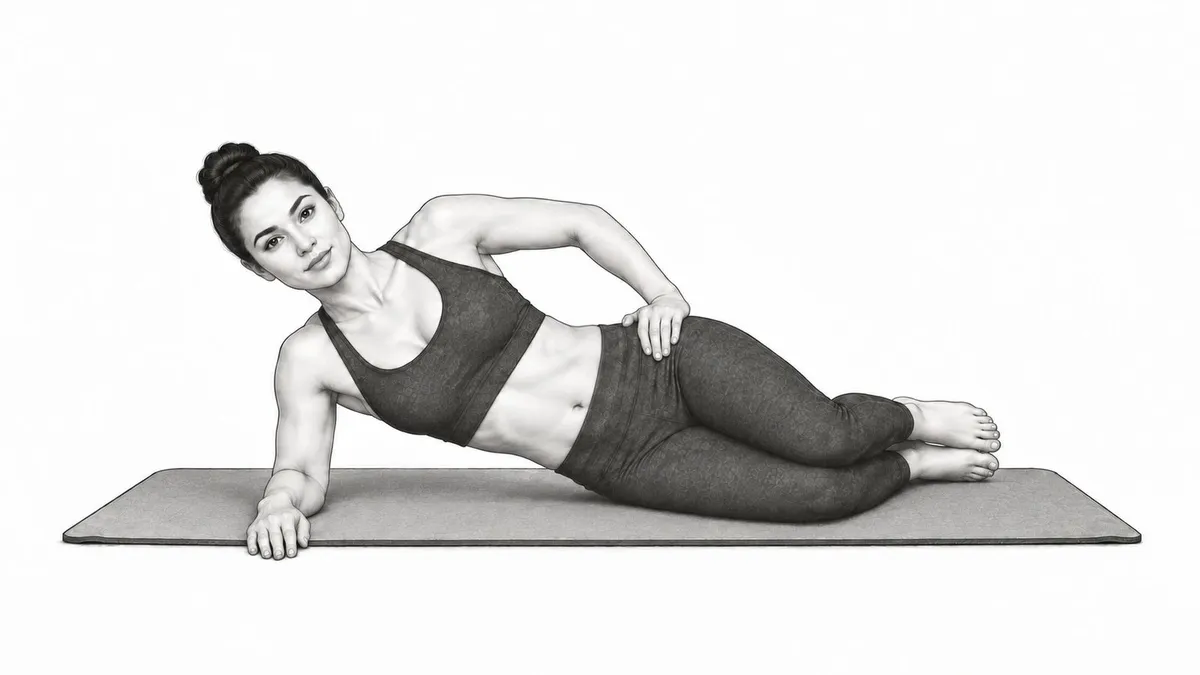 1
1Lie on your side with knees bent and stacked, feet behind you. Rest on your bottom forearm, elbow below your shoulder. Top hand on your hip.
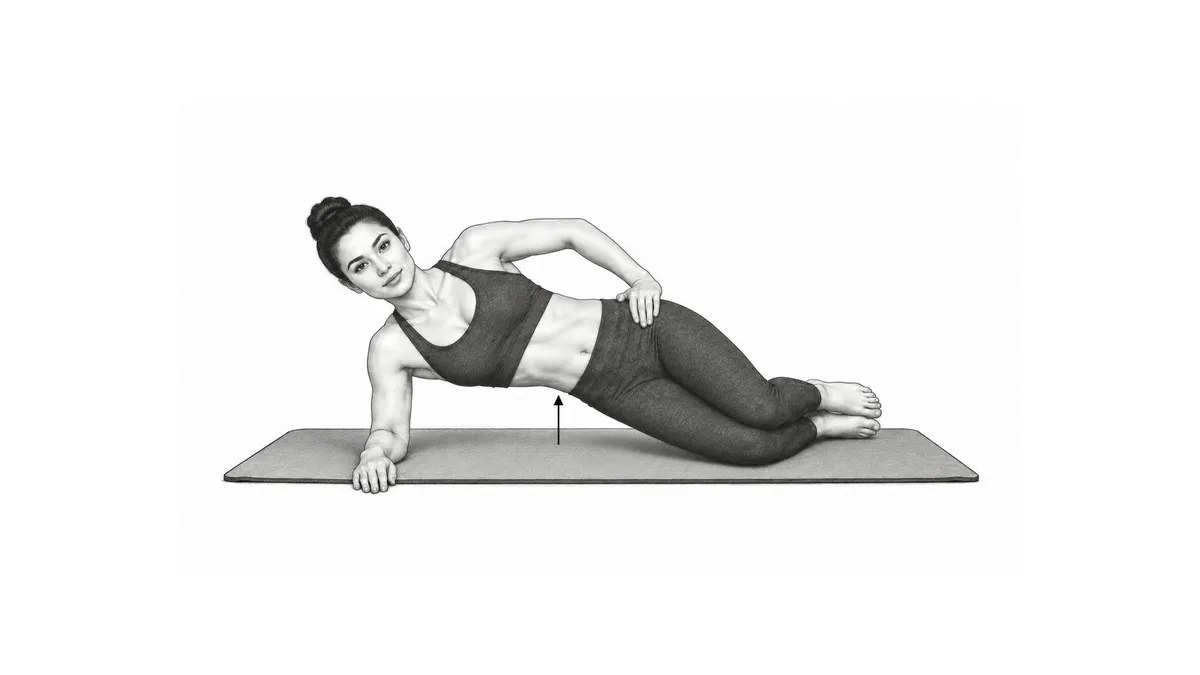 2
2Gently tighten your tummy. Press through your forearm and bottom knee to lift your hips. Keep shoulders, hips and knees in a straight line.
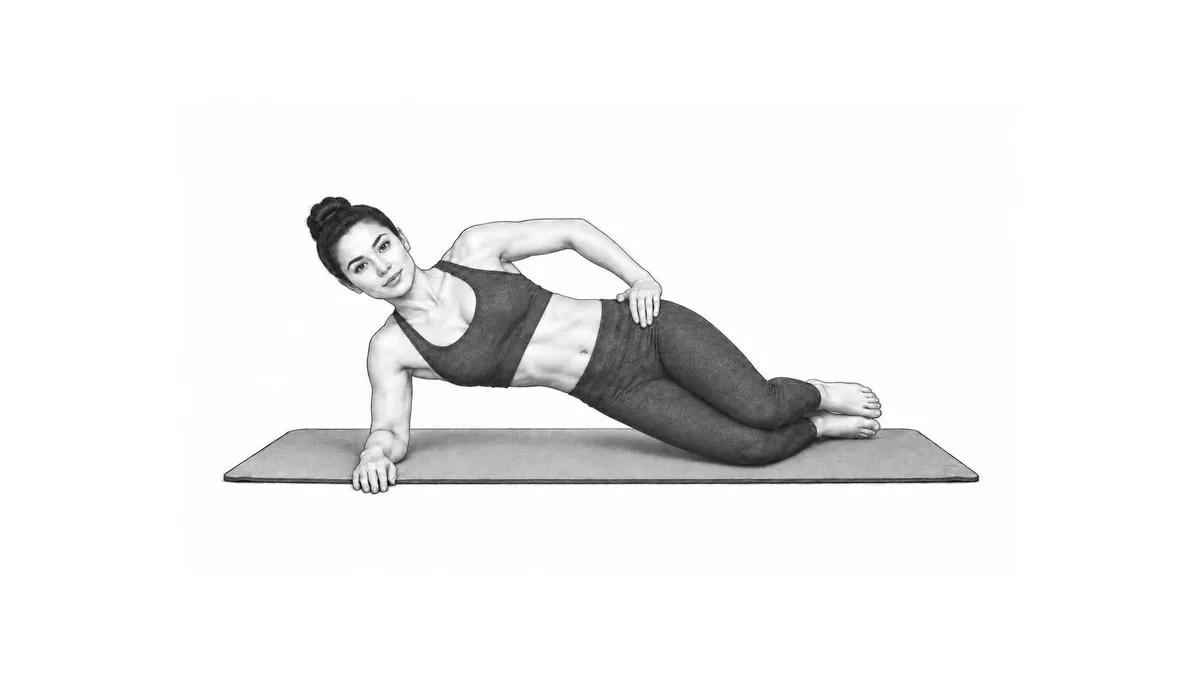 3⏱ Hold 10s
Hold for 10 seconds. Keep hips lifted, neck straight, breathing steady.
 4
4Slowly lower your hips to the mat and rest. Repeat this 5 times. Turn to the other side and repeat.
🔁 Repeat this exercise 5 times
Watch the Exercise
Muscles Targeted
Resists sideways bending and twisting of the trunk. It keeps the body steady during the hold.
Lies deeper at the side of the tummy. It maintains trunk position as the hips lift and lower.
Sits at the side of the lower back. It supports the trunk against sideways bending.
Sits at the outer side of the hip. It supports the pelvis and keeps the hips aligned.
Helpful For
May build trunk strength and control within a guided plan. Use an easier version if the position increases back pain.
Loads muscles that support the pelvis. Bent knees shorten the lever compared with a full side plank.
May suit later rehabilitation when the hip tolerates side-lying and load. Avoid it if lying on the hip or lifting worsens symptoms.
Benefits
- Builds side-core strength - works the muscles around your waist.
- Improves hip control - helps keep your pelvis steady.
- Builds shoulder support - works the muscles that support the lower shoulder.
- Easier path to a full side plank - bent knees reduce the demand.
Precautions
- Stop if you feel pain, dizziness or numbness.
- Keep your elbow below your shoulder, do not sink into the lower shoulder.
- Keep hips and shoulders stacked, do not roll forward or back.
- Keep breathing, do not hold your breath.
- Lower early if your hips drop, a shorter hold with good form is better.
- Use a padded mat for your forearm and knee.
- Ask your physiotherapist first if you have a shoulder, back or hip injury, or recent surgery.
Need Professional Help?
Book a consultation to get personalized treatment advice for your condition.
Book on Instagram