Side lying clamshell with a band
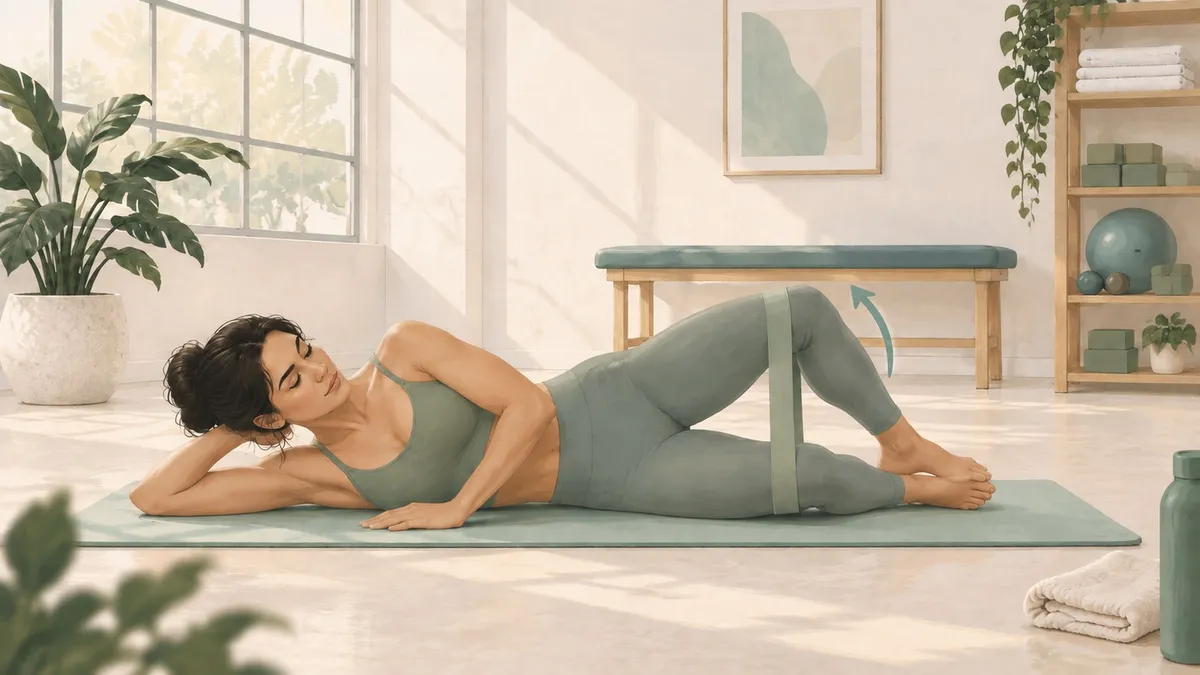
The side lying clamshell with a resistance band is a targeted isolation exercise designed to activate and strengthen the hip abductors and external rotators.
How to Perform
 1
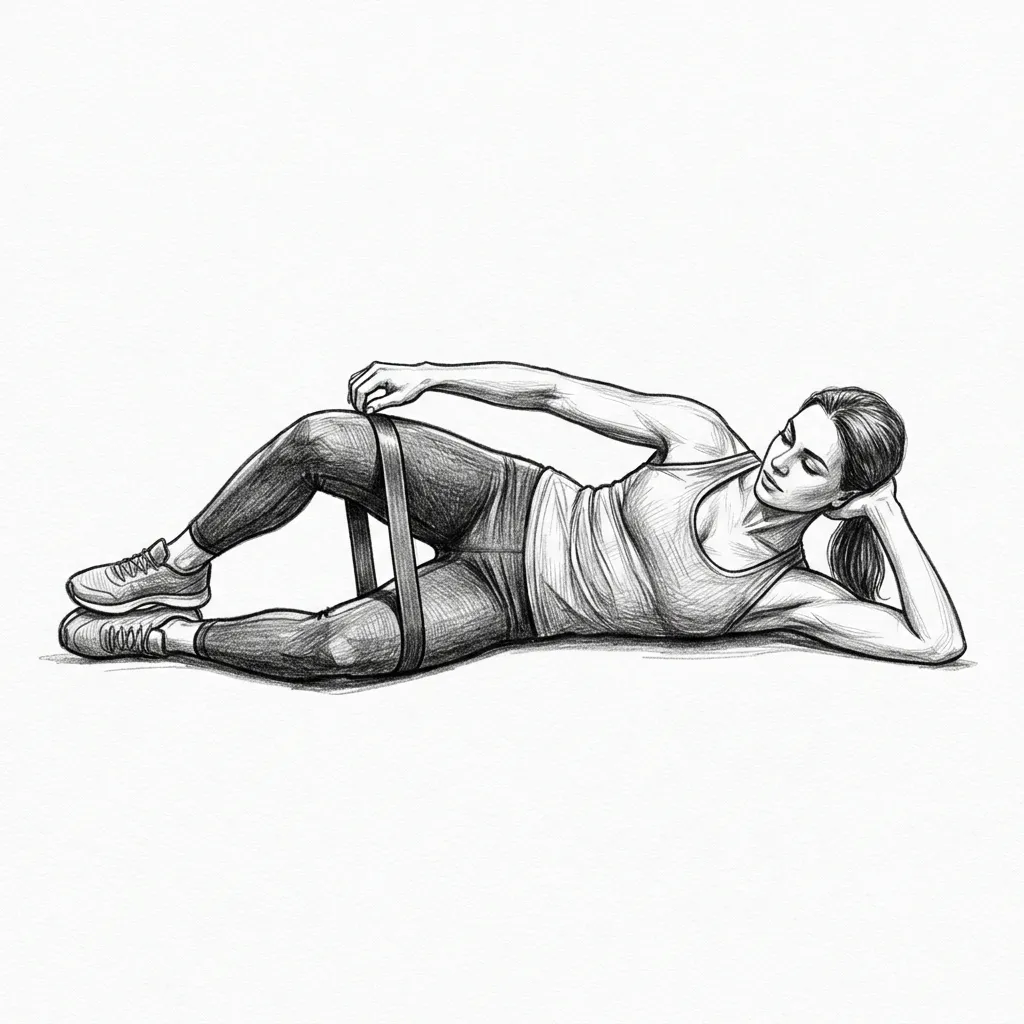
1Loop a mini loop resistance band around your thighs, placing it 1 to 2 inches above your knees.
 2
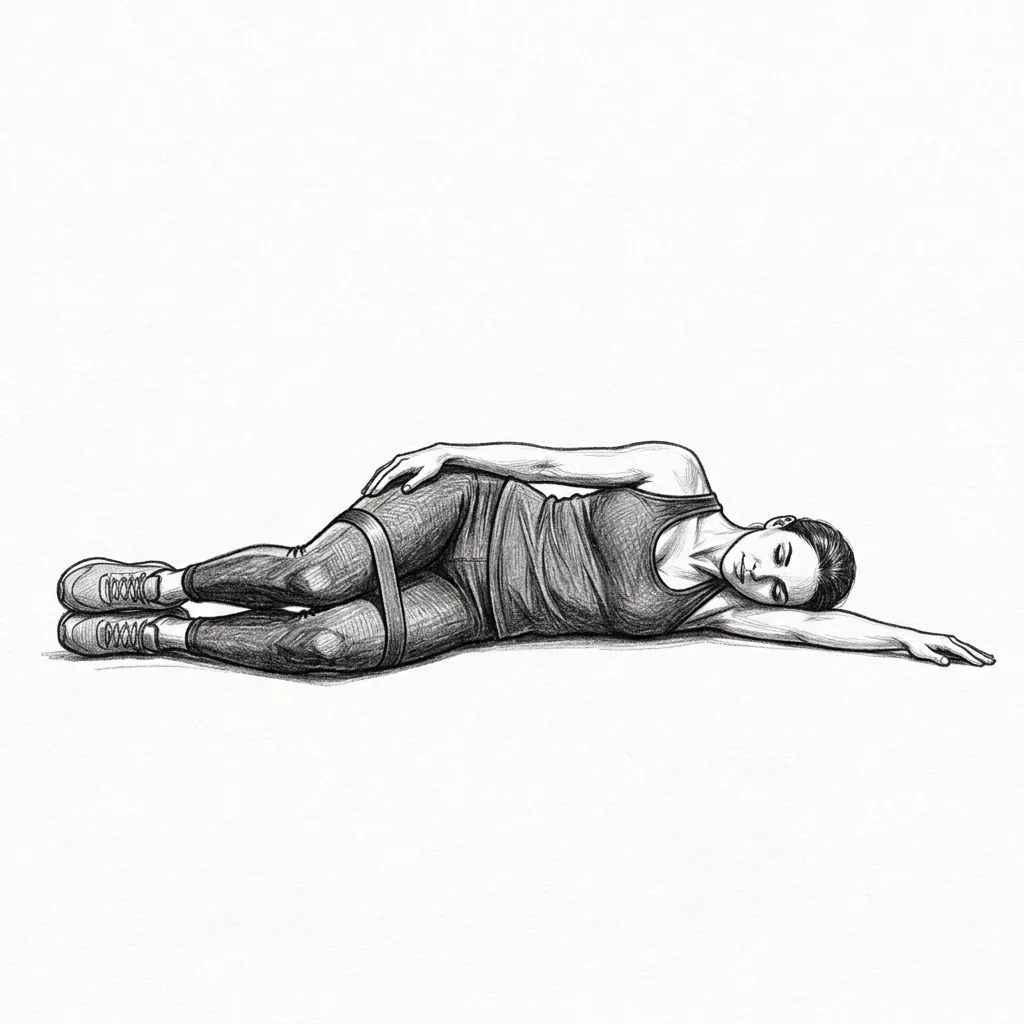
2Lie flat on your side on a fitness mat. Rest your head comfortably on your bottom arm or prop yourself up on your elbow.
 3
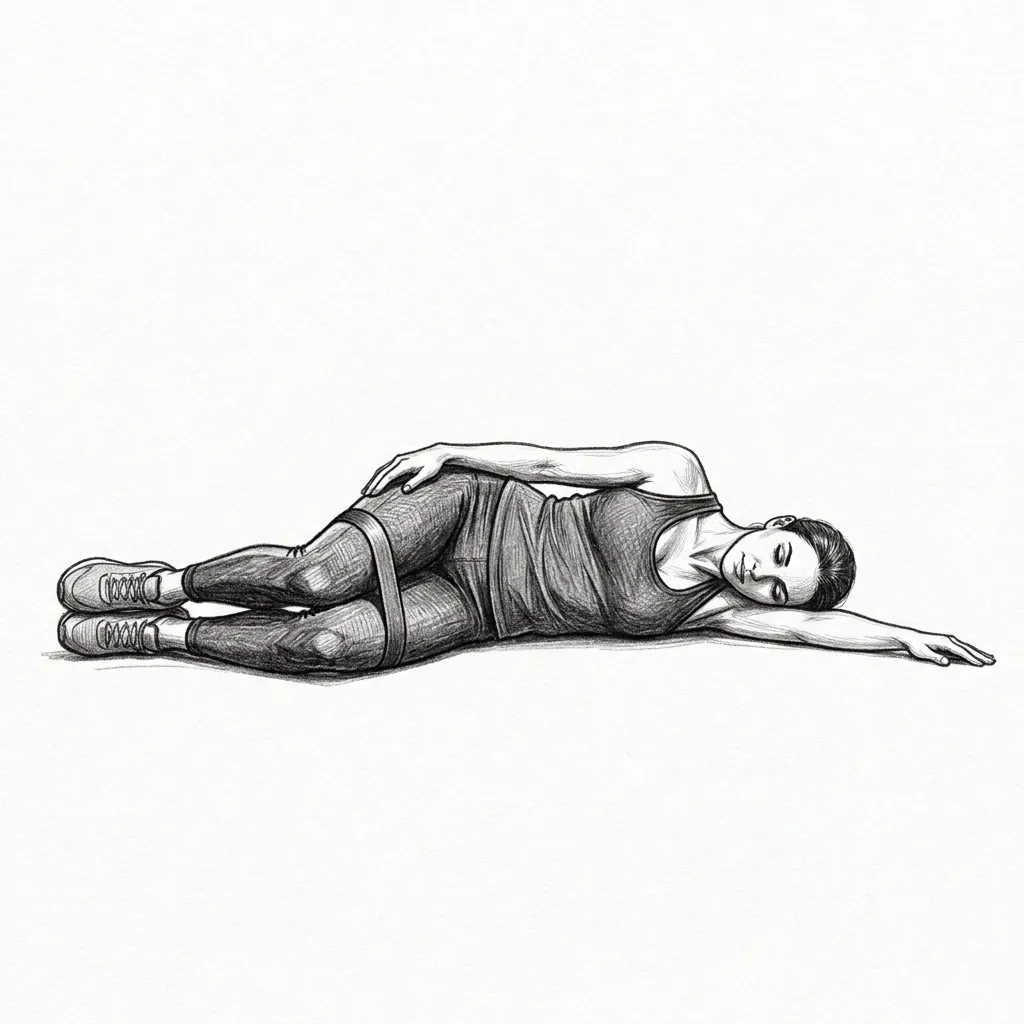
3Bend your knees at a 45 to 90 degree angle. Stack your hips, shoulders, and heels directly on top of each other so your body forms a straight line from your head to your glutes.
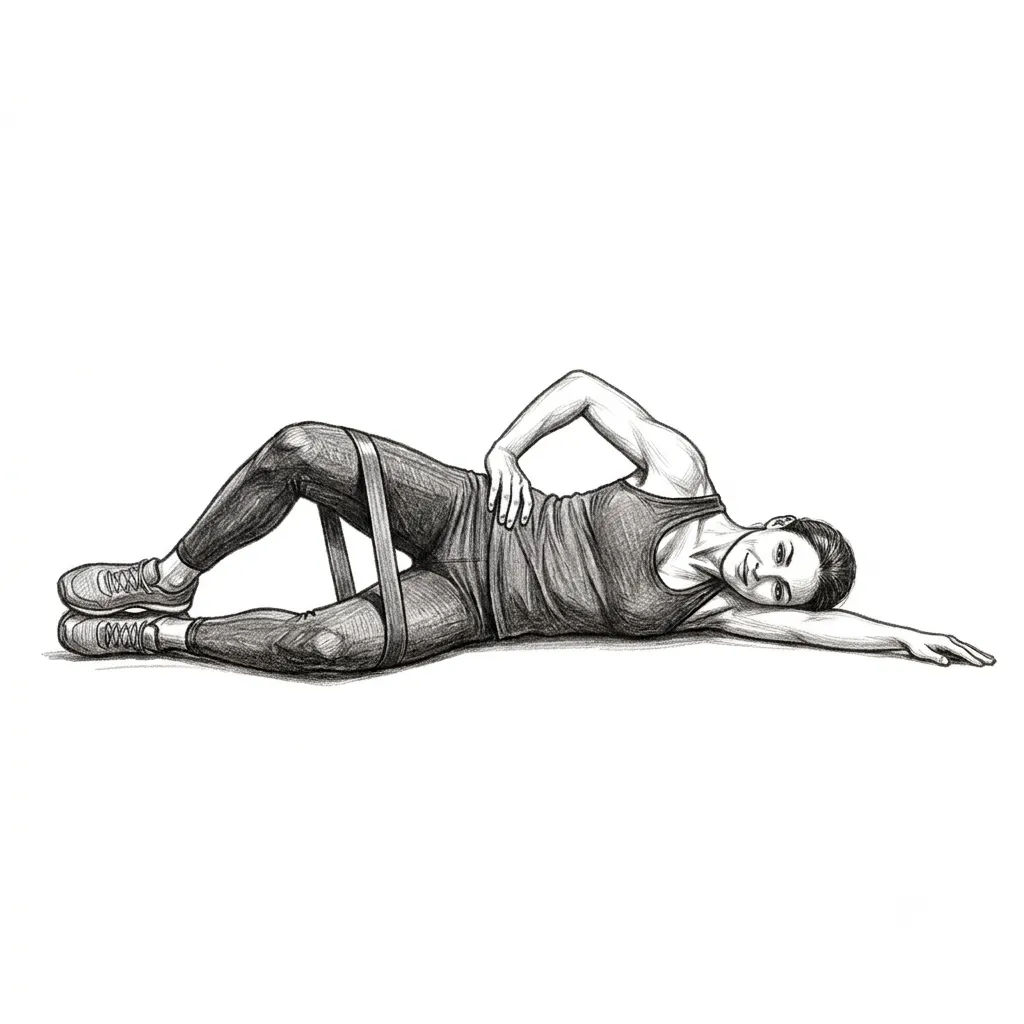 4⏱ Hold 10s
Keeping your feet firmly together, slowly rotate your top knee up toward the ceiling against the band's resistance and hold for 10 seconds and repeat.
🔁 Repeat this exercise 5 times
Muscles Targeted
Primary Movers
Primary Movers
Secondary Movers
Secondary Movers
Secondary Movers
Helpful For
Helps track the kneecap correctly by loosening tight outer thigh muscles
Reduces friction on the IT band by strengthening the primary hip abductors, taking the load off the TFL.
Used in the later stages of rehabilitation to strengthen the gluteal tendons and improve load tolerance.
Helps balance the hip rotators and relieve sciatic nerve compression.
Addresses pelvic drop and lumbar compensation caused by weak glutes.
Benefits
- Enhances Pelvic Stability: Strengthens the muscles responsible for keeping the pelvis level during single-leg movements like walking or running.
- Improves Knee Alignment: By strengthening the external rotators, it prevents the knee from collapsing inward (valgus collapse) during squats, lunges, and jumping.
- Injury Prevention: Corrects muscle imbalances between the stronger dominant muscles (like the TFL) and the weaker gluteus medius, reducing lower-body injury risk.
- Activates Dormant Muscles: An excellent warm-up to "wake up" the glutes before heavier compound lifts.
Precautions
- Avoid Pelvic Rotation: The most common mistake is letting the top hip roll backward as the knee lifts. The hips must remain completely stacked.
- Control the Eccentric Phase: Do not let the band snap the knee back down. The lowering phase builds just as much strength as the lifting phase.
- Band Tension: Using a band that is too heavy will force the body to recruit the lower back or TFL to lift the leg. Choose a resistance that allows for a full range of motion with perfect form.
- Keep the Neck Relaxed: Rest your head on your bottom arm or a small pillow to maintain neutral spinal alignment.
Need Professional Help?
Book a consultation to get personalized treatment advice for your condition.
Book on Instagram