Seated Thoracic Extension over Chair Back
A seated stretch where you gently lean back over the top of a chair to arch your upper back. It helps loosen a stiff upper back after long sitting.

How to Perform
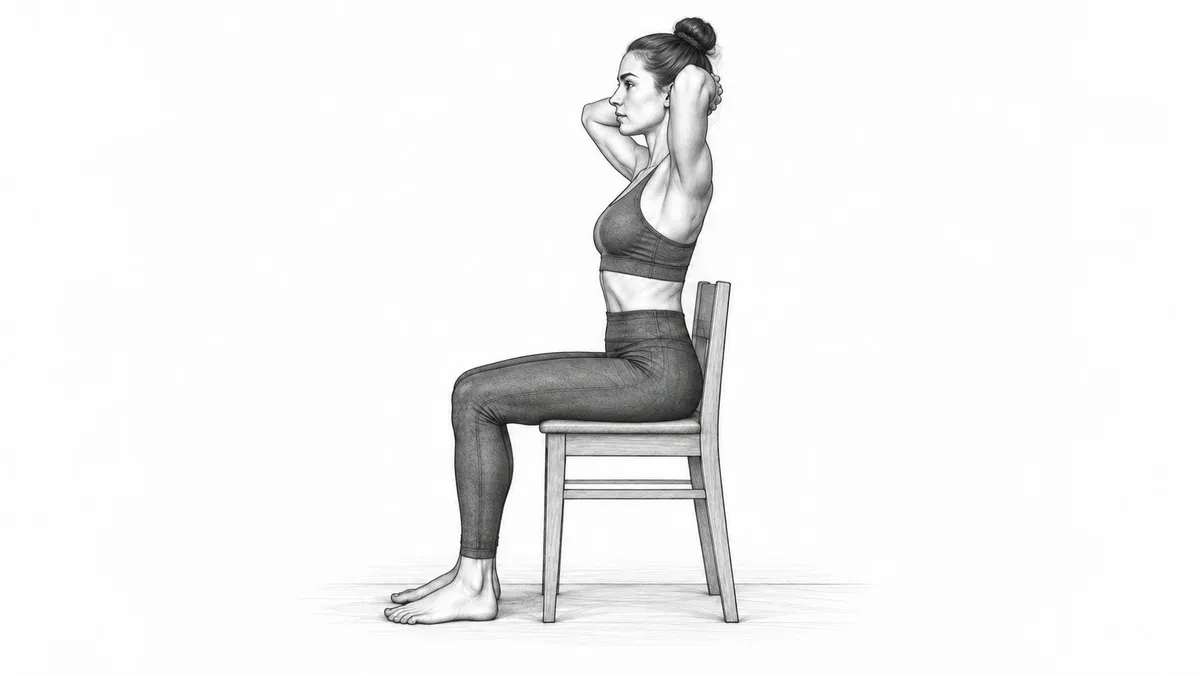 1
1Sit tall on a sturdy chair with your hips at the back of the seat and feet flat on the floor. Clasp your hands gently behind your head with elbows pointing forward.
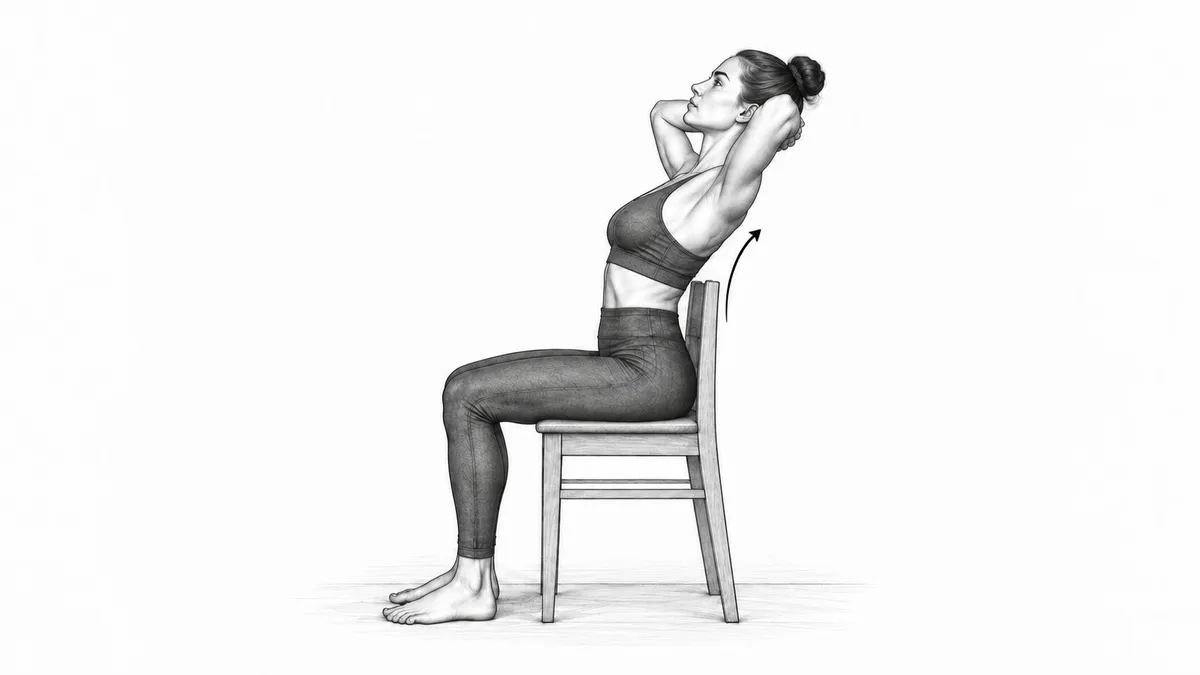 2
2Slowly lean back so your upper back arches over the top of the chair. Let your head tip back a little and look slightly up.
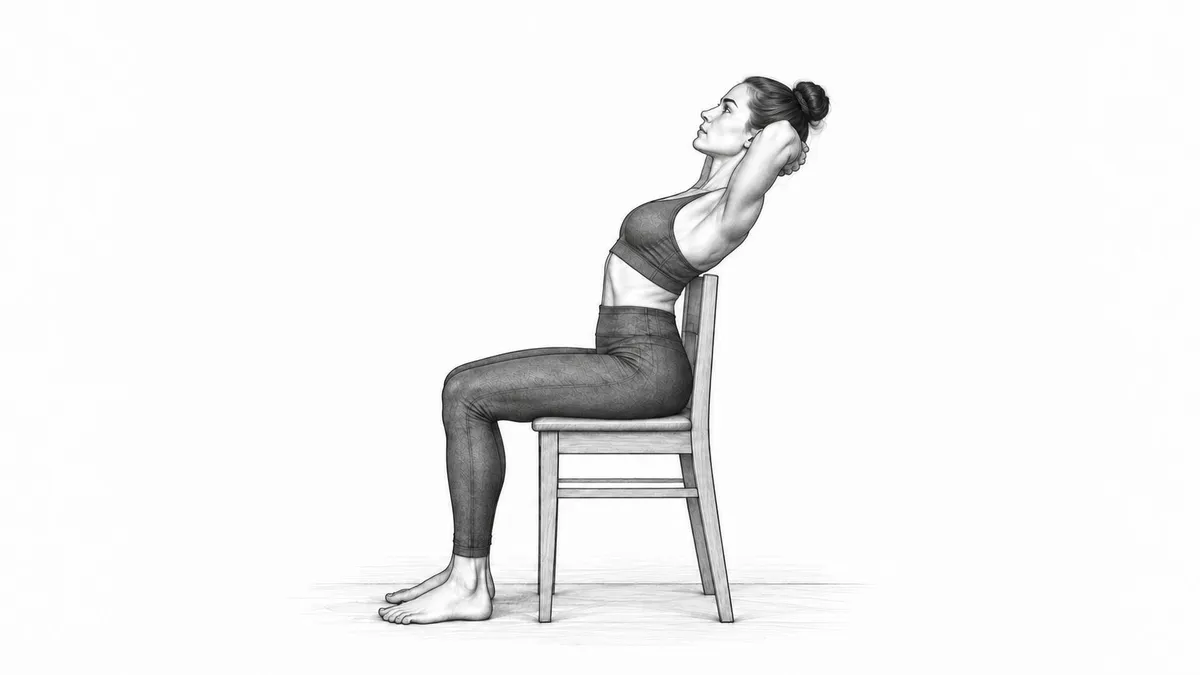 3⏱ Hold 10s
Hold this position for 10 seconds. Keep your hips on the seat and keep breathing.
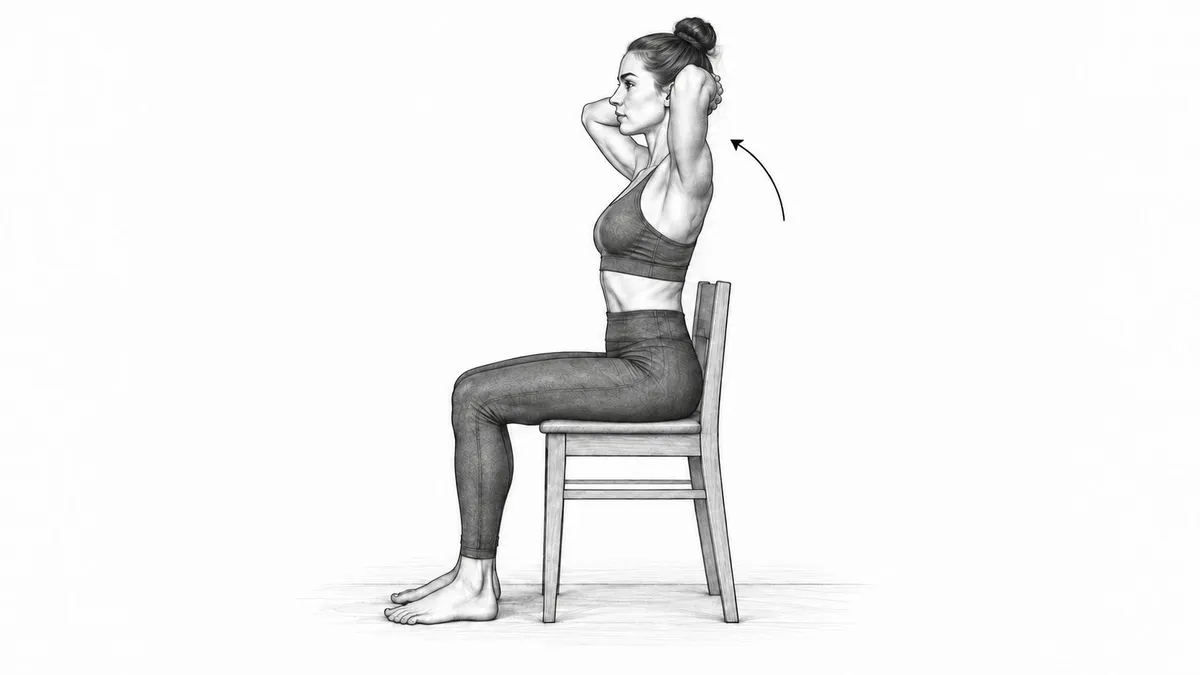 4
4Slowly come back upright. Repeat this 5 times.
🔁 Repeat this exercise 5 times
Muscles Targeted
Long muscles along both sides of the spine. They work to arch the upper back backward.
Front muscle of the belly. It gets a gentle stretch as the chest opens.
Large chest muscle. It stretches as the elbows and chest open.
Small deep muscles along the spine. They help control each small spine movement.
Helpful For
Moves the stiff middle of the spine in the backward direction. This can loosen the upper back after long sitting.
Counters the rounded, forward-bent position of desk work. It practises opening the chest.
Opens the tight chest and mobilises the stiff upper spine. It supports an upright posture.
A more mobile upper back lets the shoulders move more easily. This helps when lifting the arms overhead.
Benefits
- Improves upper back mobility: Moves the thoracic spine into extension.
- Opens the chest: Stretches the front of the chest and belly.
- Gives a quick movement break: Can be done at a desk chair.
- Needs only a chair: No equipment.
Precautions
- Stop if you feel pain, tingling, numbness or dizziness.
- Lean back only as far as is comfortable. Do not force the stretch.
- Use a sturdy chair with no wheels, with the top of the backrest at about shoulder-blade height.
- Support your head with your hands and do not pull on your neck.
- Osteoporosis, recent spine injury or surgery, or neck problems: check with your physiotherapist or doctor first.
Need Professional Help?
Book a consultation to get personalized treatment advice for your condition.
Book on Instagram