Seated plantar fascia stretch
This exercise is a targeted, low-impact stretch designed to elongate the thick band of tissue running across the bottom of your foot. Because this exercise relies on a specific physical setup to be effective.
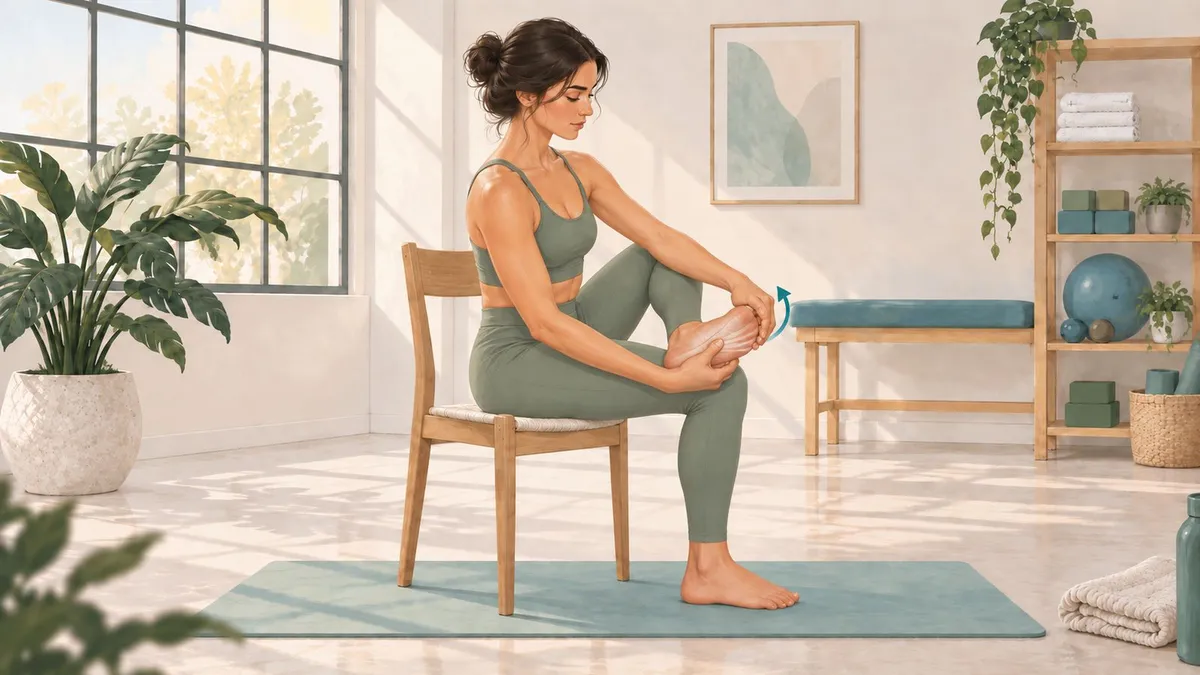
How to Perform
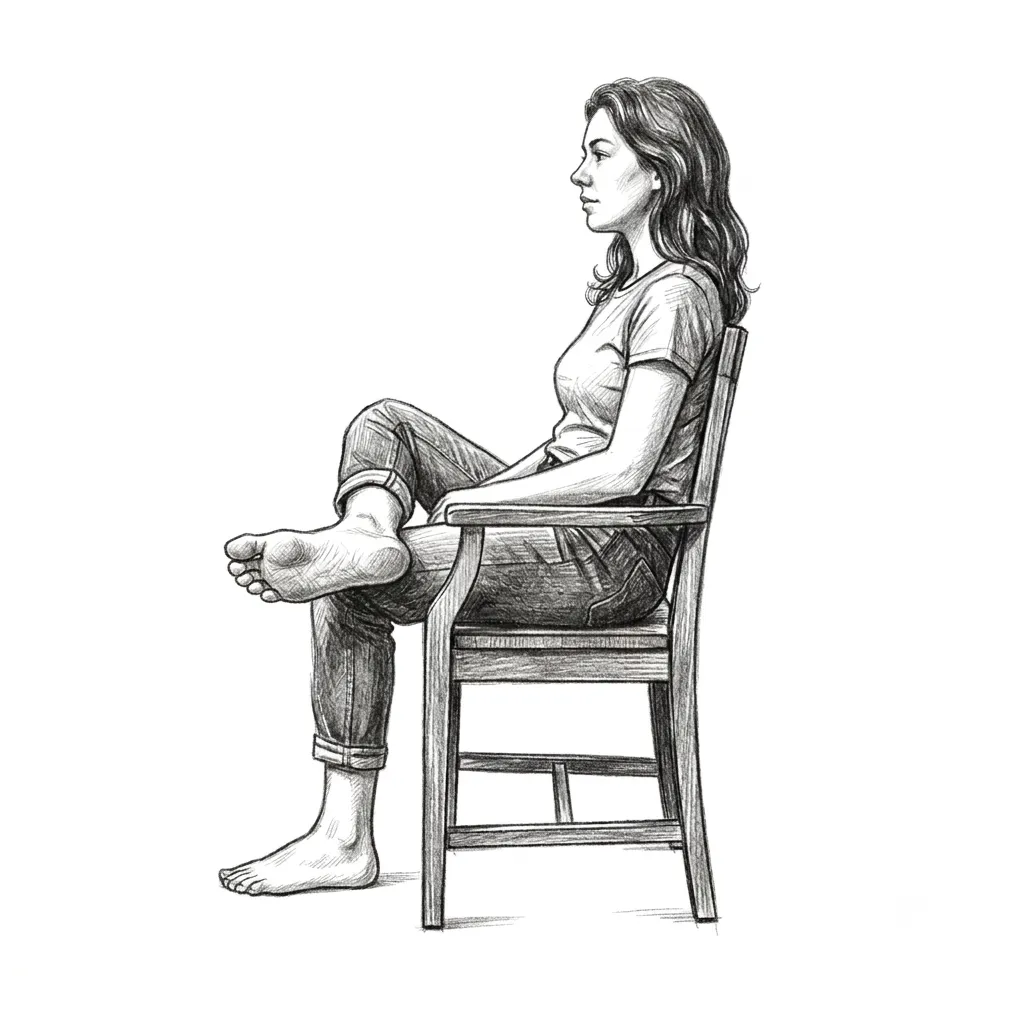 1
1Sit upright in a chair and cross your painful foot over your opposite knee so your ankle rests securely on your thigh.
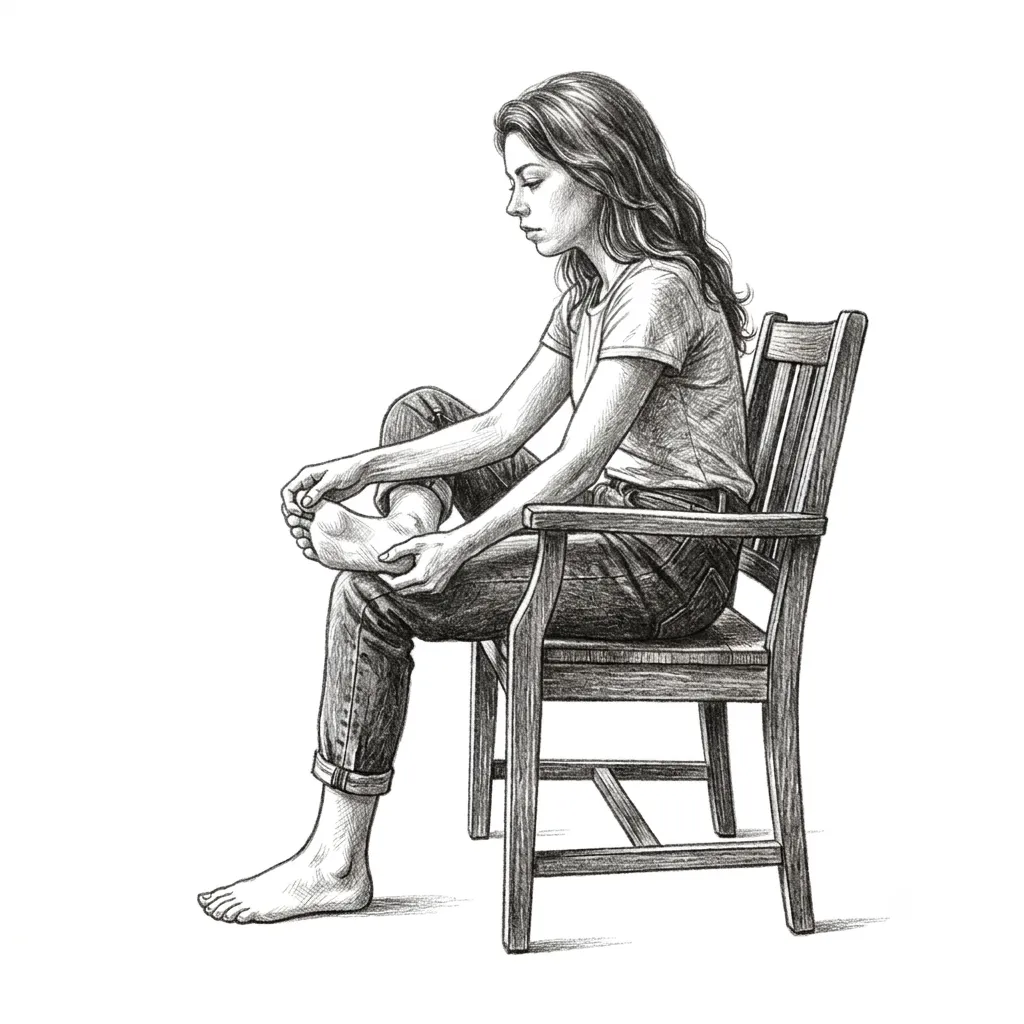 2
2Grab your toes and heels with your hand.
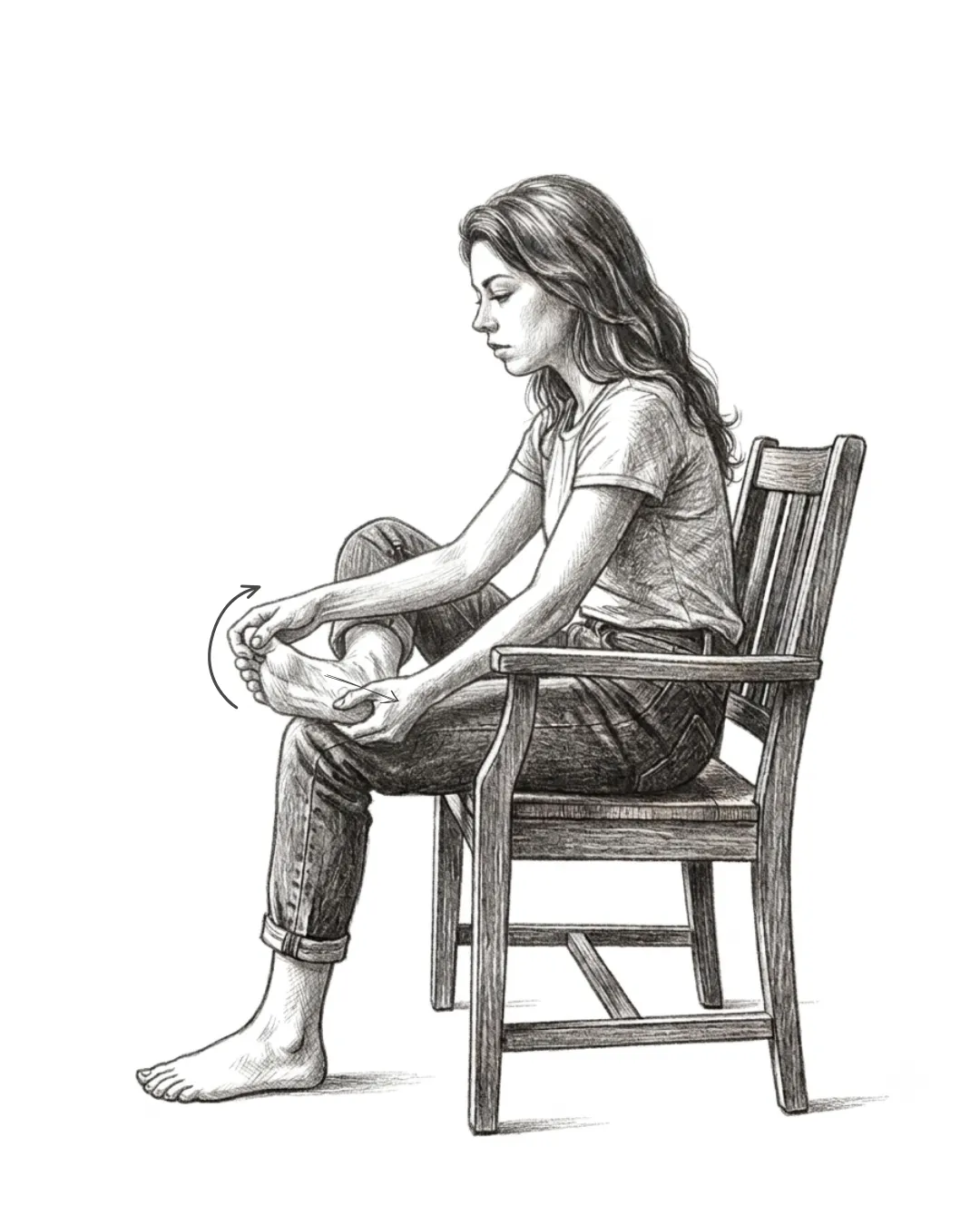 3⏱ Hold 10s
Gently pull them back toward your shin until you feel a stretch in the arch of your foot and hold , release and repeat.
🔁 Repeat this exercise 5 times
Muscles Targeted
The intrinsic foot muscle running directly under the arch.
The muscle running along the inner side of your foot.
Your gastrocnemius and soleus muscles. The fascia is part of a continuous kinetic chain that connects through the heel bone to your Achilles tendon and calves.
Helpful For
The most common condition this treats, caused by inflammation, irritation, or micro-tears in the plantar fascia.
Helps ease the surrounding tissue tension that often accompanies bony growths on the bottom of the heel.
Helps relieve the mechanical strain placed on the foot's arch by structural imbalances.
Corrects tightness resulting from poor foot mechanics, particularly if you tend to roll your weight onto the outer edges of your feet when you walk.
Benefits
- Morning Pain Relief: It significantly reduces the sharp, stabbing heel pain commonly felt first thing in the morning.
- Improves Flexibility: Elongates the plantar fascia and the Achilles tendon, making walking much more comfortable.
- Promotes Healing: The added thumb massage increases localized blood flow to the tissue, which helps reduce inflammation and speeds up recovery.
Precautions
- Don't Overstretch: You should feel a deep, satisfying pull, but it should never cause sharp or tearing pain. If you are wincing, ease up on how hard you are pulling your toes.
- Timing Matters: This stretch is most effective when done right after waking up before you take your first step out of bed.
- Include the Big Toe: Make sure you are pulling your big toe back along with the others, as the thickest part of the fascia connects directly to it.
- Keep Your Ankle Neutral: Ensure your ankle isn't twisting awkwardly while you pull. Pull the toes straight back toward the shin.
Need Professional Help?
Book a consultation to get personalized treatment advice for your condition.
Book on Instagram