Seated Knee Extension
The seated knee extension is a fundamental, low impact therapeutic exercise designed to isolate and strengthen the front of the thigh. It is highly effective for building joint stability without placing excessive weight-bearing stress on the knee.

How to Perform
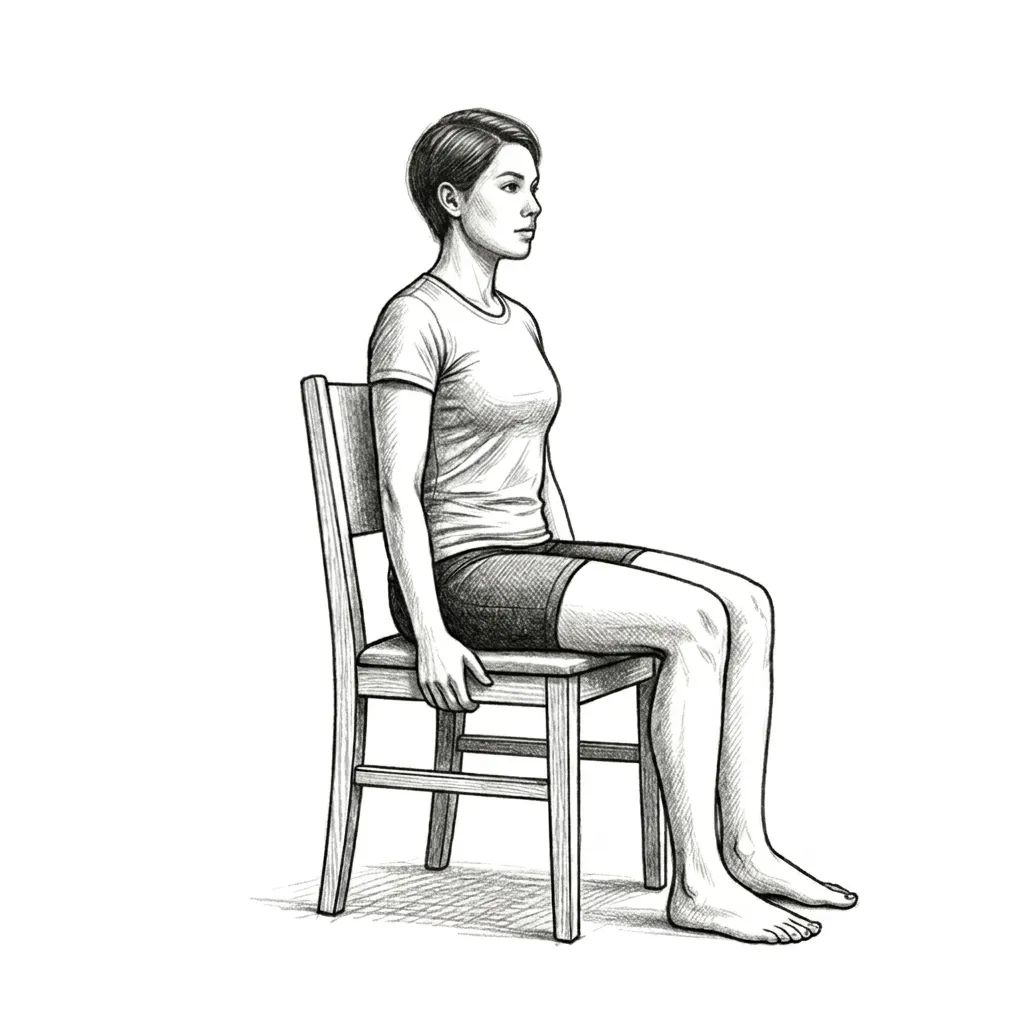 1
1Sit upright in a sturdy chair with your back supported and feet flat on the floor.
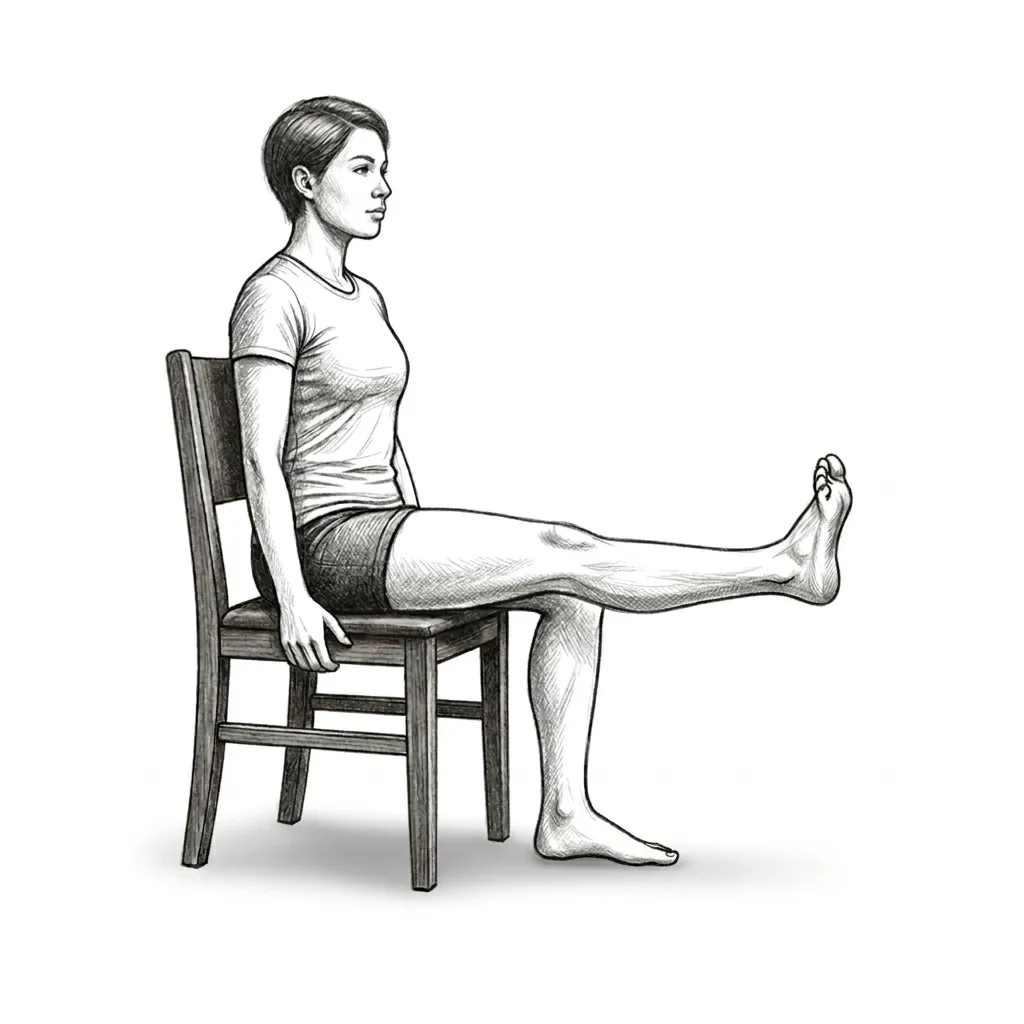 2⏱ Hold 10s
Slowly straighten the affected knee, lifting your foot until your leg is fully extended in front of you and hold this position for 10 seconds.
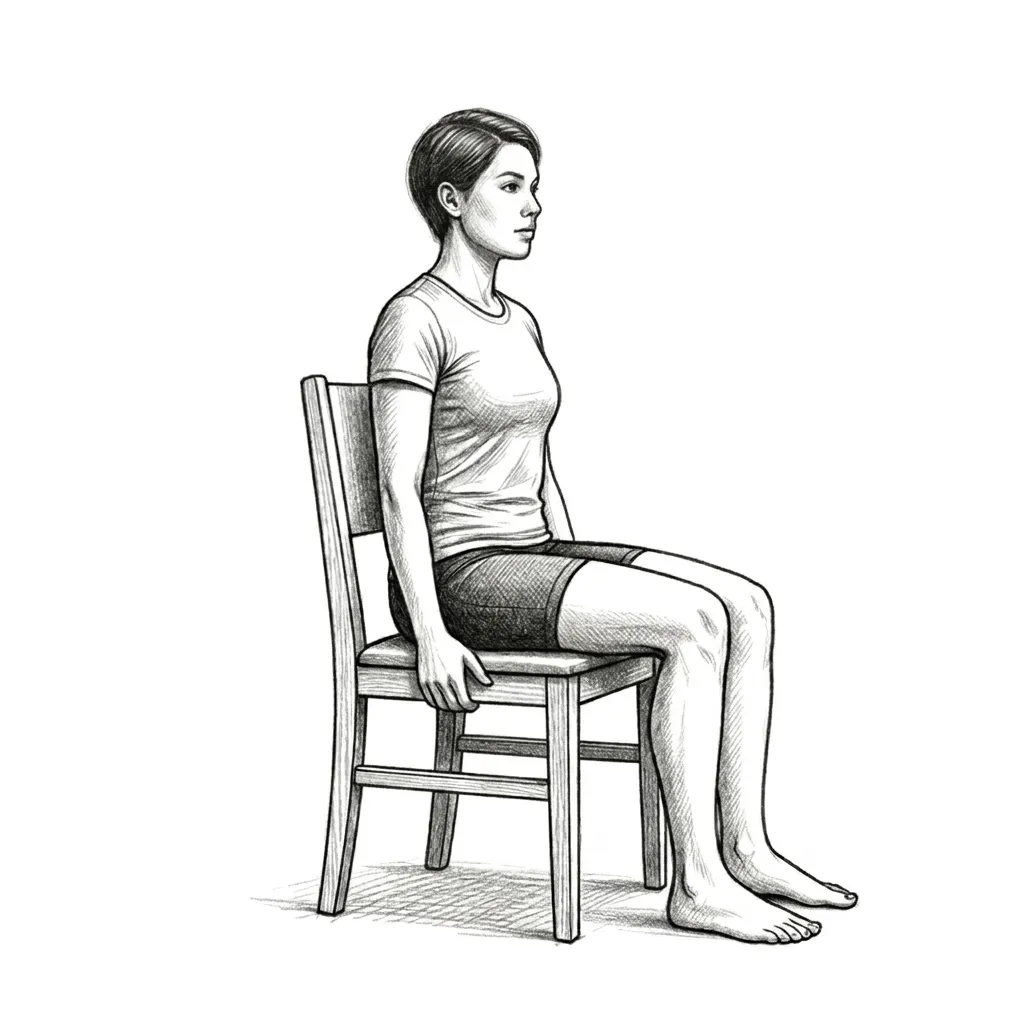 3
3Slowly lower your leg back to the starting position with control.Repeat this exercise 5 times.
🔁 Repeat this exercise 5 times
Muscles Targeted
This one is special because it crosses both the hip and knee, it is the one of the muscle of quadriceps Femoris group
Outer thigh, it is the one of the muscle of quadriceps Femoris group
Deep muscle under the rectus femoris, it is the one of the muscle of quadriceps Femoris group
Inner thigh or tear-drop muscle, it is the one of the muscle of quadriceps Femoris group
Helpful For
Strengthening quads without loading the joint reducing pain and stiffness.
Assists in improving patellar tracking (often modified to specific ranges of motion).
Crucial in early-phase rehab for ACL reconstructions, meniscus repairs, and Total Knee Replacements (TKR) to wake up the quadriceps and prevent atrophy.
Benefits
- Targeted Strengthening: Directly isolates the quadriceps, making it an excellent starting point for rebuilding muscle tone.
- Improved Joint Stability: Stronger quadriceps act as better shock absorbers, improving overall tracking and stability of the patella (kneecap).
- Low Impact: Because it is performed in a seated, non-weight-bearing position, it is highly accessible for early-stage rehabilitation.
- Functional Carryover: Builds the specific strength required for daily functional movements like standing up from a chair, walking, and climbing stairs.
Precautions
- Control the Movement: Avoid using momentum to swing the leg up or letting gravity drop the leg down. The movement should be slow and deliberate.
- Avoid Hyperextension: Do not forcefully "snap" or lock the knee at the top of the movement, which can irritate the joint.
- Maintain Posture: Avoid leaning back or slouching in the chair as you lift the leg. Keep the torso upright.
- Pain Monitoring: The exercise should be pain-free. If sharp pain occurs within the joint, reduce the range of motion or stop the exercise.
Need Professional Help?
Book a consultation to get personalized treatment advice for your condition.
Book on Instagram