Prone W
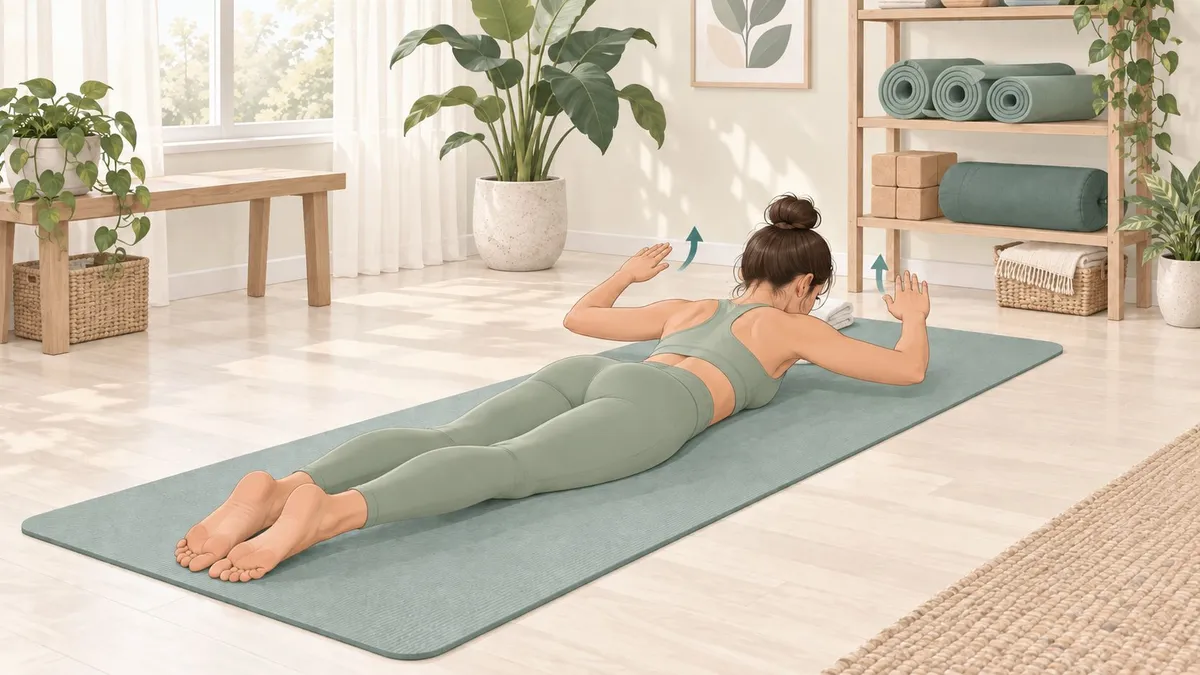
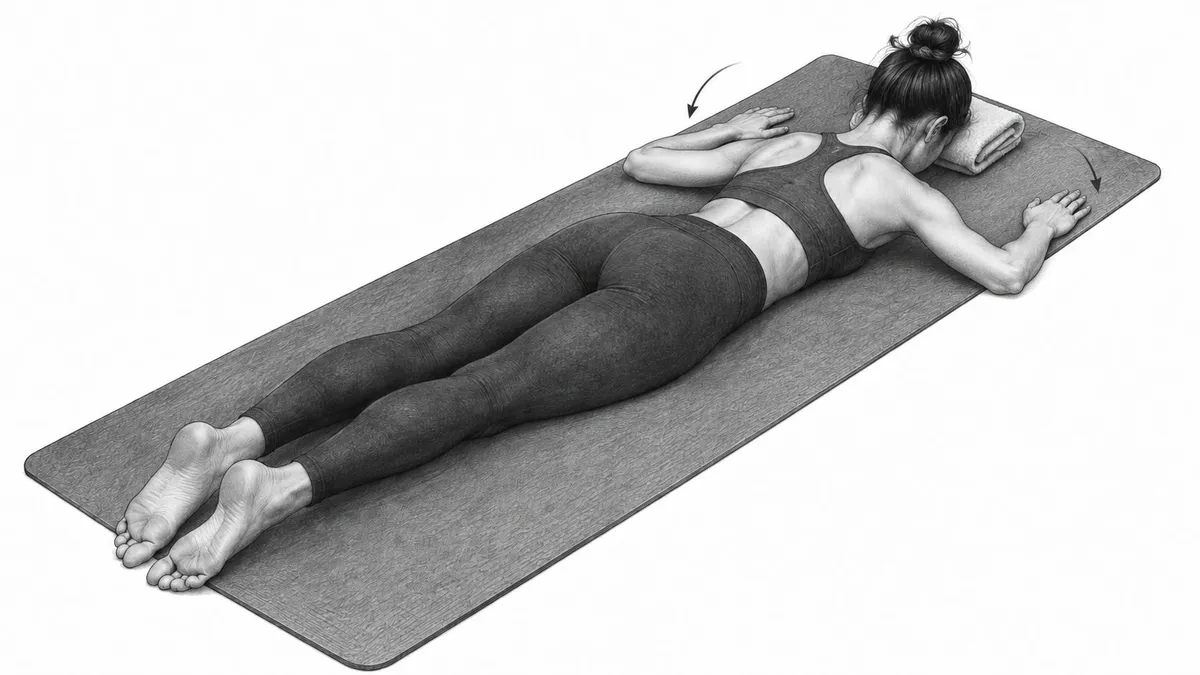
Prone W is a shoulder-blade strengthening exercise done lying face down, with your arms bent into a W shape beside your head. Gently lifting the arms while squeezing the shoulder blades down and together works the muscles of the upper back and the backs of the shoulders while your head stays supported.
How to Perform
 1
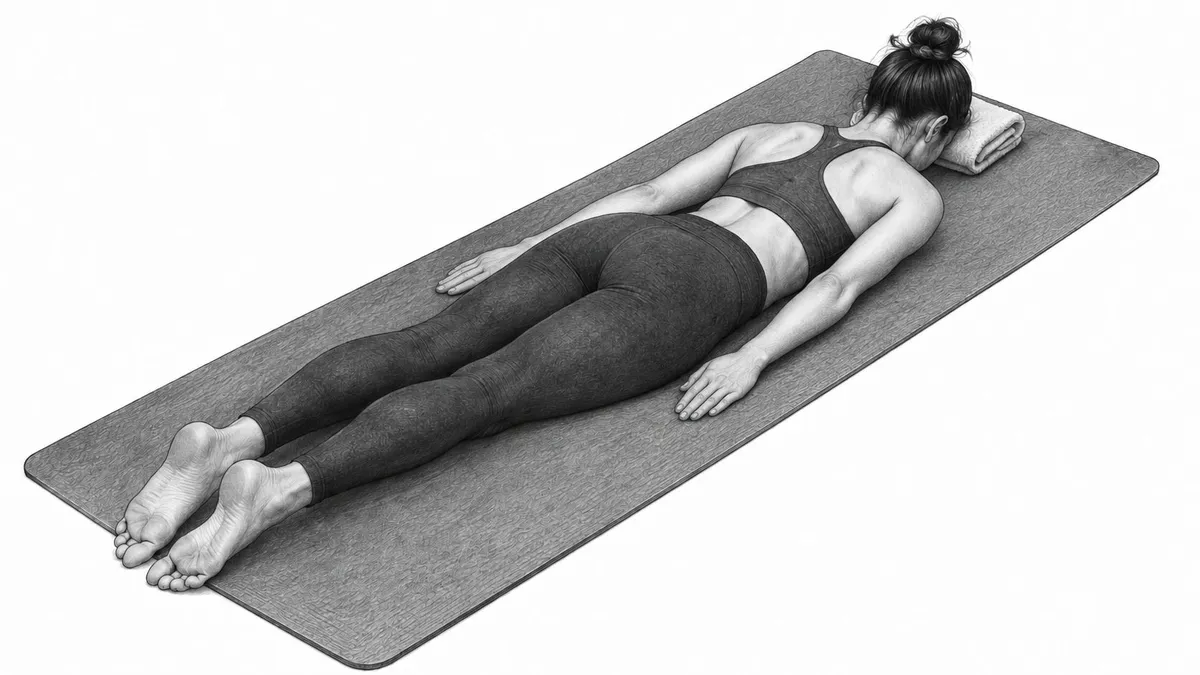
1Lie on your stomach with your legs relaxed. Rest your forehead on a folded towel so your neck stays in line with your back.
 2
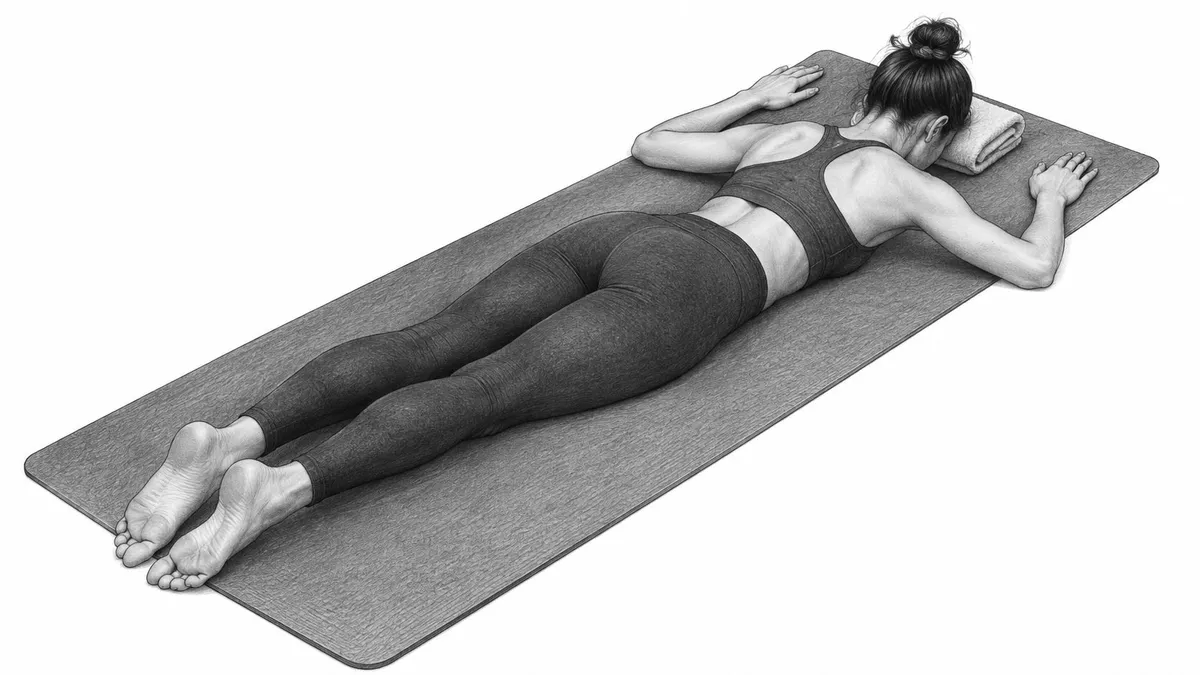
2Bend both elbows to about 90 degrees and place your upper arms out to the sides, with your hands on the mat beside your head near ear height, so your arms form a W shape. Gently draw your shoulder blades down and slightly together without shrugging.
 3⏱ Hold 10s
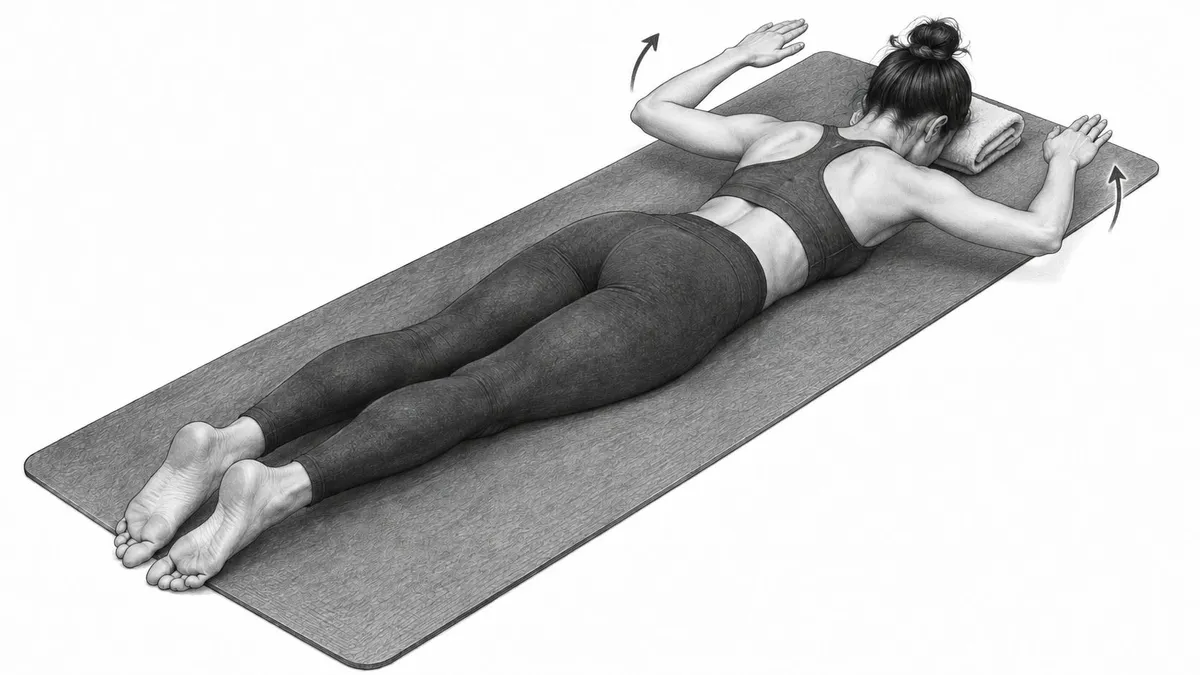
Keeping the W shape and your forehead on the towel, slowly lift both arms a short distance from the mat by squeezing your shoulder blades down and together.
 4
4Lower your arms slowly back to the mat and relax your shoulders before the next lift.
🔁 Repeat this exercise 5 times
Watch the Exercise
Muscles Targeted
Brings the shoulder blades toward the spine. It works during the gentle squeeze as the bent arms lift.
Links the spine to the shoulder blade's inner edge. It controls the squeeze and the return to the mat.
Controls the shoulder blade during arm movement. It supports the lift without raising the shoulders toward the ears.
Sits at the back of the shoulder. It lifts the upper arm while the elbows stay bent in a W shape.
Helpful For
Strengthens muscles around the shoulder blades. Combine it with movement breaks and changes in sitting position.
Practises arm movement with relaxed shoulders. Slow lowering builds control rather than a quick squeeze and drop.
May build shoulder and upper-back control during rehabilitation. The bent-arm position and lift should not cause shoulder or neck pain.
Benefits
- Strengthens the muscles between and around the shoulder blades
- Practices shoulder-blade retraction without weights
- Supported head position helps keep the neck neutral while the arms do the work
Precautions
- Move only within a pain-free range. Stop if shoulder, neck or back pain increases, or if the movement causes numbness or dizziness
- Keep the lift small and controlled; squeeze the shoulder blades rather than lifting the arms high or arching the lower back
- Keep your forehead supported and shoulders away from your ears. Do not lift the head or chest to raise the arms
- If you have a recent shoulder injury or surgery, or cannot lie comfortably face down, ask your physiotherapist or clinician for an appropriate variation
- This is general exercise information, not a diagnosis or personal treatment plan
Need Professional Help?
Book a consultation to get personalized treatment advice for your condition.
Book on Instagram