Prone T
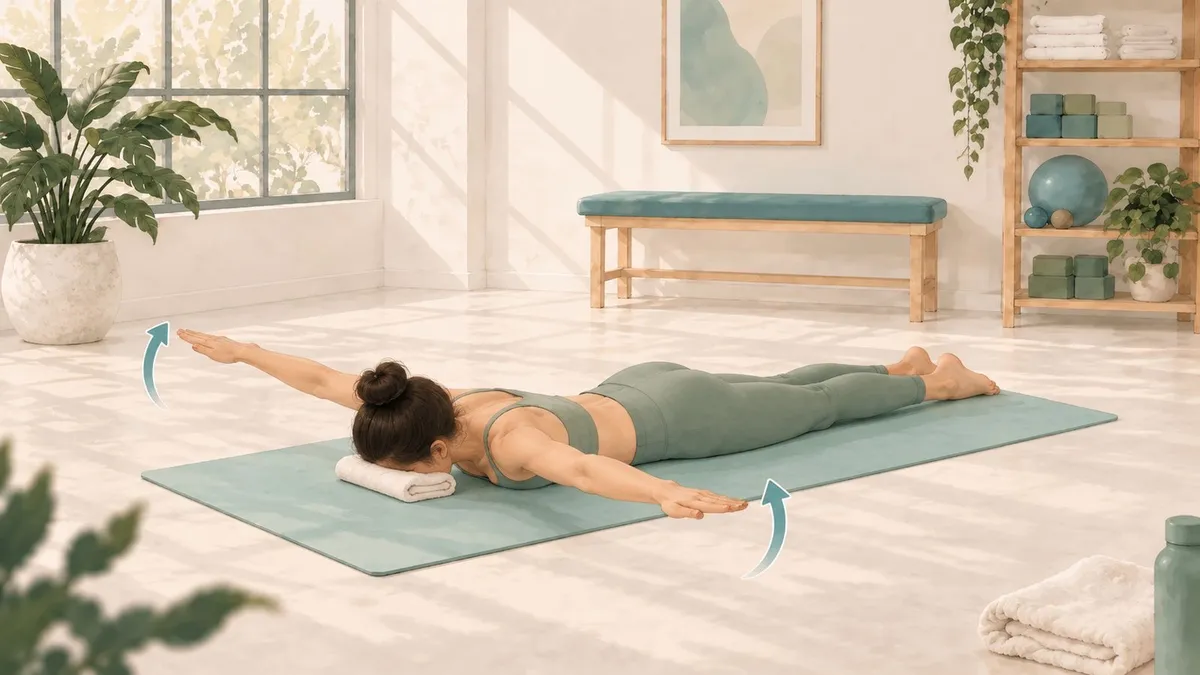
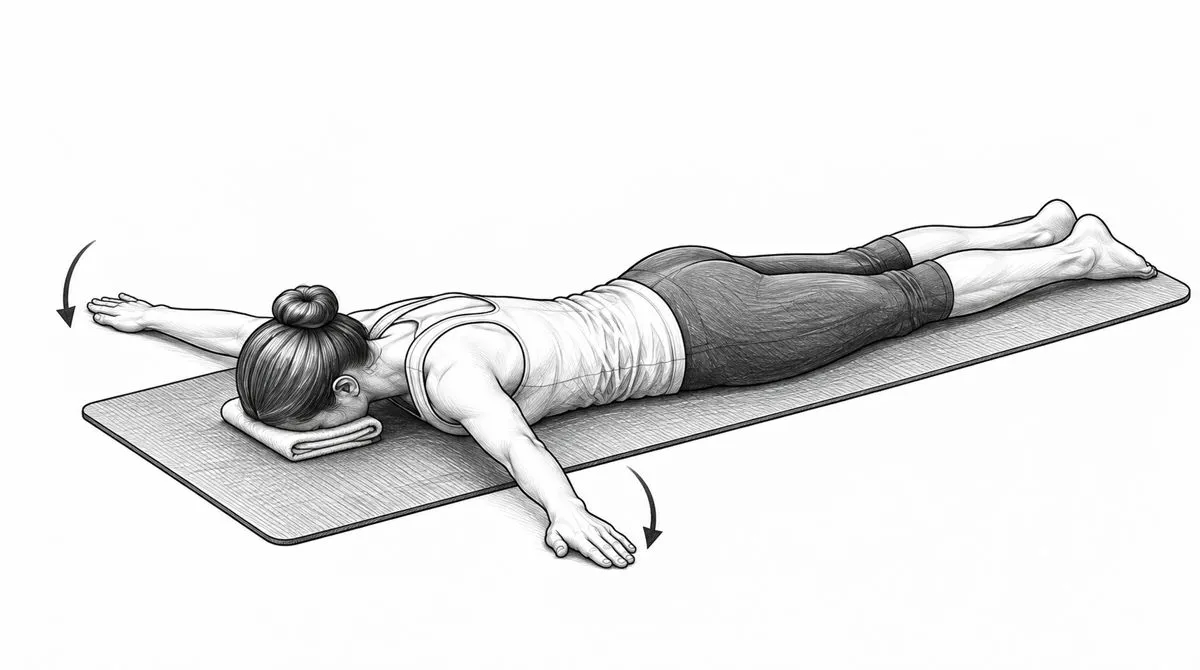
The Prone T is a shoulder-strengthening exercise performed lying face down. By lifting the arms straight out to the sides into a "T" shape, it activates the middle trapezius and the muscles that pull the shoulder blades together, helping to correct rounded-shoulder posture.
How to Perform
 1
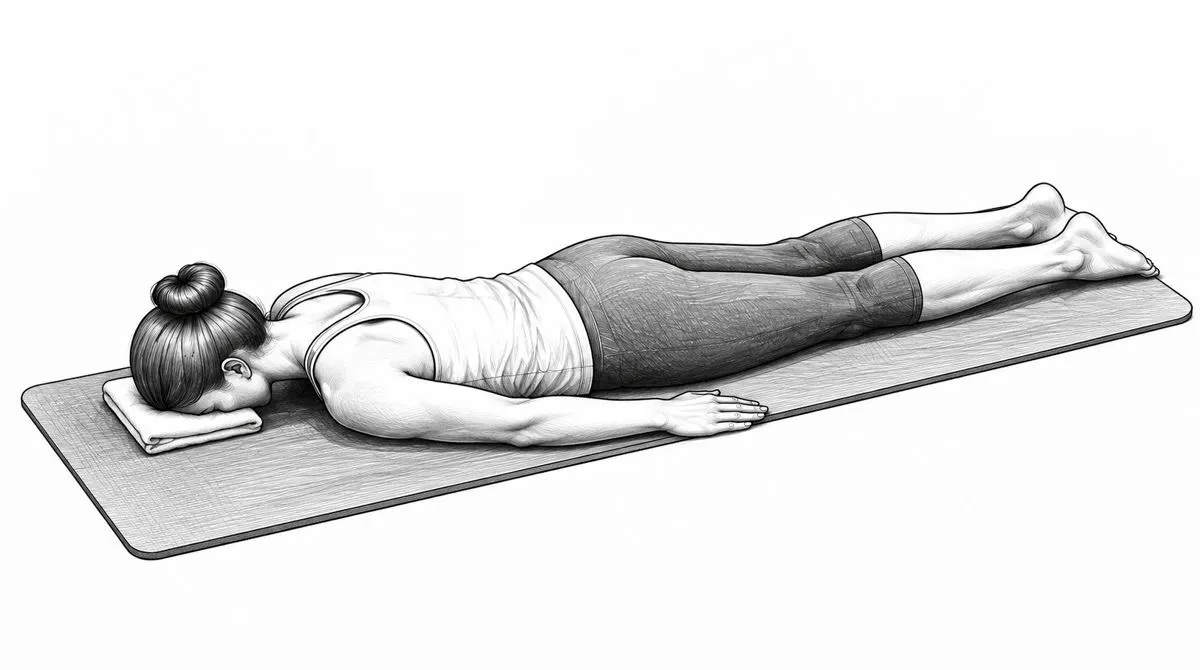
1Lie flat on your stomach on a mat with your legs extended. Rest your forehead on a small folded towel to keep your neck in a neutral position.
 2
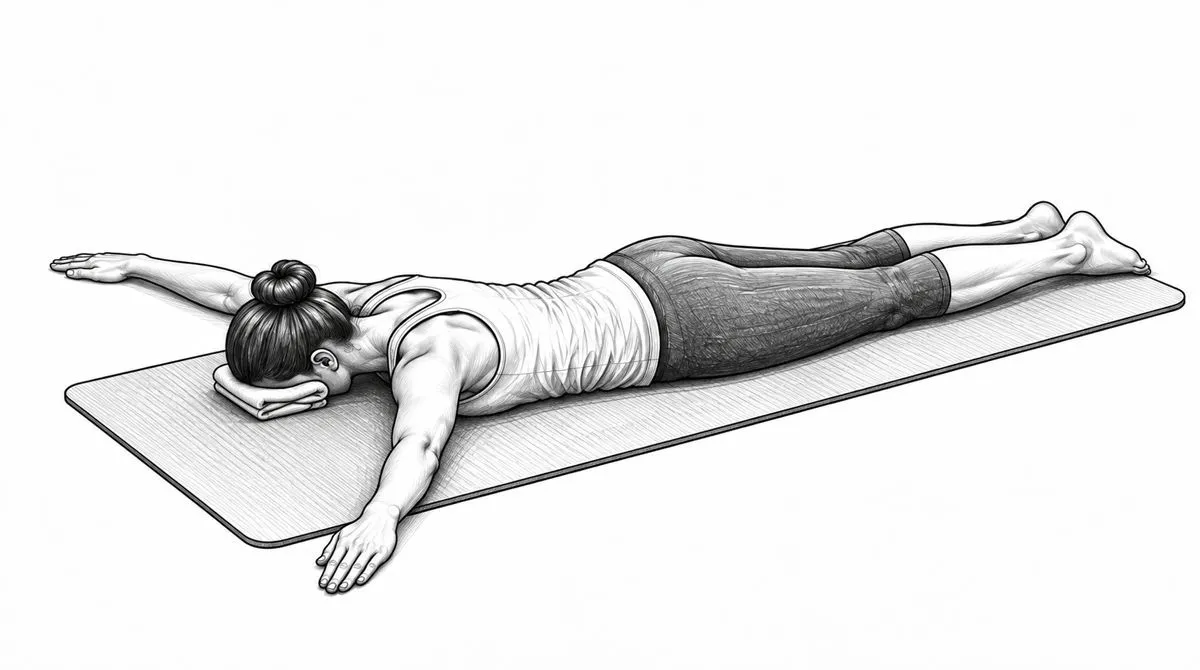
2Stretch both arms straight out to your sides at shoulder level, so your body forms a "T" shape. Keep your elbows straight and your palms facing down toward the floor.
 3⏱ Hold 10s
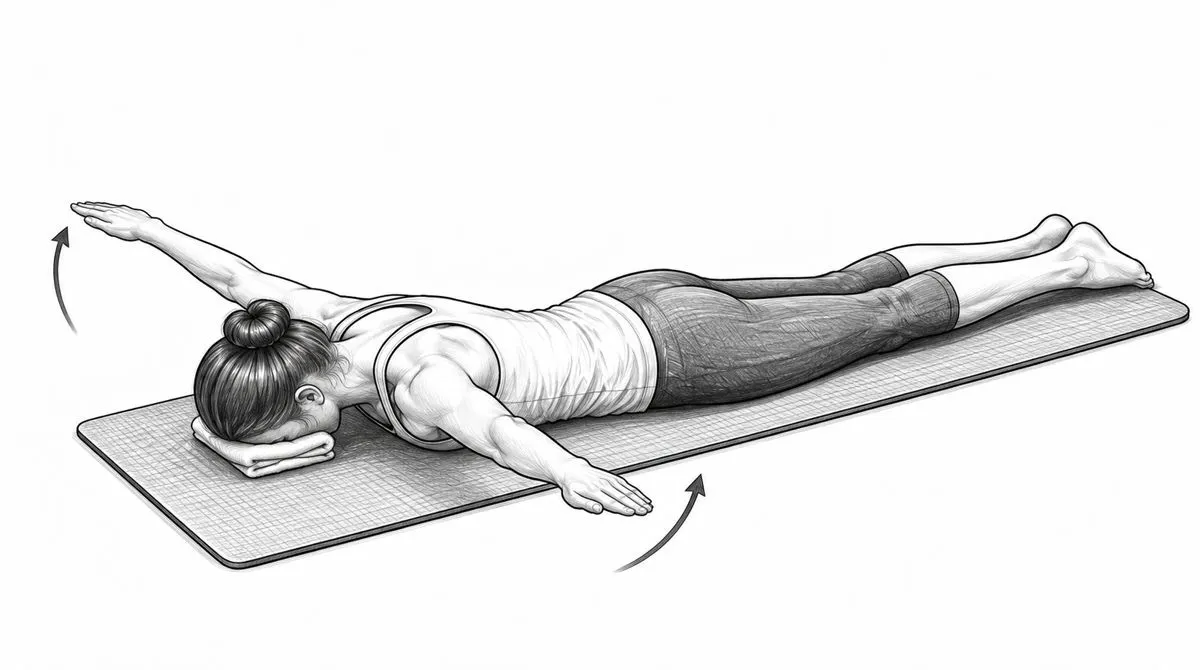
Gently squeeze your shoulder blades together and down, then lift both arms a few inches off the floor. Keep your forehead resting on the towel,only your arms move.
 4
4Slowly lower your arms back to the mat, keeping your shoulders relaxed away from your ears.
🔁 Repeat this exercise 5 times
Watch the Exercise
Muscles Targeted
Draws the shoulder blades toward the spine. It works during the gentle squeeze as the arms lift sideways.
Links the spine to the shoulder blade's inner edge. It helps pull and control the blade during the lift.
Sits at the back of the shoulder. It lifts the arm away from the mat in the T position.
Keeps the shoulder joint steady. It helps control the upper arm during lifting and lowering.
Helpful For
Builds upper-back strength to support the shoulders. Combine it with movement breaks rather than holding one posture all day.
May build shoulder strength and movement control during rehabilitation. Keep the arm position comfortable and avoid forcing through pain.
Practises moving the shoulder blades without shrugging. It may help when repeated shrugging contributes to neck strain.
Slow lifting and lowering practise shoulder-blade control. Use it within a guided plan when the movement is comfortable.
Benefits
- Strengthens the Middle Trapezius and Rhomboids: targets the muscles that draw the shoulder blades together, commonly weak with desk work.
- Postural Correction: directly opposes the rounded-shoulder position caused by prolonged sitting and phone use.
- Improves Shoulder Mechanics: retrains the shoulder blade to stabilize properly during reaching and lifting.
- Neck-Friendly: the supported prone position removes load from the neck, making it suitable even for people with neck sensitivity.
Precautions
- Avoid Pain: the movement should be entirely pain-free. If there is sharp shoulder or neck pain, reduce the lift height or stop the exercise.
- Don't Shrug: keep the shoulders drawn down away from the ears. Shrugging shifts the work to the upper trapezius and defeats the purpose of the exercise.
- Keep the Lift Small: raise the arms only a few inches off the mat. Lifting too high arches the lower back and strains the lumbar spine.
- Keep the Arms in Line: the arms should stay straight out to the sides at shoulder level, not drift forward toward the head, so the middle back does the work.
- Check for Contraindications: avoid or modify after a recent shoulder injury or surgery, and when lying face down is not advised (such as late-stage pregnancy). Consult a physiotherapist or physician before performing this movement.
Need Professional Help?
Book a consultation to get personalized treatment advice for your condition.
Book on Instagram