Posterior Deltoid Stretch (Cross-Body) in Standing
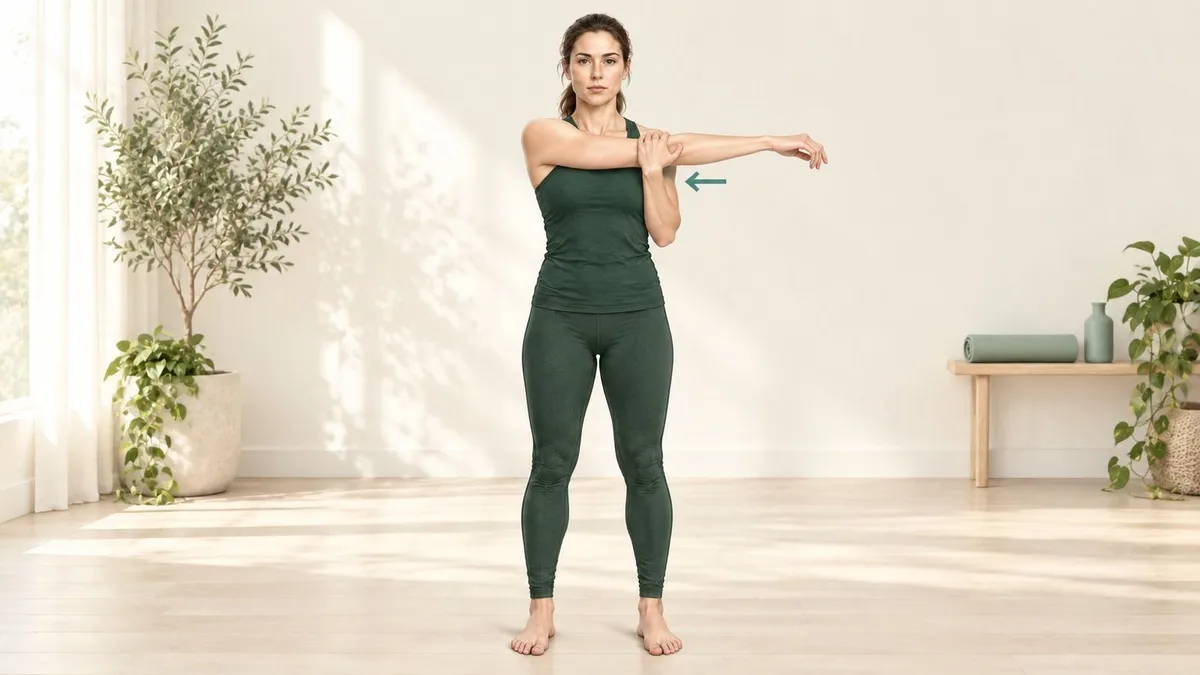
A stretch for the back of the shoulder, also called the cross-body or arm-across-chest stretch. It helps when the back of the shoulder feels tight from desk work, swimming or racket sports.
How to Perform
 1
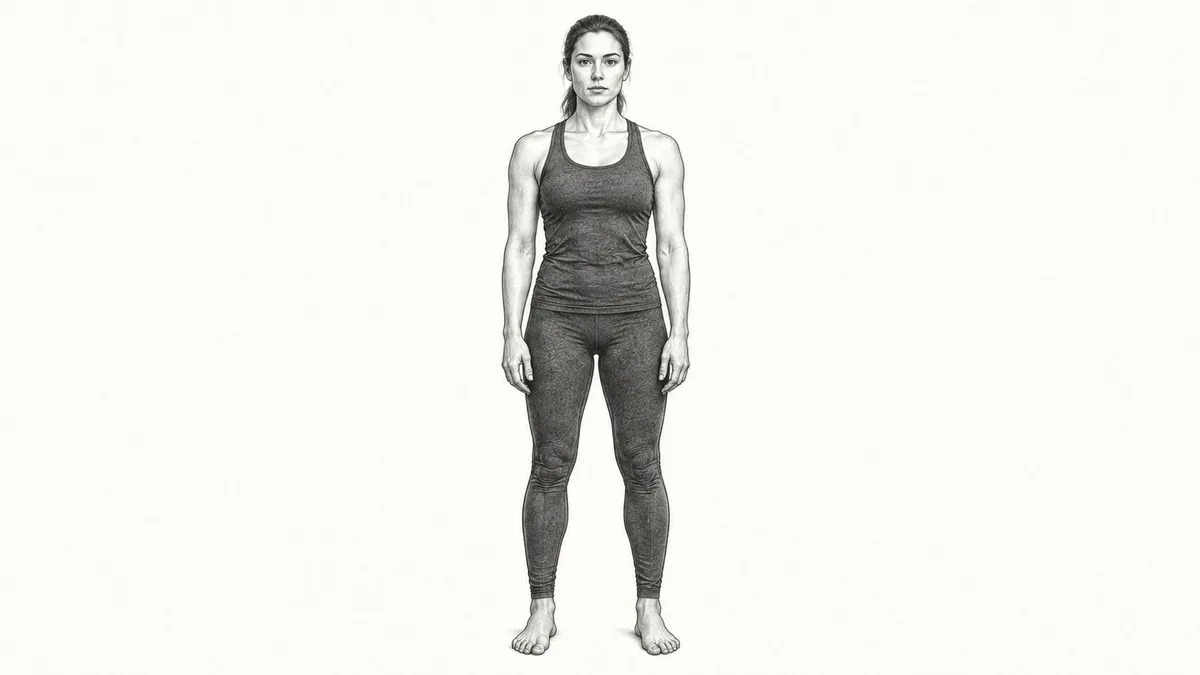
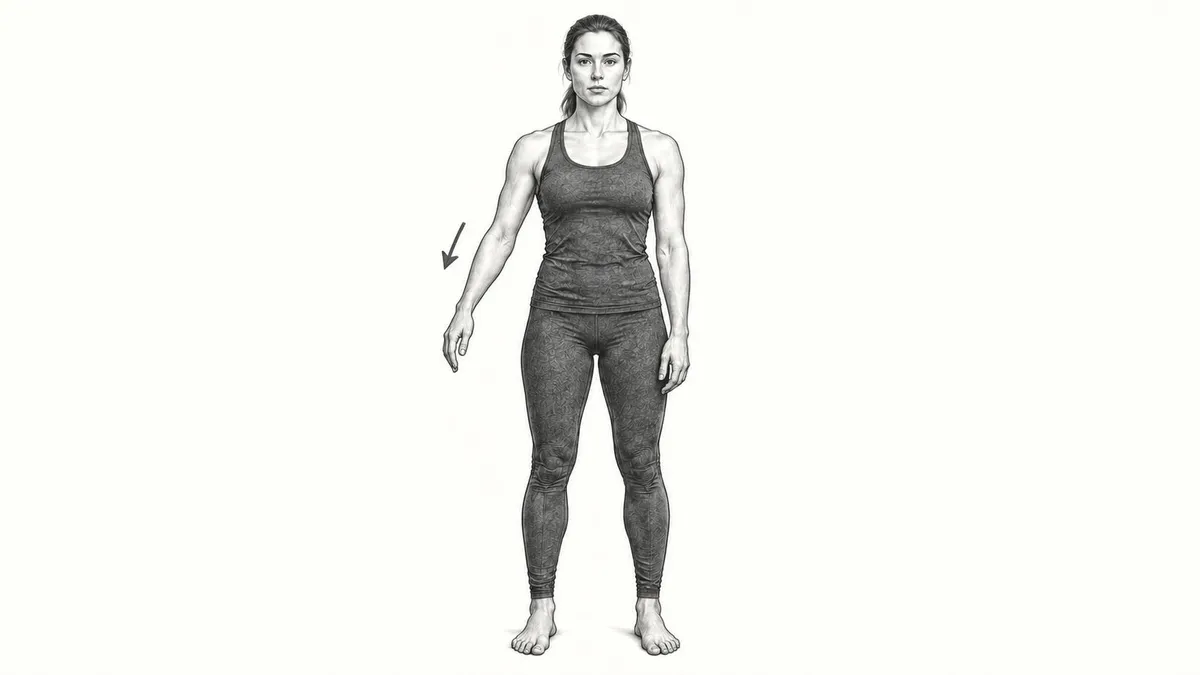
1Stand tall with feet hip-width apart. Relax your shoulders.
 2
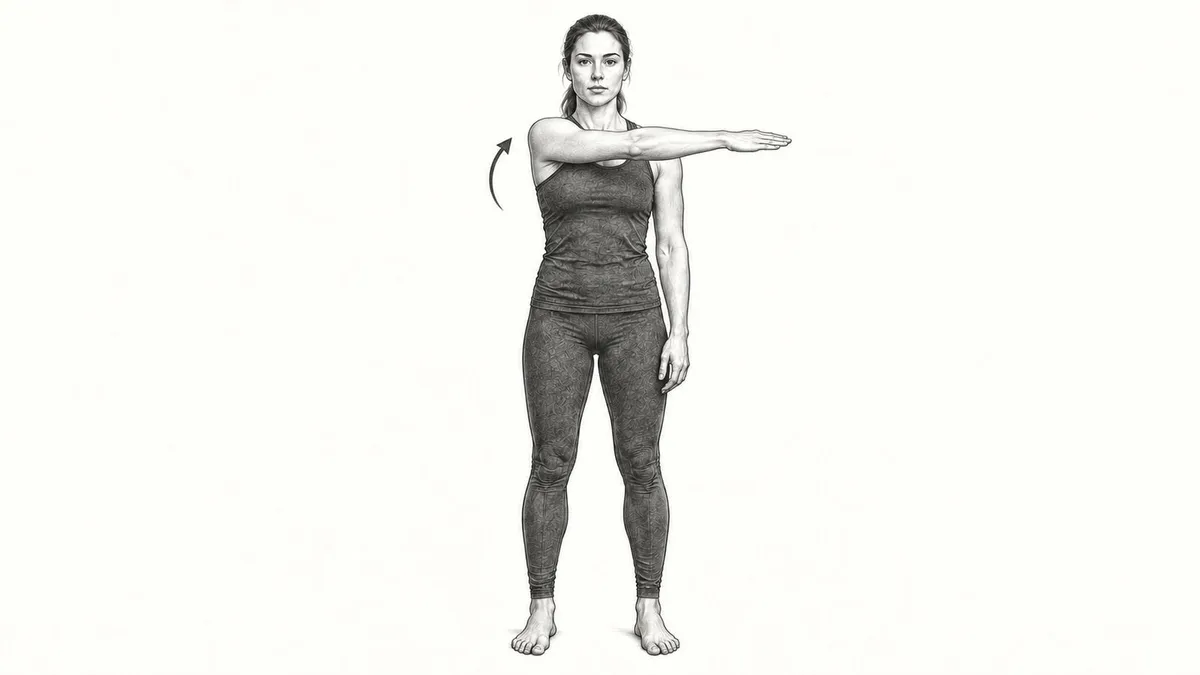
2Lift one arm to shoulder height and bring it straight across your chest.
 3⏱ Hold 10s
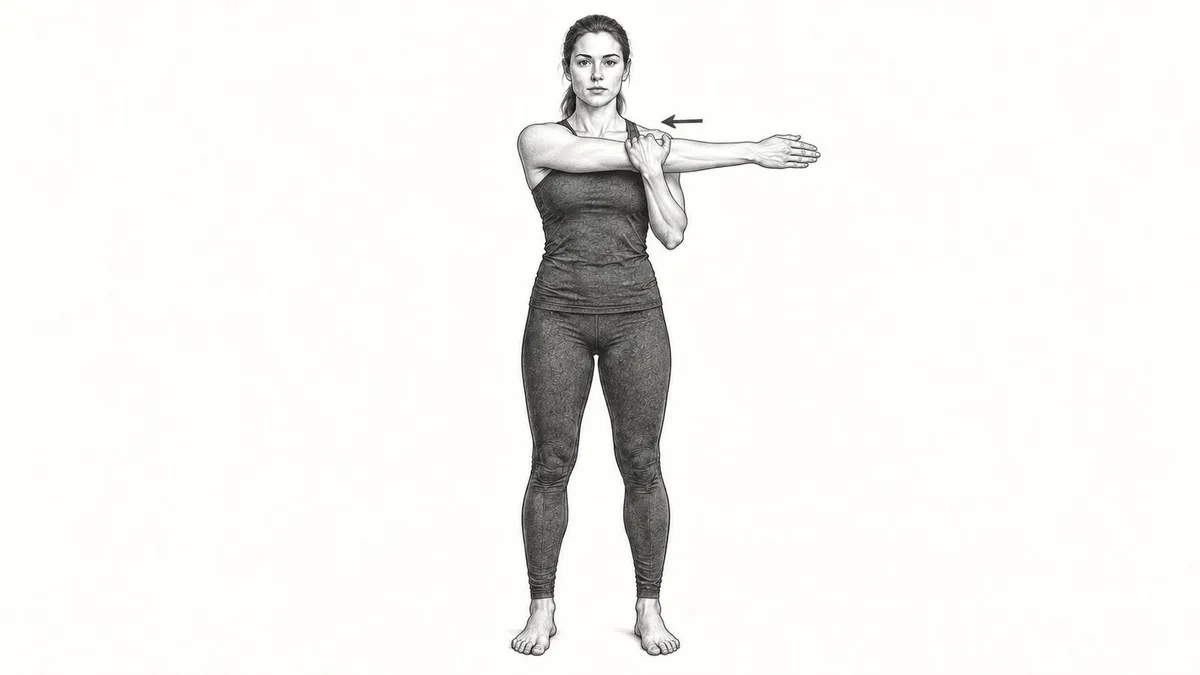
Hold that arm just above the elbow with your other hand. Gently pull it closer to your chest. Keep your shoulder down, away from your ear. Hold 10 seconds.
 4
4Release slowly. Repeat this 5 times, then switch arms.
🔁 Repeat this exercise 5 times
Watch the Exercise
Muscles Targeted
Sits at the back of the shoulder. Bringing the arm across the chest gently stretches it as the main target.
Lies at the back of the shoulder blade. Its stretch varies with arm rotation and shoulder-blade position during the cross-body reach.
This small rotator cuff muscle sits below the infraspinatus. It may receive a secondary stretch during the cross-body reach.
Crosses the shoulder and elbow. It is not a main target here, so this is not an isolated triceps stretch.
Helpful For
Gently stretches the back of the shoulder. It may ease tightness when the cross-body position is comfortable.
May suit rehabilitation when back-shoulder tightness contributes to symptoms. Do not pull through front-shoulder pain or pinching.
Practises bringing the arm across the chest. It may support dressing or seat-belt reach when muscle tightness limits movement.
May suit the stiff phase with individual physiotherapy guidance. Keep the range gentle because aggressive stretching can irritate the shoulder.
Benefits
- Loosens the back of the shoulder
- Improves reaching across the body
- Improves shoulder inward rotation
- Reduces tightness after training or desk work
Precautions
- Keep the shoulder down - do not let it shrug or roll forward
- Pull above the elbow, not on the elbow joint
- Stop if you feel pinching at the front or top of the shoulder
- Take care after shoulder dislocation, surgery or rotator cuff injury
Need Professional Help?
Book a consultation to get personalized treatment advice for your condition.
Book on Instagram