Pelvic Tilt
A gentle core exercise done lying on your back that teaches you to control your pelvis and ease lower-back tension.
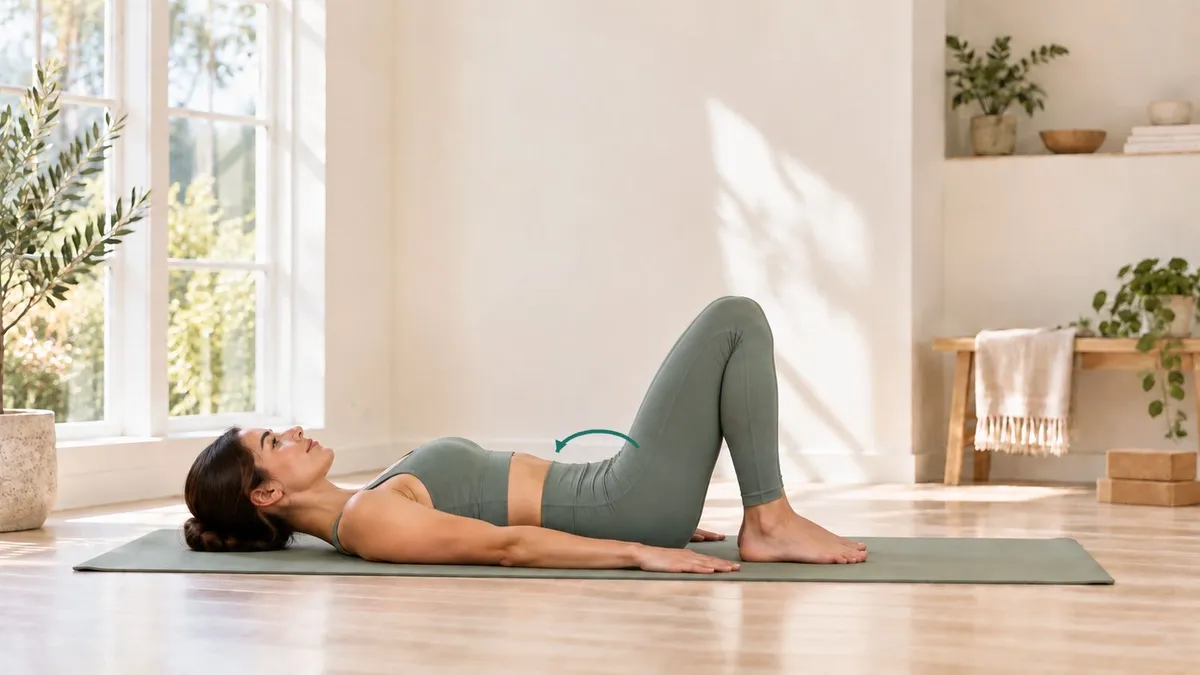
How to Perform
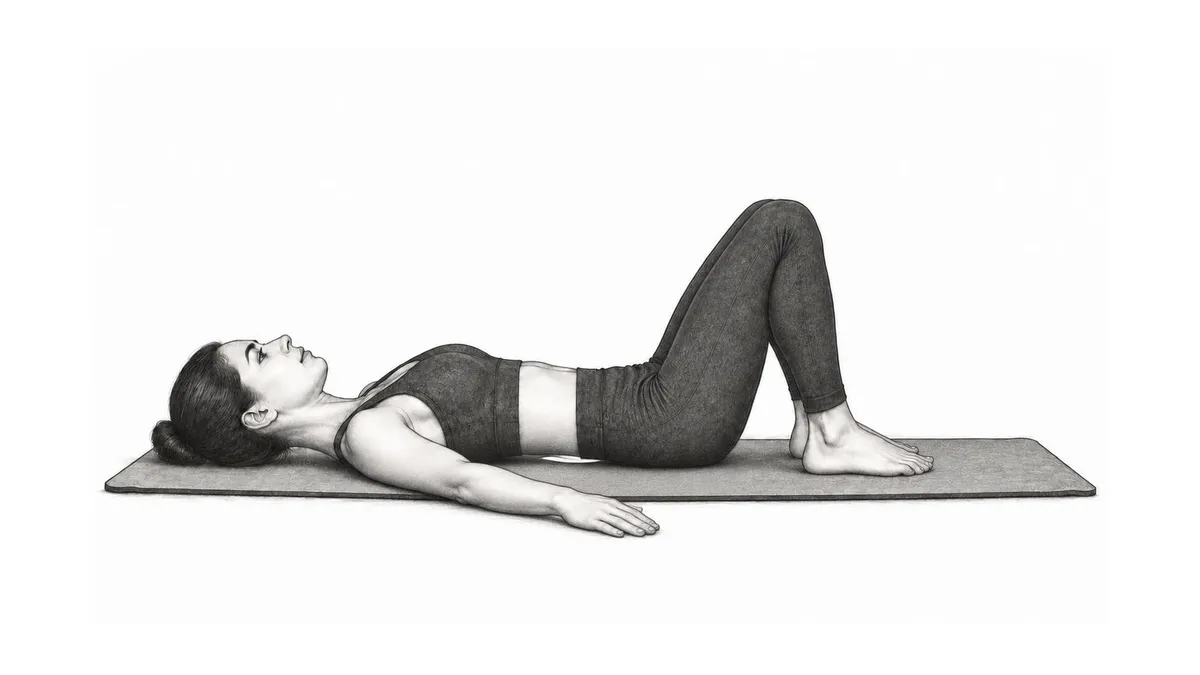 1
1Lie on your back with your knees bent and feet flat on the mat. Rest your arms by your sides.
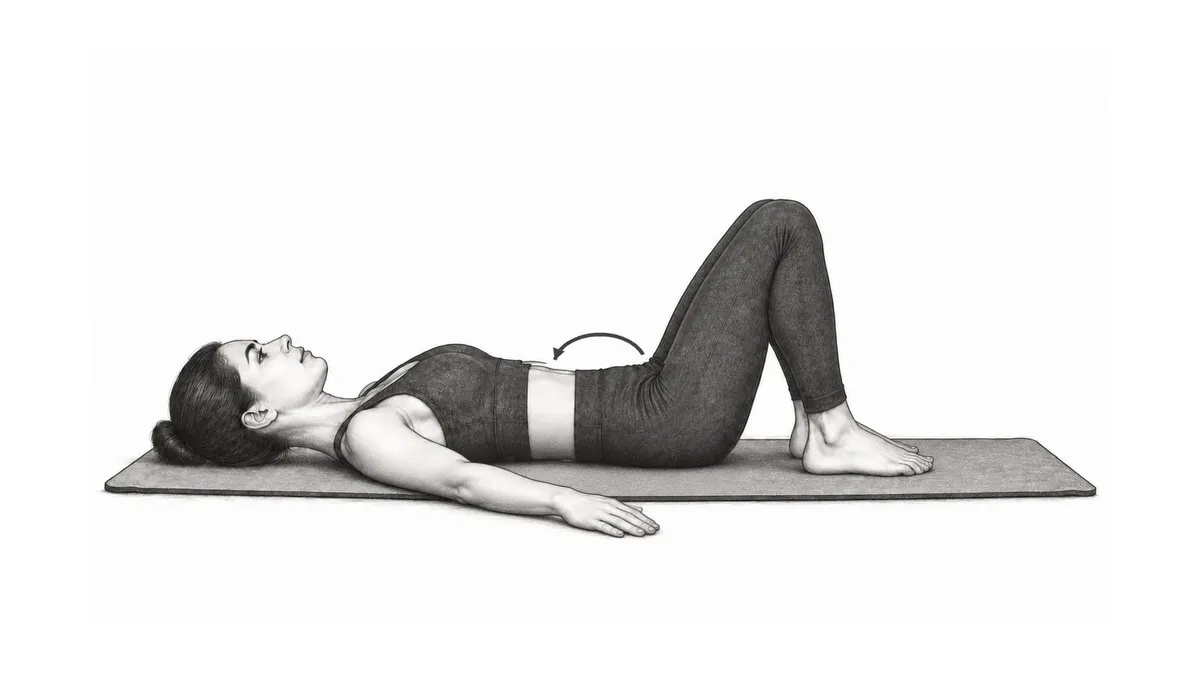 2
2Gently tilt your pelvis so your lower back flattens into the mat,imagine pulling your belly button toward your spine. Hold this tilt for 10 seconds. Keep breathing normally. Do not lift your hips off the mat.
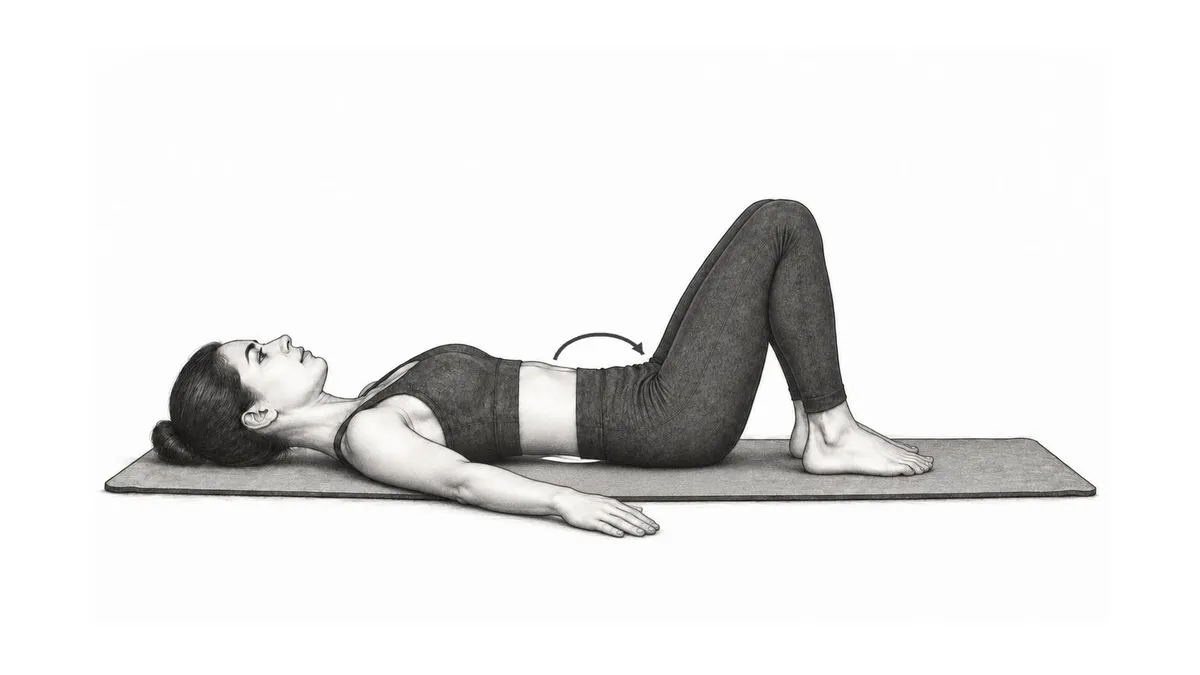 3
3Slowly relax back to the starting position. Repeat 5 times.
🔁 Repeat this exercise 5 times
Watch the Exercise
Muscles Targeted
This deep tummy muscle supports the trunk and pelvis. It joins the gentle effort during the backward tilt.
Runs down the front of the tummy. It helps bring the front of the pelvis upward.
This side tummy muscle supports pelvic control. It helps steady the tilt without twisting.
This buttock muscle can assist the backward tilt. Keep the effort gentle without lifting into a bridge.
Helpful For
A comfortable tilt may support a guided back-exercise plan. Do not force it if back or leg pain increases.
Practises small changes in lower-back and pelvic position. It can offer a gentle movement break after sitting or inactivity.
Teaches pelvic movement without lifting the hips. Slow practice with normal breathing helps build control.
Benefits
- Eases lower-back stiffness - the gentle rocking movement relaxes tight back muscles.
- Builds deep core control - trains the muscles that support your spine in daily life.
- Improves pelvic awareness - learning to move your pelvis on purpose helps your posture and other exercises.
- Gentle starting point - safe for beginners and early back-pain rehab.
Precautions
- Do not lift your hips off the mat - this is a small tilt, not a bridge; lifting changes the exercise.
- Stop if you feel pain - mild muscle effort is normal, sharp or increasing pain is not.
- Keep breathing - holding your breath raises pressure in your abdomen and works against the exercise.
- Recent back surgery, acute back injury or pregnancy - check with your physiotherapist or doctor first.
Need Professional Help?
Book a consultation to get personalized treatment advice for your condition.
Book on Instagram