Pectoralis Major Stretch (Doorway) in Standing
A stretch for the big chest muscle. It helps when the chest feels tight and the shoulders roll forward from desk work, driving or phone use. Also called the doorway chest stretch.

How to Perform
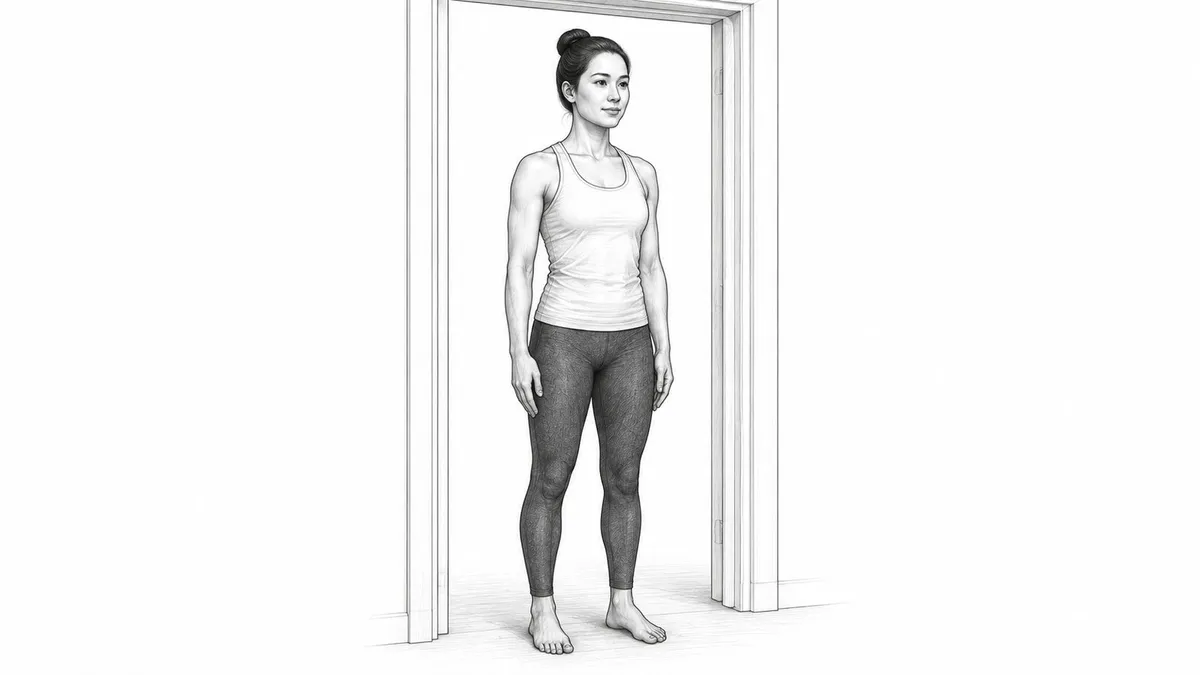 1
1Stand in an open doorway, feet hip-width apart, arms relaxed.
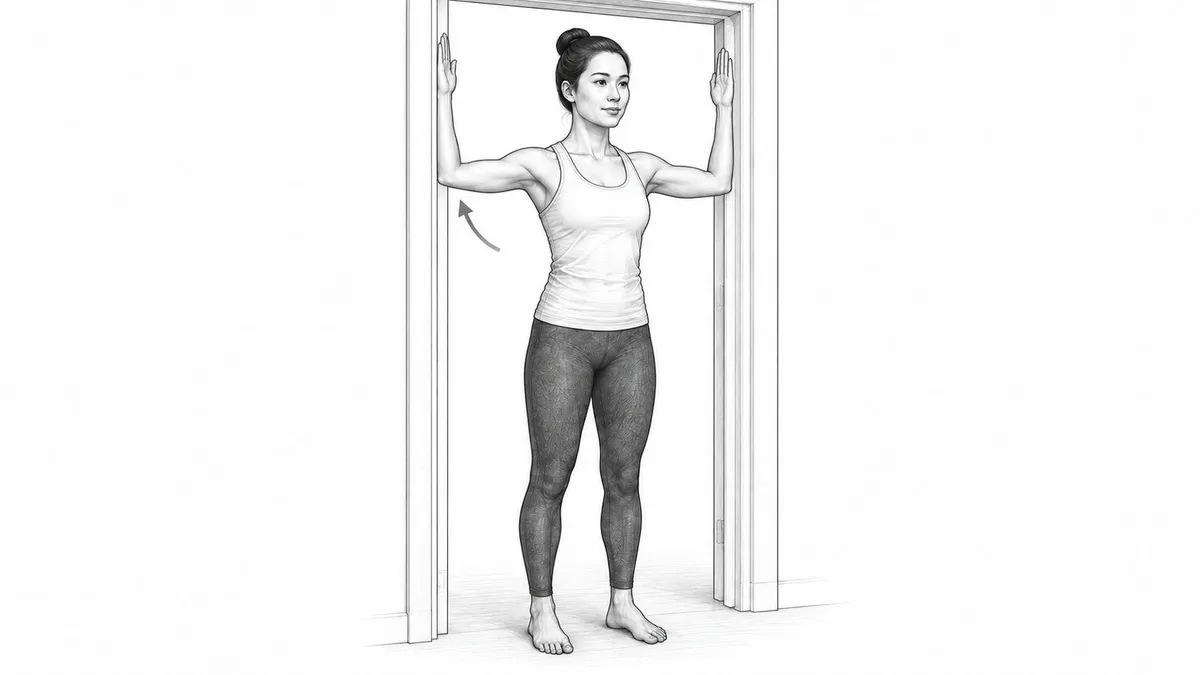 2
2Raise both arms to the sides, elbows bent to 90 degrees. Rest your forearms and palms on the door frame at shoulder height.
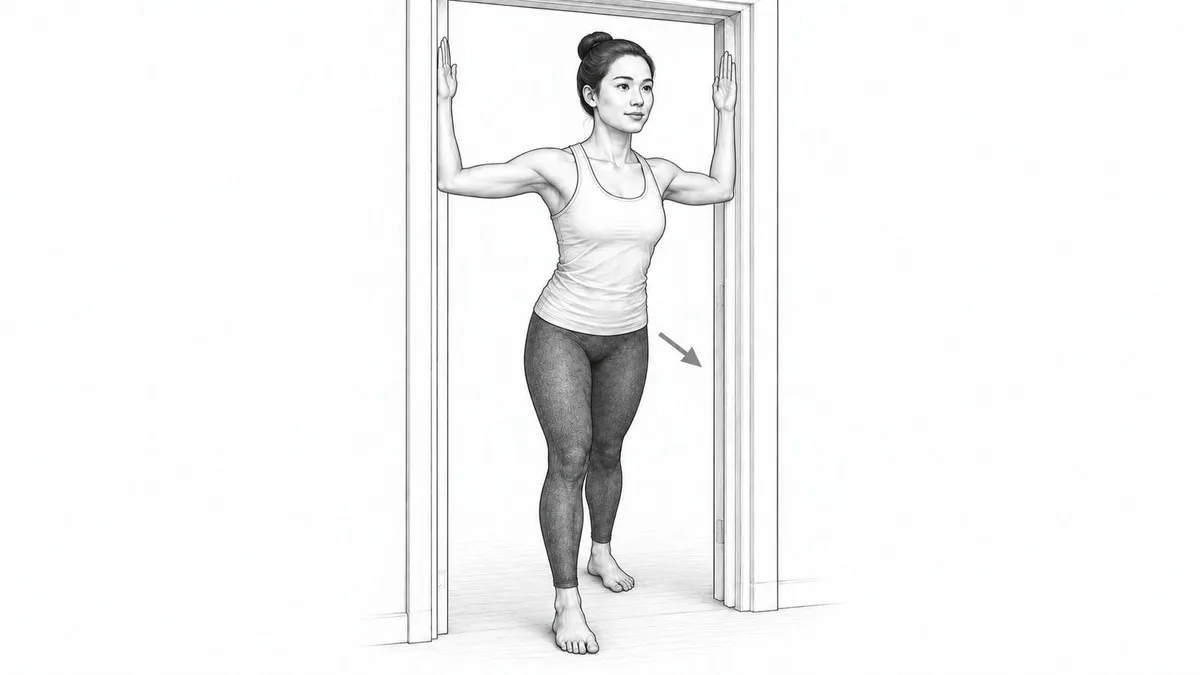 3⏱ Hold 10s
Step one foot forward and gently lean your body forward through the doorway until you feel a stretch across the chest. Keep your back straight, ribs and shoulders down. Do not turn your body.
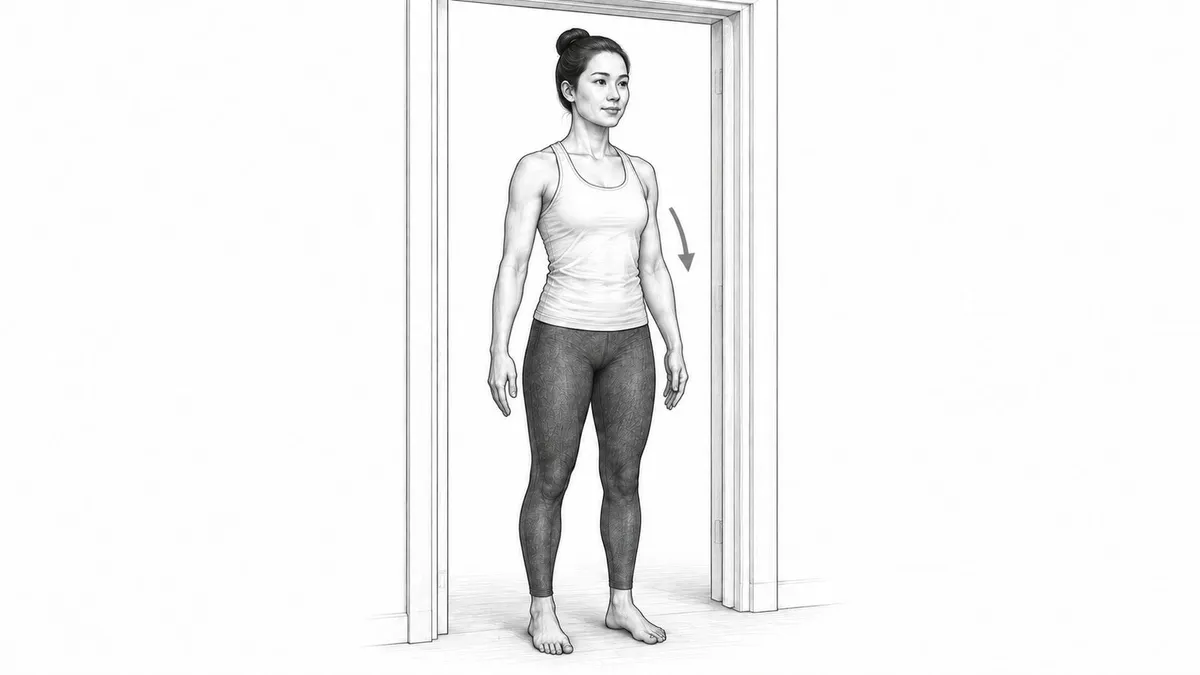 4
4Step back and lower your arms. Repeat 5 times, switching the front foot.
🔁 Repeat this exercise 5 times
Watch the Exercise
Muscles Targeted
This large chest muscle brings the arm forward and across the body. The doorway lean gently stretches it as the main target.
Lies beneath pectoralis major and attaches to the shoulder blade. It may lengthen as the blades move back.
Sits at the front of the shoulder. It may receive a secondary stretch with the upper arms supported.
Crosses the shoulder and elbow but is not a main target here. Bent elbows reduce biceps tension compared with straight-arm stretching.
Helpful For
May ease chest tightness contributing to forward shoulders. Combine it with upper-back strength, regular movement and comfortable posture changes.
May suit a wider plan for chest, neck and shoulder strain. Stretching alone does not correct the whole pattern.
Offers a change from holding the arms forward during screens or driving. Include regular movement breaks rather than relying only on stretching.
May ease chest muscle tightness after training. Unexplained chest pain, breathlessness or pressure needs medical assessment rather than stretching.
Benefits
- Opens the chest
- Improves upright posture
- Eases tension in the upper back and neck
- Makes deep breathing easier
Precautions
- Feel the stretch in the chest, not deep in the shoulder joint
- Keep the shoulder down. Do not shrug, and do not arch the lower back
- Keep the lean small. Stop if pain at the front of the shoulder, or tingling or numbness in the arm or hand
- Take care after shoulder dislocation, surgery or rotator cuff tear
Need Professional Help?
Book a consultation to get personalized treatment advice for your condition.
Book on Instagram