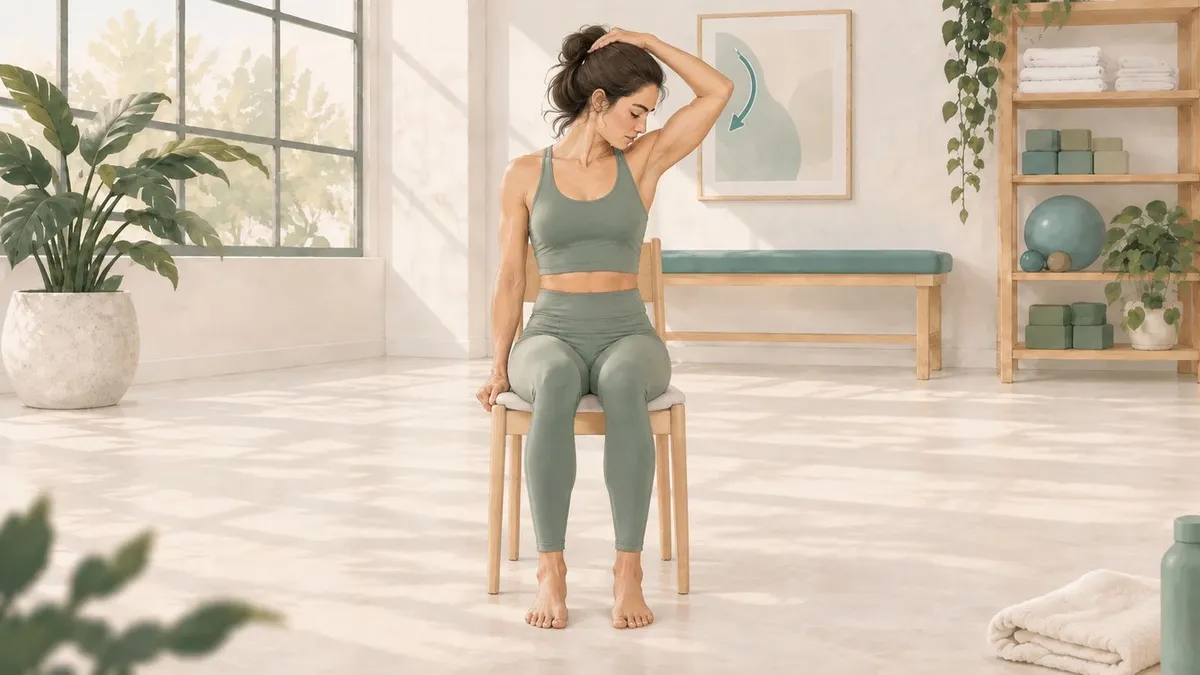
Levator Scapulae Stretch in Sitting
A stretch for the muscle that runs from the side of the neck to the top corner of the shoulder blade. It helps when one side of the neck feels stiff and turning the head is hard.
How to Perform
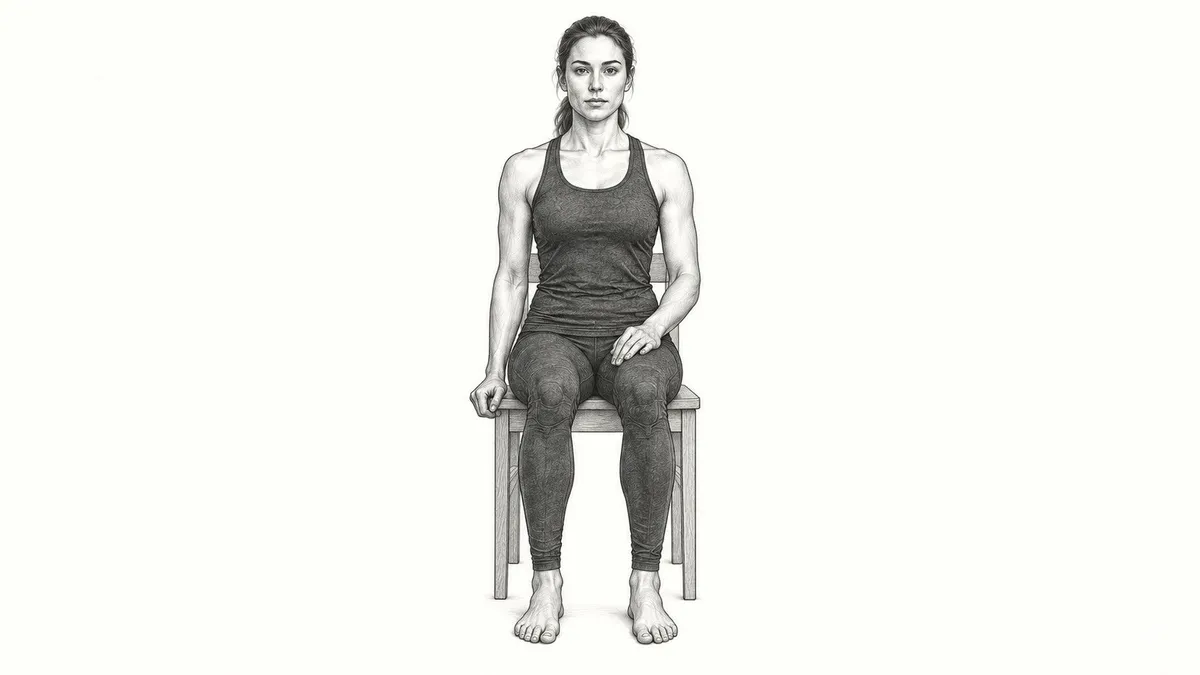 1
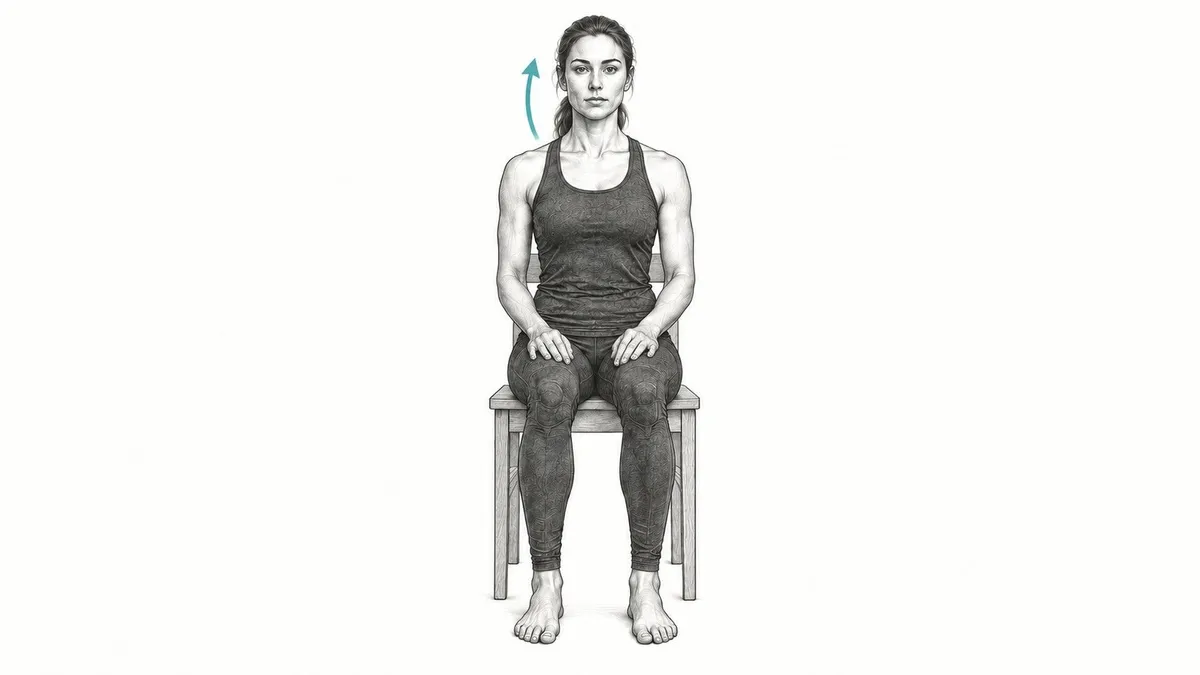
1Sit tall on a chair with your feet flat. Hold the seat with the hand on the side you want to stretch. This keeps the shoulder down.
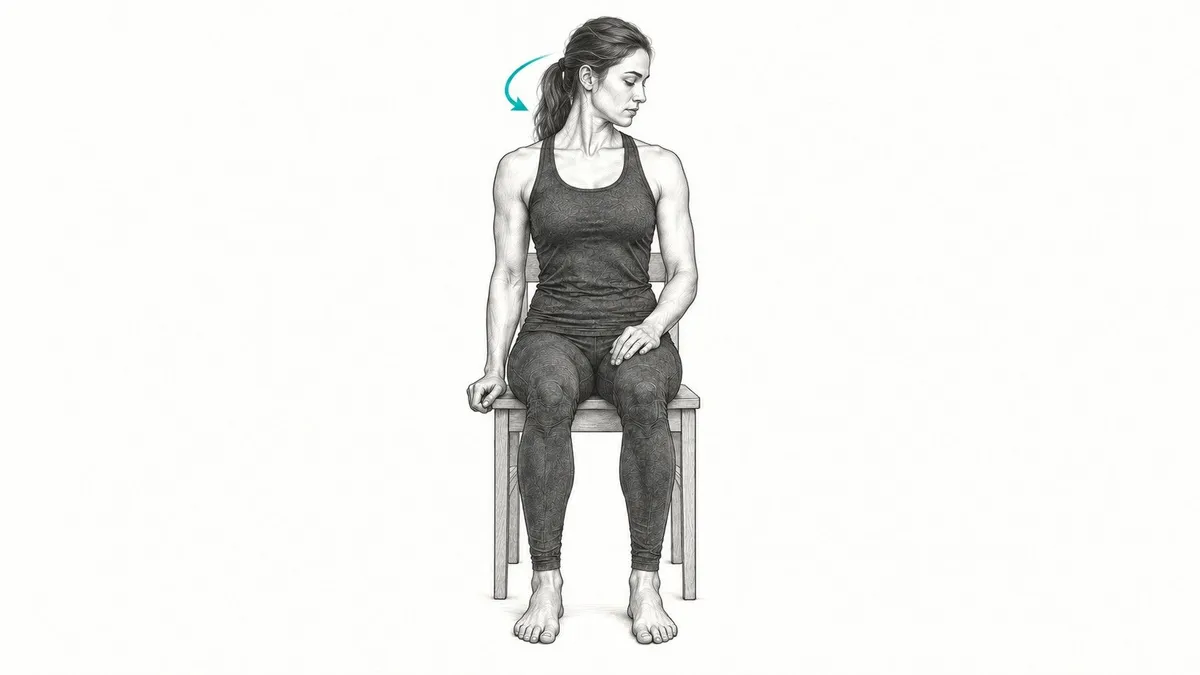 2
2Turn your head about 45 degrees to the other side, as if looking towards your armpit.
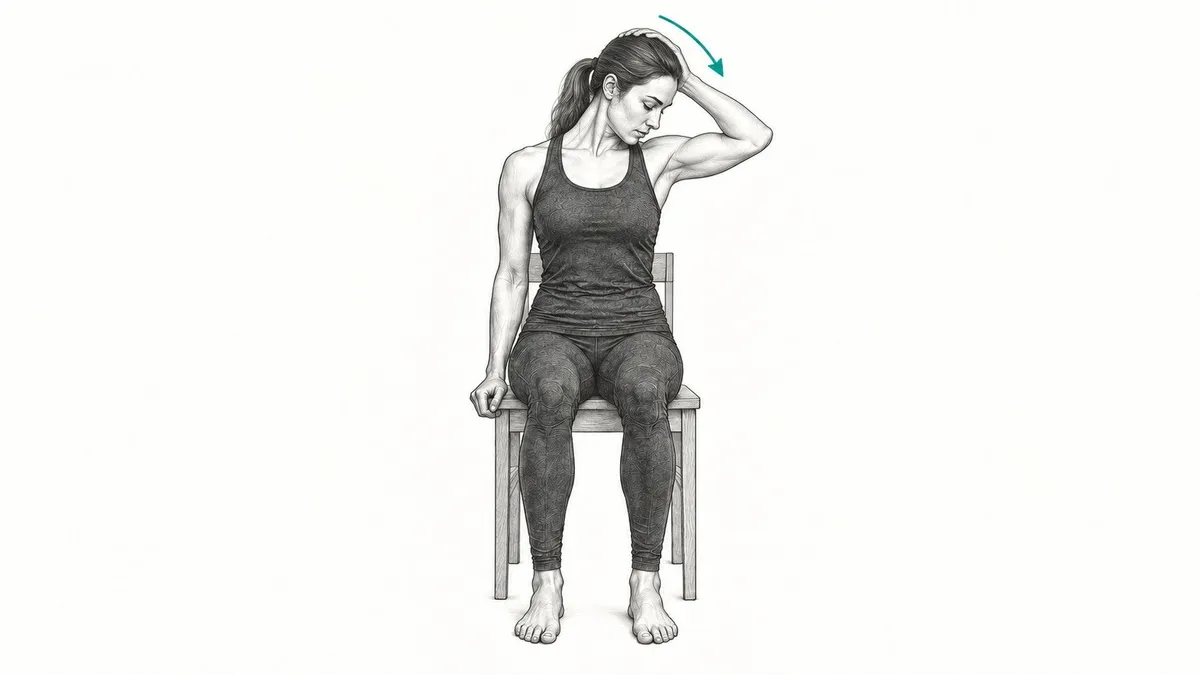 3⏱ Hold 10s
Gently tilt your head down, bringing your nose towards the armpit. Rest the other hand lightly on the back of your head for a little extra pull. Hold 10 seconds.
 4
4Come back slowly to the start. Repeat 5 times, then switch sides.
Muscles Targeted
Links the upper neck to the shoulder blade's top inner corner. Holding the shoulder down and looking toward the opposite armpit lengthens it.
Runs across the upper shoulder and neck. It may lengthen when the shoulder stays down and the head tilts away.
Lies behind the neck and helps turn and extend it. The downward head position may give it a secondary stretch.
Runs toward the back of the head. It may lengthen during downward head movement, but is not the main target.
Helpful For
May ease one-sided neck and upper-shoulder tightness. Keep movement gentle and stop for dizziness or arm symptoms.
Offers a change from holding the neck still during work or phone use. Include regular breaks and a comfortable setup.
May help when neck muscle tension contributes to headaches. New or unusual headaches need assessment, and stretching does not treat every headache.
Lengthens a muscle joining the neck and shoulder blade. It may ease tightness near the blade's top inner corner.
Benefits
- Loosens the side and back of the neck
- Improves head turning
- Eases shoulder blade tension
- Reduces neck tightness from long sitting
Precautions
- Pull gently. Do not force the neck with your hand
- Keep the shoulder down. Do not let it lift
- Stop if sharp pain, dizziness, or tingling or numbness in the arm
- Take care with a recent neck injury, whiplash or surgery
Need Professional Help?
Book a consultation to get personalized treatment advice for your condition.
Book on Instagram