Kneeling Hip Flexor Stretch
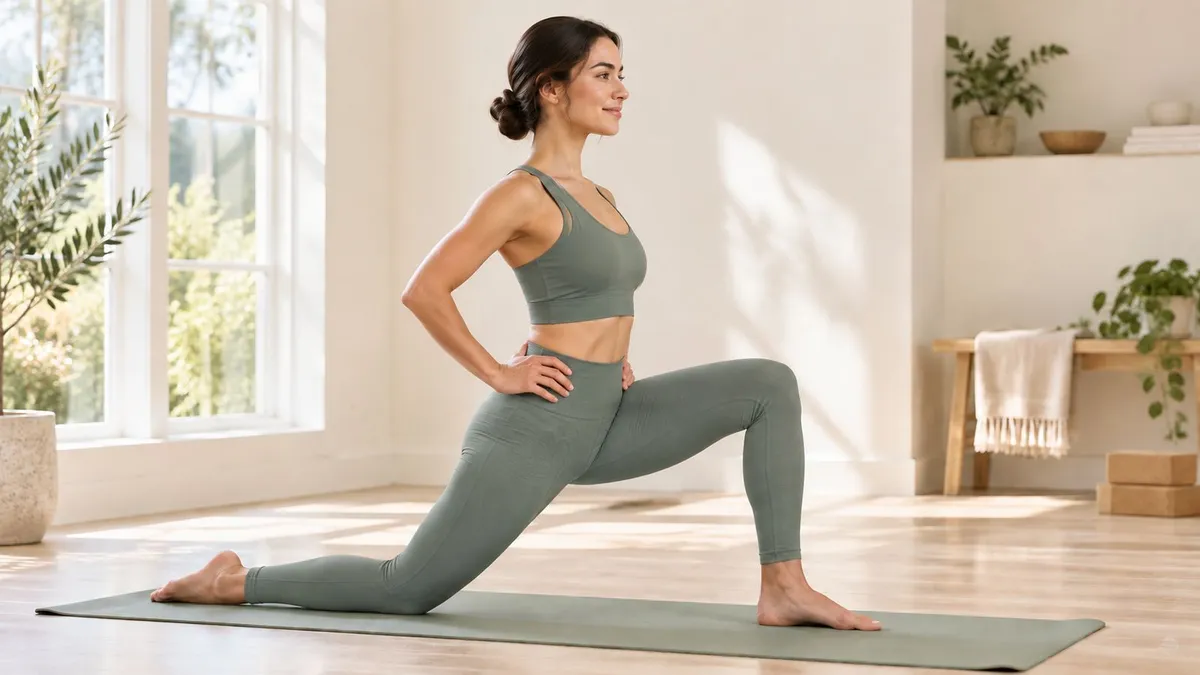
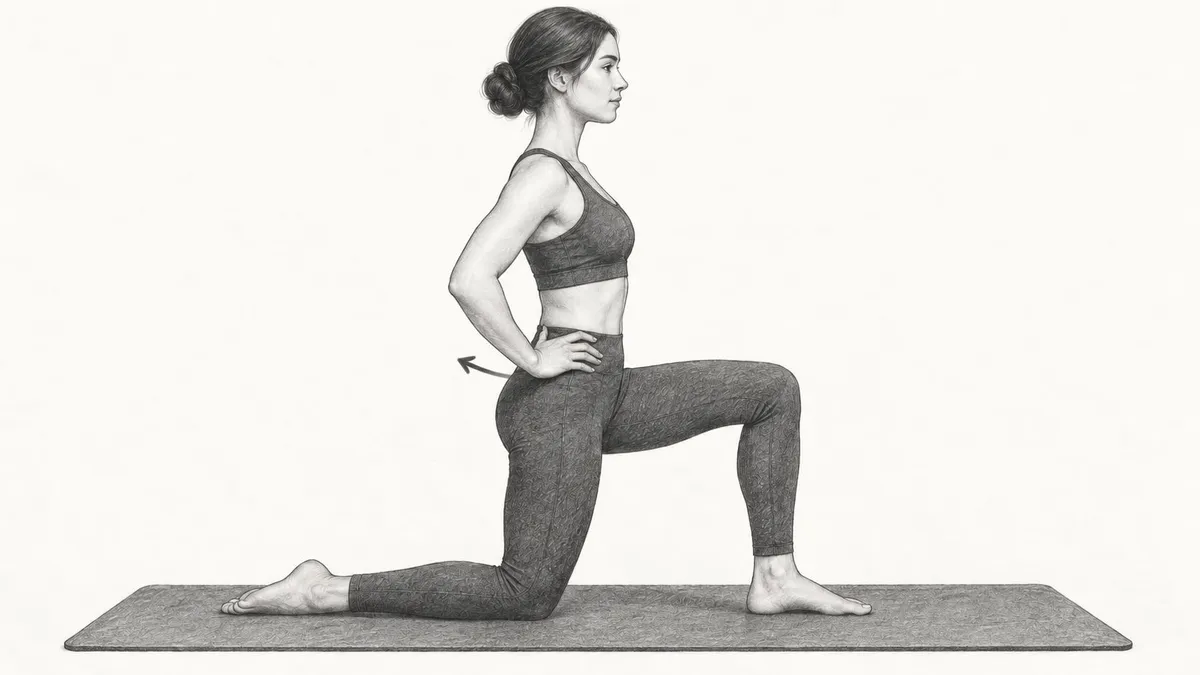
The Kneeling Hip Flexor Stretch is a gentle stretch for the front of the hip, done in a half-kneeling position. Slowly shifting your weight forward while keeping your pelvis tucked stretches the muscles that tighten up with long hours of sitting.
How to Perform
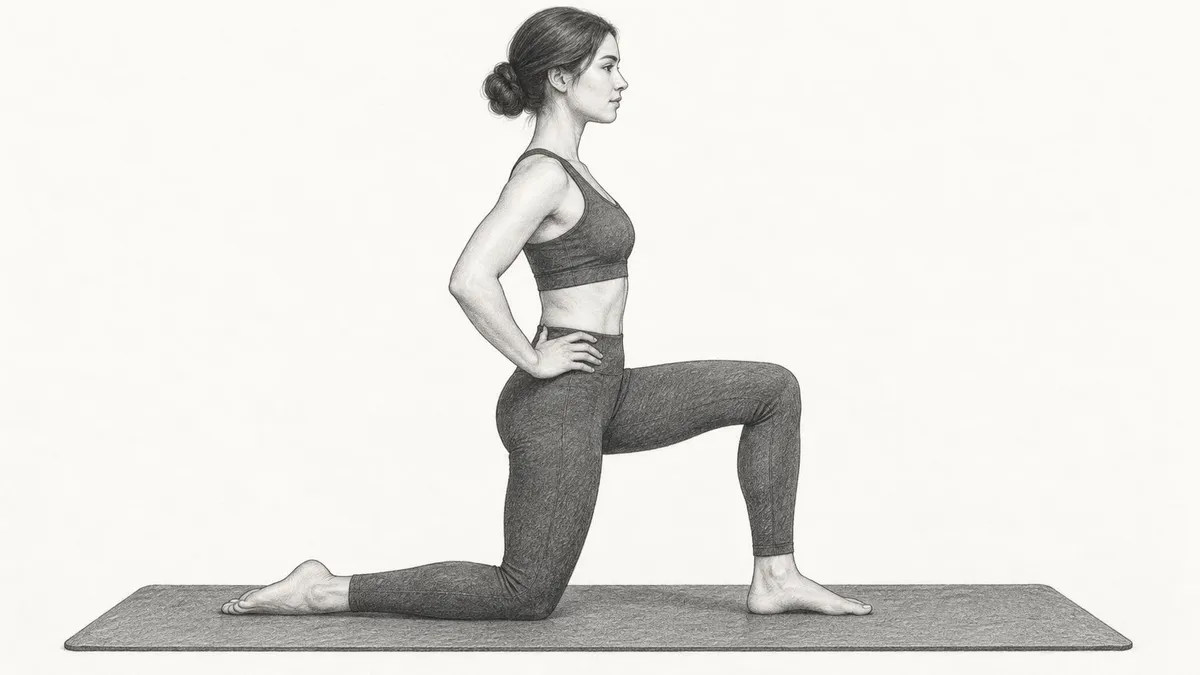 1
1Kneel on one knee on a soft mat, with your other foot flat on the floor in front of you so both knees are bent at about 90 degrees.
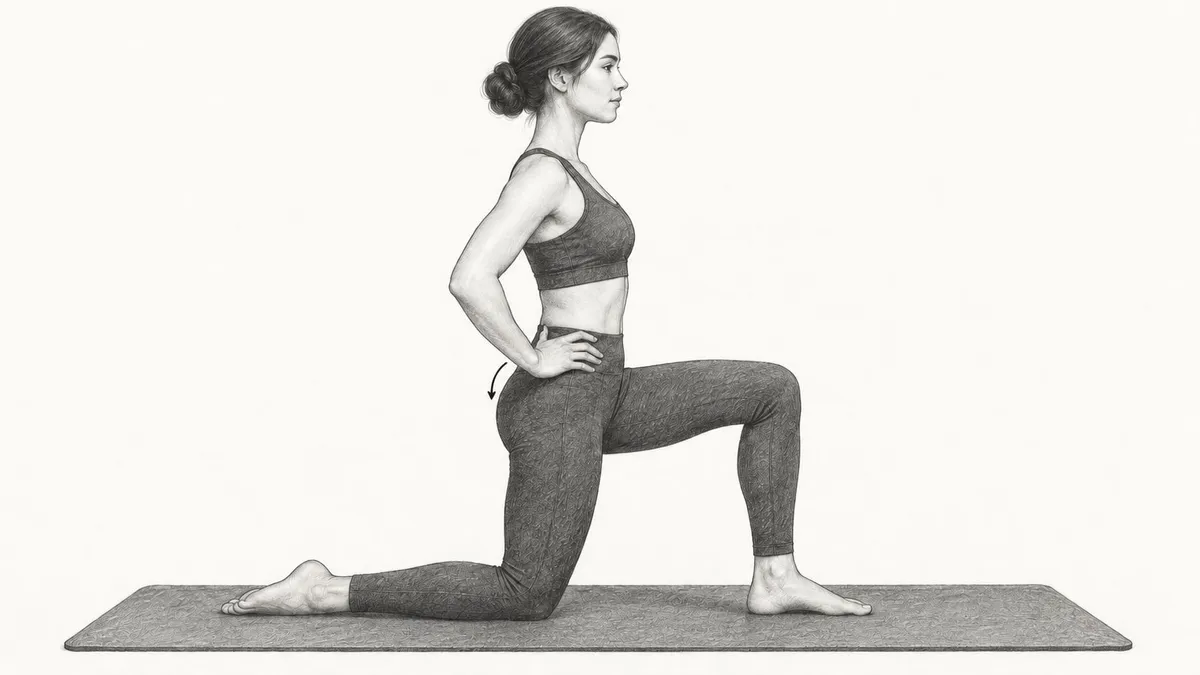 2
2Rest your hands on your hips or your front thigh, and gently tuck your tailbone under while drawing your tummy in.
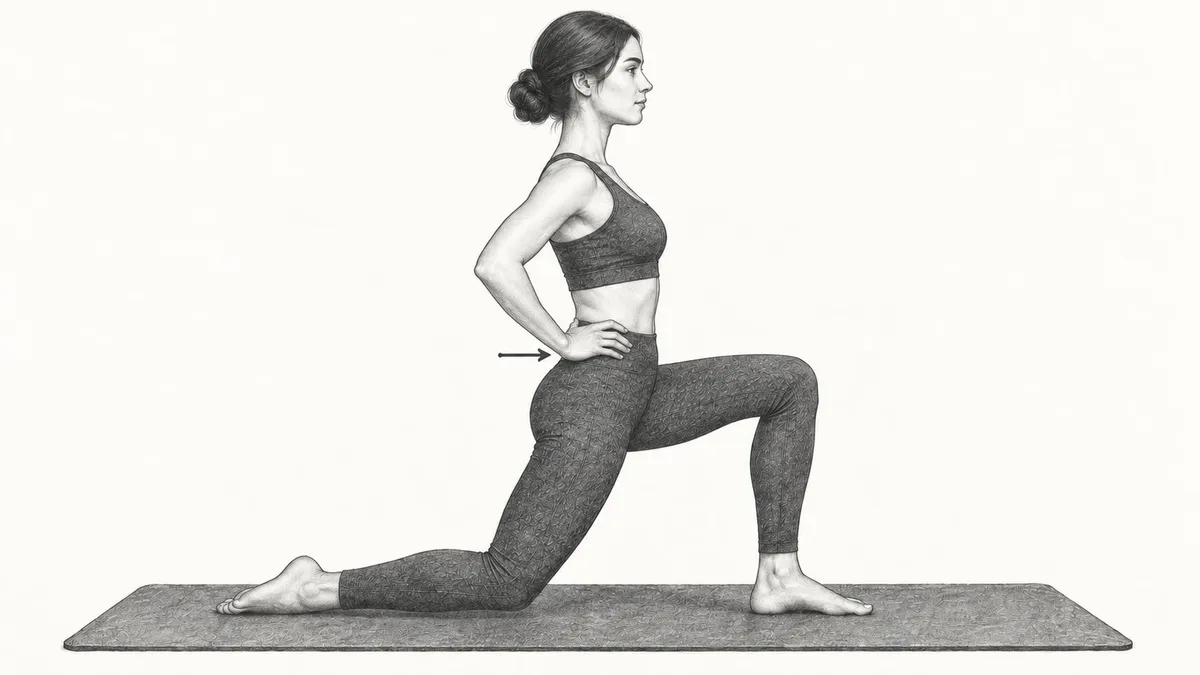 3⏱ Hold 10s
Slowly shift your weight forward until you feel a gentle stretch at the front of the hip of your kneeling leg, keeping your trunk tall. Hold 10 seconds.
 4
4Return to the starting position and relax before the next stretch. Repeat this 5 times, then change sides.
🔁 Repeat this exercise 5 times
Watch the Exercise
Muscles Targeted
This deep hip muscle brings the thigh toward the body. A tucked pelvis and backward hip position gently lengthen it.
Joins the psoas at the front of the hip. It is a main hip flexor stretched in controlled half-kneeling.
This front thigh muscle crosses the hip and knee. The bent knee and backward hip position gently stretch it.
This buttock muscle supports the movement rather than receiving a stretch. A gentle squeeze keeps the pelvis tucked without arching the back.
Helpful For
May help when front-of-hip tightness limits movement. Pelvis control matters more than taking a large forward step.
May ease walking and standing when front-of-hip tightness causes difficulty. Stop for joint pain rather than a mild muscle stretch.
May form part of a guided hip or leg programme. Use a standing version if kneeling is uncomfortable.
Benefits
- Stretches the muscles at the front of the hip without any equipment
- Practices gentle control of the pelvis and lower back position
- Offers a simple counterbalance to time spent sitting
- Supported kneeling position makes it easy to relax into the stretch
Precautions
- Move only within a pain-free range. Stop if hip, knee or back pain increases, or if the movement causes numbness or dizziness
- Place a folded towel or cushion under the kneeling knee, and skip this exercise if kneeling itself is painful
- Keep the stretch slow and gentle - do not bounce or force the hip forward
- Keep your trunk tall and tummy lightly engaged so your lower back does not arch
- If you are pregnant, have recently had hip, knee or back surgery, or have a diagnosed hip or spine condition, check with your clinician before starting
- This exercise is general education only and is not a substitute for professional medical advice, diagnosis or treatment
Need Professional Help?
Book a consultation to get personalized treatment advice for your condition.
Book on Instagram