Hip Adductor Ball Squeeze in Supine
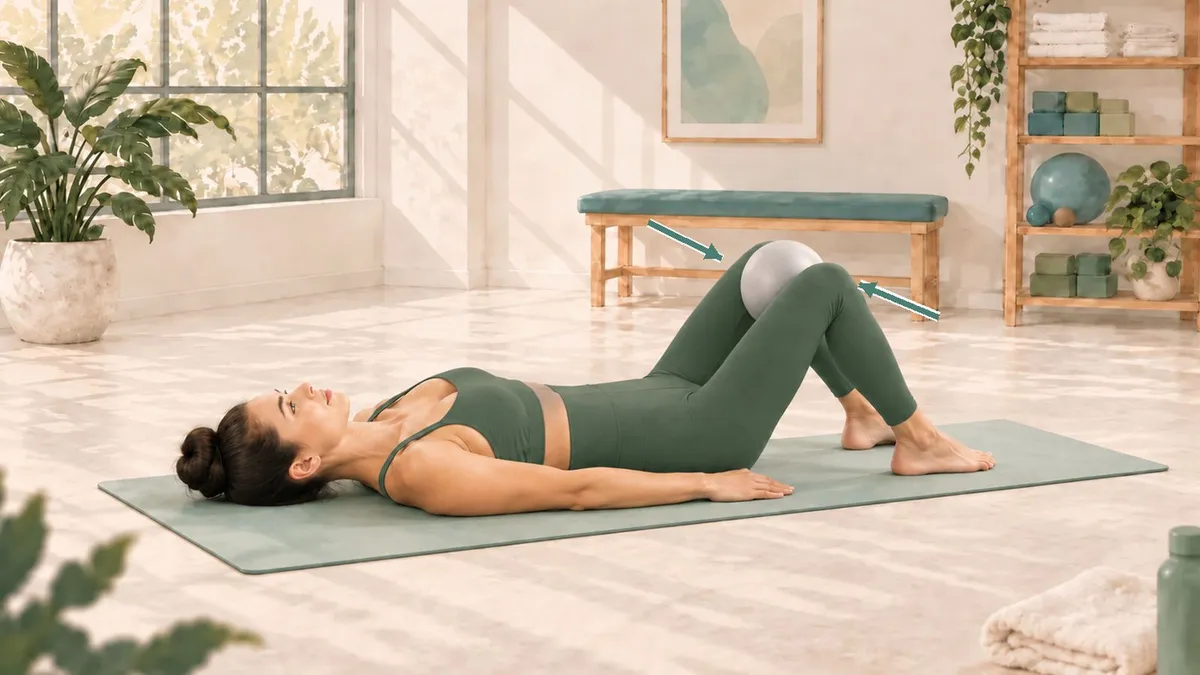
A gentle exercise done lying on your back with a soft ball between your knees. Squeezing the ball works the inner-thigh muscles while your body stays still.
How to Perform
 1
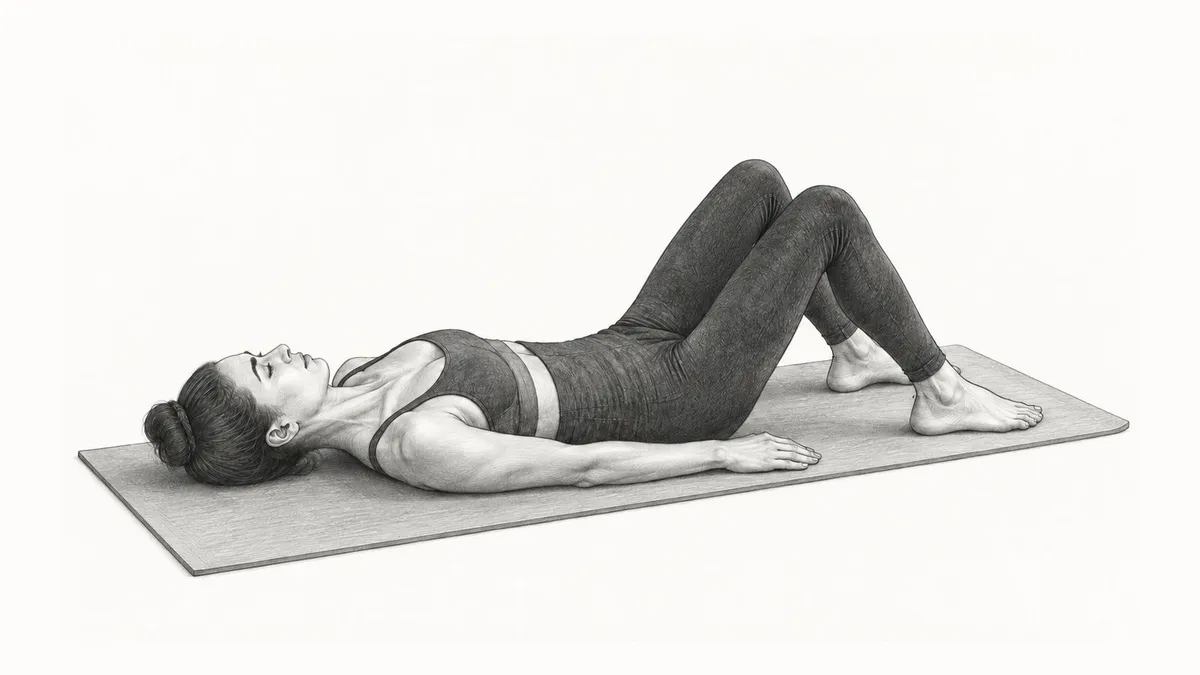
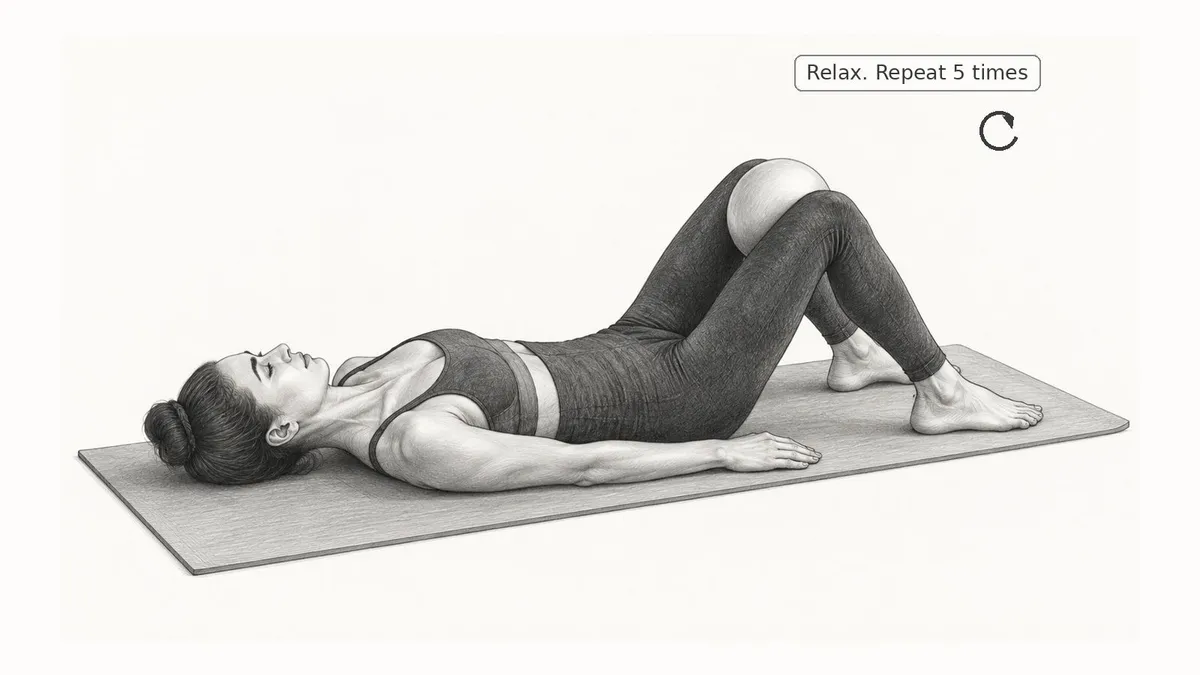
1Lie on your back with your knees bent and feet flat on the floor, hip-width apart. Rest your arms by your sides with your palms facing down.
 2
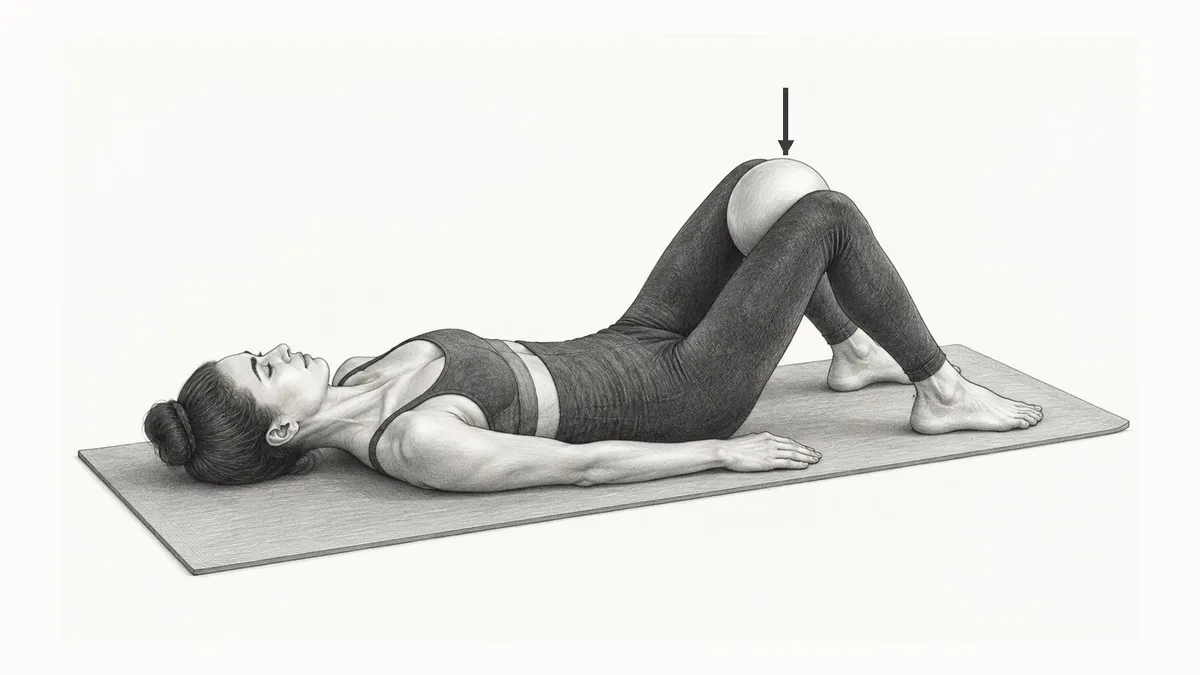
2Place a small, soft ball between your knees. Keep your head, back and hips resting on the mat.
 3⏱ Hold 10s
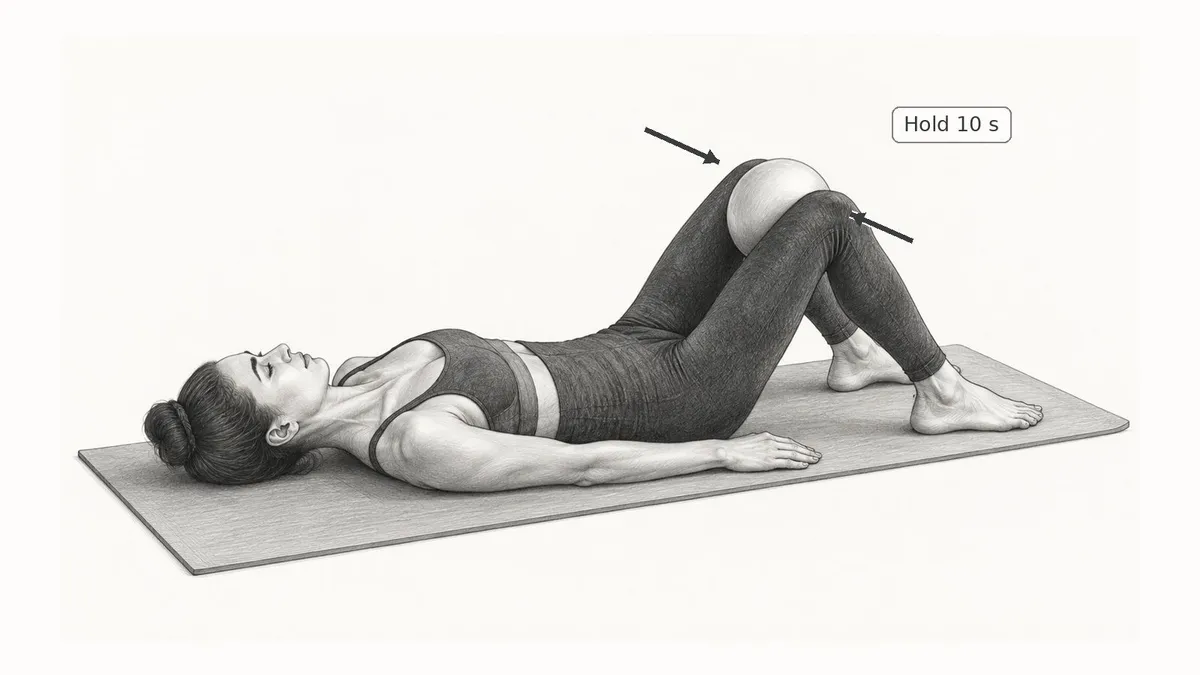
Breathe out as you gently squeeze the ball with both knees, using equal pressure from each side. Hold for 10 seconds and keep breathing slowly. Keep your feet on the floor and your neck and shoulders relaxed.
 4
4Slowly release the squeeze, keeping the ball between your knees. Rest briefly.
🔁 Repeat this exercise 5 times
Watch the Exercise
Muscles Targeted
This inner-thigh muscle brings the thigh toward the body's centre. It works as the knees gently press into the ball.
This short inner-thigh muscle brings the thigh inward. It joins the other adductors during the steady squeeze.
This large inner-thigh muscle adds inward pressure. It works during the hold without a large hip movement.
This thin inner-thigh muscle brings the thigh inward. It contributes to the squeeze and helps control the leg.
Helpful For
Gently loads the muscles that bring the legs together. Adjust pressure to match your strength and comfort.
A light squeeze may suit recovery when the injured muscle tolerates it. Follow guidance on effort and timing without squeezing through pain.
May provide early, controlled tendon loading. Follow a guided plan to set the effort and progress beyond this squeeze.
Benefits
- Builds inner-thigh strength.
- Helps the inner-thigh muscles hold a steady contraction.
- Trains both legs to squeeze with equal pressure.
- Works the inner thighs in a supported position without standing.
Precautions
- Use a soft ball and gentle pressure. Do not squeeze as hard as you can.
- Keep breathing during the hold. Do not hold your breath.
- Reduce the pressure or stop if pain increases. Seek advice if symptoms stay worse later that day or the next day.
- Ask your physiotherapist before starting after a recent groin injury or hip surgery, and follow any movement restrictions.
Need Professional Help?
Book a consultation to get personalized treatment advice for your condition.
Book on Instagram