Hamstring Curls in Prone
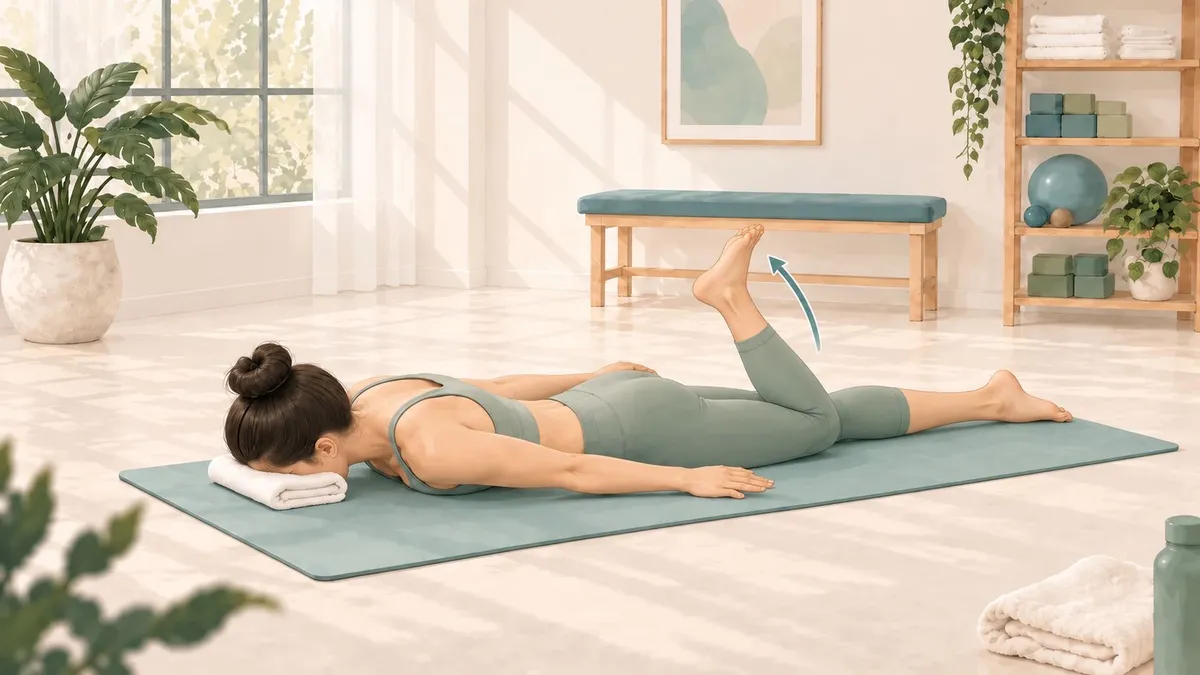
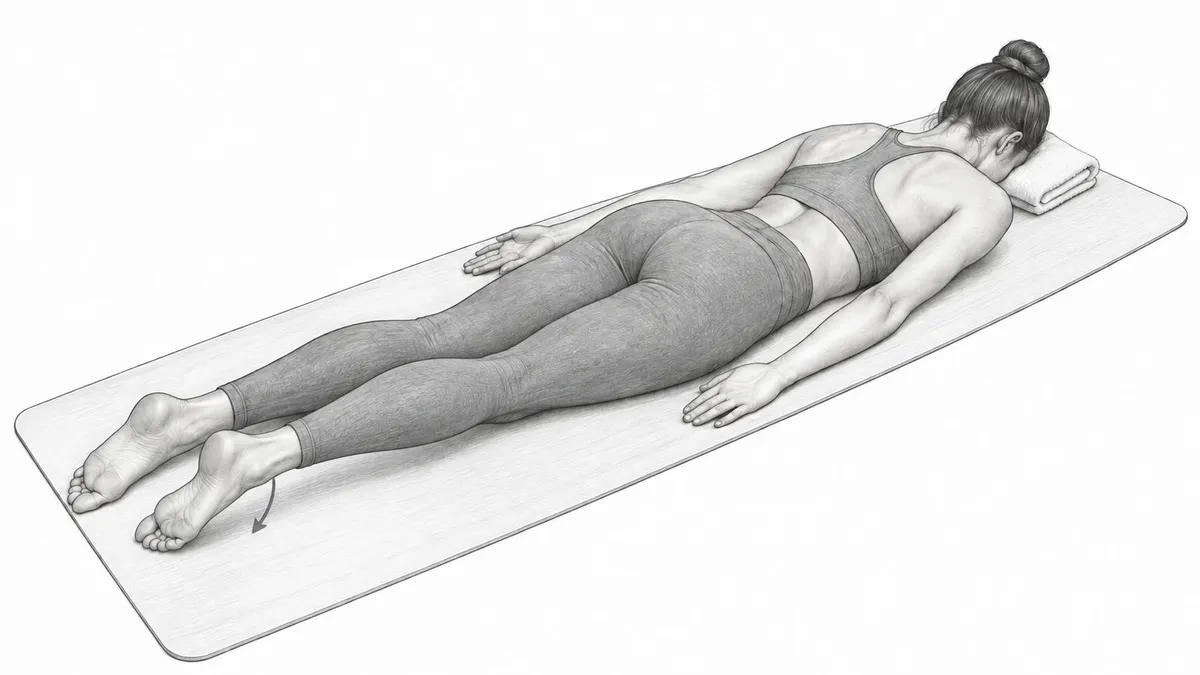
Hamstring Curls in Prone is a strengthening exercise for the back of the thigh, done lying face down. Slowly curling one heel toward your buttock and lowering it with control works the hamstring muscles while your hips stay supported on the mat.
How to Perform
 1
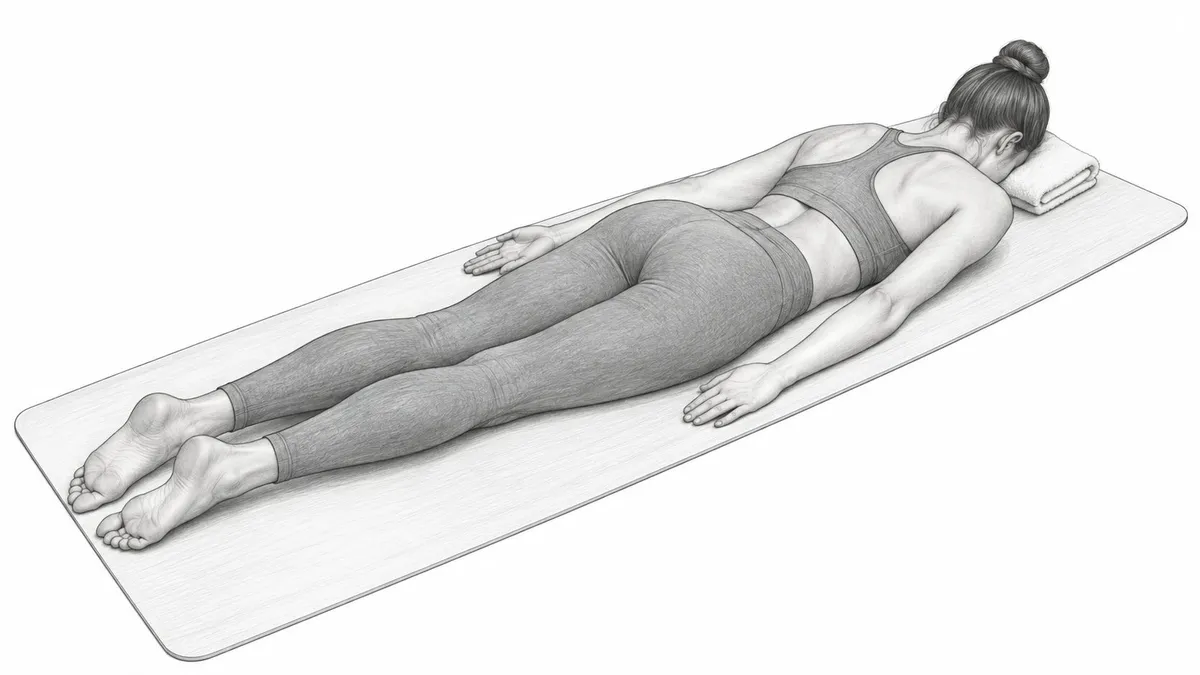
1Lie on your stomach with your legs straight and relaxed. Rest your forehead on a folded towel so your neck stays in line with your back.
 2
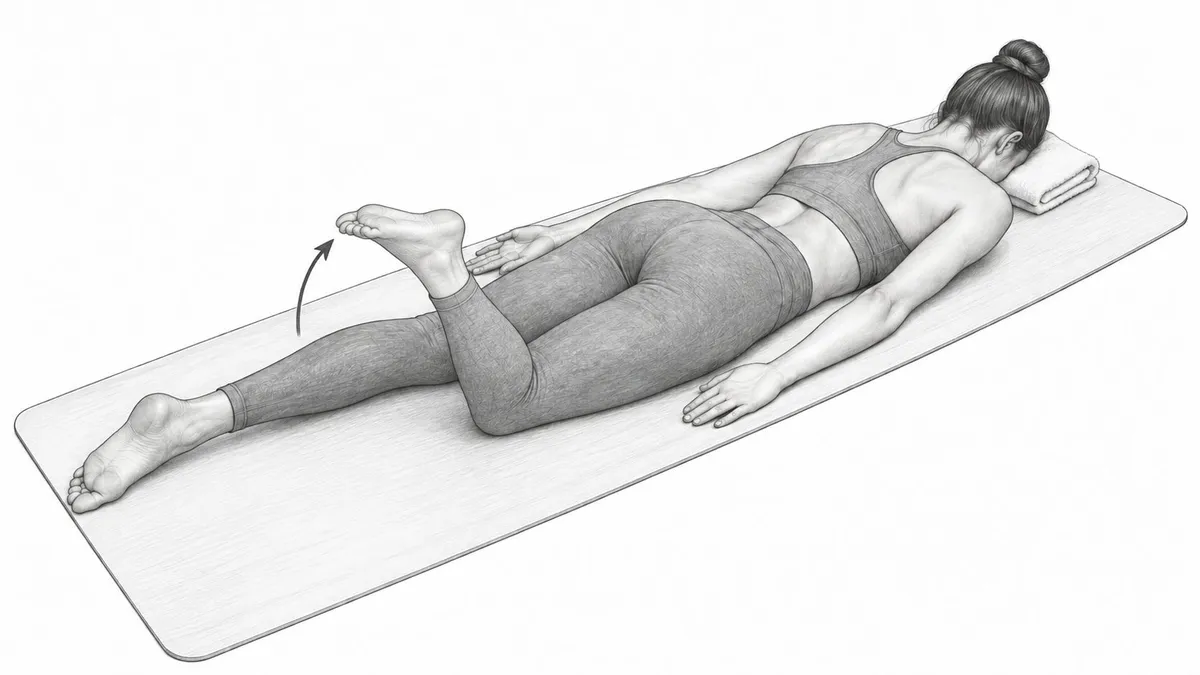
2Keep both hips and the front of your thighs pressed gently into the mat, and tighten your tummy muscles slightly so your lower back stays still.
 3⏱ Hold 10s
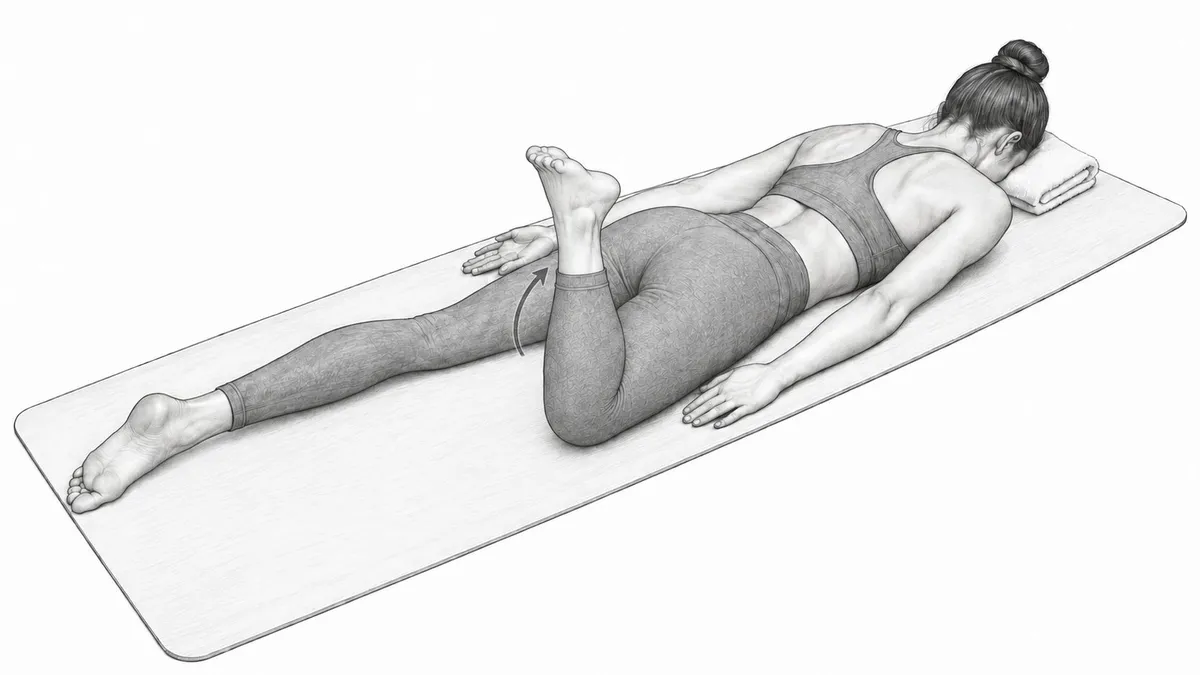
Slowly bend one knee, bringing your heel toward your buttock as far as is comfortable while your thigh stays on the mat. Hold 10 seconds.
 4
4Lower your leg slowly back to the mat and relax before the next curl. Repeat this 5 times, then change legs.
🔁 Repeat this exercise 5 times
Watch the Exercise
Muscles Targeted
Lies at the outer back of the thigh. It bends the knee and controls the leg as it lowers.
Lies at the inner back of the thigh. It helps bring the heel toward the buttock.
Lies at the inner back of the thigh. It bends the knee and steadies the curl.
This calf muscle crosses the knee and ankle. It assists knee bending, but the hamstrings remain the main target.
Helpful For
Works the muscles at the back of the thigh. Slow lifting and lowering build control without standing on the leg.
Trains hamstrings that help control everyday knee movement. Use it as part of a wider leg-strengthening plan.
May support rehabilitation when knee bending and face-down lying are comfortable. Follow movement and loading limits after injury or surgery.
Benefits
- Strengthens the hamstrings without weights or equipment
- Practices a slow, controlled knee bend and lower
- Supported hip position helps keep the lower back still while the leg does the work
- Working one leg at a time helps build balanced strength on both sides
Precautions
- Move only within a pain-free range. Stop if knee, thigh or back pain increases, or if the movement causes numbness or dizziness
- Keep your hips and the front of your thighs on the mat; do not lift the hips or arch the lower back to bring the heel higher
- Curl and lower slowly; do not swing or kick the leg up
- If you have a recent knee or hamstring injury or surgery, or cannot lie comfortably face down, ask your physiotherapist or clinician for an appropriate variation
- This is general exercise information, not a diagnosis or personal treatment plan
Need Professional Help?
Book a consultation to get personalized treatment advice for your condition.
Book on Instagram