Diaphragmatic Breathing in Supine
A gentle breathing exercise done lying on your back. It helps you practise slow breathing using your diaphragm and can help your body and pelvic floor relax.
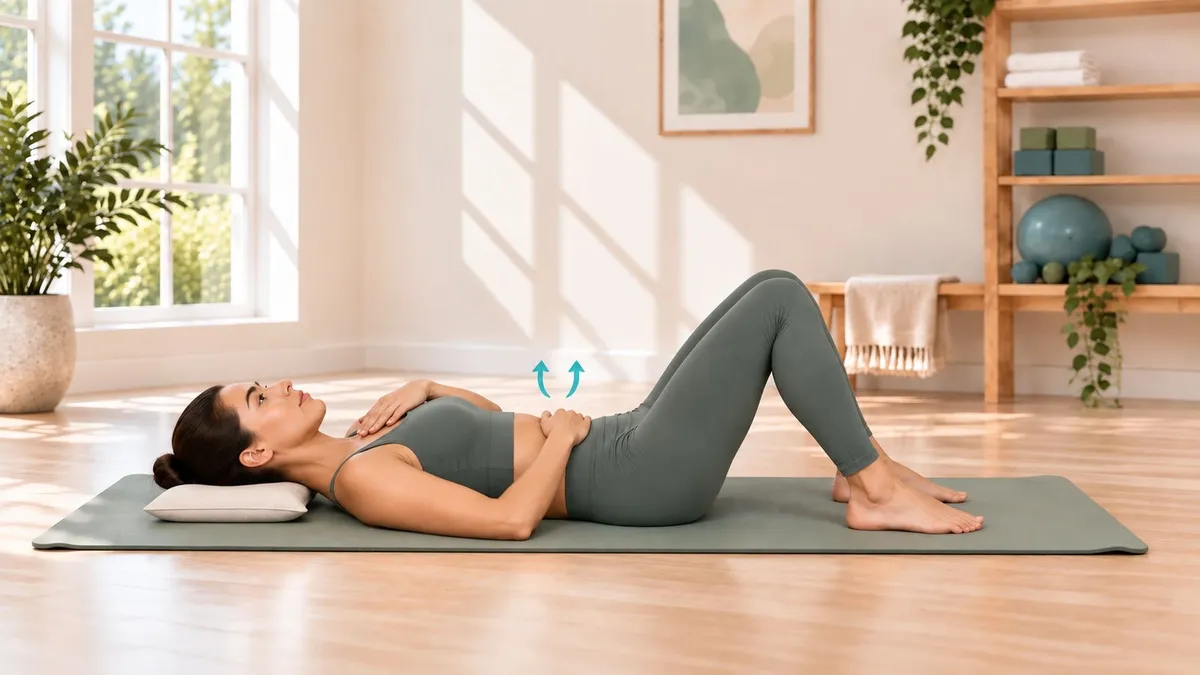
How to Perform
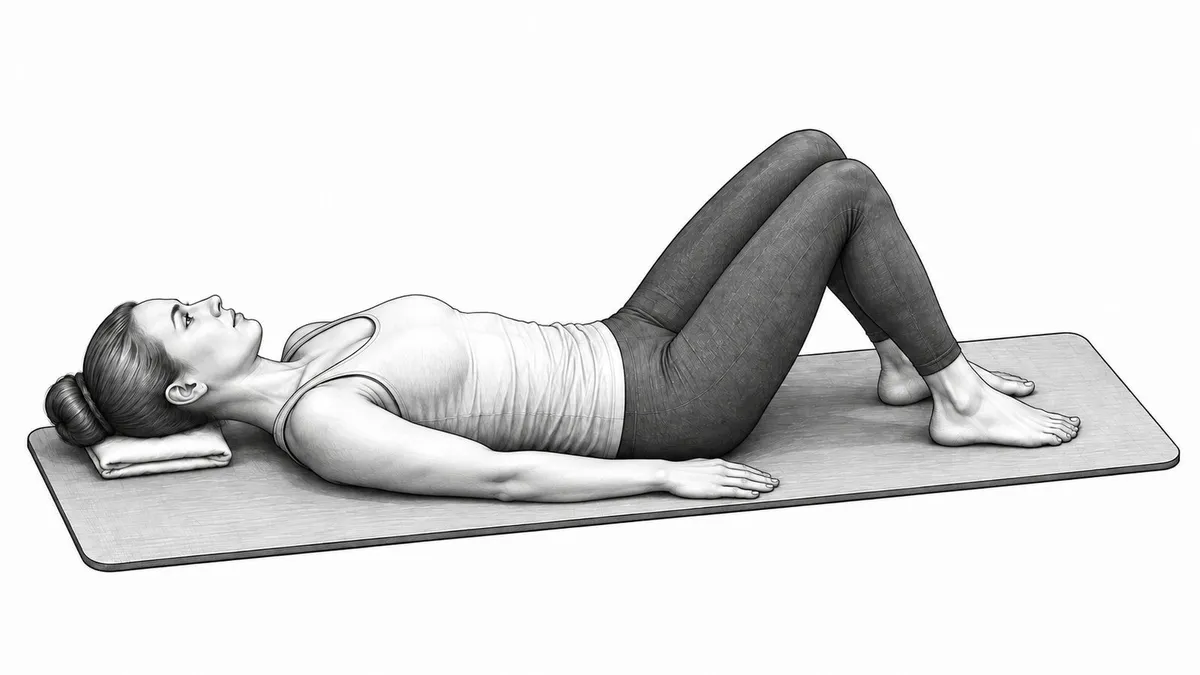 1
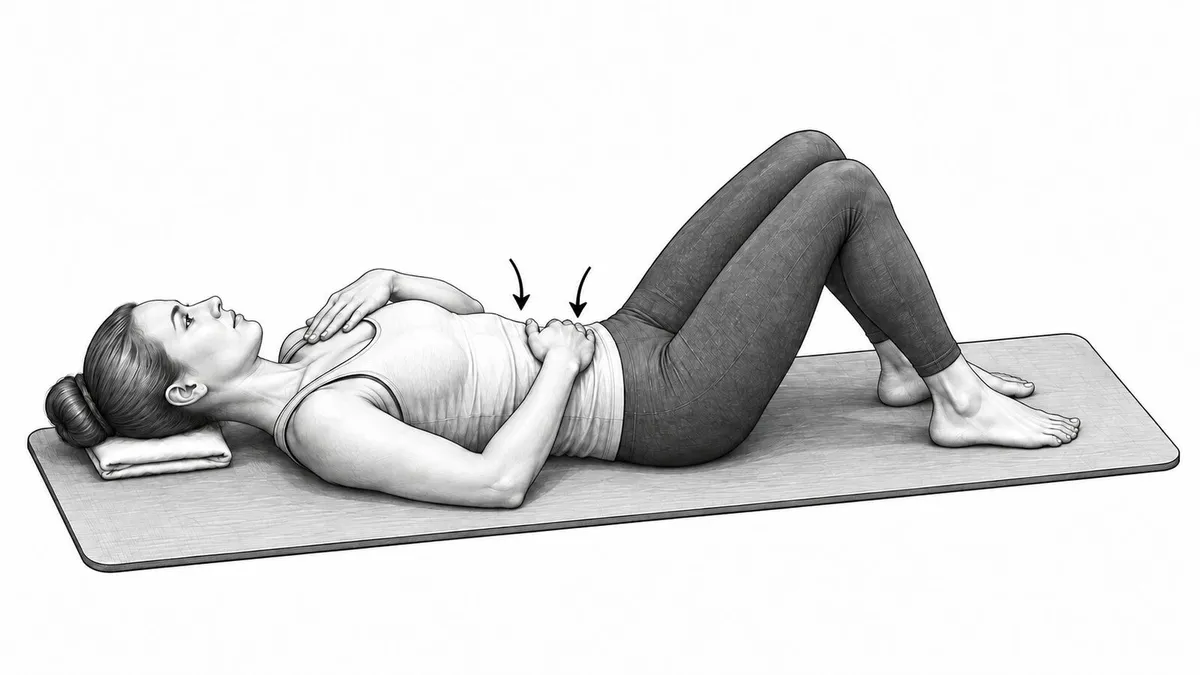
1Lie on your back with your knees bent and feet flat. Use a small pillow under your head if needed. Relax your neck and shoulders.
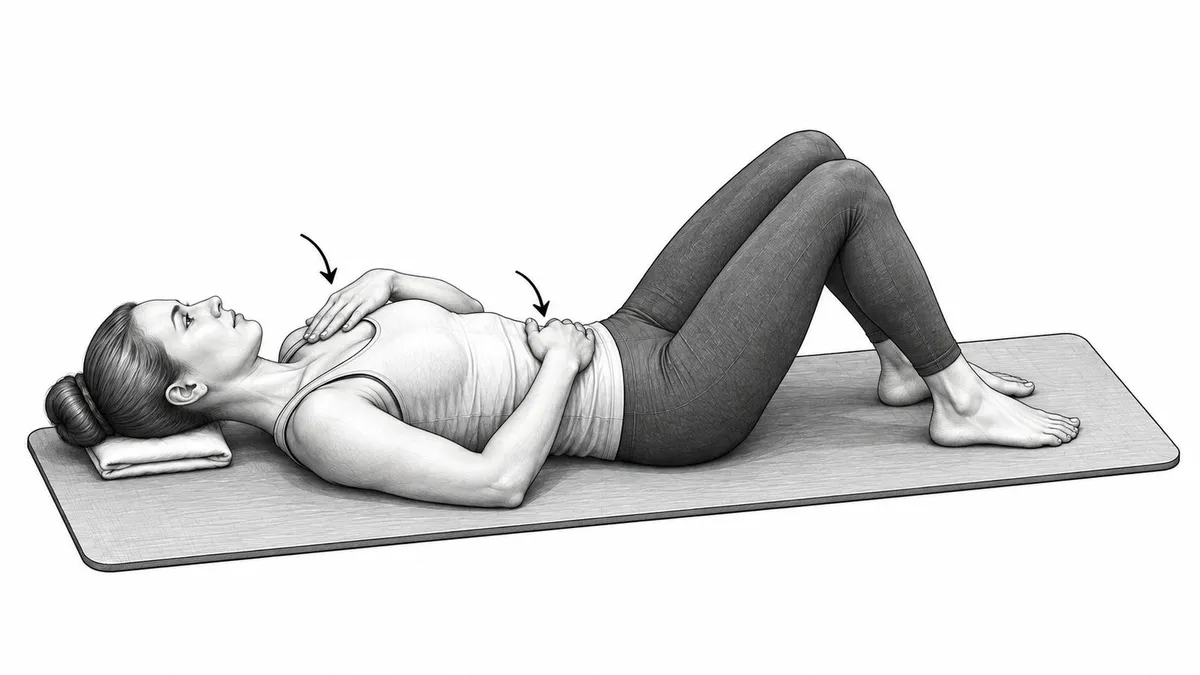 2
2Place one hand on your upper chest and the other on your tummy, just below your ribs.
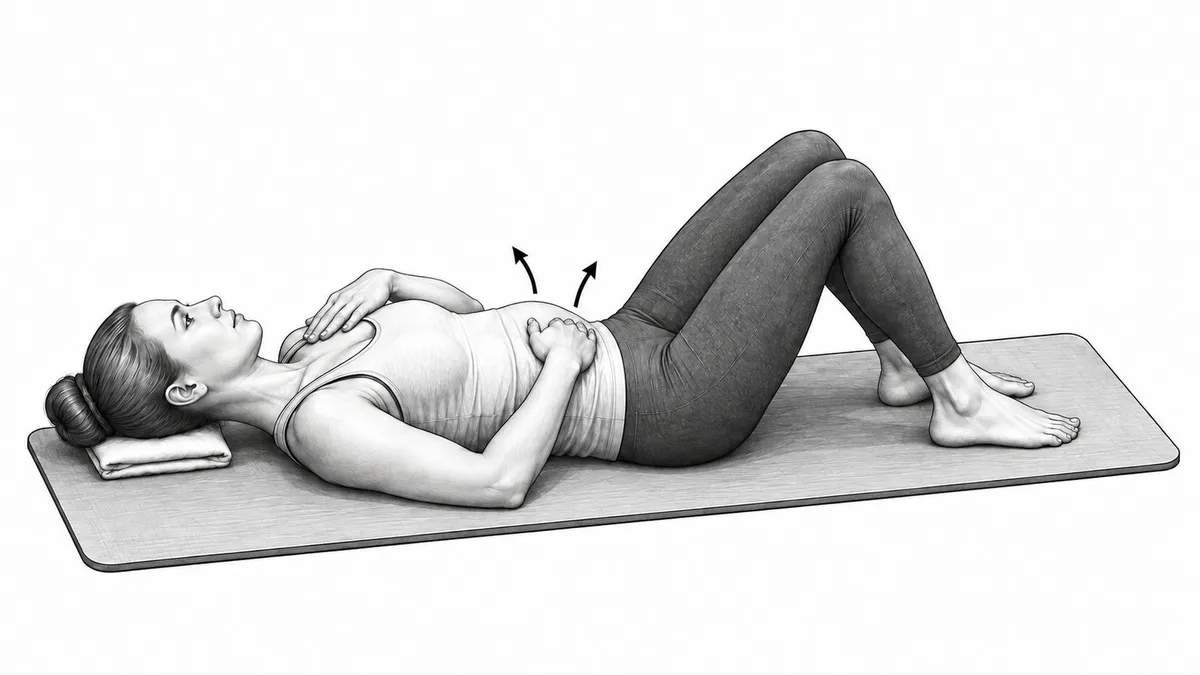 3
3Breathe in slowly through your nose. Let your tummy rise under your hand and your lower ribs widen gently. Keep the hand on your chest mostly still.
 4
4Breathe out slowly and let your tummy and ribs fall back. Keep your tummy soft. Do not hold your breath or push down. Repeat this 5 times.
🔁 Repeat this exercise 5 times
Watch the Exercise
Muscles Targeted
This is the main breathing muscle. It moves down during breathing in and rises during breathing out.
These muscles lie between the ribs. They help lift and widen the rib cage during breathing in.
This deep tummy muscle helps manage trunk pressure with breathing. Here, let the tummy soften rather than holding a strong brace.
Forms part of the pelvic floor support system. Relaxed breathing encourages softening during the in-breath without bearing down.
Helpful For
Slow, comfortable breathing may reduce body tension. Use it as a calming skill, not a replacement for ongoing anxiety care.
Practises softening the tummy and pelvic floor rather than tightening repeatedly. It may support pelvic health physiotherapy for difficulty relaxing.
Relaxed breathing may ease tension contributing to pelvic pain. Persistent or worsening pain still needs assessment.
Practises relaxation when tense pelvic floor muscles hinder bowel emptying. It complements treatment rather than replacing bowel advice or constipation assessment.
Benefits
- Helps you practise a slow, steady breathing pattern
- Builds awareness of tummy and lower rib movement
- Encourages body relaxation
- Helps you practise pelvic floor relaxation with breathing
Precautions
- Keep each breath gentle. Do not force a big breath or push your tummy out
- Do not hold your breath, brace your tummy or bear down
- Stop if you feel dizzy, faint, uncomfortable or more short of breath
- Ask your clinician first if you have a heart or lung condition, or lying flat makes breathing harder
Need Professional Help?
Book a consultation to get personalized treatment advice for your condition.
Book on Instagram