Dead Bug
Dead Bug is a core-stability exercise done lying on your back. Slowly reaching one arm and the opposite leg away while your lower back stays gently pressed into the mat works the deep tummy muscles that support your spine.
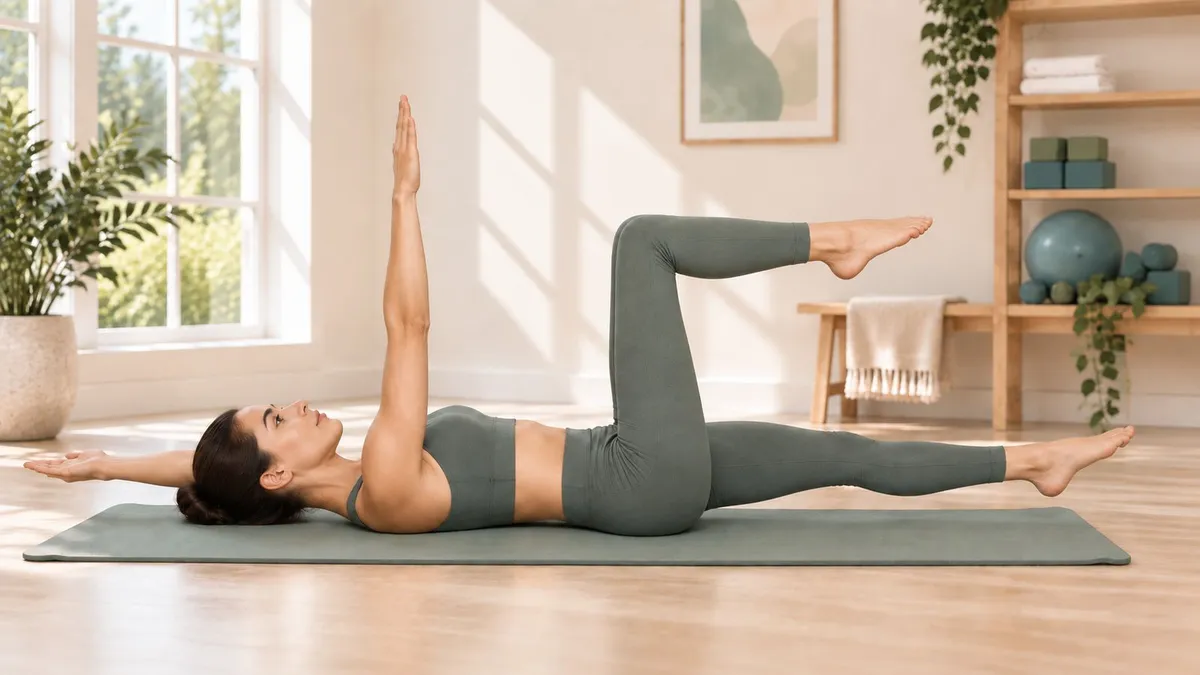
How to Perform
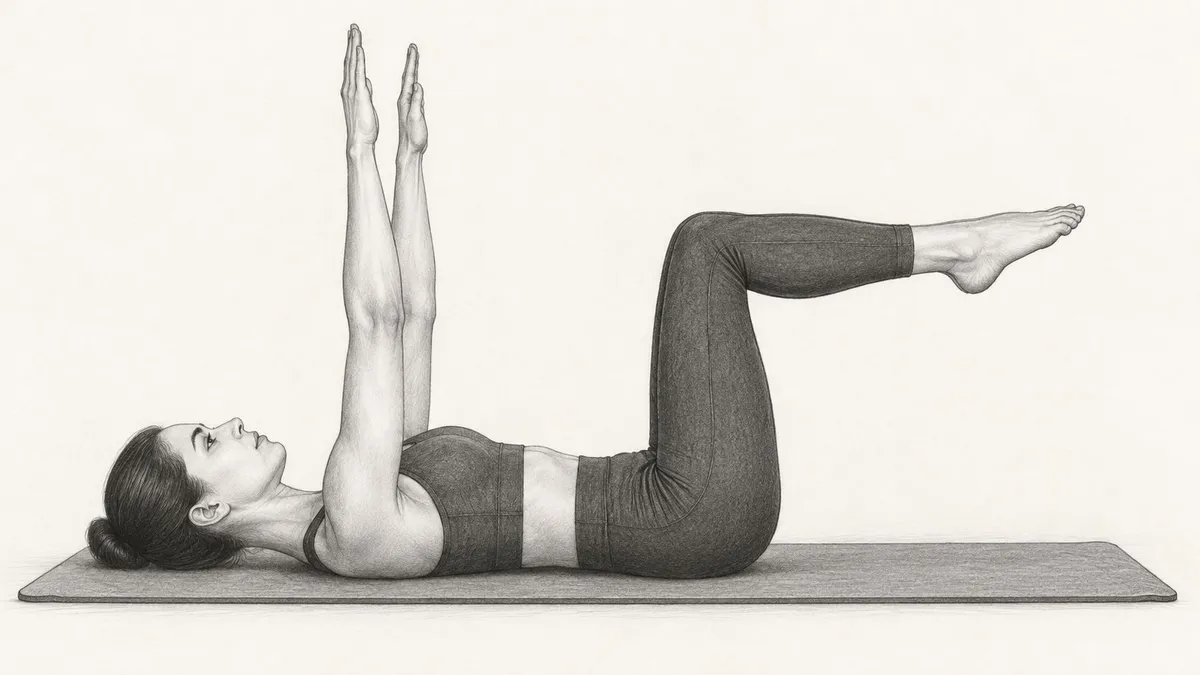 1
1Lie on your back. Keep both arms straight up and your hips and knees bent at 90 degrees. Rest your lower back lightly on the mat.
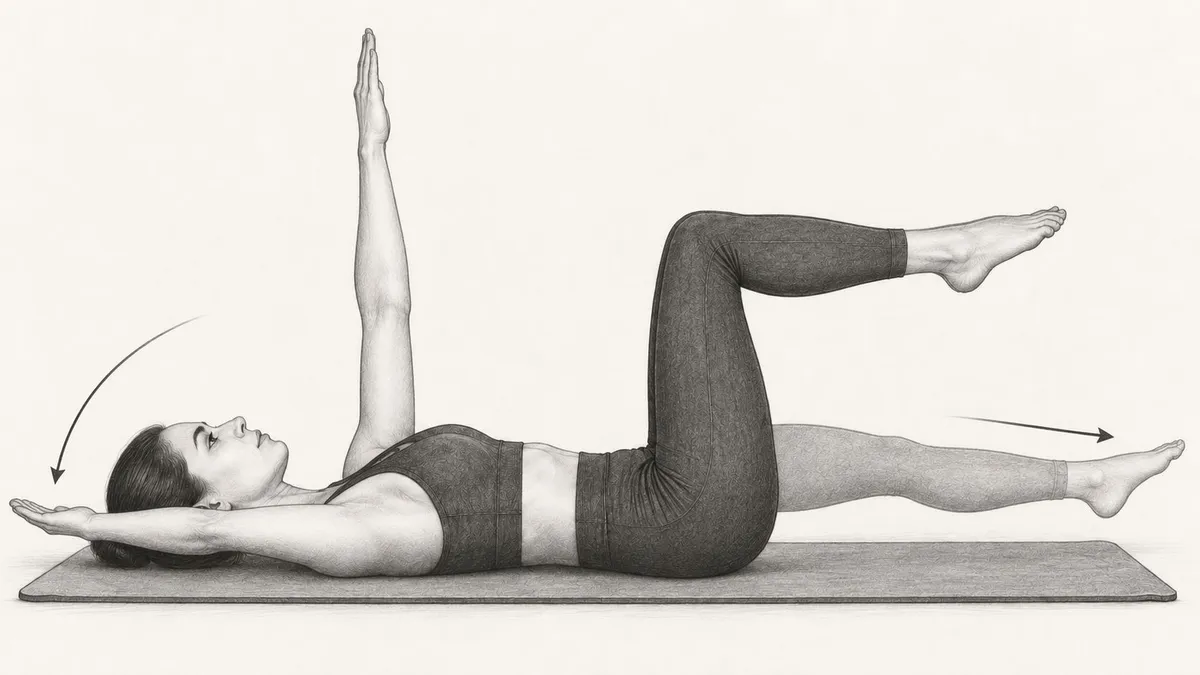 2
2Slowly take one arm back over your head and stretch the opposite leg out low, heel just above the mat. Keep your back flat. Hold 10 seconds.
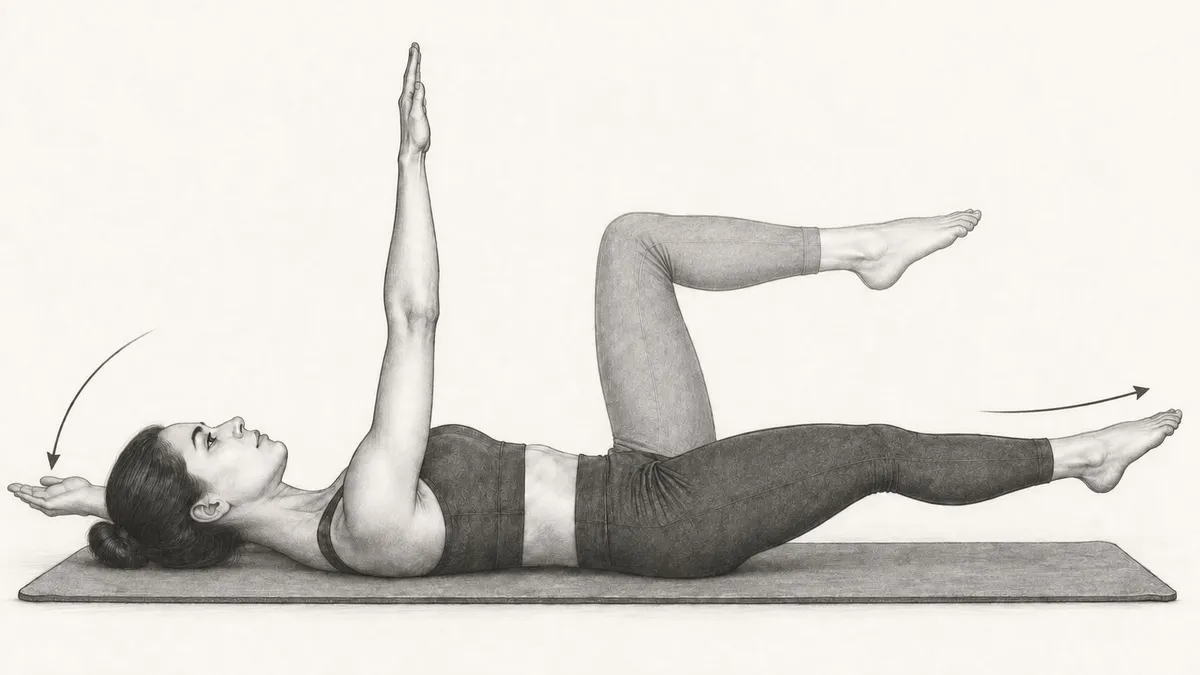 3⏱ Hold 10s
Do the same on the other side. Hold 10 seconds.
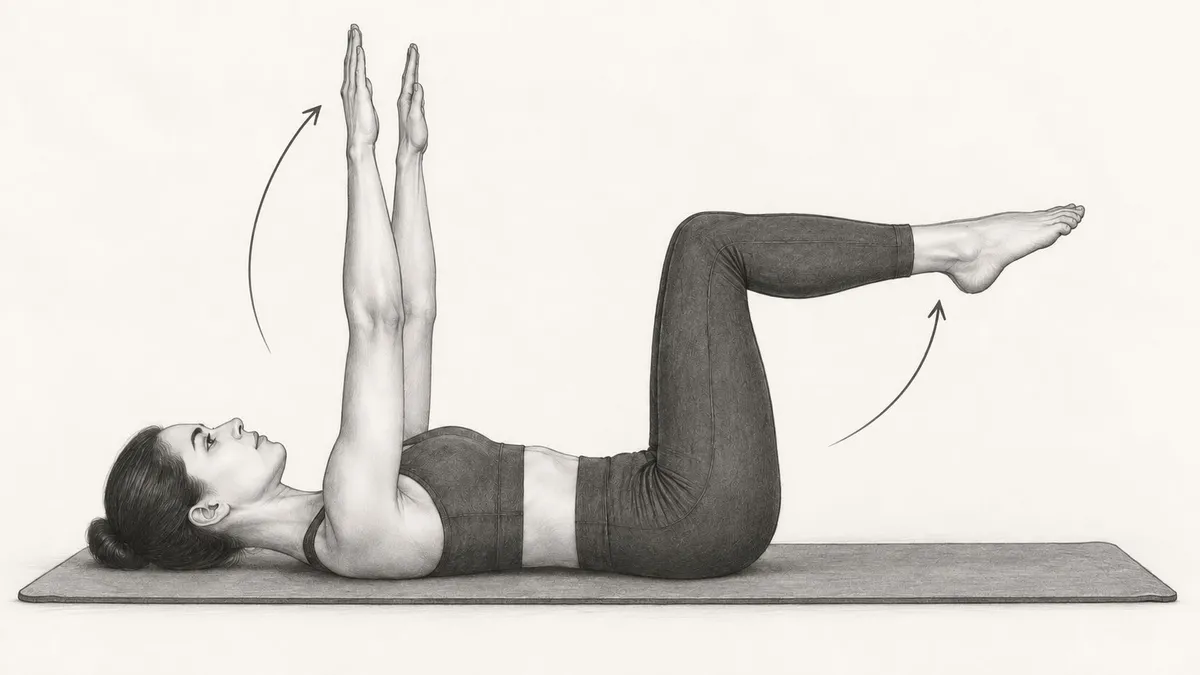 4
4Come back slowly to the start and relax. Repeat 5 times on each side.
🔁 Repeat this exercise 5 times
Watch the Exercise
Muscles Targeted
This deep tummy muscle supports the trunk. It helps keep the pelvis steady while the limbs move.
Runs along the front of the tummy. It helps stop the lower back arching during the opposite arm-and-leg reach.
This side tummy muscle controls trunk rotation. It helps prevent twisting during the opposite arm-and-leg movement.
Helps steady the trunk and pelvis. It works with other tummy muscles to control the reach and return.
Helpful For
Challenges the tummy muscles during arm and leg movement. Start with a small reach before progressing.
Practises a steady lower back and pelvis during limb movement. It trains control rather than guaranteeing pain relief.
May support rehabilitation when the position and movement are comfortable. Shorten the reach if the back arches or symptoms increase.
Benefits
- Strengthens the deep core muscles without weights or equipment
- Practices coordinating opposite arm and leg movements with control
- Trains the lower back to stay still while the limbs do the work
- Supported lying position keeps the neck and spine comfortable
Precautions
- Move only within a pain-free range. Stop if back, hip or neck pain increases, or if the movement causes numbness or dizziness
- Keep your lower back in light contact with the mat; if it starts to arch, make the reach smaller
- Move slowly and keep breathing normally throughout the exercise
- If you are pregnant, have recently had abdominal or back surgery, or have a diagnosed spine condition, check with your clinician before starting
- This exercise is general education only and is not a substitute for professional medical advice, diagnosis or treatment
Need Professional Help?
Book a consultation to get personalized treatment advice for your condition.
Book on Instagram