Chin Tuck in Sitting
A gentle neck exercise where you glide your head straight back over your shoulders. Also known as neck retraction or "double chin" exercise. It helps you sit and stand with your head in a better position.
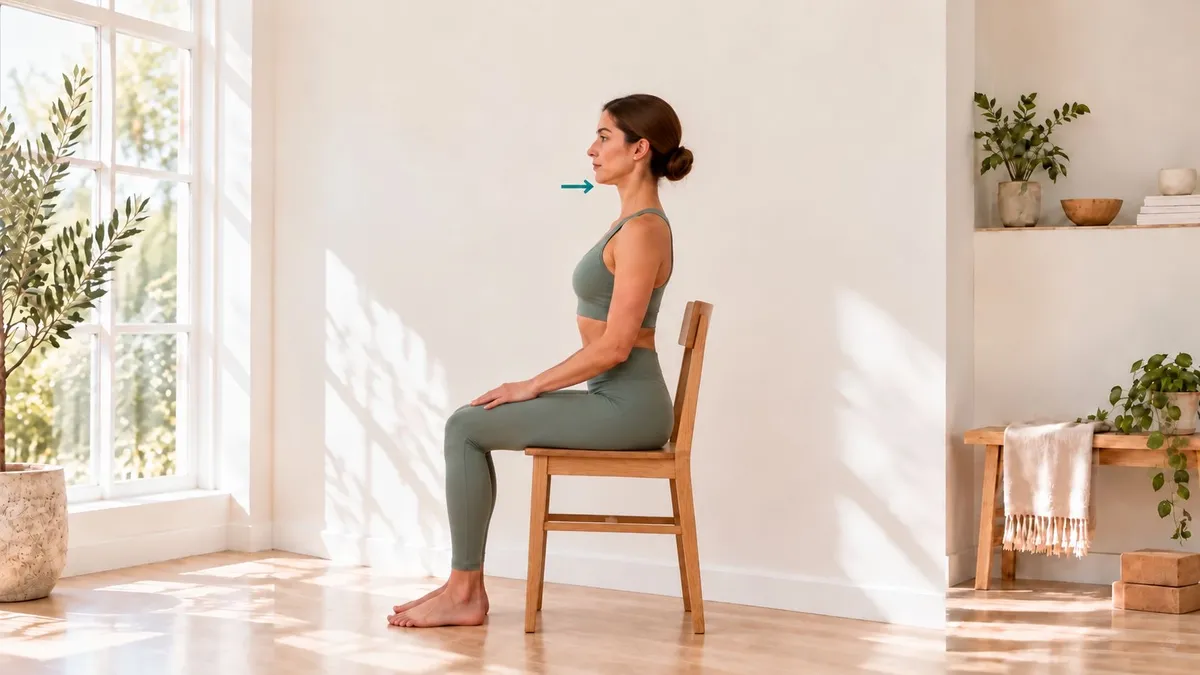
How to Perform
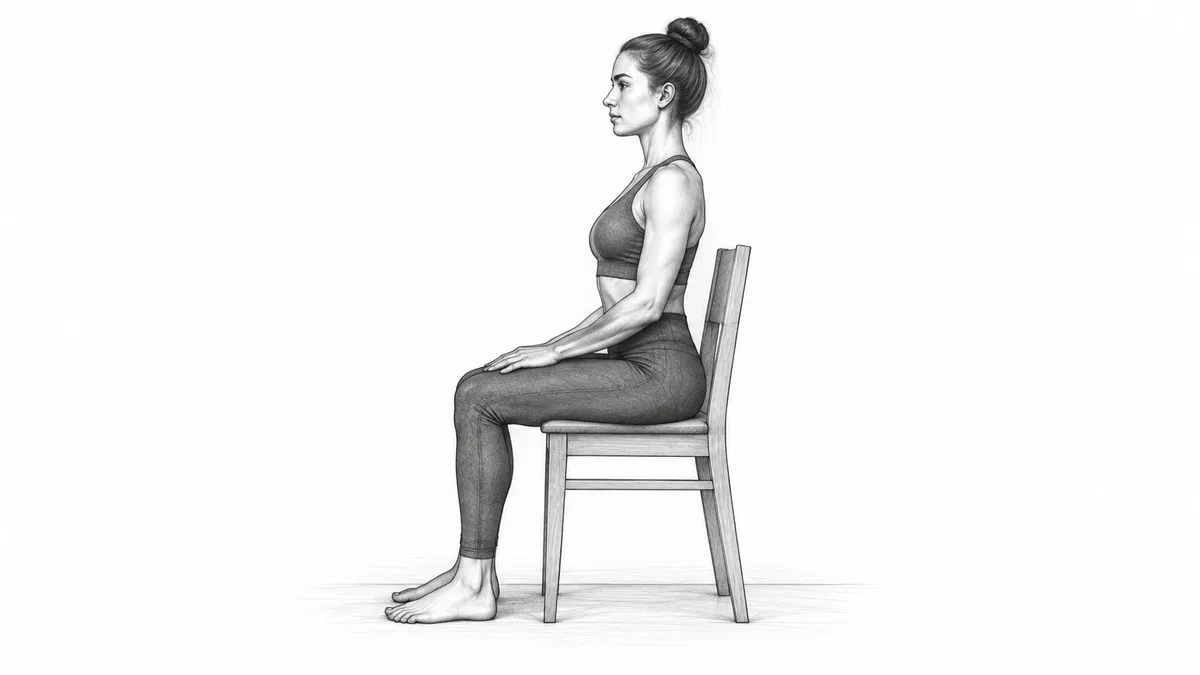 1
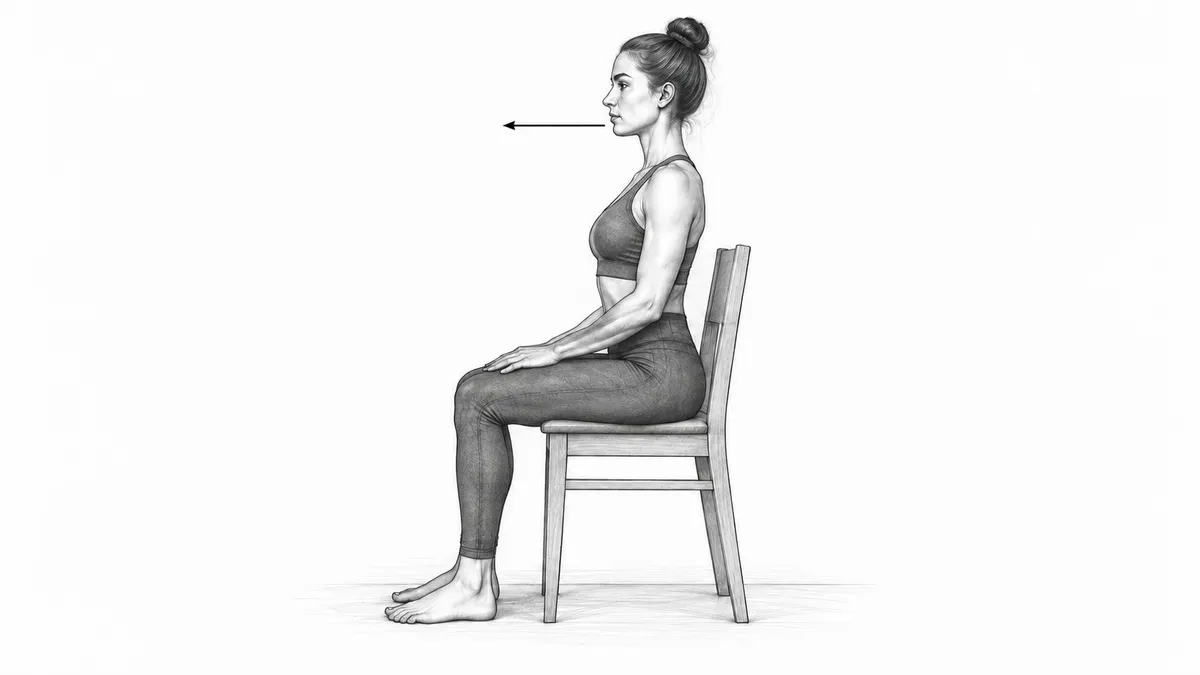
1Sit tall on a chair with your feet flat on the floor and your hands on your thighs. Relax your shoulders and look straight ahead.
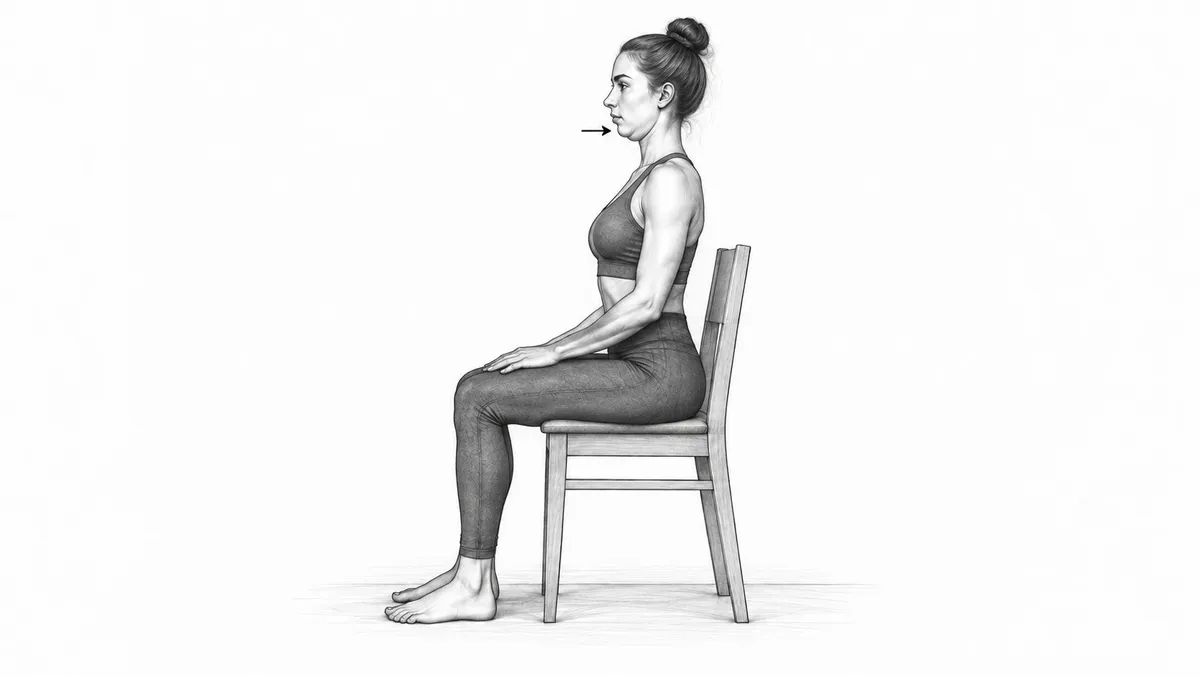 2
2Slowly glide your chin straight back, as if making a small double chin. Keep your head level. Do not tilt it up or down.
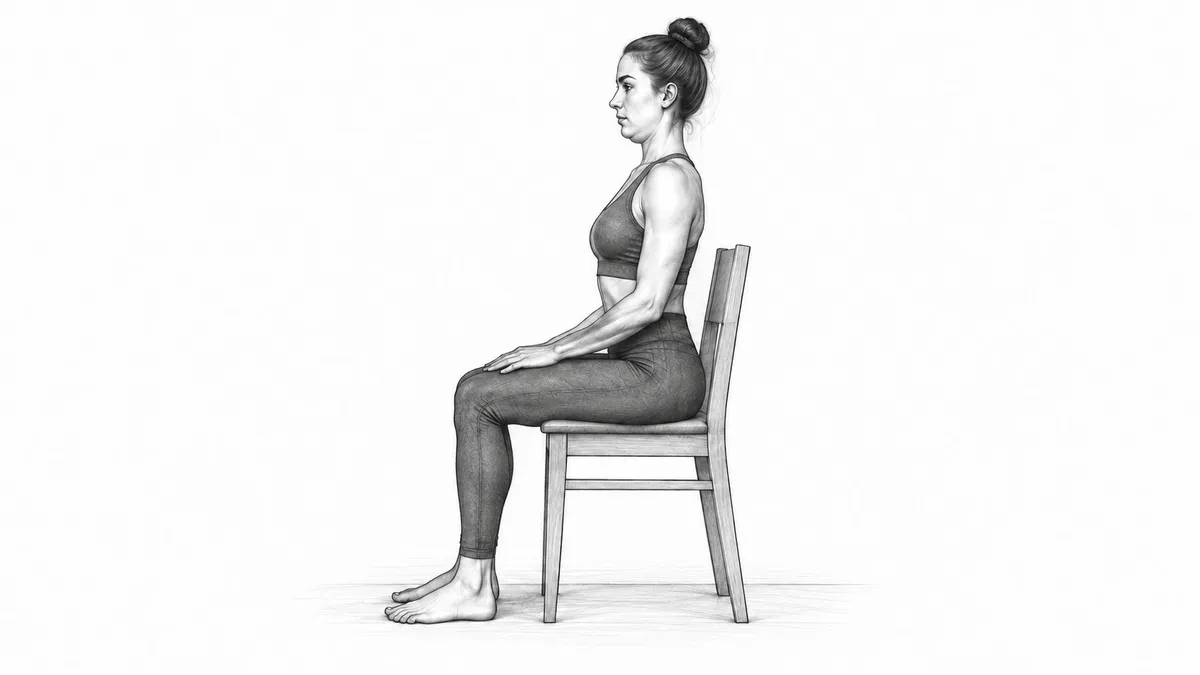 3⏱ Hold 10s
Hold this position for 10 seconds. Keep breathing and keep your shoulders relaxed.
 4
4Slowly glide your head forward to the starting position. Repeat this 5 times.
🔁 Repeat this exercise 5 times
Watch the Exercise
Muscles Targeted
Deep muscle on the front of the neck bones. It works to draw the head back and keep the neck steady.
Deep muscle at the front of the upper neck. It helps nod and tuck the head in.
Small muscle between the skull and top neck bone. It helps control small head nods.
Small muscles at the base of the skull. They get a gentle stretch as the head glides back.
Helpful For
Gentle movement of the neck can ease stiffness. It also trains the deep neck muscles that support the neck.
Strengthens the muscles that pull the head back over the shoulders. This helps counter long hours looking at a phone or screen.
Trains weak deep neck muscles. It balances the tight muscles at the back of the neck.
Easing tension at the base of the skull may help some people. Check with a physio if headaches continue.
Benefits
- Improves head and neck posture: Teaches the head to sit back over the shoulders.
- Strengthens deep neck muscles: Builds support for the neck without equipment.
- Eases neck stiffness: Gently moves the upper neck joints.
- Easy to do anywhere: Can be done sitting at a desk or standing.
Precautions
- Stop if you feel new pain, dizziness, tingling or numbness in the arms.
- Move slowly and gently. Do not force the chin back.
- Do not tilt the head up or down, and do not arch the back or hunch the shoulders.
- Recent neck injury, surgery or ongoing symptoms: check with your physiotherapist or doctor first.
Need Professional Help?
Book a consultation to get personalized treatment advice for your condition.
Book on Instagram