Bird dog
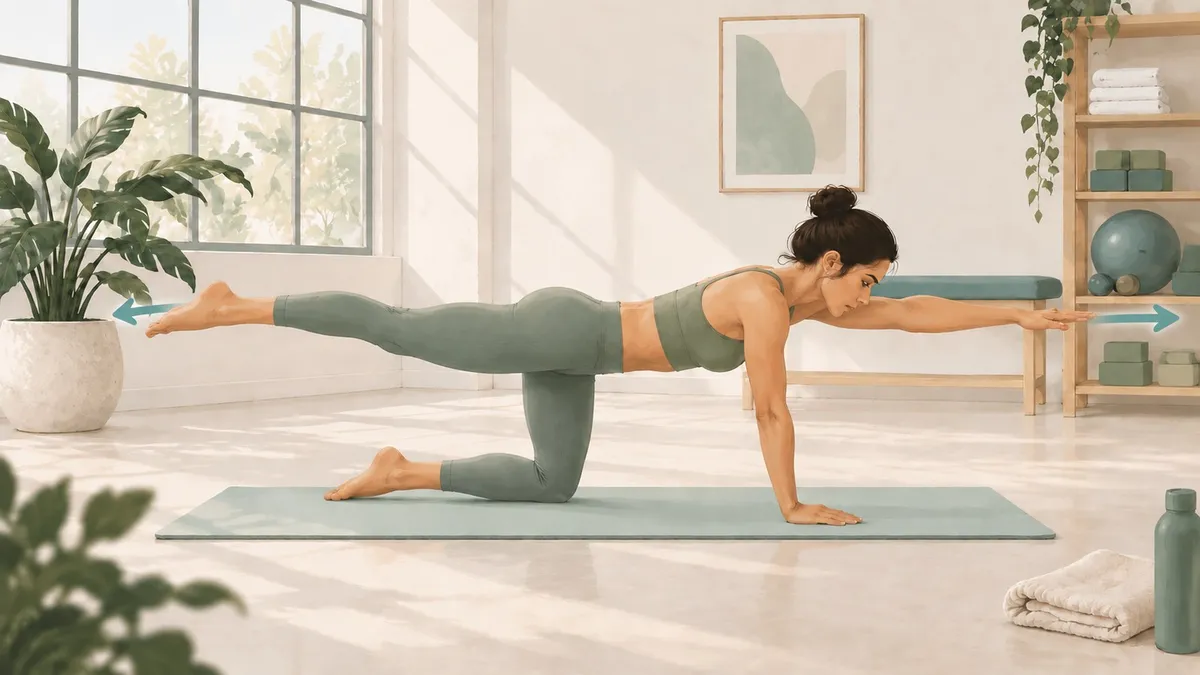
The Bird Dog is a highly effective core stabilization exercise that challenges the body to maintain a neutral spine during contralateral (opposite side) limb movement. It trains the core, lower back, and glutes to work together to prevent unwanted rotation or extension in the spine.
How to Perform
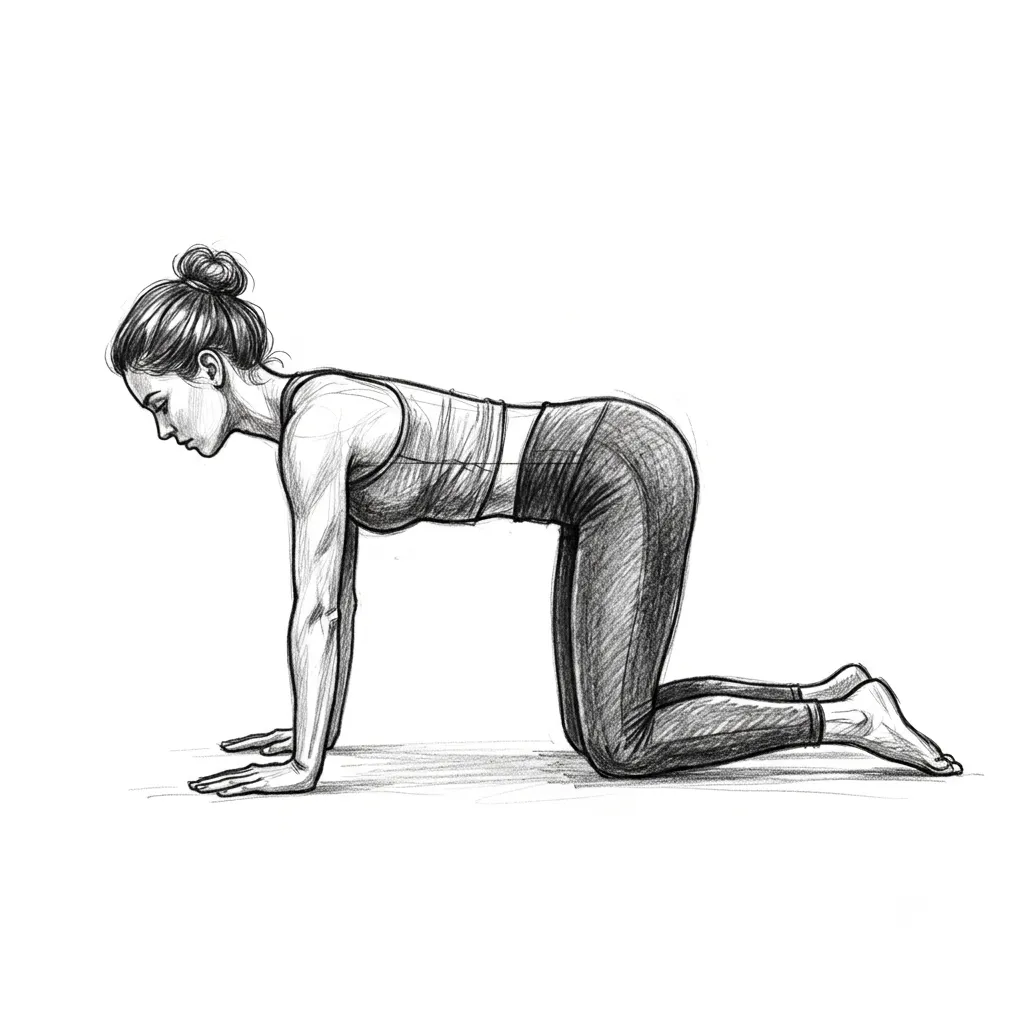 1
1Get on all fours on a mat. Place your hands directly under your shoulders and your knees under your hips. Get on all fours on a mat. Place your hands directly under your shoulders and your knees under your hips.
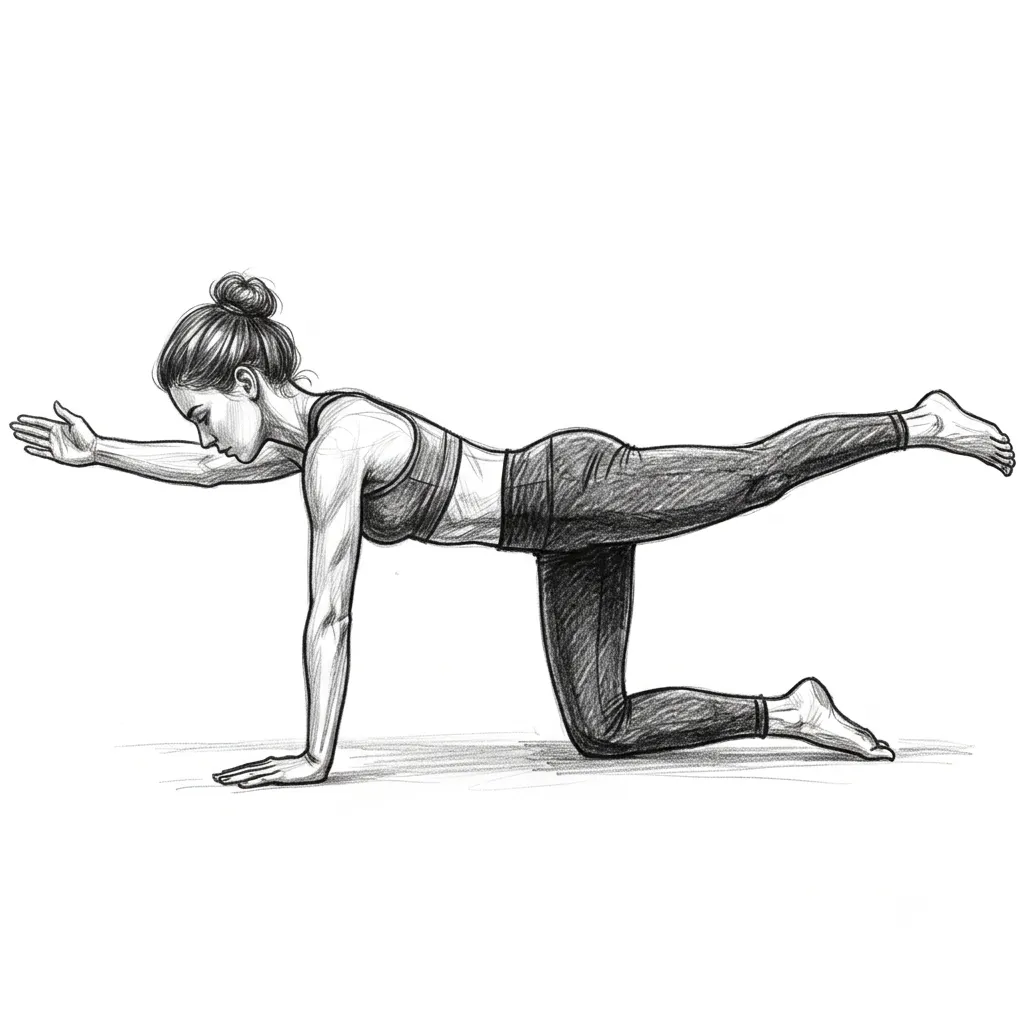 2⏱ Hold 10s
By tightens your stomach, slowly reach your right arm straight forward while extending your left leg straight back at the same time and hold the position for 10 seconds.
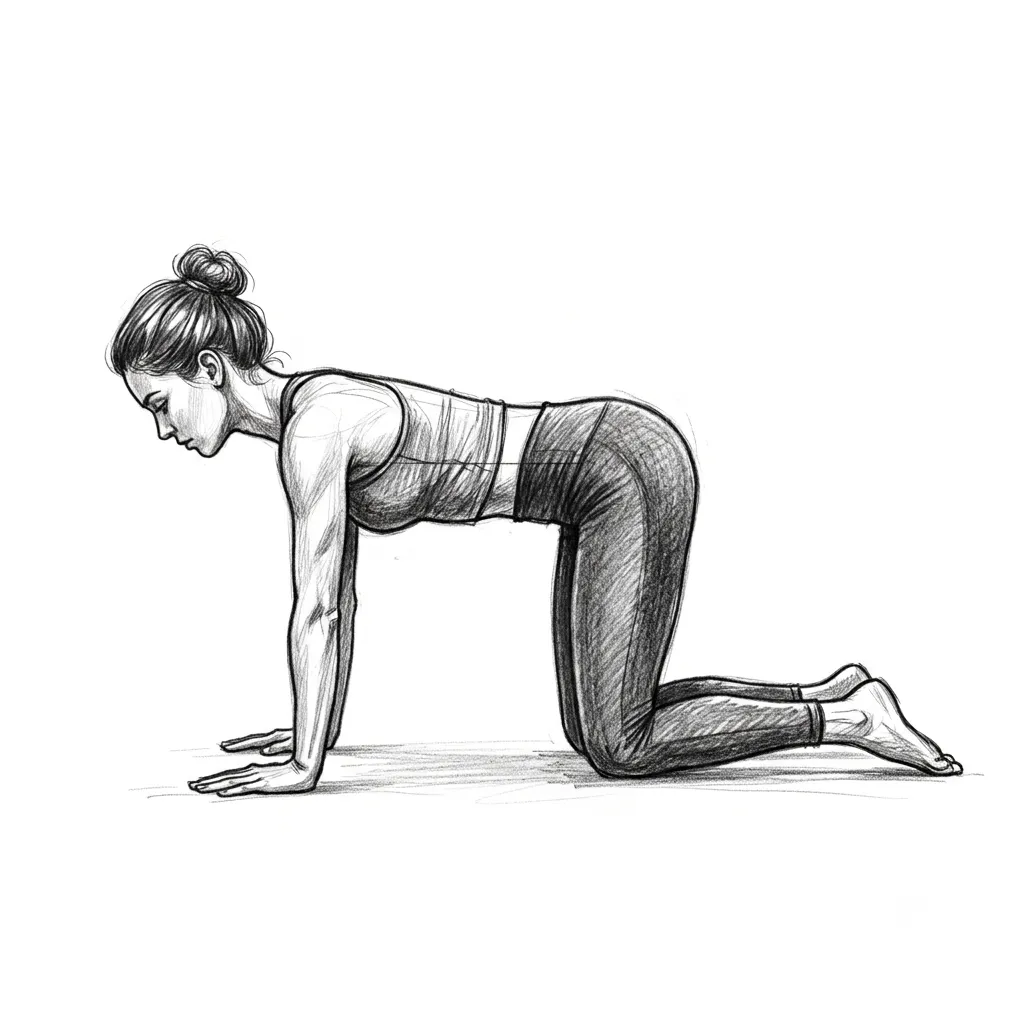 3
3Then slowly lower your arm and leg back to the starting position. Repeat on the opposite side.
🔁 Repeat this exercise 5 times
Muscles Targeted
The muscles along your spine that help maintain your posture during the reach.
Deep spinal stabilizers
The main muscles of the buttocks.
Helpful For
A staple in rehabilitation for building muscular endurance in spinal stabilizers without aggravating pain.
Frequently prescribed because it avoids spinal flexion, a movement that can push disc material further backward and worsen symptoms.
Helps stabilize the lumbopelvic region, reducing micromovements that can irritate the sciatic nerve.
Corrects upper and lower cross syndromes by strengthening the often-weakened posterior chain.
Benefits
- Enhances Core Stability: Trains the abdominal and back muscles to fire together to stabilize the spine during movement.
- Improves Neuromuscular Control: The cross-body movement pattern challenges proprioception, balance, and coordination.
- Promotes a Neutral Spine: Teaches how to move the extremities without relying on compensatory movements in the lumbar spine.
- Spine-Sparing: Highly effective for strengthening the posterior chain without placing compressive or shearing loads on the intervertebral discs.
Precautions
- Avoid Lumbar Hyperextension: Do not let the lower back sag or arch excessively when lifting the leg. Only lift the leg as high as you can while keeping the back completely flat.
- Keep Hips Square: Prevent the hip of the extended leg from hiking up or rotating outward. Imagine balancing a cup of water on the lower back.
- Maintain Cervical Alignment: Keep the neck neutral. Avoid looking up or letting the head drop toward the floor.
- Control the Speed: Momentum ruins the biomechanical benefits. Focus on slow, intentional, and highly controlled movements.
Need Professional Help?
Book a consultation to get personalized treatment advice for your condition.
Book on Instagram