Bent Knee Fall-Out in Supine
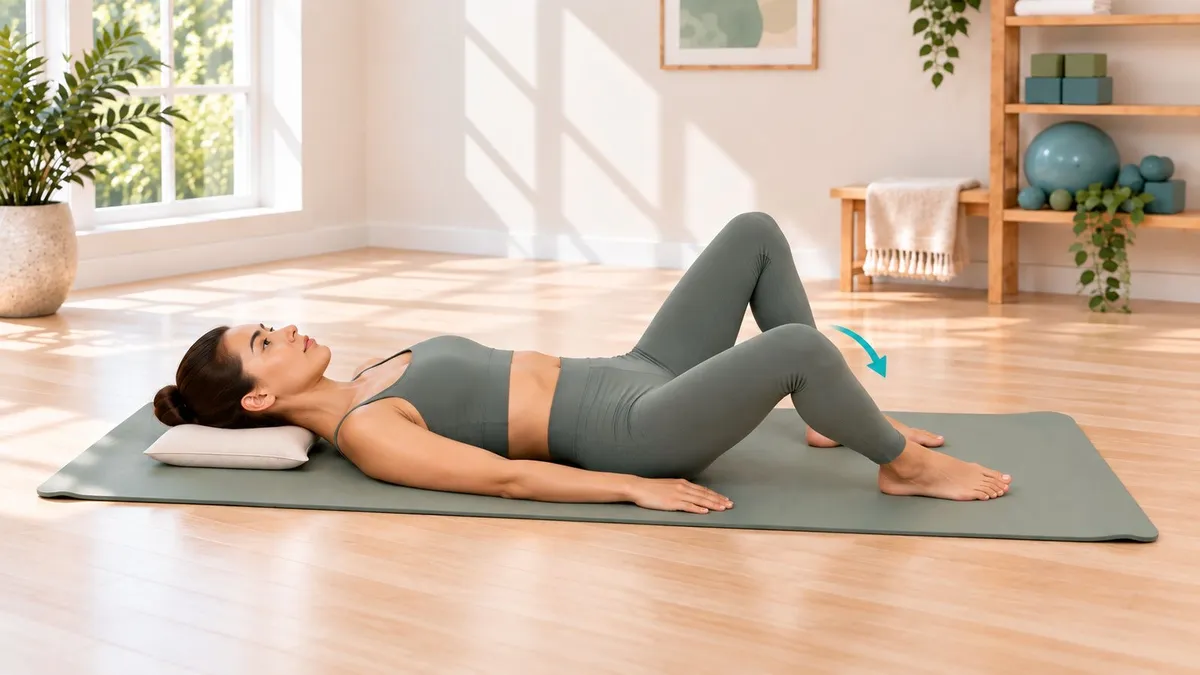
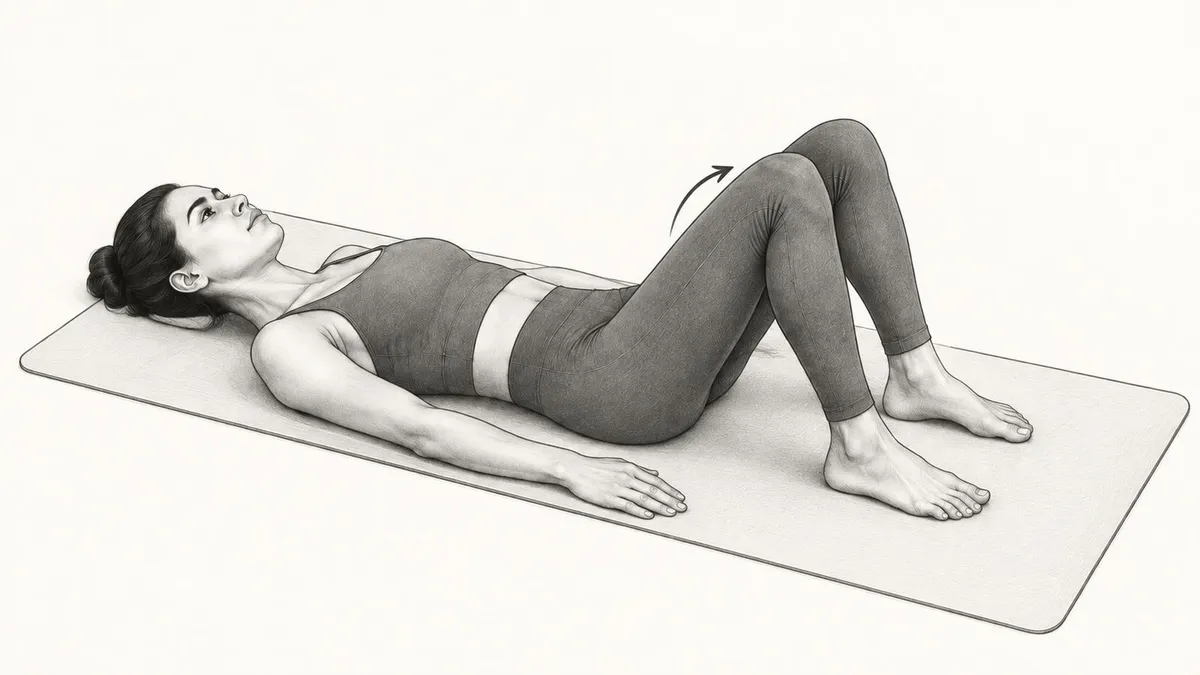
A gentle core-control exercise done lying on your back. Moving one knee out to the side while keeping your pelvis still helps you practise control of your tummy, lower back and hips.
How to Perform
 1
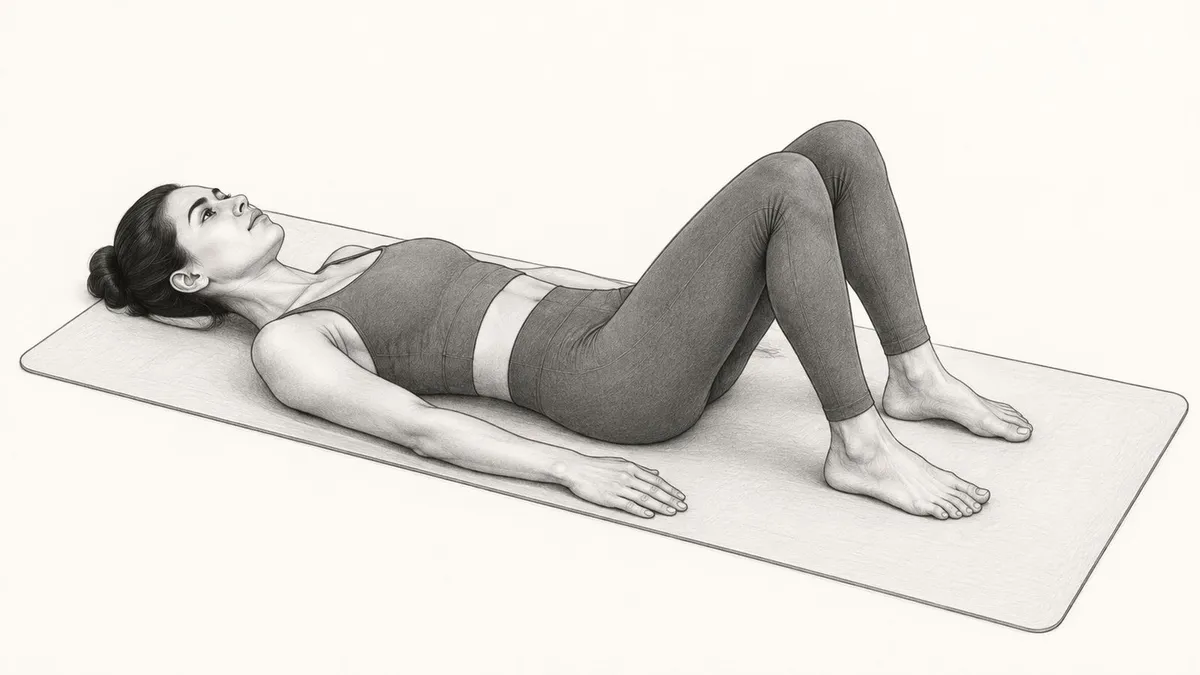
1Lie on your back with your knees bent and your feet flat on the floor, hip-width apart. Rest your arms by your sides and keep your back in its natural position. Stay relaxed.
 2
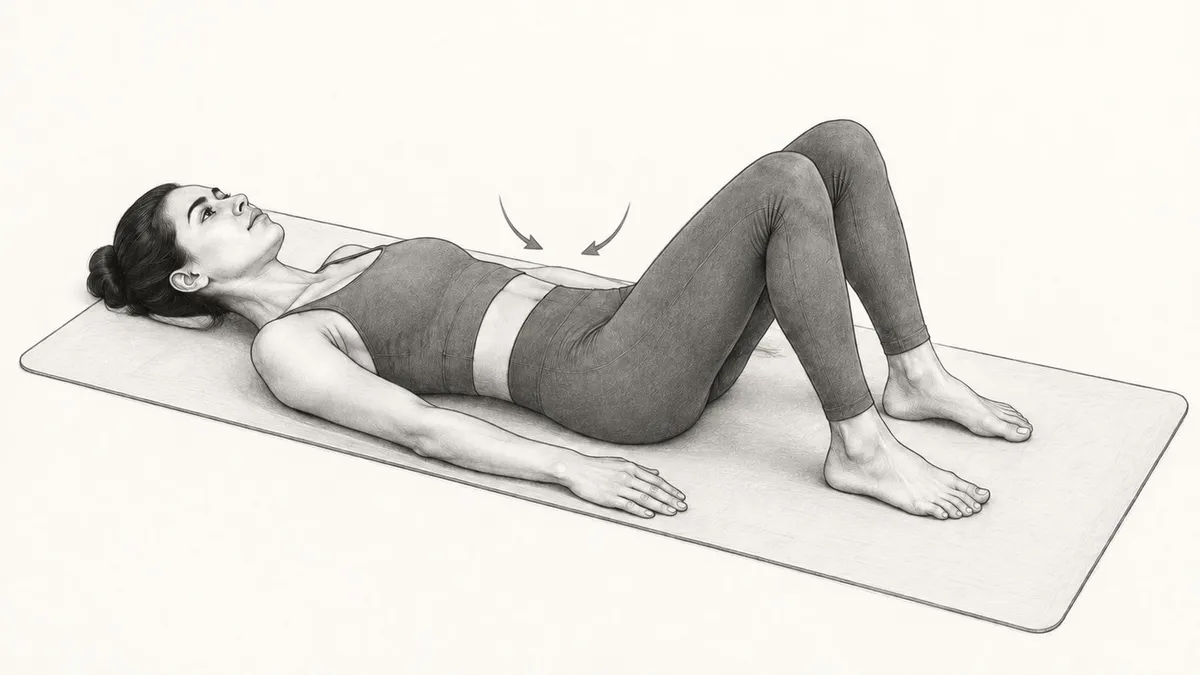
2Breathe out and gently draw in your lower tummy. Keep breathing normally and keep your pelvis still.
 3
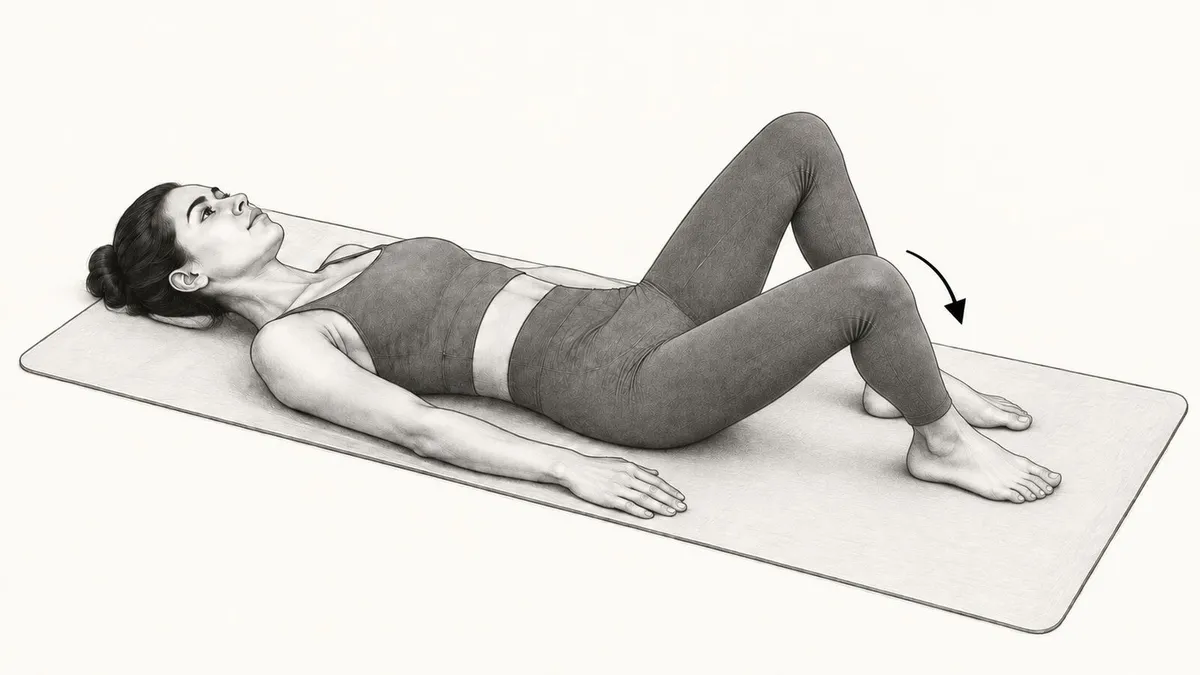
3Slowly let one knee move out to the side, only a modest distance. Keep the other knee upright, your foot flat and your pelvis level and still. Stop before your pelvis starts to roll.
 4
4Slowly bring the knee back up to the starting position and relax your tummy. Repeat with the other leg. Repeat this 5 times.
🔁 Repeat this exercise 5 times
Watch the Exercise
Muscles Targeted
This deep tummy muscle supports the trunk. It helps keep the pelvis still while one knee moves outward.
This side tummy muscle controls rotation. It helps stop the pelvis rolling with the moving leg.
Helps control trunk twisting. It works with other tummy muscles to keep the movement steady.
These small muscles lie close to the lower spine. They control the lower back while the hip moves.
Helpful For
Practises hip movement with a controlled back and pelvis. Use it within a guided plan if symptoms do not increase.
Gently practises tummy control during leg movement. Start when suitable for your recovery and shorten the range if the pelvis moves.
May support a tailored abdominal recovery plan. Keep the range small and seek guidance for pain, tummy doming or pelvic symptoms.
Benefits
- Builds control of the deep tummy muscles
- Helps keep the pelvis steady during leg movement
- Practises moving the hip without twisting the back
- Helps you coordinate breathing with gentle core work
Precautions
- Do not force your knee towards the floor or let your pelvis roll
- Keep breathing normally. Do not tighten your tummy too hard
- Stop if you feel back, hip, groin or pubic pain, or pressure down into the pelvic floor
- Stop if your tummy bulges or domes. After childbirth or surgery, follow your physiotherapist's advice
Need Professional Help?
Book a consultation to get personalized treatment advice for your condition.
Book on Instagram