
If you are dealing with a persistent, nagging ache on the outside of your elbow that travels down your forearm, you are not alone. You might be experiencing a very common condition known as Tennis Elbow (medically termed lateral epicondylitis).
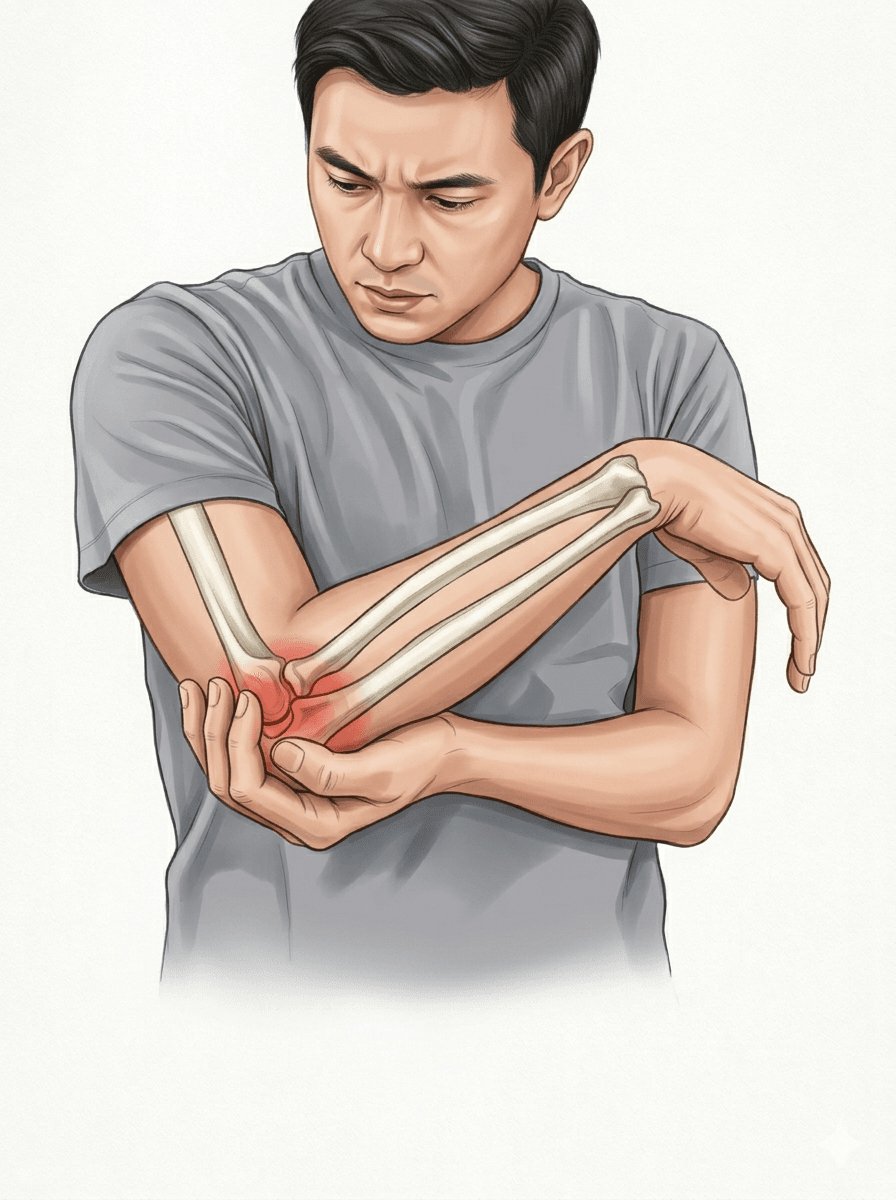
Despite the name, you don't need to ever pick up a racket to get it. While it certainly affects tennis, badminton, and golf players, we see it just as frequently in carpenters, tailors, painters, and office workers. In reality, anyone who repeatedly uses their wrists and fingers is at risk.
Tennis elbow occurs when the extensor muscles in your forearm specifically a muscle called the ECRB, which helps lift your wrist become overworked and irritated.
The good news? with early attention, simple adjustments, and the right exercises, tennis elbow is highly treatable.
Preventing The Tennis Elbow
Preventing tennis elbow is all about working smarter, not harder. If you catch the warning signs early, these simple habits can keep your elbows healthy:
Modify Your Movements: If an activity causes pain, pause and find a different way to do it. Listen to your body and take frequent breaks.
Check Your Ergonomics and Gear: Use lightweight tools, or increase the grip size on your rackets and tool handles to reduce the strain on your tendons.
Refine Your Technique: If you play sports or use specialized tools, consider getting a coach or professional to evaluate your form. Poor technique is a leading cause of joint stress.
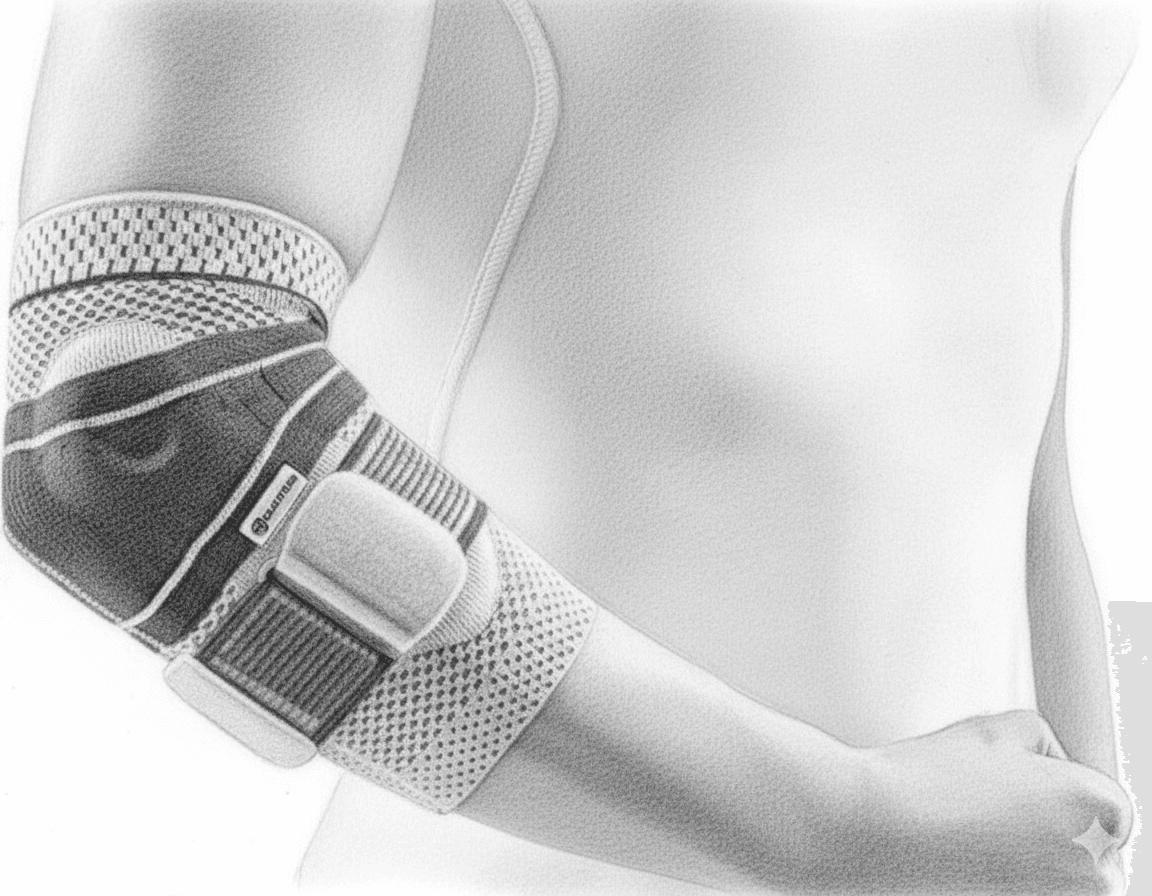
Consider Bracing: Wearing a supportive strap or splint during repetitive activities can take the pressure off your tendon and prevent further damage.
Warm Up Consistently: Never jump straight into heavy or repetitive wrist tasks. Always stretch and warm up your muscles first.
A Quick 3-Minute Warm-Up Routine
Before engaging in heavy lifting, typing, or sports, try these gentle movements:
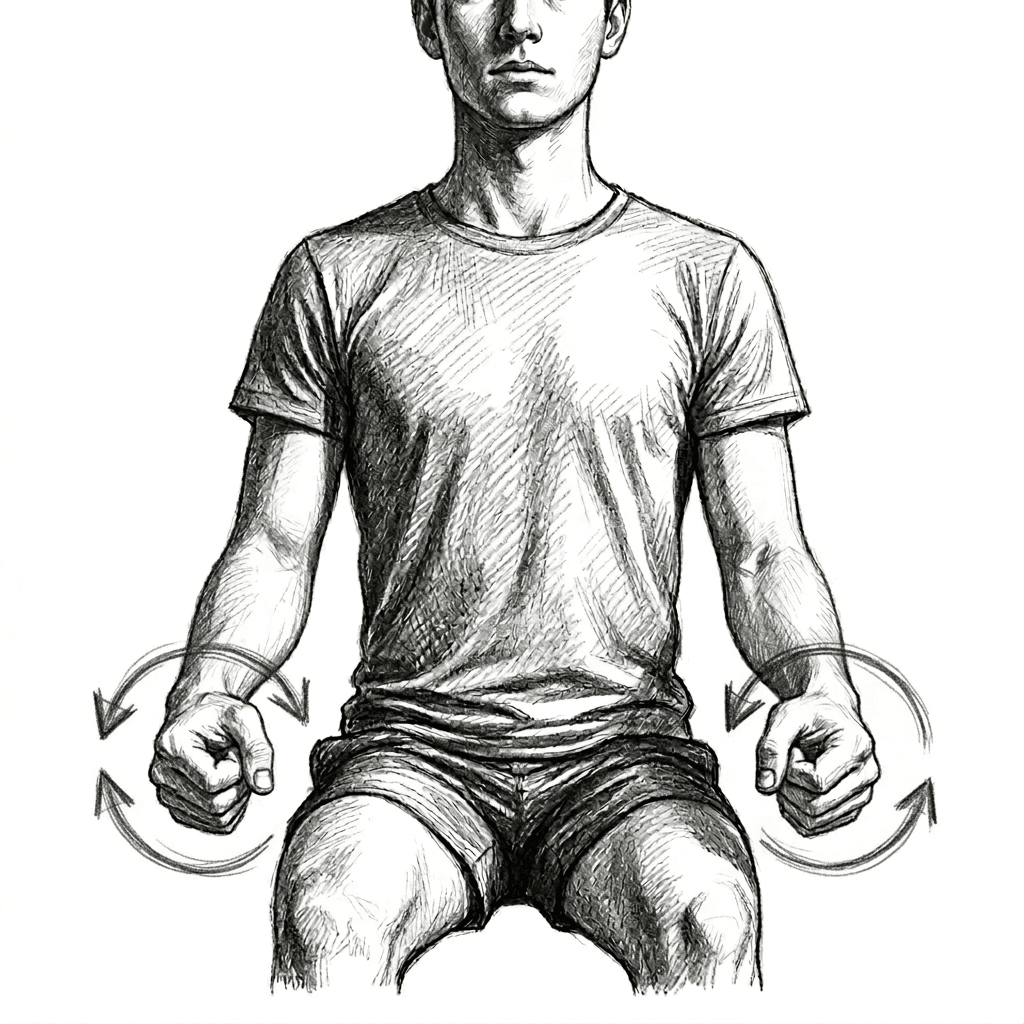
Wrist Circles: Gently circle your wrists clockwise for 5 full circles, then switch and do 5 counterclockwise circles.
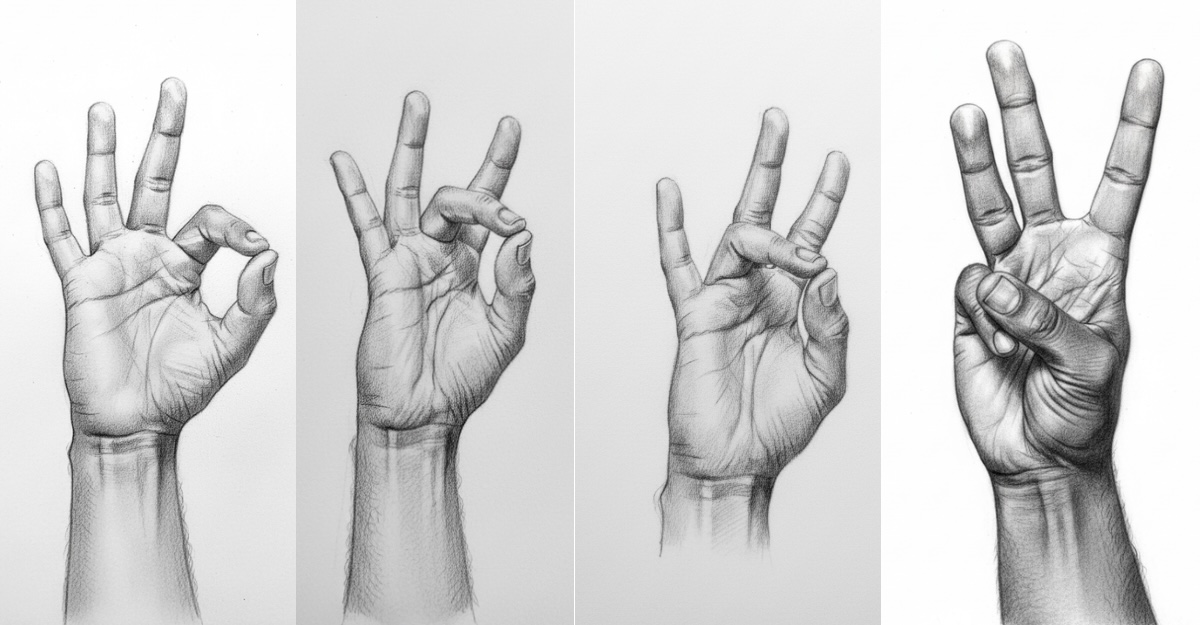
Finger-Thumb Opposition: With a relaxed wrist, touch your thumb to the tip of each finger one at a time, forming an okay sign. Make the circle as round as possible. Repeat 8 to 12 times per hand.
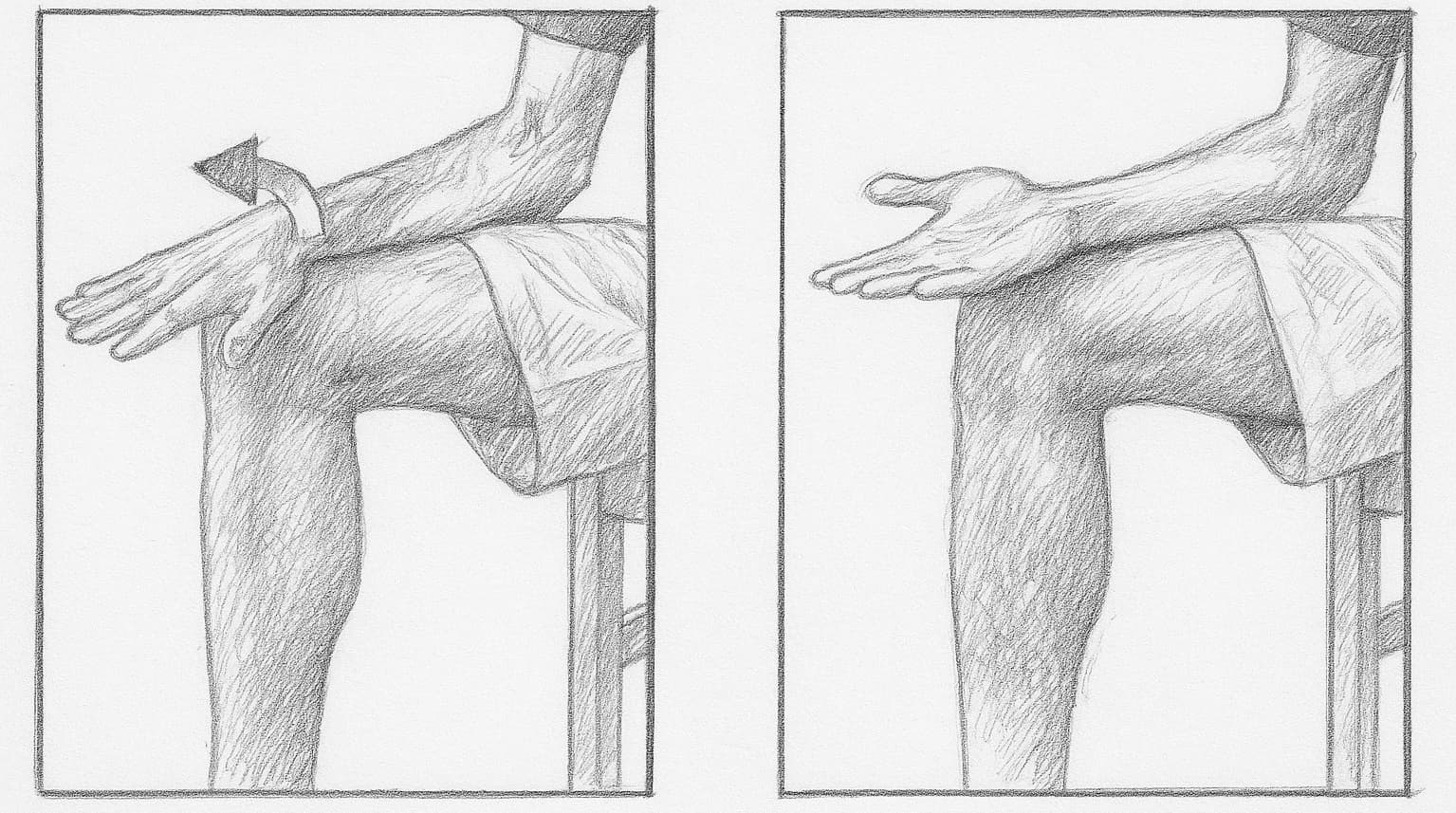
Hand Flips: Sit down and rest your forearm flat on your thigh, palm facing down. Simply flip your hand over so your palm faces up, then flip it back down. Repeat 8 to 12 times.
Tennis Elbow Recovery
Timely intervention with initial care and specific exercises promotes healing. These steps focus on reducing pain and restoring mobility.
Immediate Care
Ice Therapy: Apply ice for 10-15 minutes, 2-3 times daily, to reduce pain and inflammation.
Relative Rest: Avoid activities that strain the elbow. Gentle movement helps maintain circulation and flexibility without full immobilisation.
Phase 1: Gentle Stretching and Mobility Exercises
Focus on flexibility and mobility before building strength. Stop if you feel sharp pain; a mild stretch is normal.
Name | Description | Repetition / Hold |
Wrist Extensor Stretch | Extend your affected arm straight in front, fingers pointing downward. Use the other hand to gently pull the hand toward your body until a stretch is felt on the top of the forearm. | Hold 15-30 seconds, repeat 2-4 times (both arms) |
Wrist Flexor Stretch | Extend your arm with fingers pointing upward (like a stop sign). Use the opposite hand to gently pull fingers back to feel a stretch on the underside of the forearm. | Hold 15-30 seconds, repeat 2-4 times |
Wrist Deviation | Rest your forearm on a table with your hand hanging sideways. Hold a light object and slowly move your wrist up and down. | 8-12 repetitions, then switch arms |
Finger Stretch | Place palms together in a prayer position. Keep fingers together and gently pull the heels of the hands apart to stretch palms and fingers. | Hold 20-30 seconds |
Triceps Stretch | Raise one arm overhead, bend elbow to touch back of neck. Use opposite hand to gently push the elbow backward for a stretch. | Hold 15 -20 seconds |
Phase 2: Progressive Strengthening
Only begin these once pain has significantly decreased. Consult a physiotherapist before starting.
Name | Description | Repetition / Hold |
Ball or Sock Squeeze | Hold a tennis ball or rolled socks. Squeeze firmly, maintain contraction, then fully relax. | Hold 6 seconds, repeat 8-12 times per hand |
Isometric Wrist Extension | Rest forearm on a table with hand over the edge, palm down. Hold a light weight and keep the wrist straight and steady without movement. | Hold 15 seconds, repeat up to 5 times |
Resisted Wrist Flexion | Rest forearm on a table with palm facing up. Hold a light weight and slowly curl the wrist upward, then lower it back down in a controlled manner. | 8-12 repetitions |
Towel Twists | Hold a rolled towel with both hands and gently twist as if wringing water, then reverse direction. | 5-10 repetitions |
For better results, consult a physiotherapist. They can guide you through appropriate resistance levels and ensure proper form to prevent re-injury and optimize recovery.